
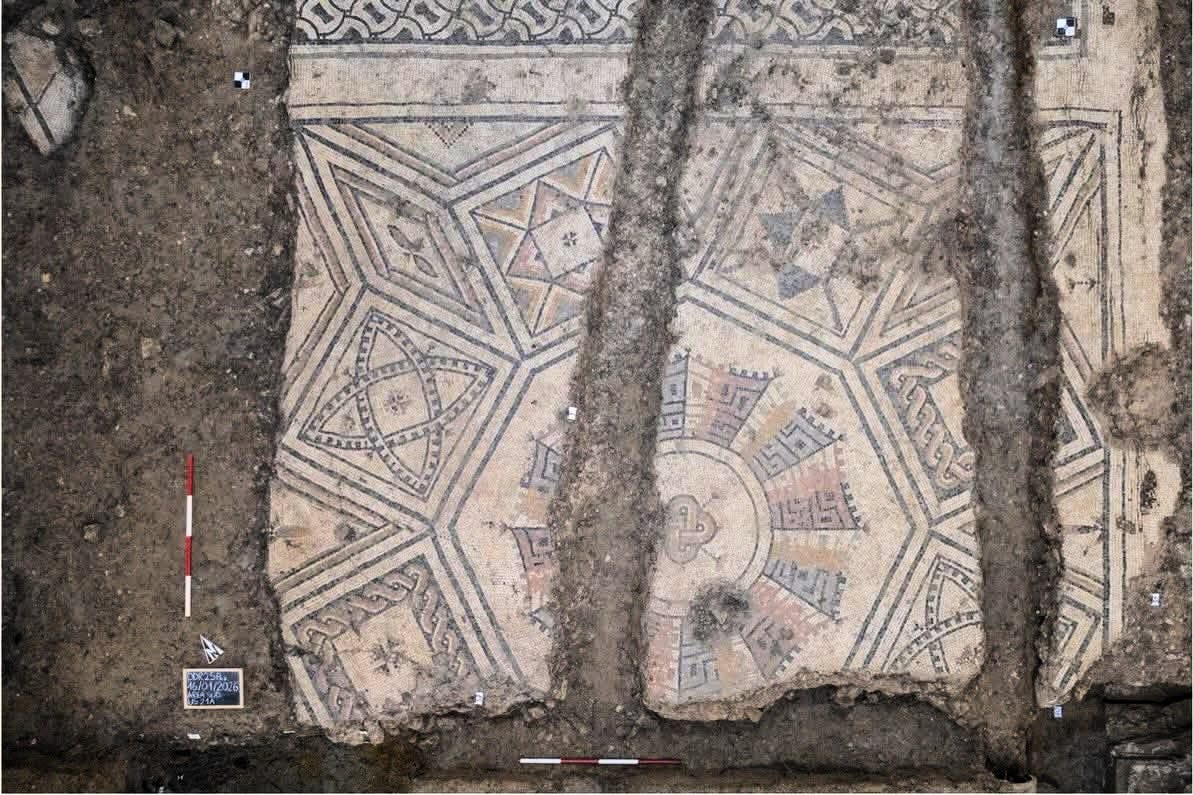
Excavations in Oderzo, Italy, have uncovered spectacular mosaics from what is believed to have been the city’s first church.
The Late Antique ecclesiastical site, dated to the period after the height of the western Roman empire, sits just outside the town known to the Romans as Opitergium.
Digging in advance of a residential project, archaeologists unearthed large areas of multicoloured mosaic floors between the substantial masonry footprints of lost walls. The impressive remains - currently estimated at 23 metres in width and a minimum of 30 metres in length - are believed to be the remains of the city’s first church.
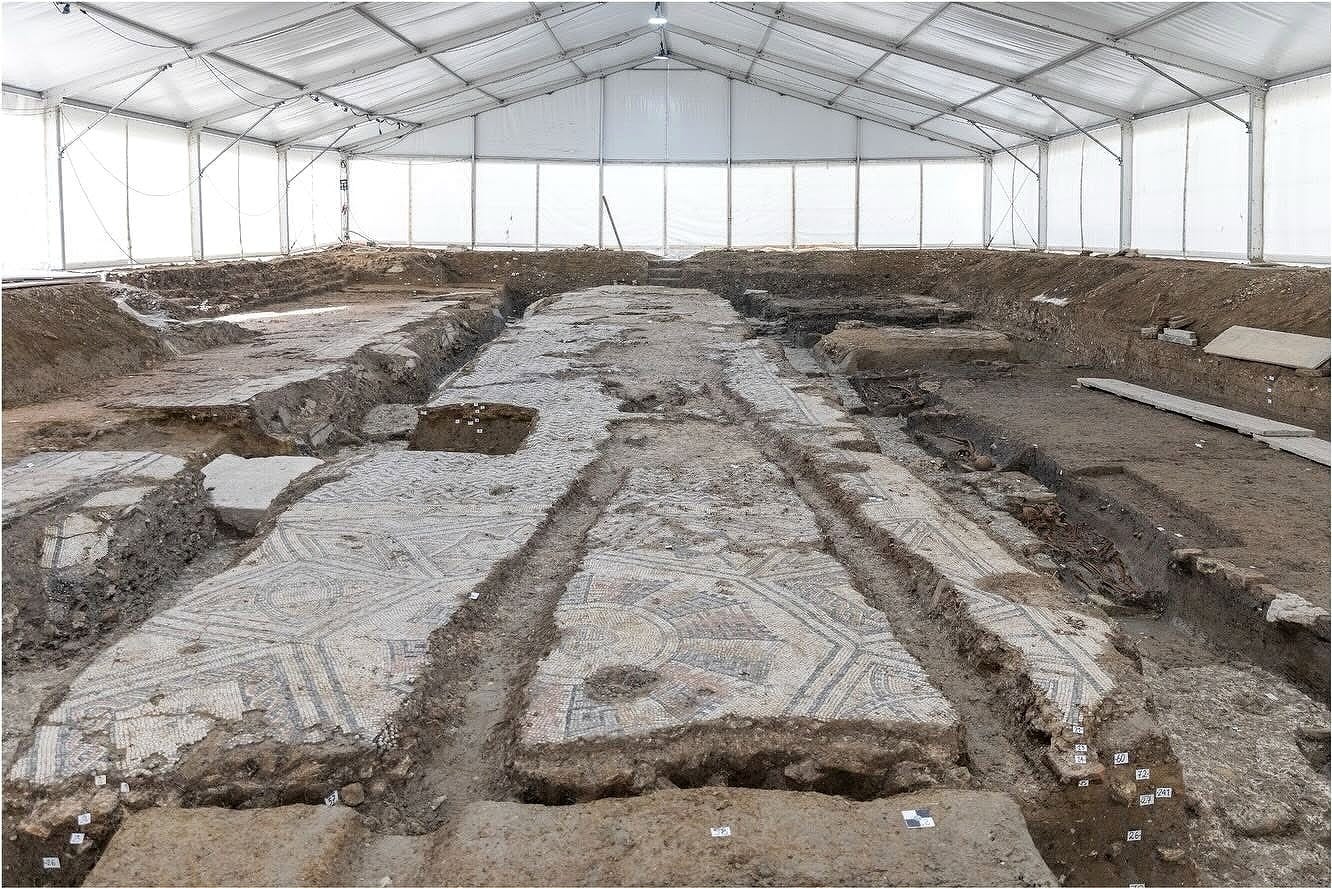
The polychrome mosaics feature delicate motifs of geometric and floral designs, and are particularly well preserved in part of the nave and the southern aisle.
As the regional authority, known as the Soprintendenza, writes:
‘Among the most complex [mosaics] is a square panel along the aisle, characterised by a large central octagon with a velarium [awning] motif and an intricate composition of squares and lozenges bordered by double frames and enriched with additional geometric and vegetal decorative elements.
‘There are also geometric patterns with octagons bordered by braids, intertwined circles adorned with acanthus leaves, and vegetal motifs such as ivy [...] and lozenges with an inscribed cross, attributable to decorative repertoires attested in northern Italy in the Late Antique period. Based on these, it is currently assumed that the complex dates to between the late 4th and 5th centuries AD.’
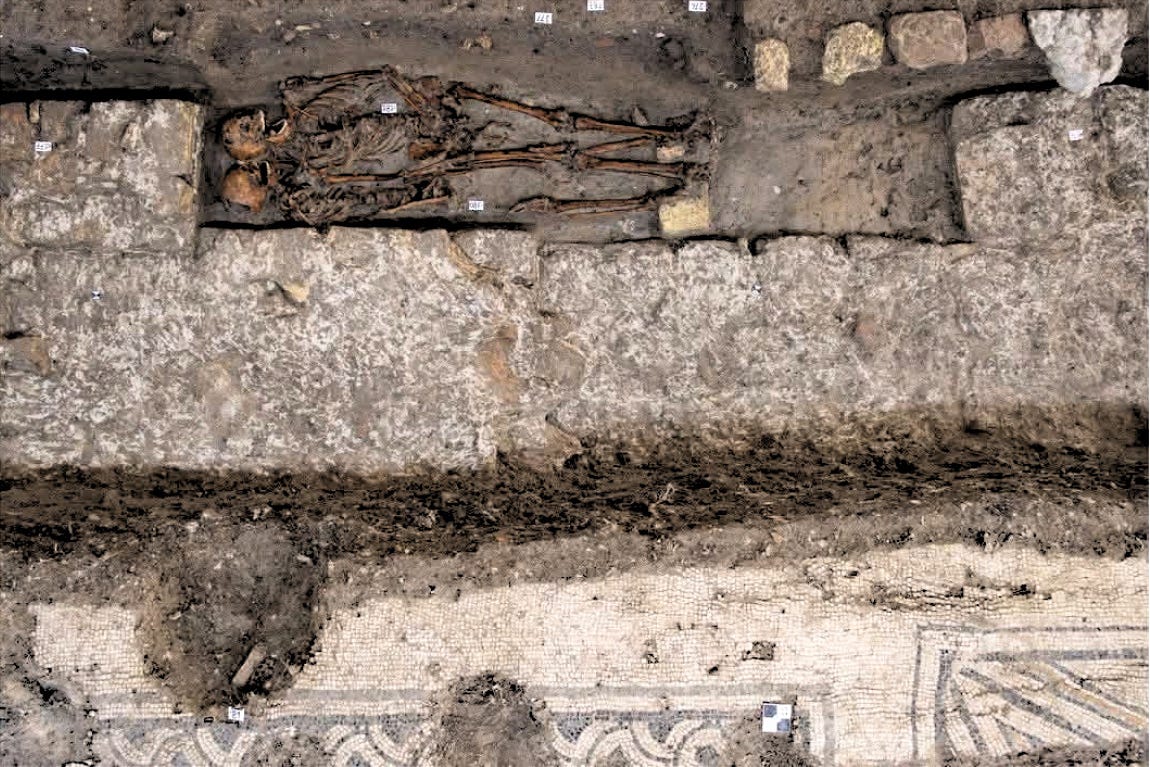
Square bases discovered in the eastern part of the excavated area are thought to have been for the pillars that supported the screen that enclosed the liturgical area around the high altar, known as the presbytery. Burials were also found immediately outside the church walls.
In the southeast of the wider site, an area seemingly relating to the storing or processing of materials for the building and decoration of the ornate church has been revealed. Here, a possible furnace lies next to significant volumes of mosaic tesserae, fragments of marble and ceramics, glass, and notably delicate glass tesserae that might indicate the former existence of wall or vault mosaics in the highly decorated church.
Work is in place to preserve and display the most important parts of the finds for future public viewing.
SABAP Padova, Treviso e Belluno: Oderzo (Tv) | La Soprintendenza presenta i primi risultati delle indagini archeologiche in corso nell’area dell’ex pescheria: torna alla luce un eccezionale contesto di epoca tardoantica
ArcheoReporter YouTube: Ancient Christian Mosaics in Veneto: Exceptional Discovery in Oderzo at the Former Fish Market

Archaeologists from Oxford Cotswold Archaeology have uncovered a settlement dating to between the 7th and 10th centuries AD near Kirkby Thore, Cumbria.
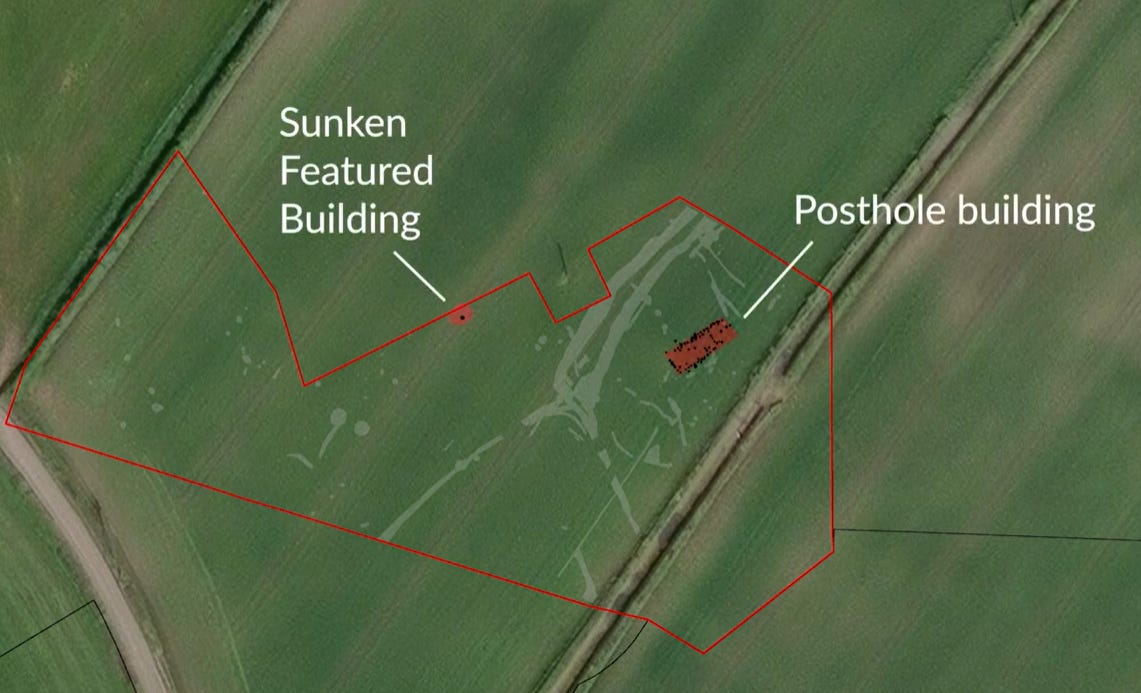
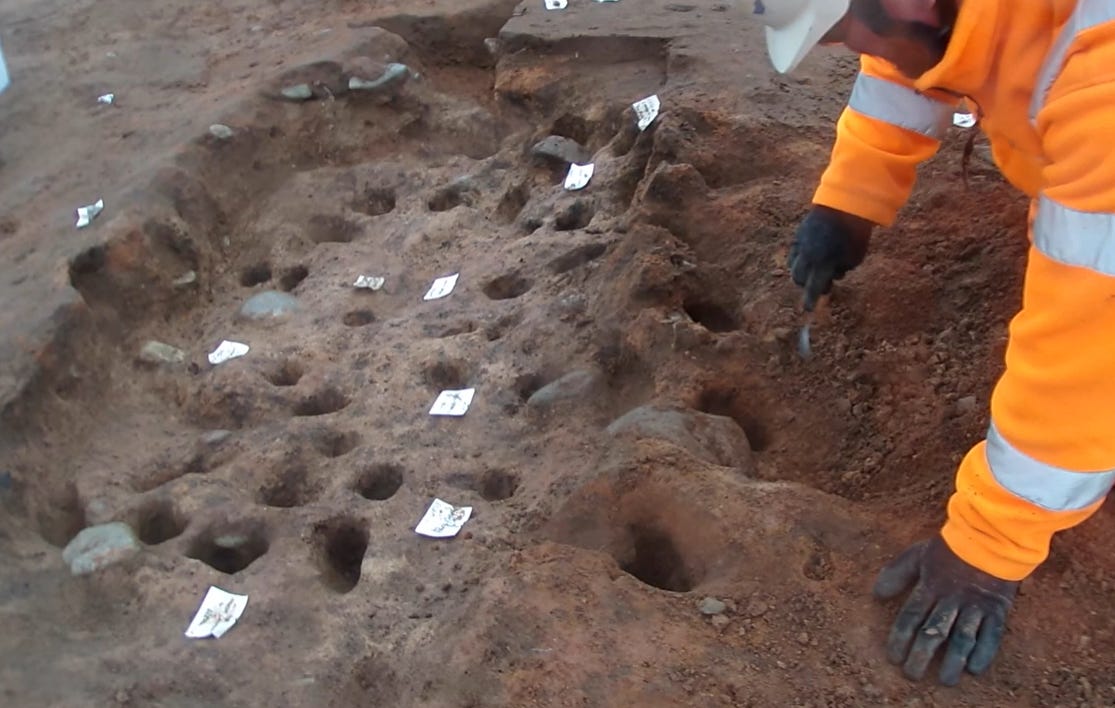
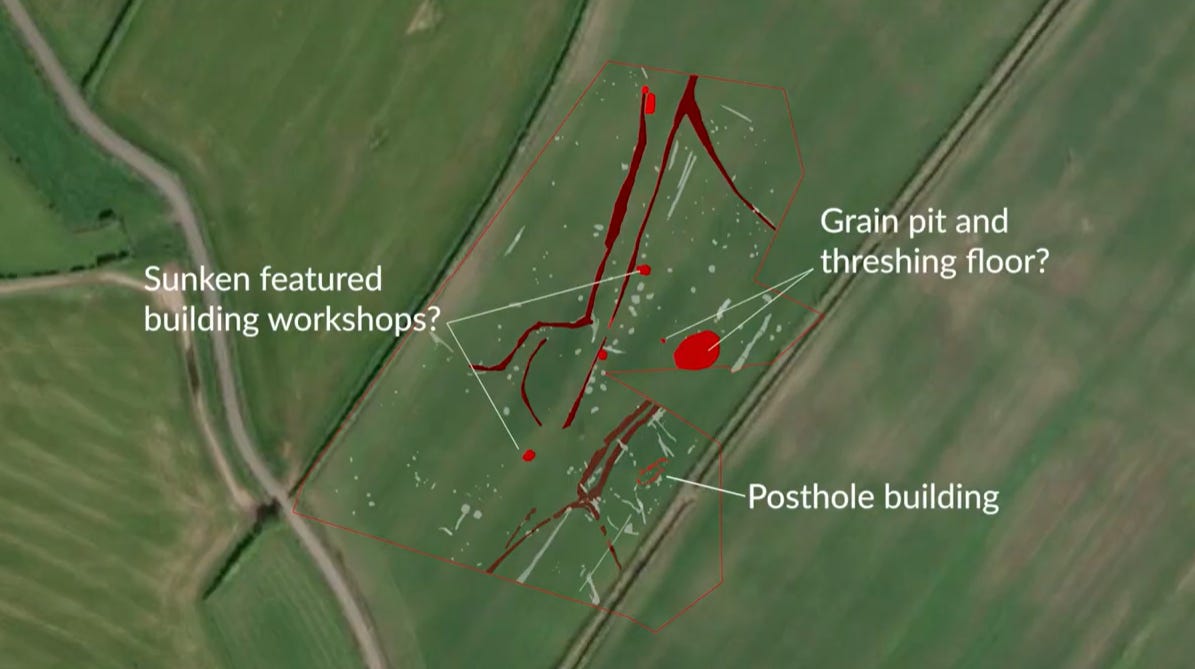
Unearthed during investigations for the A66 project, finds include the remains of a large timber hall-like structure, as evidenced by a series of postholes.
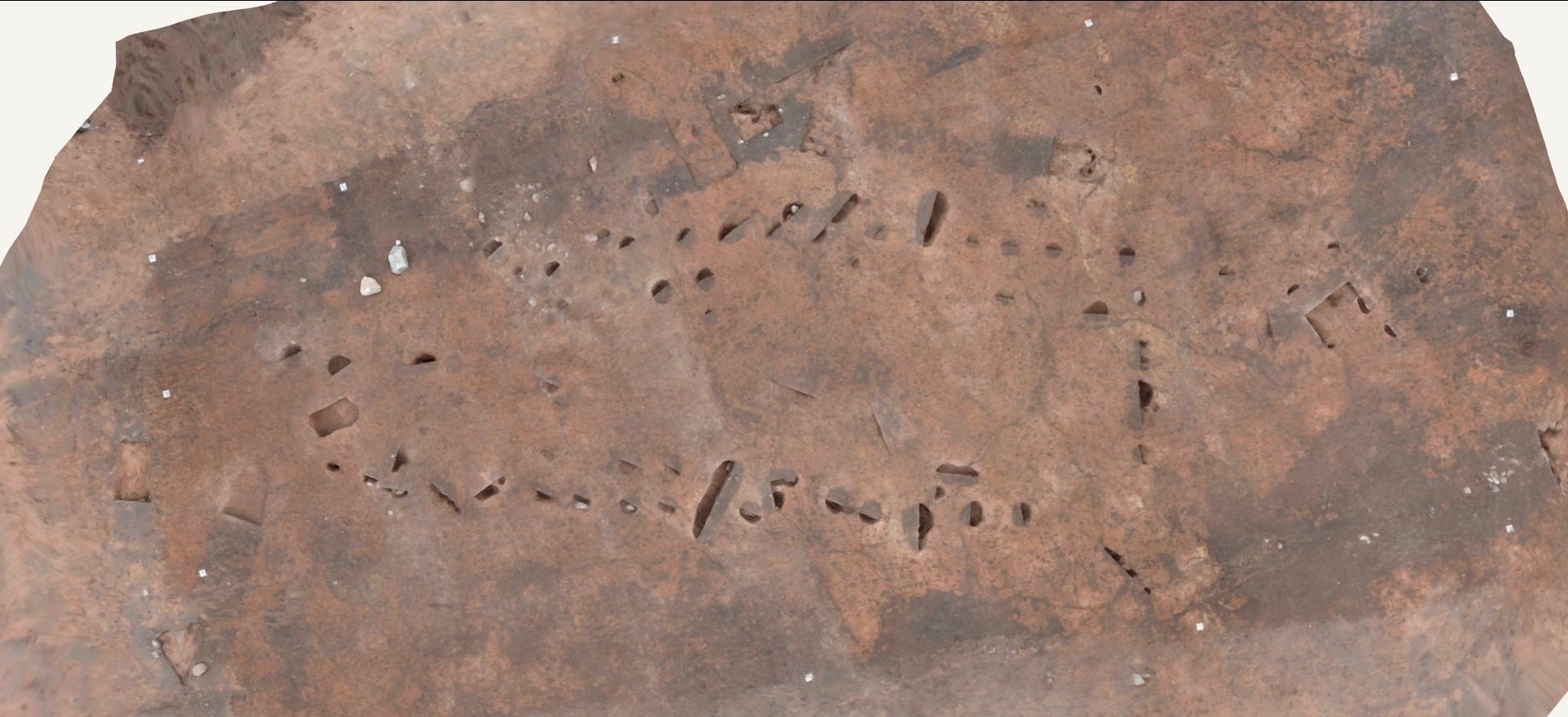
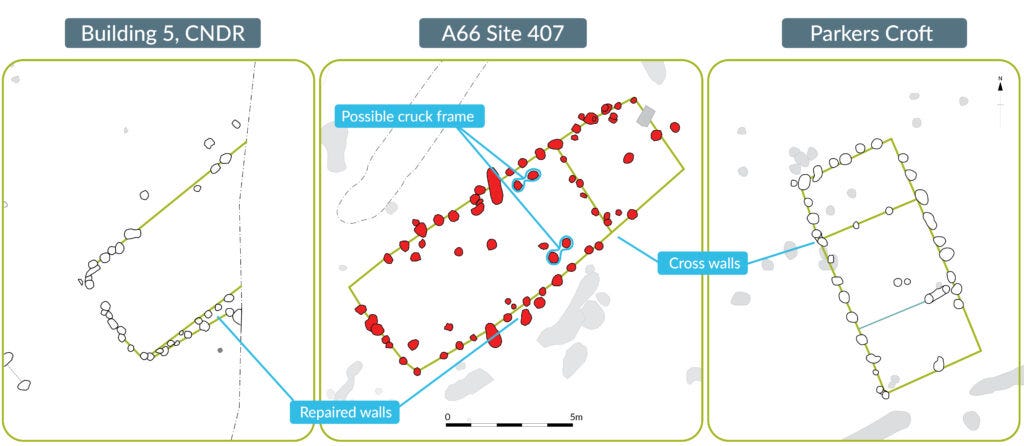
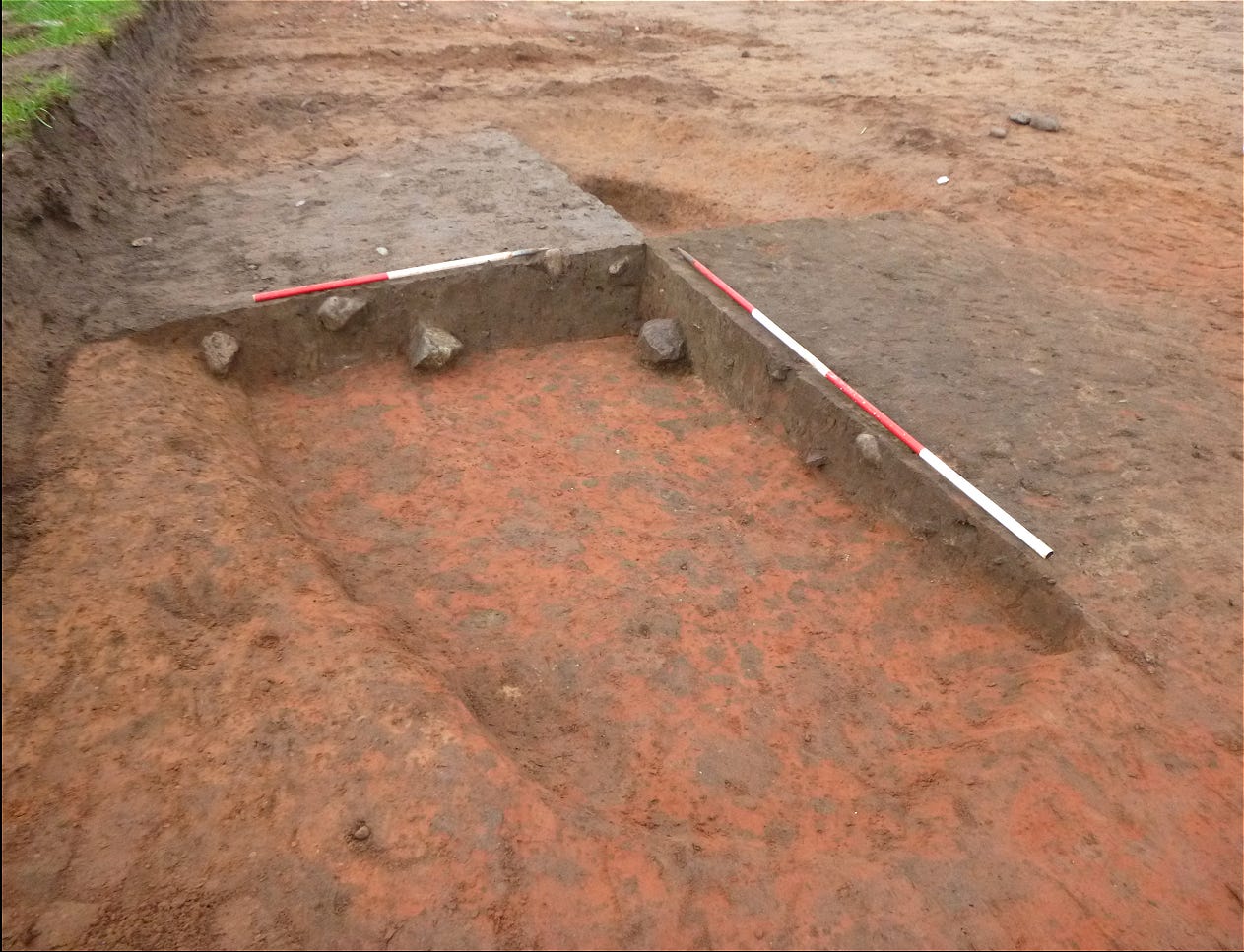
In a rare find for the region, several ‘sunken-featured buildings’, partially subterranean huts often associated with textile production, were also discovered at the site.
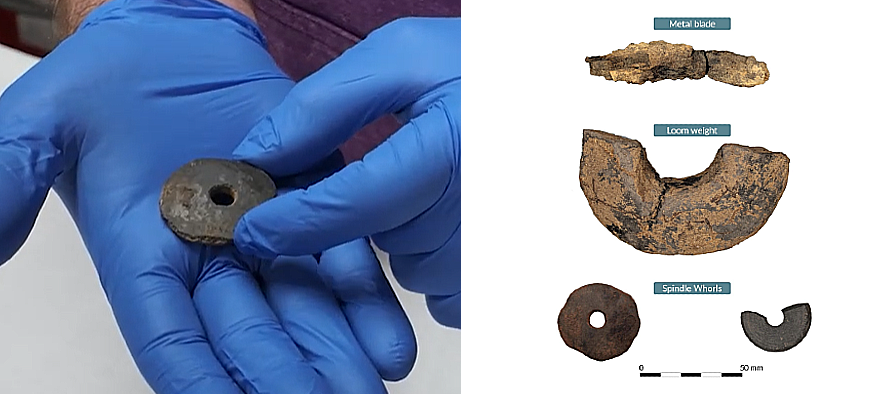
Evidence for the production of fabric was also seen in the material culture via finds of spindle whorls used to spin thread - one of which was made from recycled Roman pottery - and the unfired clay weights used to weigh down the warp threads in upright weaving looms.
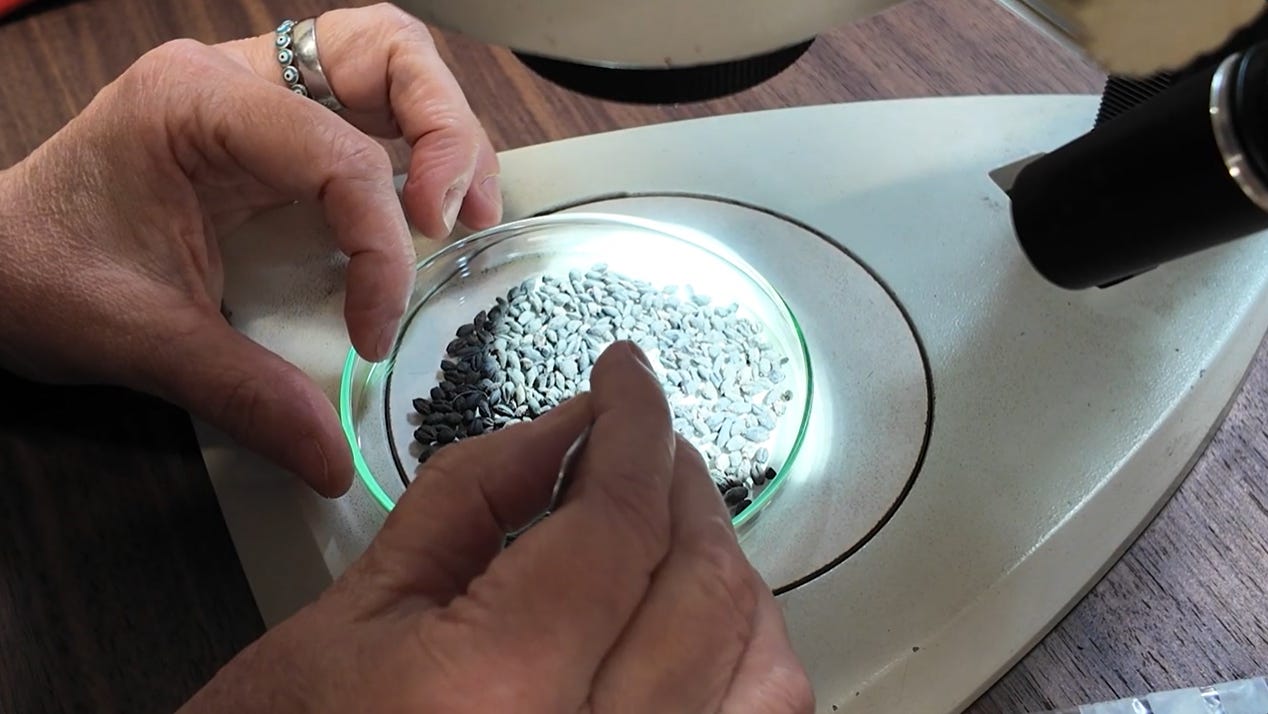
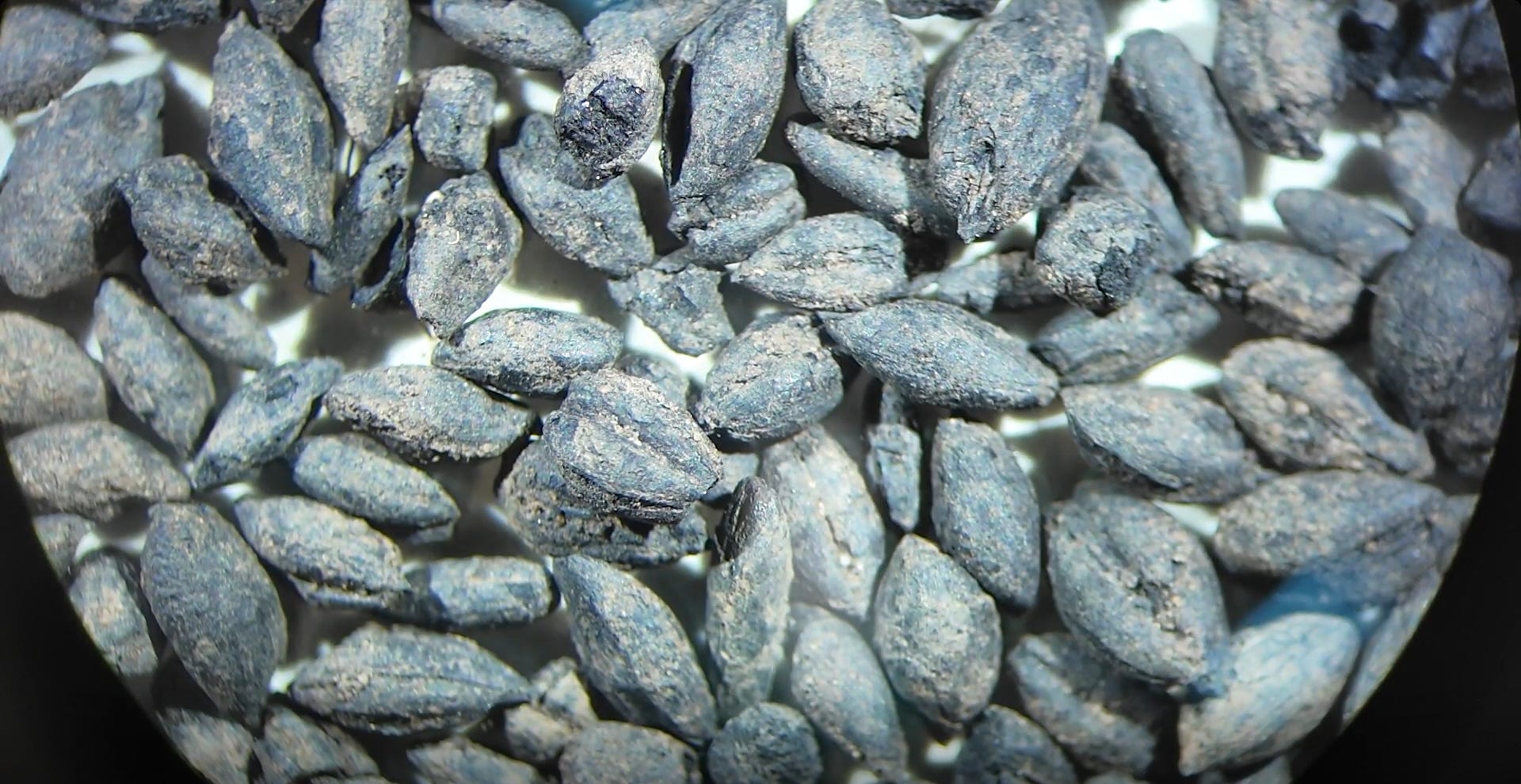
A possible threshing floor and grain pit were also unearthed. The grain pit, which had suffered a fire that preserved the charred contents through carbonisation, largely contained barley alongside some oats. The cereals were, seemingly, held in a storage basket, indicating the primary source of food for the Kirkby Thore farmers.
The discovery of the likely domestic posthole structure amid evidence for small-scale fabric production and the processing of cereal crops suggests the site was a large farm or farming settlement, occupied between c. AD 600 and 900.
Aidan Parker, Site Project Officer for OCA, told TAN:
‘The findings at Kirkby Thore provide an exciting opportunity to learn more about Early Medieval Cumbria. Dating from evaluation works pointed to a 7th-10th century date and the discoveries in the wider excavation have been in keeping with that timeframe.
‘In short, we believe we are looking at an Early-Medieval settlement that sprung up alongside the Roman road of Maiden Way, a link between Roman Kirkby Thore and Hadrian’s Wall.
‘The threshing floor and grain pit highlight specific agricultural practice, while artefactual evidence associated with spinning and weaving shed light on domestic activity.
‘All of this was [indicated] a farmstead in which people lived and worked continuing the occupation of Kirkby Thore from its previous Roman identity’.
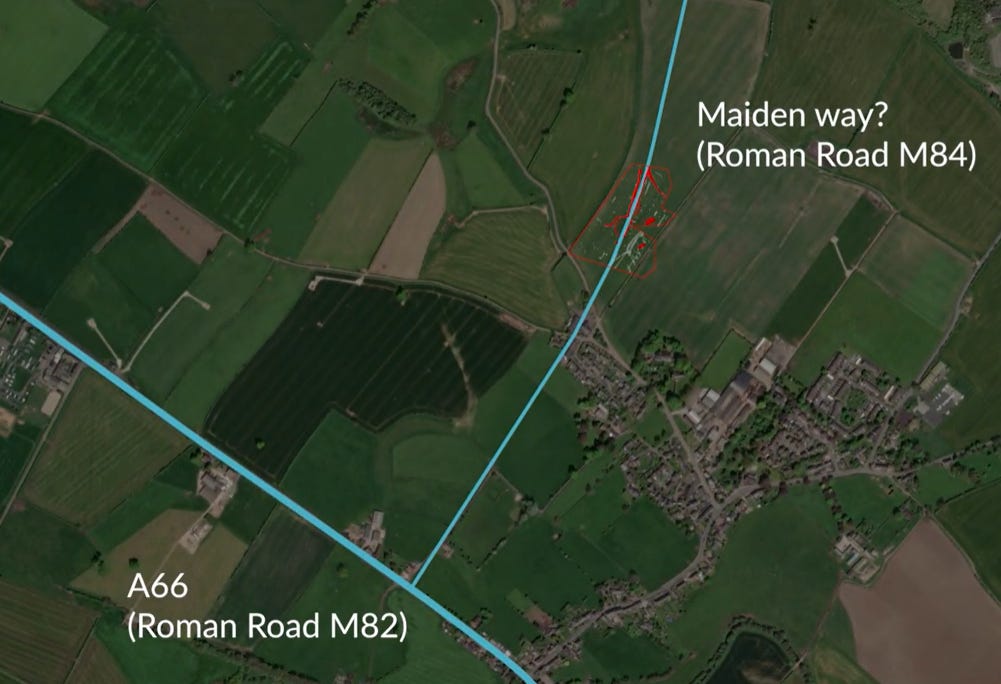
Oxford Cotswold Archaeology: Stripping back Early Medieval Cumbria, by Adam Parsons
OCA YouTube: Early Medieval Settlement Discovered During the A66 Excavations
The Archaeologist’s Notebook would like to thank OCA for their help with this story!

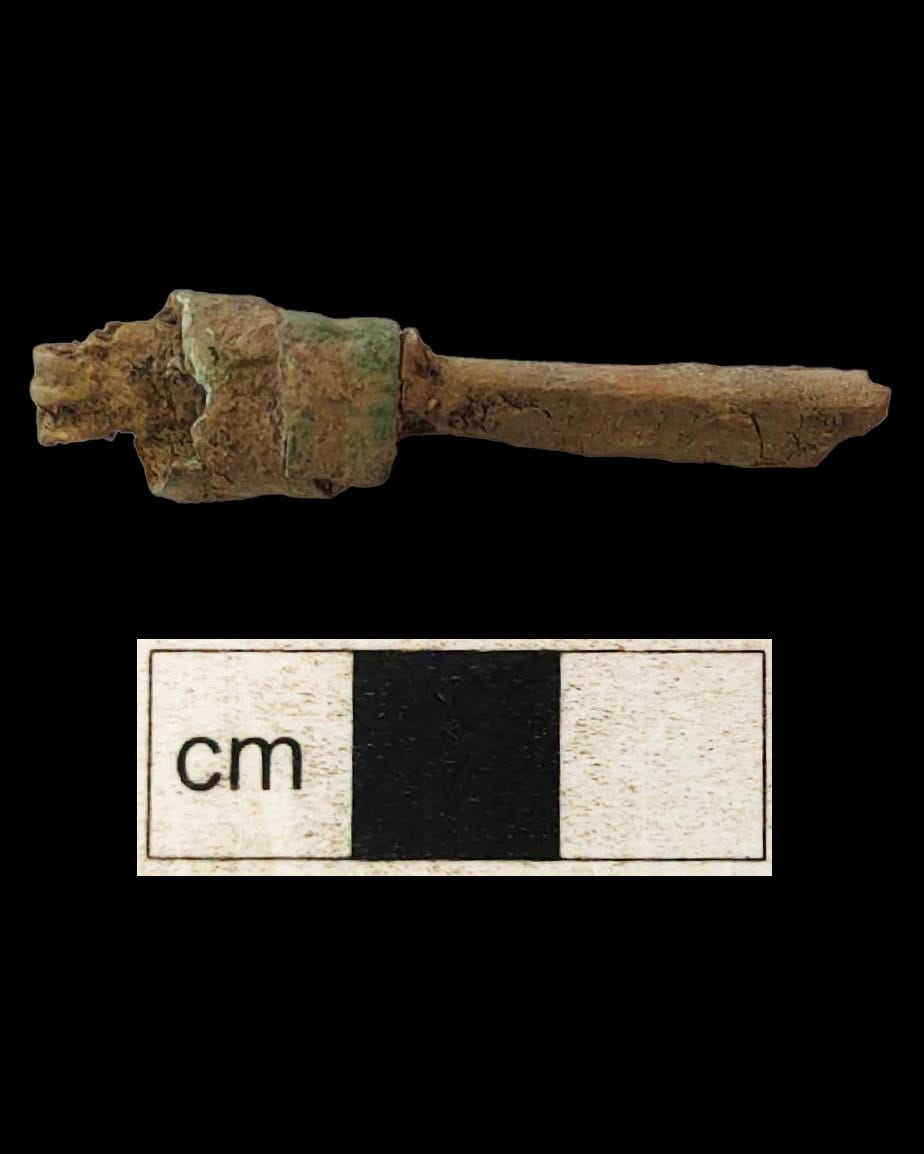
Archaeologists have revealed the probable use of a metal splint to help a valuable Late Medieval hunting bird recover from a broken leg.
Teams from Cotswold Archaeology and the University of Exeter used a CT scanner to investigate the discovery of a sparrowhawk’s leg bone encased in a spiral of copper alloy from the Rookery Farm site in Cambridge.
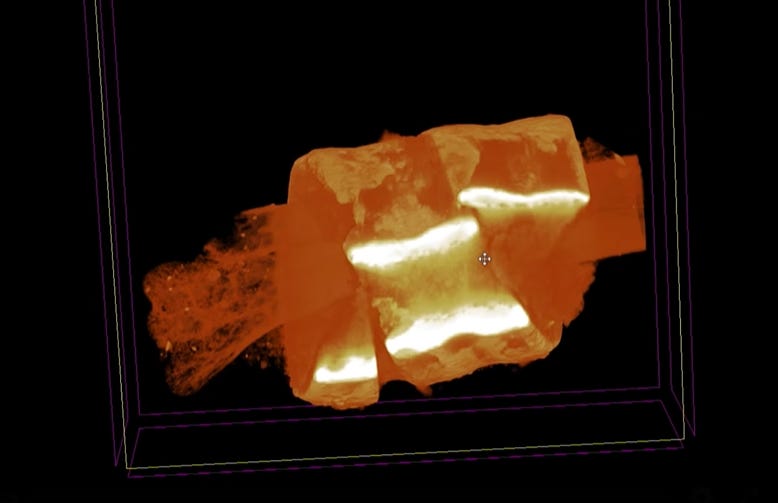
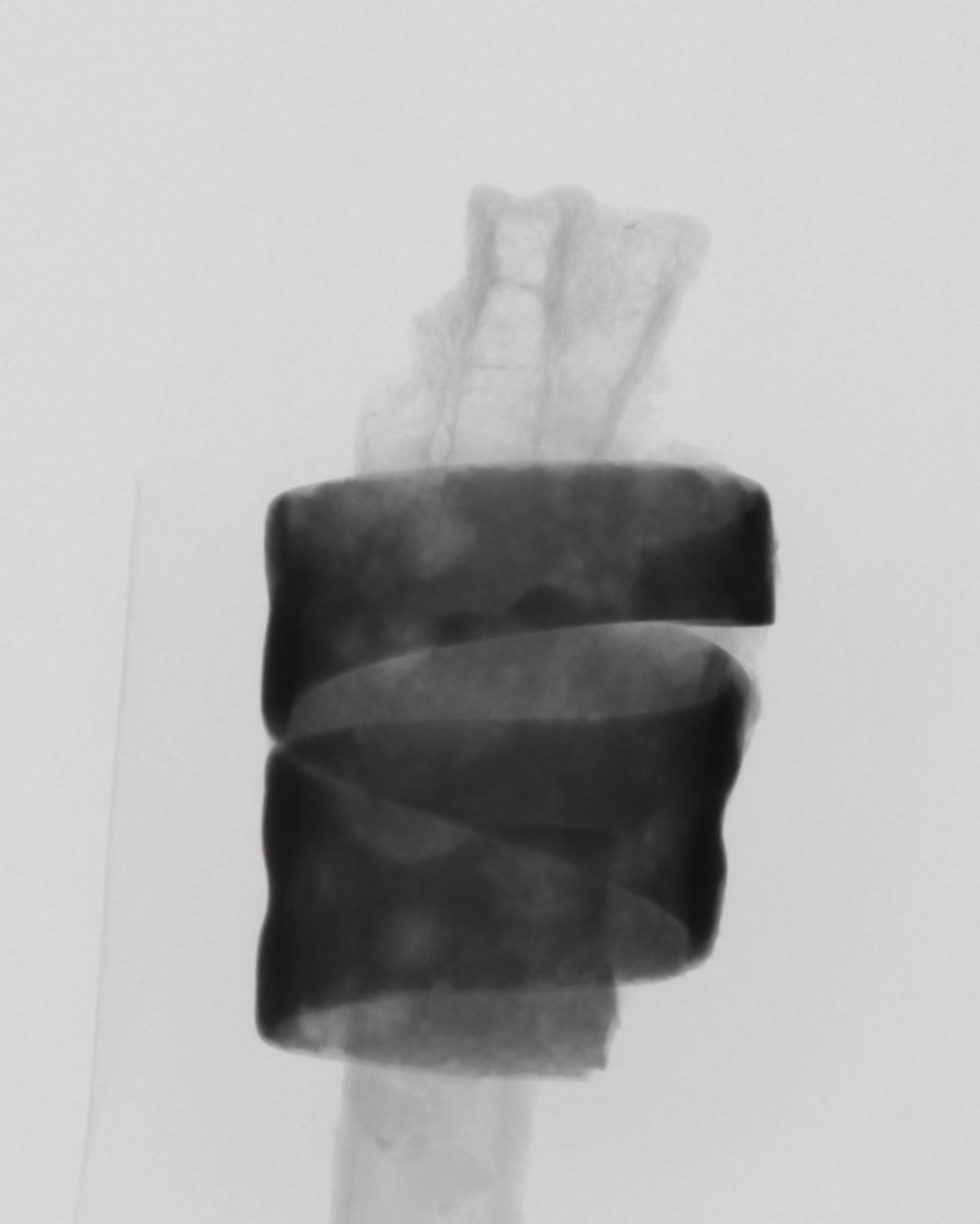
The results of the CT scan demonstrated that the metal wrapping surrounded and protected a leg break that had subsequently healed. Notably, the splints used in modern falconry are similar to the Rookery Farm example, which is either Late Medieval or slightly later, indicating that this find represents one of their antecedents.
Care this expensive and difficult was given to sparrowhawks because they were highly valued when used in the elite sport of hawking, a form of high-status hunting.
Cotswold Archaeology: Facebook

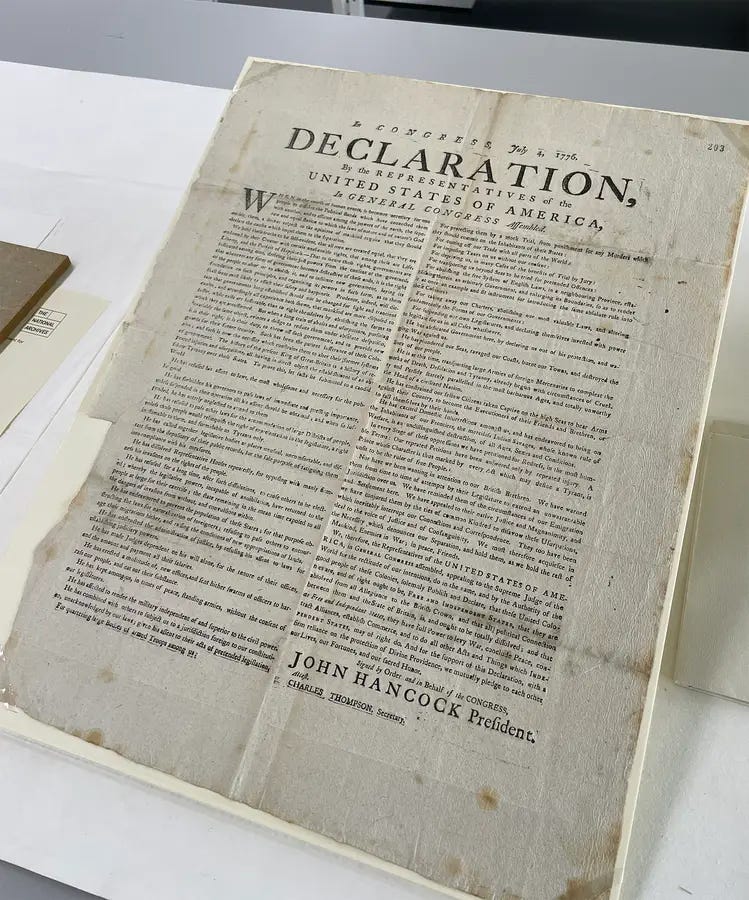
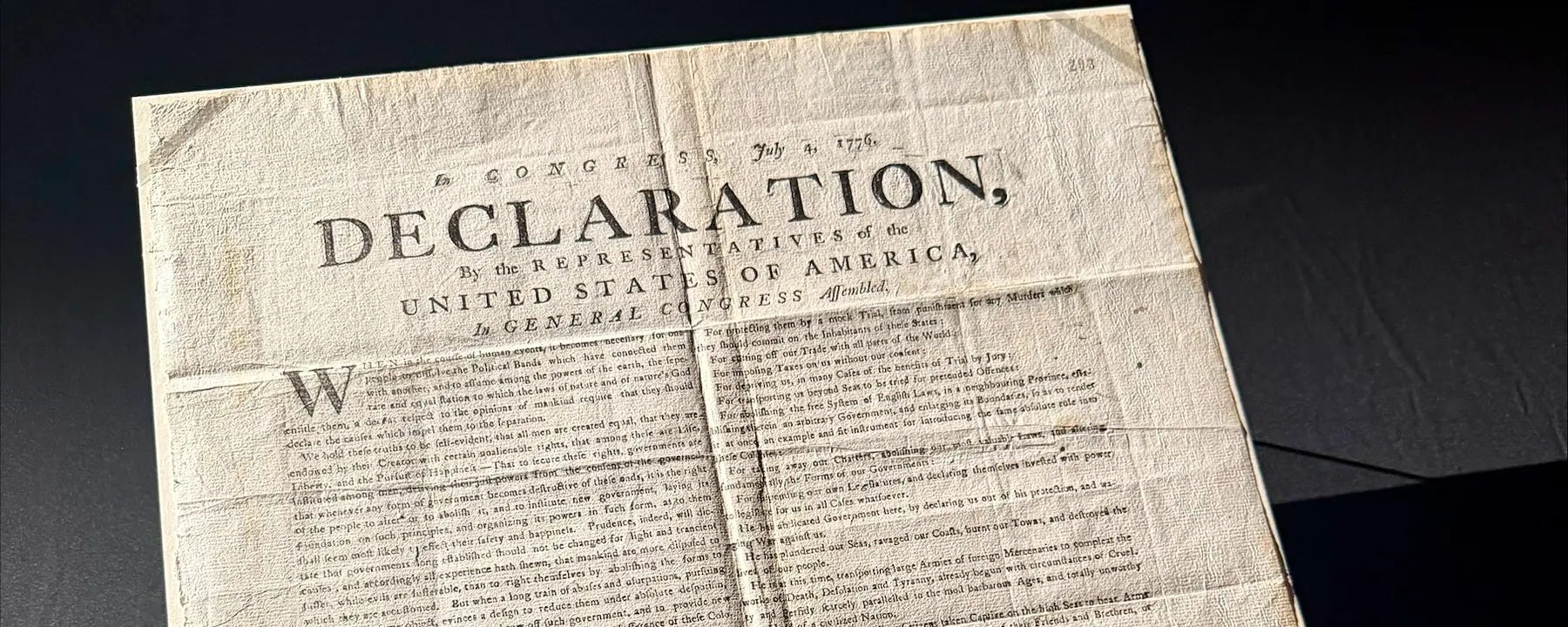
One of only 11 copies of the Declaration of Independence printed in 1776 has been discovered in The National Archives in London.
The copy reached Britain after an American privateer ship - the Dalton - was taken by a Royal Navy vessel off the coast of Portugal on Christmas Eve in 1776.
Notably, the writer of the inventory listed the seized document, somewhat dismissively, as just ‘another paper’, meaning that its presence in the archives was only noticed by volunteer Michael Scurr during a cataloguing project of Revolutionary War-period Navy captains’ papers by The National Archive to mark the United States’ 250th anniversary.
The Declaration copy was printed in New Hampshire between the 16th and 19th of July, 1776, part of attempts to spread the news across North America and beyond.
The National Archives’ Dr Graham Moore, curator of Revolution 250, said:
‘This is one of the rarest forms of the Declaration we know about. It wasn’t meant to be preserved – it was printed quickly and distributed widely.
‘What makes this discovery even more exceptional is that, as the only known copy taken by military action, we know much more about it – thanks to the bureaucratic processes of war.’
The National Archives: Press | Blog: Finding a new copy of the US Declaration of Independence

YouTube
How far back does the history of human warfare truly go? Today, Giselle investigates the oldest weapons ever discovered. From the hunting spears to 70,000-year-old projectile bows, Giselle explains them all!


Comments
Nothing yet. Say the first thing.
Sign in to join the conversation.