
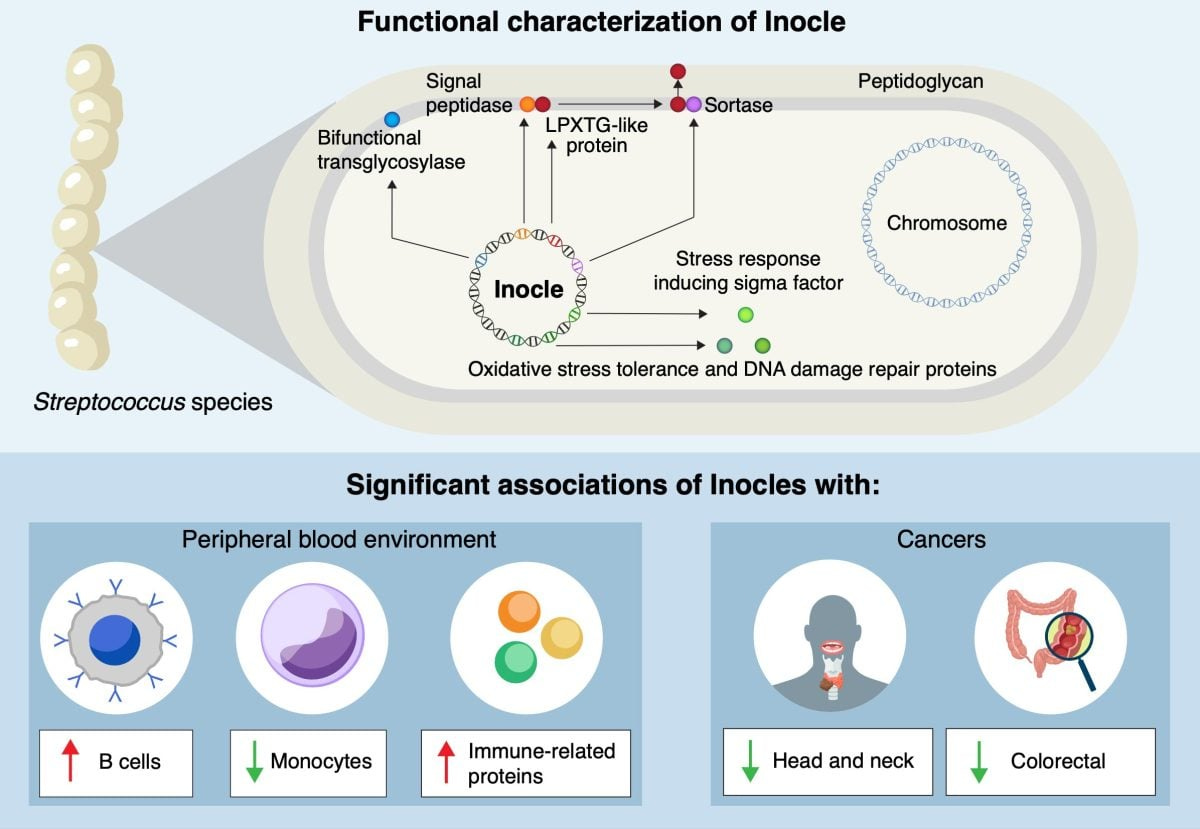
Researchers found huge circles of extrachromosomal DNA—“Inocles”—inside common oral bacteria. They average ~350 kbp and are missed by standard short-read methods. Inocles seem to help microbes adapt to shifting stresses in saliva and gums. Surveys suggest about three-quarters of people host them. Early data hint that changes in inocles may track with some cancers, raising biomarker and microbiome-therapy questions. For teaching A&P, this is a fresh example of how gene content shapes microbial fitness and oral health—perfect for tying DNA structure to real-world host–microbe interactions, and for a quick note on why long-read sequencing matters
Kevin Patton comment→ A WORD DISSECTION™ may be appropriate for the newly coined term inocles. It’s from
Insertion sequence encoded
Oral origin
Circle genomic structure
Large extrachromosomal element
There’s another way to dissect it when inocles refer to glasses that show the wearer internet content (smart glasses): in- internet, -ocles eyes
Read more→ AandP.info/qpg
Thanks for reading The A&P Professor Science & Education Updates! This issue is public so feel free to share it.
In a recent conversation I had with another A&P professor, they stated that anatomy content doesn’t change, so need not be revised as new A&P textbook editions are published. I hear this often from peers—even from professional anatomists. However, that’s not really true—for several reasons.
Evolution happens at varying rates, so some human structures can evolve (at a population level) within a human lifespan. So changes to living anatomy, rare as they are, can happen. But that’s the exception.
Another possible reason to update anatomy content in a textbook is when terminology changes. Considering the still-in-flux trends of eliminating eponyms, dealing with the growing number of students who never learned Roman numerals, use of more sensitive and inclusive language, and various quests to make anatomy terminology uniform, we have a lot of revisions to consider.
However, probably most of the many revisions to anatomy in textbooks result from improved understanding that comes from from additional research or new research techniques. Modern imaging technology, for example, reveals aspects of human anatomy that we never really “saw” before. Tagging organs and tissues with metabolic or genetic markers reveals newly discovered anatomic relationships. Including more subjects in research often reveals that the anatomy represented in textbooks, based on only one or a few specimens using old research strategies, are rare variants, rather than typical structure found in most humans.
Explore some ideas related to the “changing” nature of anatomy concepts in Episode 105 of The A&P Professor podcast, Is Anatomy Finished? | Review of New Discoveries.
To listen to this episode, click on the play button above ⏵ (if present) or this link→ theAPprofessor.org/podcast-episode-105.html
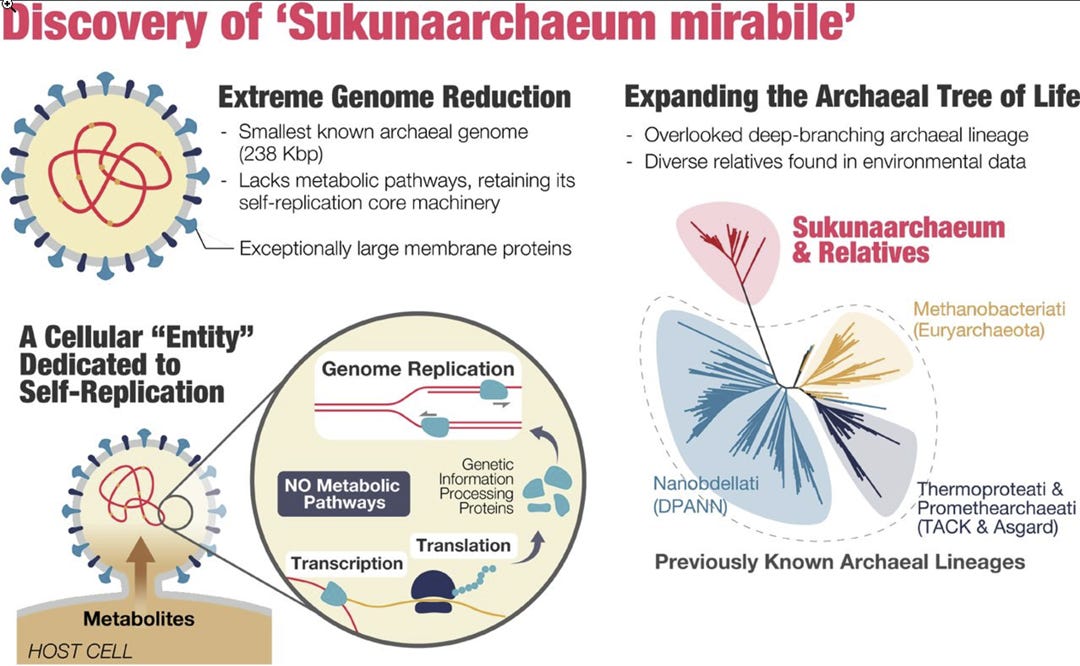
Scientists found an archaeal microbe, Sukunaarchaeum mirabile, living inside a marine dinoflagellate (Citharistes regius). Its genome is only ~238,000 base pairs. It lacks genes for metabolism and leans on its host for basic building blocks—yet it has ribosomes and can replicate, blurring the line between virus and cell. Global sequence scans hint at many relatives. Big takeaway: life’s essentials come in surprising packages.
A&P teaching tip: Use this story when you cover cell structure and metabolism to contrast “what cells need to be alive” with extreme genome reduction—and why definitions of life are tricky.
Read more→ AandP.info/6x4
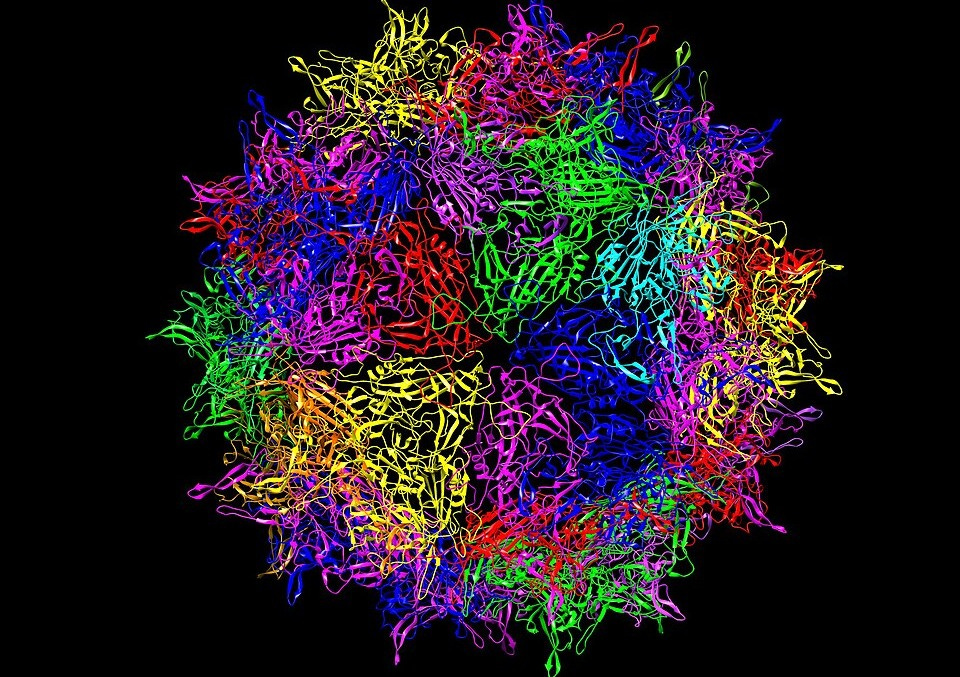
Capsida paused its first-in-human CAP-002 gene-therapy trial for STXBP1 encephalopathy after the first participant died days post-infusion; the IV AAV capsid was designed to cross the blood–brain barrier while detargeting the liver.
A&P teaching tip: use this to link synaptic vesicle biology (STXBP1) to CNS gene-therapy design and safety—why BBB targeting matters, why liver injury is a known risk, and how early-phase trials weigh potential benefit against unknown harms. This is also a good example of the fact that gene-therapy is still in its early infancy.
Read more→ AandP.info/jo0

A randomized study found a custom AI tutor produced more learning in less time than a well-run, active-learning class. Students also felt more engaged and motivated. Check out the article. Read it and weep.
A&P teaching tip: try an AI “study buddy” for A&P problem-solving—pose stepwise prompts that mirror how you coach in class, then have students explain each step back to you.
Read more→ AandP.info/0cs
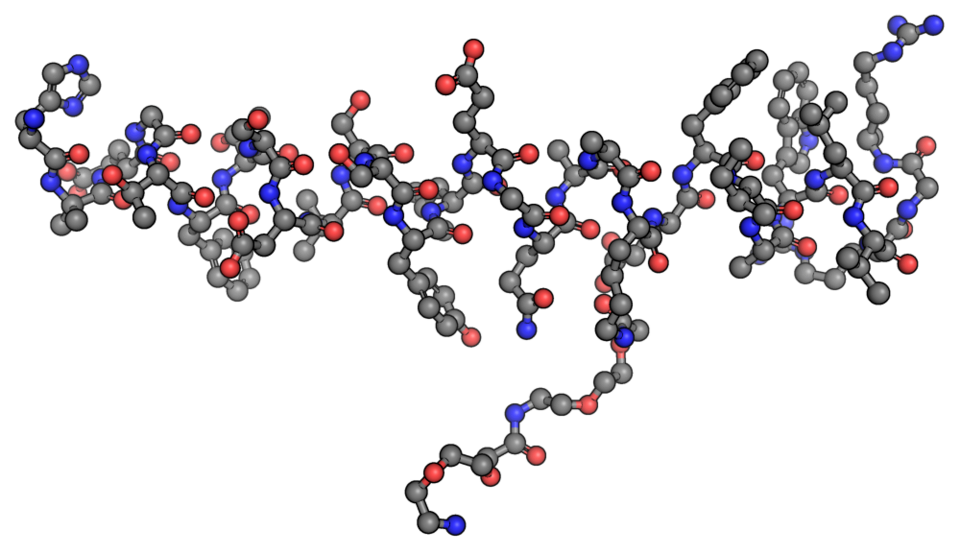
A 64-week NEJM trial reports daily oral semaglutide 25 mg cut body weight ~14% on average vs ~2% with placebo. Coverage notes results rival the injection pending FDA review.
A&P teaching tip: use this to review GLP-1 physiology—how gut-brain signals curb appetite—and compare oral vs injectable delivery constraints.
Read more→ AandP.info/nzz
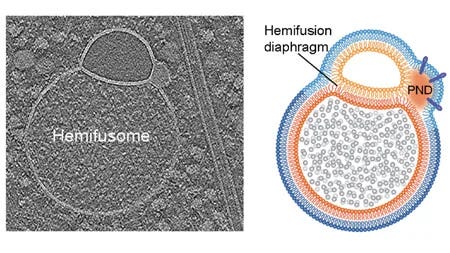
Researchers identified a previously unknown, membrane-bound organelle they call the hemifusome. Early work suggests it helps sort and recycle cellular cargo and may be tied to rare genetic disease.
A&P teaching tip: It’s propably too soon ot add this the organelles list in your course, but the discovery shows that the list is not “finished.” It’s worth a discussion to ask students how a new trafficking compartment could change our models of lysosomes, endosomes, and protein turnover.
Read more→ AandP.info/4ia
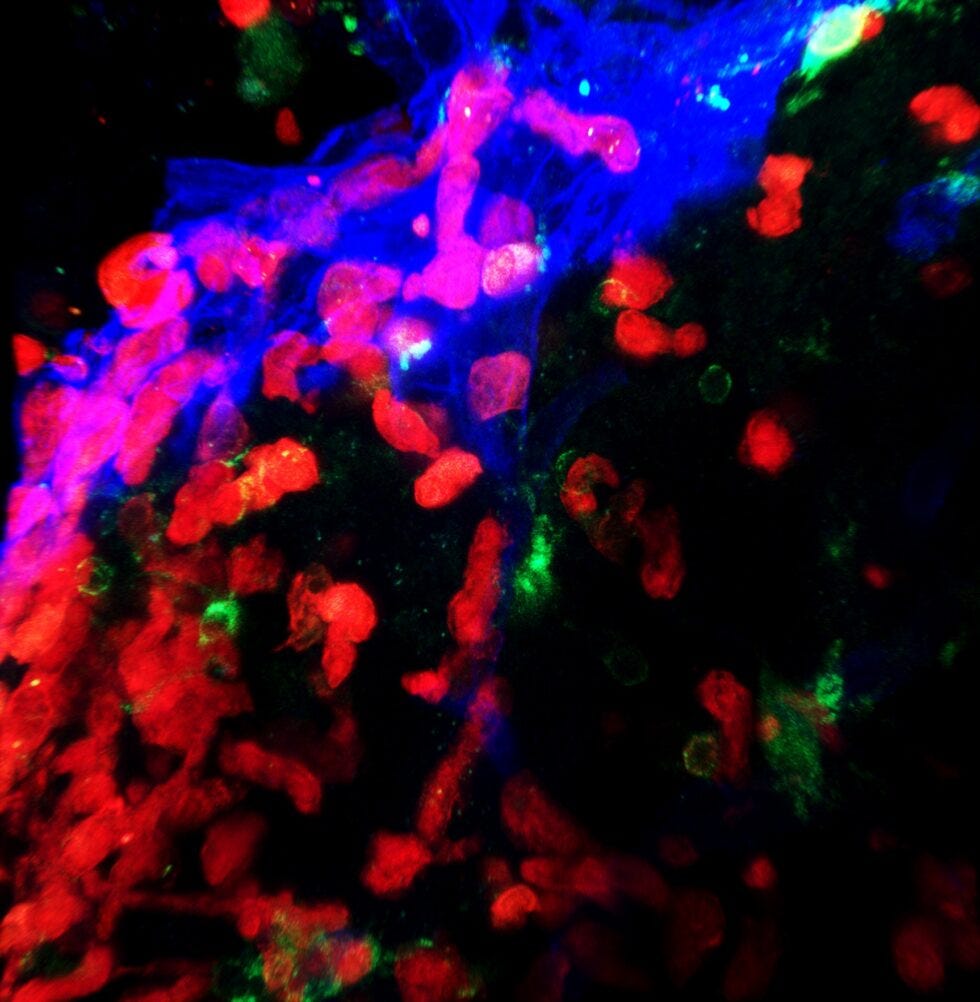
Don’t you love it when a “hidden passage” is discovered? New work identifies the velum interpositum as a route for immune cells moving from blood to meninges and into deep brain regions. This reframes how neuroinflammation may begin and spread. It also hints at new paths for drug delivery to the CNS.
A&P teaching tip: Have students trace blood → meninges → parenchyma pathways and discuss how this “back door” might alter infections, autoimmunity, or targeted therapies.
Kevin Patton comment→ Time for another WORD DISSECTION™!
velum veil or curtain,
interpositum insert or place between
Read more→ AandP.info/2a8
It’s barely begun, but already it’s awesome. The second Virtual Conference of the Human Anatomy & Physiology Society is underway. Today, we had an awesome synchronous Zoom meeting to discuss Dr. Judi Nath’s prerecorded keynote presentation on textbooks. What fun to learn how Judi navigates the surprisingly complex and laborious world of textbook authoring. Tomorrow, Dr. Dee Silverthorn will be helping us process her recorded keynote on competency-based learning. As you may have guessed, the keynotes are all “flipped.”
Wednesday, my flipped keynote will be discussing my pre-recorded audio podcast, The Audible Classroom to discuss the often overlooked set of audio teaching strategies. Later, Kevin Petti will discuss his keynote about the relationship between anatomy and art—a topic in which he is literally a world-renowned expert. Scattered between the keynotes are fun and interactive workshops, posters, games, and lots and lots of networking.
Many of the elements are recorded, so you can go back and review if you are joining us late. But it’s not too late to register!
Read more→ To register or explore, simply go to www.hapsweb.org/conferences-events/conference-hub/virtual/
Comments
Nothing yet. Say the first thing.
Sign in to join the conversation.