
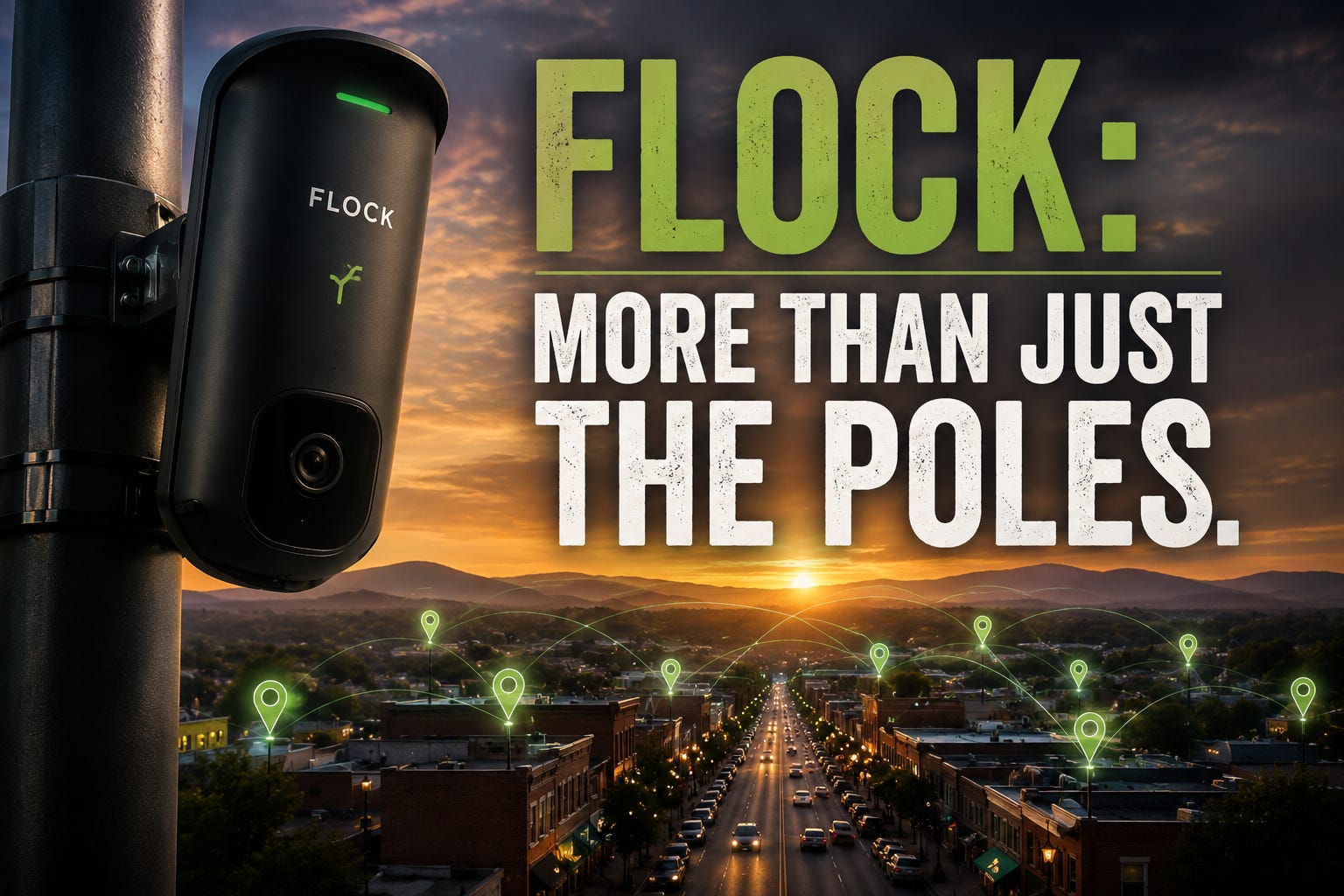
The following was written by Spike @spikesguides on Nitter.
This deep dive into Flock as a company, the surveillance cameras as a whole, and their short and long-term plan are important enough to repost here on Substack.
This writing is not mine.
https://xcancel.com/spikesguides/status/2089144853288395099
“It’s just a traffic camera, right?” “They’re just catching criminals, aren’t they?” “I have nothing to hide!”
Similar statements to these are said daily in person and online when it comes to these systems. Many people are unaware of just what Flock and their competitors do. People do not know how these systems can be misused or what they can actually do now, or in the future. People see the cameras and assume they are just that. Cameras.
In April of 2024 in Toledo, Ohio a Flock camera incorrectly associated Brandon Upchurch’s Dodge Ram with a stolen vehicle, mistaking the number 2 as a 7. The camera sent a real time alert to police officers in the area and a felony traffic stop was initiated. Officers approached Upchurch with weapons drawn and released their canine unit, tearing his arm to shreds. Upchurch was bitten 7 times. He was hospitalized and then jailed, despite officers stating on the body-camera footage that it was a misread plate. Upchurch was only given a settlement of $35,000.
These systems are so much more than just cameras. Flock offers an entire ecosystem to agencies across the United States that make the Snowden leaks look like child’s play. There is a database out there that likely has you on it, and it knows where you go, when you go, and how often you go.
You are being watched.

History.
Flock Safety was founded in 2017 after founder Garrett Langley discovered his neighborhood was dealing with a number of automotive break-ins that went unsolved. Langley had a history building and selling startups and this break-in streak planted the seed that would become Flock Safety. The initial plan was simple, create a cheaper ALPR (automated license plate reader) system that operated off of solar panels that could be sold to HOAs and neighborhoods to crack down on package theft and automotive break-ins. Initially the system operated outside of police control, offering information to them when relevant.
The company was a smash hit. In 2018 they began spreading throughout the metro Atlanta area. By July of the next year, there were over 180,000 homes across 270 cities in 30 different states sporting Flock poles. By attaching themselves to HOAs, Flock was able to bypass the red tape of government, allowing them to rapidly build their base before pivoting onto larger contracts that would require significant investments in lobbying and other governmental costs. Each pole sold for only 2000 dollars a year, significantly less than the competition at the time.
By 2019 Flock signed their first agreement with a police department. The Johns Creek Police Department paid an unknown amount of money to Flock for the privilege to access privately installed Flock cameras in their area.In 2020 Axon, known for their bodycam systems (among other things that will be mentioned later in this piece and future pieces), began a strategic investment into Flock Safety as well as a commercial partnership aimed at selling Flock Safety cameras to police departments. Axon sold Flock cameras with Axon mobile ALPR systems side-by-side to departments across the country.
Since 2020 Flock has undergone 9 rounds of investments. Notable investors include Andreessen Horowitz, Tiger Global, and Peter Thiel’s Founders Fund. In total they raised over 957 million dollars. The company’s valuation ladder has been nothing short of impressive, ballooning from a 4.8 billion dollar valuation in 2024 to 8.4 billion in April of 2026.

How Are These Systems Installed?
A common thread throughout the national narrative relating to Flock cameras (and other, similar systems) is that they are deployed rapidly and done without the consent of any population. They fly under the radar of the citizenry and once these systems are emplaced, they are particularly sticky and troublesome to remove via the wheels of government.In some cases the local government approves of the installation of these systems. Generally what happens is a sheriff or a police department makes a request for a budget increase specifically for these systems and the board approves of it. There is also rumor and debate that some local governments may also be receiving some kind of backroom deal style remittance for approving of these systems, particularly in some high visibility cases, but I am not going to entertain that conjecture here.
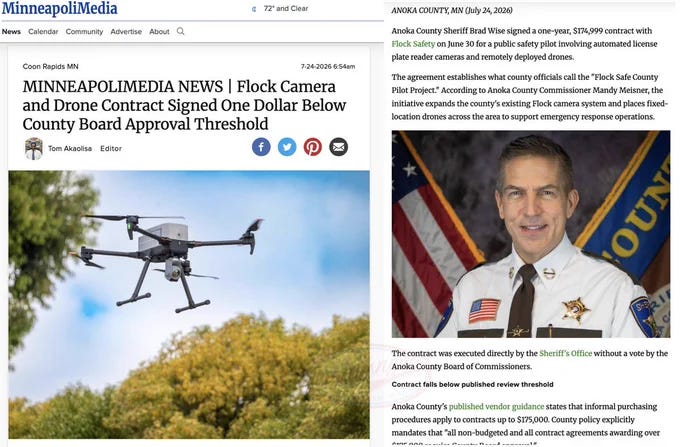
Sometimes the local police or county sheriff is able to entirely circumvent local government and begin implementing systems with their own discretionary budgets. For example, in Anoka county Minnesota, Sheriff Brad Wise was able to (proudly) bypass the county board by spending 1 dollar less than his reporting threshold on Flock products. It should be noted that the county still has those products in place as of the writing of this piece and the contract calls for up to 10 drones and numerous LPR cameras, when pressed on his reasoning, the sheriff reported “national politics.” Brad Wise is not the only sheriff to do this, this is very likely happening in counties across the nation, completely sidestepping any accountability and allowing these systems to be stealth-deployed.
Occasionally Flock, and their competitors, offer free trials or low cost pilot programs for local agencies to test these systems without having to invest in the entire ecosystem. This allows the local government’s debate to no longer be focused on “should these cameras be installed” and instead focused on “should these already functional cameras be removed?” This is precisely what occurred in Isanti county, Minnesota. The public only learned about the trial program after the cameras were emplaced.
Finally there are the cases where the deployment of the cameras is already paid for via federal and state level grants. This eliminates the need to request funding from the county or local government and instead allows these systems to basically just be requested and installed by the agency. Once active, the cost for maintaining the subscription for these systems gets put on the local government and it becomes much harder for them to spend the money on removing them over the lower cost of continuing their use. For example, in Newark Ohio, a state grant allowed a Flock contract to get approved without any competitive bidding or local governmental oversight.
The bigger trend to notice is the subversion involved in these different approaches. At no point is a community voting on this. These systems are being deployed without any citizen approval and their information is added to a national database that can be accessed cross-country by hundreds of thousands, if not millions of government employees. Flock and their ilk have become masters of undermining local government and the rights of the citizenry for profit.
Beginning as a conception to catch porch pirates, Flock has ballooned into a juggernaut in the United States. They are active in 49 states, in over 5000 communities, with estimates as high as 100,000 cameras, all interconnected and easily accessed by law enforcement and governmental entities. They make up a large portion of the nervous system of the Demiurgic System, acting as everpresent eyes. You can drive from one half of the state of New York to the other and have nearly every minute accounted for and logged in their database. All done without any input from the citizenry.
The Flock Camera System.
The Flock system is much more than just the fixed camera on a pole that we often see in the media. Flock, much like Axon, and other companies in the sector, are focused on creating an interconnected ecosystem that communicates with all of their products as well as the products from competitors.
The Basic Unit - The Pole
The most fundamental unit in Flock’s ecosystem is the pole camera. It is the cell that makes up the body that makes up their organism. At first glance it is just a camera on a stick but it is more in-depth than it looks.
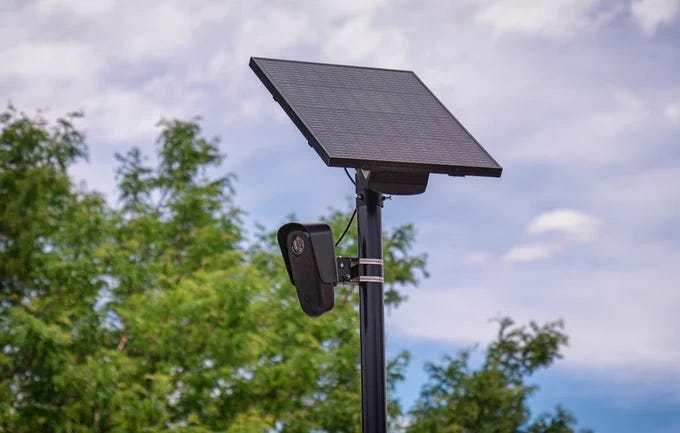
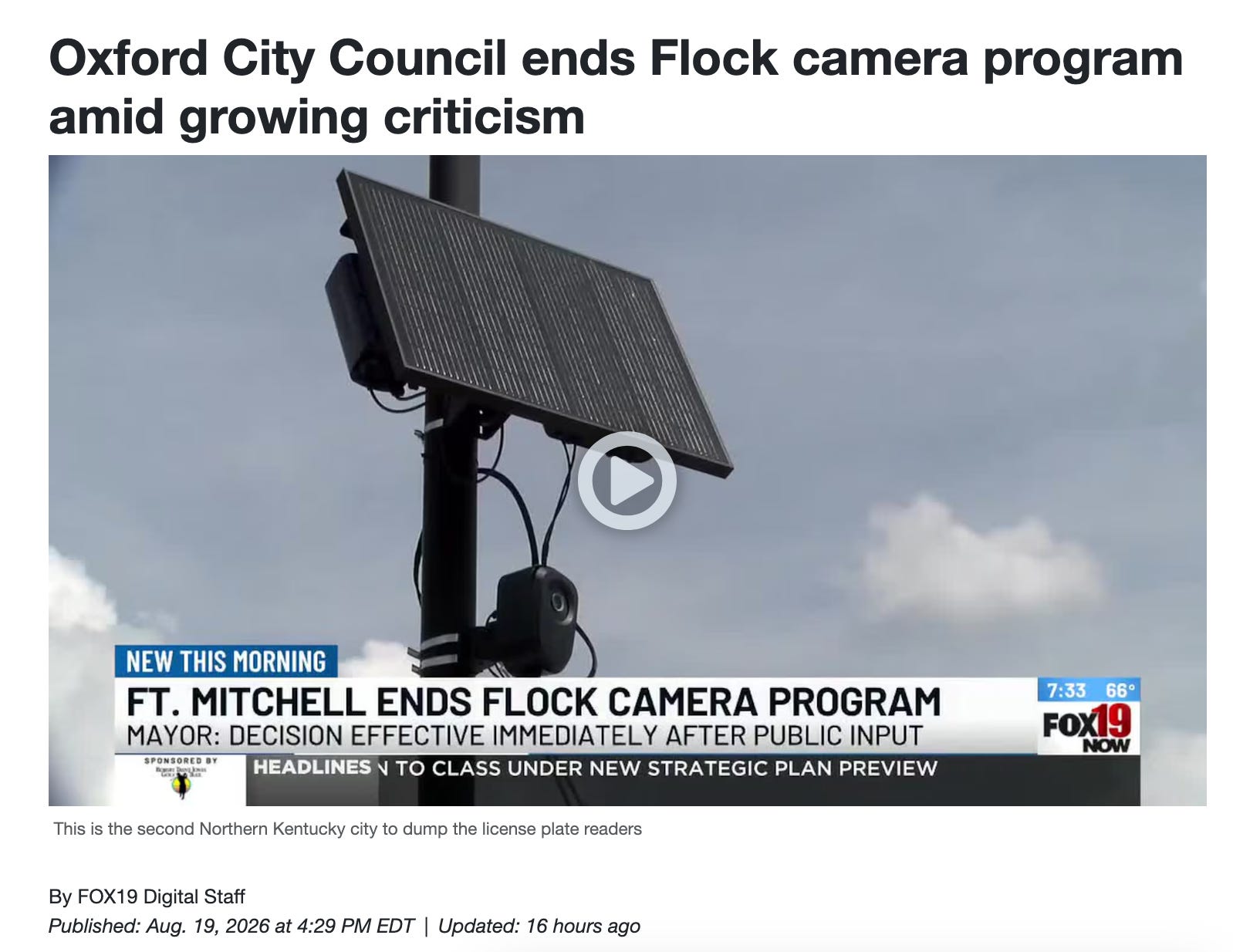
Affixed on top of the pole is a mounted camera, also known internally as a “Falcon” unit. The Falcon is a fixed ALPR camera, designed to identify passing vehicles and plates. The Falcon is the “brains” of the operation. The Falcon performs initial image processing and identification of surveilled subjects before sending it off to the greater system. Attached to the Falcon is a solar panel with a rechargeable battery. Finally there is a cellular modem fixed to the unit, contained within a weather-resistant shell.
These poles are modular. Because they require no connection to civil infrastructure for power or communication, they can be installed virtually anywhere and done rapidly. They can be attached to the traditional aluminum pole that they are often seen standing atop as well as other infrastructure such as utility poles, light poles, traffic infrastructure, buildings, and more.When a vehicle passes a Flock pole the following happens:
1. Vehicle enters the camera’s field of view
2. A photograph is taken. Simultaneously software will isolate the license plate, transcribe it, and identify the state it is from.
3. Computer vision then estimates the vehicle’s make, model, color, body style, and highlight visual characteristics such as dents, cracks, bumper stickers. It also will identify larger vehicle features like racks, trailers, toolboxes, and unusual modifications.
4. Timestamp is generated with date, time, and location noted.
5. Direction of travel is noted.
6. Observation is sent to the Flock’s greater system over their LTE network.
The Flock Ecosystem.
The Flock ecosystem is vast and is growing by the day. Flock, and similar companies, are actively growing their capabilities to sell more products to governments. Although, at its most basic lizard-brain level, the Flock ecosystem is built upon their centralized cloud.
The Centralized Cloud.
The entire Flock System is predicated upon the cloud. The cloud’s original purpose was to serve as the database for their ALPR cameras to send reports to. The database took Falcon data and made it searchable. Investigators needed only to log-in to a portal to access the database The cloud network does not only receive its data from state-owned cameras, but also from private companies, HOAs, and other customers using Flock systems. Private customers can choose to share their camera data with law enforcement, meaning an agency’s effective coverage can extend far beyond the cameras it physically owns. This is done because Flock operates a “private network” that it allows the government to see for a fee, raising substantial Fourth Amendment concerns. Because of the omnipresence of the cameras, police are able to perform more than just a simple check of where a stolen car was driving, they can identify the entire lifestyle and habitual patterns of a citizen. Rather than trailing a suspect, the system can trail everyone in real time.The central Flock Safety Cloud also features custom options for agencies to employ such as vehicle filters, custom “hotlists,” real time alerts, mobile access, and access to the national LPR network.
At first glance one might think that the greater Flock system is a giant cloud-based database that allows police and governmental agencies to access their logs at a moment’s notice without any prior authorization. Unfortunately, the system is much larger than the cameras. Flock is increasingly becoming focused on software sales than hardware. While the base Flock database is still used daily by police, their more active software packages like Nova and FlockOS are becoming increasingly popular.
The Greater Flock System.
Unfortunately, the centralized cloud is not where the system stops. Flock has invested large amounts of time and resources into producing a software layer that seamlessly integrates their data sets, and the data sets from other companies, into real time command and control software, investigative data-fusion layers, DFR (Drone as First Responder) systems, audio detection, and 911 software. Each of these subsystems will have full length write ups in their own right but for now, we are focusing on the macro level.Real Time Command and Control – AKA FlockOS
FlockOS is Flock’s answer to Axon’s Fusus platform. It is a real time command-and-control layer allowing agencies to see real-time camera feeds, CAD (computer aided dispatch) alerts, drone feeds, weather, and all other available intelligence feeds the department may have at its fingertips. It is a modular platform that allows agencies to merge everything into one feed, even if it comes from other brands, as well as access to private feeds on the different networks (such as an HOA with Flock cameras). There is active support for Genetec, Motorola/Avigilon, Mark43, Axon Fleet, ShotSpotter, and Skydio Drones. The goal of FlockOS is to create a nervous system that connects the disparate senses around the agency’s area, as well as allow connectivity to other agencies.
Investigative Data-Fusion Layers – AKA Flock Nova
Flock Nova performs cross-database research, collapsing previously separate RMS, CAD, LPR, jail, public-record, OSINT, and authorized interagency datasets into one searchable interface. An agency can put in a query for a name and receive not only their background in their area, but their background nationwide. Nova can create heatmaps of suspects, showing locations frequented and times of day (based on LPR data), along with all publicly available information relating to the suspect – name, address, marital status, vehicles owned, arrests, and more, drawing from other agencies, governmental entities, and even some private sources. If FlockOS is the nerve center, Flock Nova is the frontal lobe, processing all the information and sorting it.
DFR Systems – AKA Flock DFR
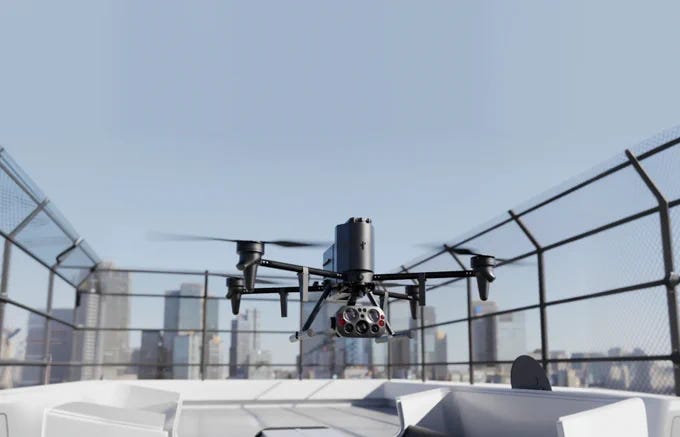
Flock DFR operates similarly to other DFR systems. Multiple drone units are dispersed throughout the agency’s area, parked on rooftops, usually fire and police departments, and they are then piloted or commanded to move to different locations based on 911 calls, LPR hits, sound detection alerts, and in the case of some of their competitors preprogrammed patrols. DFR systems feature HD imagery with both night vision and thermal optics with the ability to track individual vehicles or personnel autonomously, with real time autonomous flight. These drones can travel as fast as 60 mph and reportedly can read a license plate at 2000 feet. These drones can see with extreme precision. Similar drone systems from other companies can also be programmed to patrol at specific intervals, fully autonomously. DFR systems are designed to activate instantly and have an “eye in the sky” for a call within minutes, ideally before an officer arrives on scene as well as serve as autonomous surveillance platforms.
Sound Detection Systems – AKA Flock Audio Detection
Flock Audio Detection serves as their own take on the classic ShotSpotter system where roadside and public space acoustic sensors are placed strategically throughout the agency’s area. These systems are trained on hundreds of thousands of sounds and detect when there is gunfire, fireworks, and car accidents. Unlike ShotSpotter that behaves as a separate system, the Flock Audio Detection system can be the trigger for Flock camera systems and DFR systems to activate without human intervention.
911 Software – AKA Flock911
Flock911 is a dispatch-information layer connecting 911 caller information to patrol officers, real time command and control operators, and DFR pilots. Rather than waiting for a dispatcher to issue CAD notes, Flock911 strives to try and relay the information in real time to the agency and the rest of the ecosystem. In theory, this means the call itself can be what triggers the entire network. The call is made in a location (or a location is reported), and this triggers all nearby video and LPR systems in the area to begin relaying information in real time to the real time command and control center.
Ecosystem Conclusion.
The Flock ecosystem is a cold, autonomous machine that not only operates as extended eyes and ears of the agency that employs them, but they serve as passive surveillance platforms that indiscriminately target the entire population. Every facet of the ecosystem serves as a new organ for data collection or as a neural pathway to funnel information into another system. It conjures up scenes from a science fiction novel from Philip K. Dick or films like Minority Report. An omnipresent watcher, an electric brain watching everyone at all times.
Search and Identification Capabilities.
It’s easy to lose track of everything that these systems can monitor because their breadth is so wide. From the information space, to audio detection software, the sky is literally the limit with these autonomous systems. It feels like these systems are already omnipresent and omnipotent. Thankfully, these systems have yet to reach their full potential, unfortunately that means things can get much worse. Before we can establish where we are going, we need to first lay out everything that the systems can presently monitor beyond just the raw data streams.
Plate and Vehicle Information.
The system currently can read license plates and return matching historical observations with timestamps for each trigger. They can know where the plate was, the direction of travel, the make/model of the vehicle that it is on, as well as information relating to vehicle condition and aesthetics. They can also operate on partial plate information. The system can extract a partial plate and run it against the vehicle’s make/model and other identifying features to identify the vehicle. Plates can also be inserted into a hotlist and flagged when identified by LPRs, alerting users.
In essence, the system can know where a vehicle has been or currently is at any time of day.
AI Assisted Search.
Agencies can make use of Flock’s AI assisted search using natural-language queries. An investigator can describe a vehicle or person using ordinary language and the system will begin searching using an LLM style search. AI search goes beyond just plates and vehicles, allowing searches across supported video and LPR data. This includes vehicles and individuals based on visible characteristics captured by those systems.
Location and Movement Reconstruction.
Through the use of the LPR network and the rest of the Flock ecosystem, agencies can effectively map a subject’s entire life without the use of GPS tracking (which often requires a warrant). Camera hits can identify locations where someone is traveling or parking (sometimes even seeing them park in their own driveways), when scaled-up to a cross-jurisdictional system like Flock has, one cannot escape the network. One can drive from San Francisco to New York City and have substantial portions of the journey fully accounted for and timestamped.
Pattern and Lifestyle Analysis.
Humans are creatures of habit and because of that, these autonomous systems can identify the habits of individuals. They can make inferences relating to workplace, family connections, family relationships, business relationships, shopping habits, or really any recurring destination. They identify time-of-day patterns and can highlight when someone is behaving in a way that is outside of their usual pattern. They also make note of when subjects are near specific locations such as churches, political meetings, medical facilities, gun ranges, hotels, union halls, protests, or any other potentially sensitive or revealing locations. Travel records are a privacy breach but pattern analysis like this would make the Stasi blush.
Conclusion.
This is just where the system is at today. These companies often brag about where they are heading in the next 2, 5, and 10 years from now. If you feel uncomfortable with their capabilities already, these systems are only going to become more powerful in the near future.
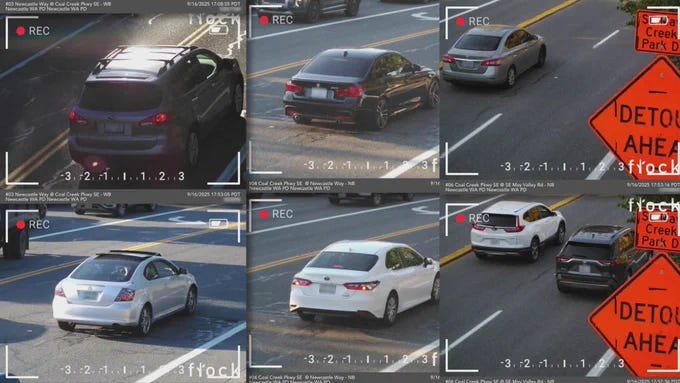
Where the System is Heading.
As AI systems become more powerful and hardware becomes more effective, Flock and their compatriots are going to expand the capabilities of their products to produce more sales. Unfortunately, that means they are going to become even more expansive and subversive. It should be noted first that these companies are quite secretive about the features they are actively working on and often do not make them publicly known, instead forcing the public to make forecasts based on technological trends. That is what this section focuses on.
As established in the ecosystem section, Flock is focused on fusion. The current goal is to create a family of products that can work together in conjunction to create more complete intelligence pictures. They already have LPR, video, CAD, drones, public records, sound, and 911 dispatch streams available. The goal next is to integrate with other intelligence vendors or create similar systems. This means new products in the ecosystem that can intercept communications, geolocate subjects, social media monitoring, digital evidence collection, and use of OSINT data sources to identify and generate threat profiles on individuals, groups, and locations.
Flock, and their competitors, are focused as well on their existing products becoming more powerful by selling physical upgrades or upgraded service plans to their existing customer base. They already feature LLM driven AI search functions for major visual identifiers on humans (tattoos, scars, etc) but the current interest is driven towards more subtle data streams, specifically biometrics. Flock claims they are “not planning” facial recognition upgrades at this time but the technology is already existing and implementation would be relatively easy to add. On top of facial recognition technology is gait identification technology, identifying someone based on how they walk. There is also speculation that these firms may be looking into iris identification algorithms and high resolution cameras that can clearly see them. If implemented, Flock would be able to know who everyone on their camera feeds is without needing to see a license. Even if the subjects wore masks. Even if the subjects had rocks in their shoes. The goal is to create so many undeniable avenues of data that even if one or two are missing, the subject is identified.Beyond bodies, there are forecasts that the industry is also branching into cell device identification. Police departments already use cell-site simulators to locate device and identify their owners by impersonating a cell tower. These devices can be seamlessly integrated into the Flock ecosystem and serve as another identifier that can sit next to a Flock LPR, confirming the identities of those inside of a vehicle.
Companies like Penlink already market that they can gather real time collection of phone calls, text messages, and web activity with their investigative software. The next logical step includes branching out into commercial data streams, that is to say, data brokers. Data brokers have been used by government agencies for years, it has been a severe source of privacy violations but up until recently, was generally done only during serious investigations. Autonomous systems will allow it to be done instantly and on anyone.
Unfortunately, things don’t stop there and they only get more and more personal. Financial transactions, predictive analysis (identifying what they THINK you will do next based on how you talk and act online and in person), persistent autonomous monitoring and modeling, full agentic AI investigations, fully autonomous tasking.
The end state is a future where everyone is under a microscope at all times. Privacy does not exist. Proactive policing stops being a policy of promoting peace in neighborhoods but becomes no-knock warrants on anyone the state deems a potential threat in the future.
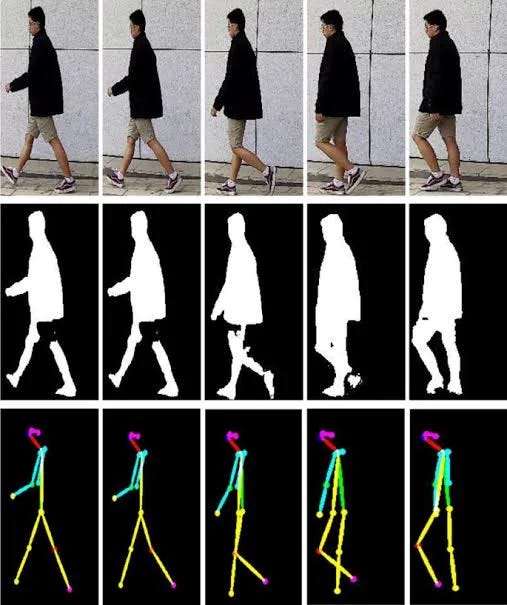
Why should I care if they can do all of that?
Human history is littered with the stories of governments gaining more power and abusing it every step of the way. Without trying to sound like an anarchist, I want to discuss the nature of the state. The state behaves like any Darwinian creature. It wants to protect itself, feed itself, and reproduce. Following the order in reverse, the state reproduces by growing its authority and powers. Government agencies grow in responsibilities, grow in personnel, and they attempt to exert more control. The state then feeds and sustains itself with our tax money, that is quite self-explanatory. Finally, the state protects itself with law enforcement and the military.
As the state grows and exerts more control, it becomes more focused on protecting itself from a population that may not like the actions it is taking and in turn. For example, in East Germany, the Stasi (secret police) kept in-depth surveillance files on approximately 1 in 3 citizens. They kept extensive facial recognition databases, logs of people’s life, and a network of operatives and informants that kept their eyes and ears tuned into the people. It is estimated that in their 39 years of operation, the Stasi arrested 250,000 citizens.Flash forward to today and the Western world is full of expanding states. The last decade has seen a radical shift in both left- and right-wing politics. Both sides have become obsessed with growing the state in their own way, expanding the police state, and prosecuting their enemies. This coupled with the growth and capability of the surveillance state threatens to create a society more afraid and watched than even the Stasi of East Germany could ever dream of creating.
This is all to say that this is setting the stage for a future that is very dark. One where we may not even see privacy in our own homes. This is well beyond “ur phone spies on u bro” this is total information domination. It begins with catching porch pirates and it ends with dissidents being arrested for attending a protest, holding the wrong views, for having the wrong connections, and more. Citizens stop being citizens and they become subjects. Someone to be seen with suspicion. A number with a pattern that is algorithmically studied and kept under constant surveillance. All the while, the companies that make and run these platforms rake in seemingly infinite amounts of taxpayer money.

What Can Be Done?
Thankfully, we are not finished and the future is not certain doom. The bad news is that it is an uphill battle to remove these cameras. The answer isn’t going to be found in taking a Sawzall to your nearest aluminum pole, either. Every legal avenue must be exhausted. These systems were put in place via subversion and legal knowledge, the best chance of removing them is from doing the same thing in reverse. A camera that is cut down is usually replaced. A camera repeatedly cut down is put in a more secure location that costs even more to implement. The United States government has more money (and money printers) than there are Sawzall blades.
Rather than getting physical, the current best option is to follow the playbook of the American left. The left in America has focused on grassroots campaigns, local government pressures, legislation pressures, and even litigation to get their way. That does mean that you need to put in effort in some form. You can’t slacktivist your way out of getting rid of these cameras. You need to be a proverbial nuisance.Local governments respond well to large groups attending local meetings, especially when they are very upset groups who make their attendance known to local media or go viral on social media. Pressure can be applied to city and county governments to decline contracts, disable national sharing, shortening retention periods, or remov cameras entirely.
Large bipartisan grassroots campaigns are something every middling politician loves to see. This is because if they hitch themselves to the cause, they see a greater chance of reelection in their eyes. This is all to say that if a popular movement is started and politicians are pressed on it, they are more likely to agree with your point of view over a few angry letters. Politicians are also very partisan, and appeals can be made to their views. For instance, a left-wing politician may respond more to concerns about Flock (and similar systems) working with ICE.
If movements become large enough, they can begin litigation. Something that is VERY well employed by the left and the gun rights groups in the US. Constitutional challenges can be applied and sent out across the board, targeting city, county, state, and national level actors.
Finally there is the cultural shift. To bring up gun rights again, in the 1990s it was generally seen as borderline extreme to want to carry a gun in public and many states made it very difficult to obtain one, at the same time there was little opposition to things like the National Firearms Act and gun control wasn’t as dirty of a word. Fast forward to today and most states are now “SHALL ISSUE” conceal carry states, the NFA is on life support, and assault weapon bans are vehemently fought. This is not to draw a partisan crowd or say the opposition is wrong, it is to highlight that shifting the culture influences how governments act. If Flock and other surveillance capitalism firms are given the same treatment as the third rail, their support will dry up naturally with time. This doesn’t mean that you can just bitch about it on Twitter, though. Culture shifts happen naturally and gradually along with activism.
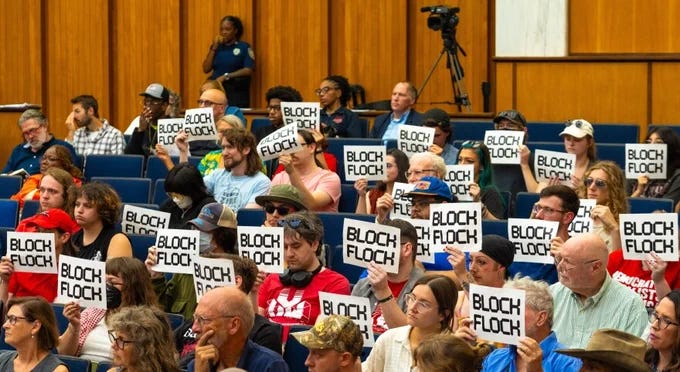
Closing Thoughts.
It’s so much more than just a pole with a camera. Flock is a case study for the greater demiurgic system that is growing around us. The goal isn’t just license plate readers. The goal is a system that is omnipresent, omniscient, and omnipotent. They want a god who will keep people in line.
Like all human ideas, it started off innocently enough, wanting to catch thieves and it quickly spiraled out of control once more and more money entered the picture. Suddenly HOAs had them, then local governments, then the network could communicate with itself, after that came more capabilities. Drones, 911 software, intelligence systems, and more, all operating in conjunction with one another. The forecast from here only becomes more grim as AI technology grows and more data streams enter the fray.These systems are growing in their capabilities, being deployed subversively, and done against our will. Without pushback, these agencies and companies are going to keep growing their capabilities until they make the NKVD, Stasi, and Gestapo of yore blush. People need to be organizing while there is still time. It starts with a local Facebook group, or meetup at city hall. You don’t need to create something like BLM or MADD overnight, start local and put the pressure on your local government. With any luck others in your area are doing the same, you can then meet up and join forces and grow larger. That is how these things get done. We cannot wait for this to blow over or “wait til the collapse” because when that comes, the system will be so oppressive that even breathing wrong could trigger a knock at your door.
Act accordingly.

Grok Summary of the thread above:
“Flock Safety, a rapidly expanding surveillance company, is facing national backlash over its network of automated license plate reader (ALPR) cameras and interconnected ecosystem, which the thread argues goes far beyond catching criminals to enable pervasive tracking of ordinary people without public consent. Founded in 2017 to combat neighborhood thefts via cheap solar-powered poles sold first to HOAs, it pivoted to police contracts (aided by Axon partnerships and major investors like Andreessen Horowitz and Peter Thiel’s Founders Fund), reaching an $8.4 billion valuation by 2026 with presence in 49 states, over 5,000 communities, and up to 100,000 cameras. Installations often bypass democratic oversight through discretionary budgets, free trials that shift debate to removal, or grants; the core “Falcon” poles capture plates, vehicle details (make, model, color, modifications), timestamps, and direction, feeding a centralized cloud database searchable by agencies (including private feeds). This expands into FlockOS (real-time command-and-control integrating cameras, CAD, drones, and third-party feeds), Nova (data-fusion for cross-agency lifestyle heatmaps and records), DFR drones (autonomous aerial response with thermal/night vision), audio detection (gunshots/accidents triggering systems), and 911 software—enabling plate/vehicle searches, AI natural-language queries, full movement reconstruction across jurisdictions, and pattern analysis of habits, workplaces, and sensitive locations.
The author warns that current capabilities already allow lifestyle mapping without warrants and risk evolving into biometric ID (face/gait/iris), cell-device tracking, data-broker integration, predictive analytics, and fully autonomous investigations, creating a “Demiurgic System” of omnipresent control worse than historical secret police like the Stasi, where citizens become algorithmically scrutinized subjects rather than free people. An example of misuse is a 2024 Toledo false plate read that triggered an armed stop and dog attack injuring an innocent driver (settled for only $35,000). Pushback is urged via non-violent local organizing: packing government meetings, bipartisan pressure to cancel contracts or limit data-sharing/retention, litigation, and cultural shifts framing such surveillance as a third rail—starting small at city/county levels rather than relying on destruction or waiting for collapse—while tying into a broader critique of emergent, unvoted systems blending post-9/11 surveillance, bureaucracy, and corporate interests.”
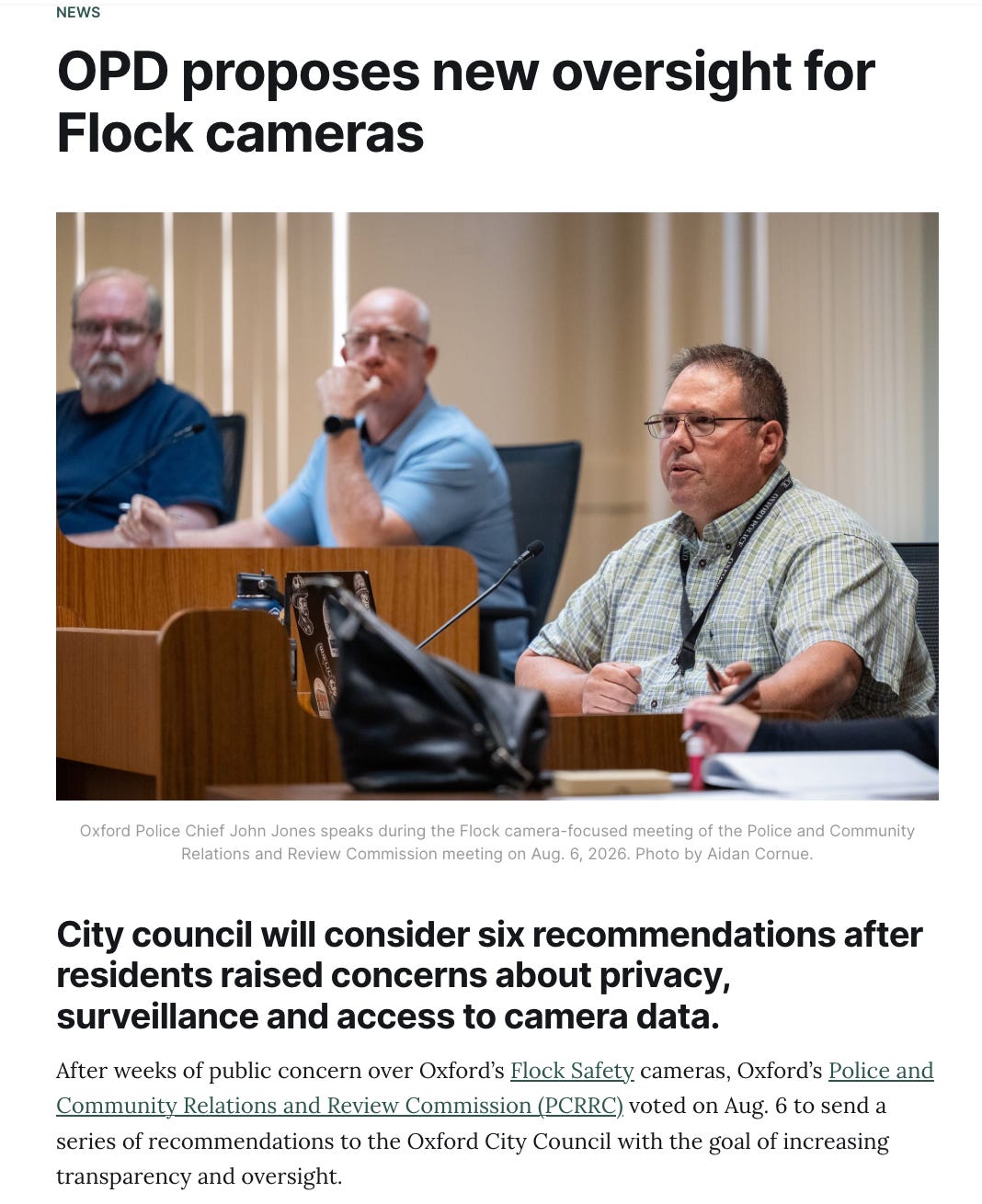
https://www.oxfreepress.com/opd-proposes-new-oversight-for-flock-cameras/
BIO: Dr. Sean M. Brooks is the host of the podcast American Education FM and the author of several books including; The Unmasking of American Schools: The Sanctioned Abuse of Americas Teachers and Students. He’s also on Gab, X, Truth, Bitchute, Rumble, YouTube, and everywhere audio podcasts can be heard.
No posts
Comments
Nothing yet. Say the first thing.
Sign in to join the conversation.