
The Boston University Bookstore, 1991
I have a very clear memory of standing in the Boston University bookstore, seventeen years old, about to overpay for an Apple computer because I was starting film school in the fall and simply nothing else would do. And while I waited in line, I was reading American Cinematographer.
That’s the memory, anyway.
In reality the magazine must have been Fangoria or Starlog. There’s a non-zero chance it was Gore Zone. But let’s pretend I was a precocious young film major reading a respectable trade publication and not a kid looking at latex werewolf transformations.
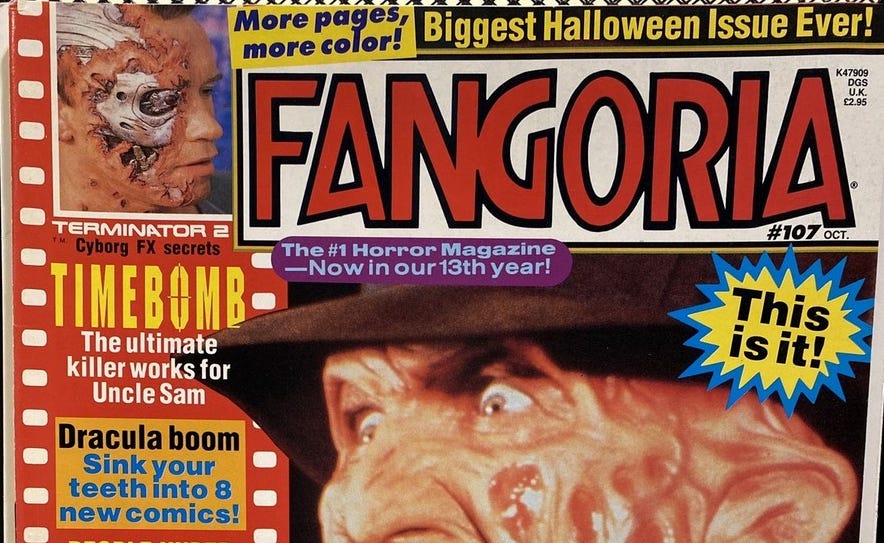
In any case, the cover story was Terminator 2.
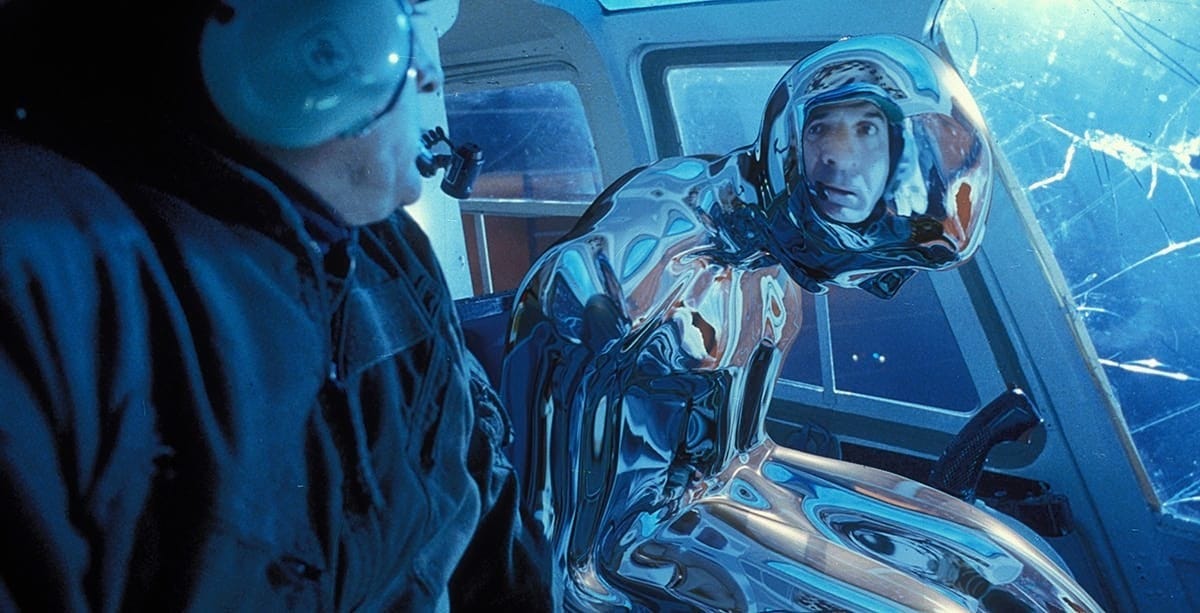
If you weren’t there, it’s hard to explain what that movie did to people. The morphing. The liquid chrome. James Cameron reaching into the future and pulling out something nobody had seen before. I’d seen the movie three times in the theater, and the article made me realize why. It wasn’t just the spectacle. It was the strategy.
The 1990s technology gave Cameron a small window of what the technology could actually do flawlessly. So he built the whole film to live inside – and fully exploit – that window. The T-1000 isn’t chrome because chrome is cool. It’s chrome because chrome is what the effects could sell, perfectly, without ever tipping into fake. And god it was cool. The story was engineered around the capability. Not the other way around.
Seventeen-year-old me thought that was the smartest thing he’d ever heard.
I’m no James Cameron, but thirty-some years later, I’m kinda stealing the approach.
(And you should, too.)
Here’s the news
I’ve been quiet on here for a minute. Two reasons. One, I’m in pre-production on our AI-native animated series for Amazon, which is very happily eating a healthy percentage of my brain. And two, I’ve been building something of my own.
It’s a dark webseries called The Kronos Conspiracy.
Episode one is live on YouTube right now, and new episodes will be dropping every Thursday. The episodes are short and I promise they aren’t quite as creepy-clown-forward as the thumbnail might have you believe. Here’s the premise: a journalist sets out to debunk a conspiracy theory and gets pulled into one that’s bigger, and realer, than anything he imagined. The story is too big not to publish, but too dangerous to tell – so he’s using AI to hide his face.
Here’s a link: The Kronos Conspiracy | Chapter 1 | Why I Hide My Face

Episode one is a prologue. Setting the world. Establishing the vibe. The story proper starts next Thursday.
Why I built it this way
Because I did the Cameron thing.
I didn’t start with a story and then go wrestle the tools into serving it. I started by figuring out what generative AI is genuinely, reliably good at right now, today, this week. And then I built a world that lives inside those capabilities on purpose.
That was the plan: Find the window. Build inside it.
Next week’s episode expands the show’s visual language in a couple of ways that I chose specifically to live inside the window of what the robots are good at. Once that video is live I’ll be back here talking about the lessons I learned and applied in the making of these pieces.
Talk to you then.
And meanwhile, thanks for reading and checking out The Kronos Conspiracy.
#AI #Filmmaking #Storytelling #GenerativeAI #IndieFilm #YouTube
Thanks for reading The AI Showrunner! This post is public so feel free to share it.
No posts
Comments
Nothing yet. Say the first thing.
Sign in to join the conversation.