
Welcome to The AI Radar — your weekly briefing on what actually matters in AI.
We track the real signal: breakthroughs, product launches, funding moves, and strategic shifts shaping the future.
Filtering the signal from the noise in AI. Smart insights, every week.
Access exclusive, high-paying remote AI training roles with flexible hours. No prior AI experience required.
Management Consultant - $154 - $210/hour
Financial Investment Analyst - $154 - $210/hour
Funds Attorney - $80 - $105/hour
Business Presentation Consultant - $30 - $55/hour
Stripe has reportedly agreed to acquire OpenRouter, an AI gateway platform that lets developers access and manage multiple AI models through a single API, in a deal valued at around $7 billion. The acquisition would strengthen Stripe’s AI infrastructure strategy by expanding its developer platform beyond payments and into AI services, while giving businesses easier access to leading models from multiple providers.

Meta has introduced Muse Glimmer, its first open agentic AI model designed to perform complex, multi-step tasks through reasoning, planning, and tool use. Built on the Llama ecosystem, the model supports long-horizon workflows such as software development, research, and automation, while remaining open-source for developers to customize and deploy. Meta says the release aims to accelerate the development of more capable AI agents across both research and enterprise applications.

Anthropic has introduced a text watermarking system for Claude that helps identify AI-generated content without affecting readability or writing quality. The technique embeds subtle statistical patterns into generated text, enabling reliable detection while remaining resistant to common editing methods. Anthropic says the feature is designed to improve transparency and trust, giving organizations a practical way to distinguish AI-generated content from human-written text.
Nvidia has partnered with Apollo, BlackRock, Blackstone, Brookfield, Goldman Sachs, and KKR to launch AI infrastructure financing platforms aimed at mobilizing more than $500 billion in third-party capital. The initiative is designed to help fund AI chips, data centers, and power infrastructure, making it easier for companies to finance large-scale AI deployments as demand for compute continues to surge.
DeepSeek has unveiled **Harness**, an open-source AI coding agent designed to compete with Anthropic’s Claude Code by automating software engineering tasks directly from the terminal. At the same time, the company launched **DeepSeek V4 Pro** through its API, delivering improved coding, reasoning, and agentic capabilities for enterprise applications. While the new model offers stronger performance, it also comes with **higher API pricing**, signaling DeepSeek’s move toward more premium AI offerings for professional developers and businesses.
xAI has launched Grok 4.6, an upgraded AI model designed for long-running agent workflows, coding, and complex knowledge tasks. The model improves reasoning, self-verification, and large-scale project execution, while supporting a 500K-token context window, native tool use, and faster agentic workflows. xAI says Grok 4.6 delivers performance comparable to leading frontier models at roughly half the API cost, making it a more affordable option for developers building AI applications.
Google has introduced Gemini 3.7 Flash, its latest workhorse AI model optimized for coding, AI agents, and complex knowledge work. The model delivers stronger software engineering, web development, and instruction-following performance while offering lower latency and improved first-pass accuracy. To encourage adoption, Google is also launching the model at an introductory 50% discounted API price through the end of 2026, making it more cost-effective for developers building production AI applications.

OpenAI has released a Builder’s Guide to GPT-5.6, providing developers with practical recommendations for getting the best performance from its latest model. The guide covers effective prompt design, tool calling, structured outputs, reasoning controls, and strategies for improving reliability, speed, and cost efficiency. It also highlights common implementation patterns and best practices to help teams build more capable, production-ready AI applications with GPT-5.6.
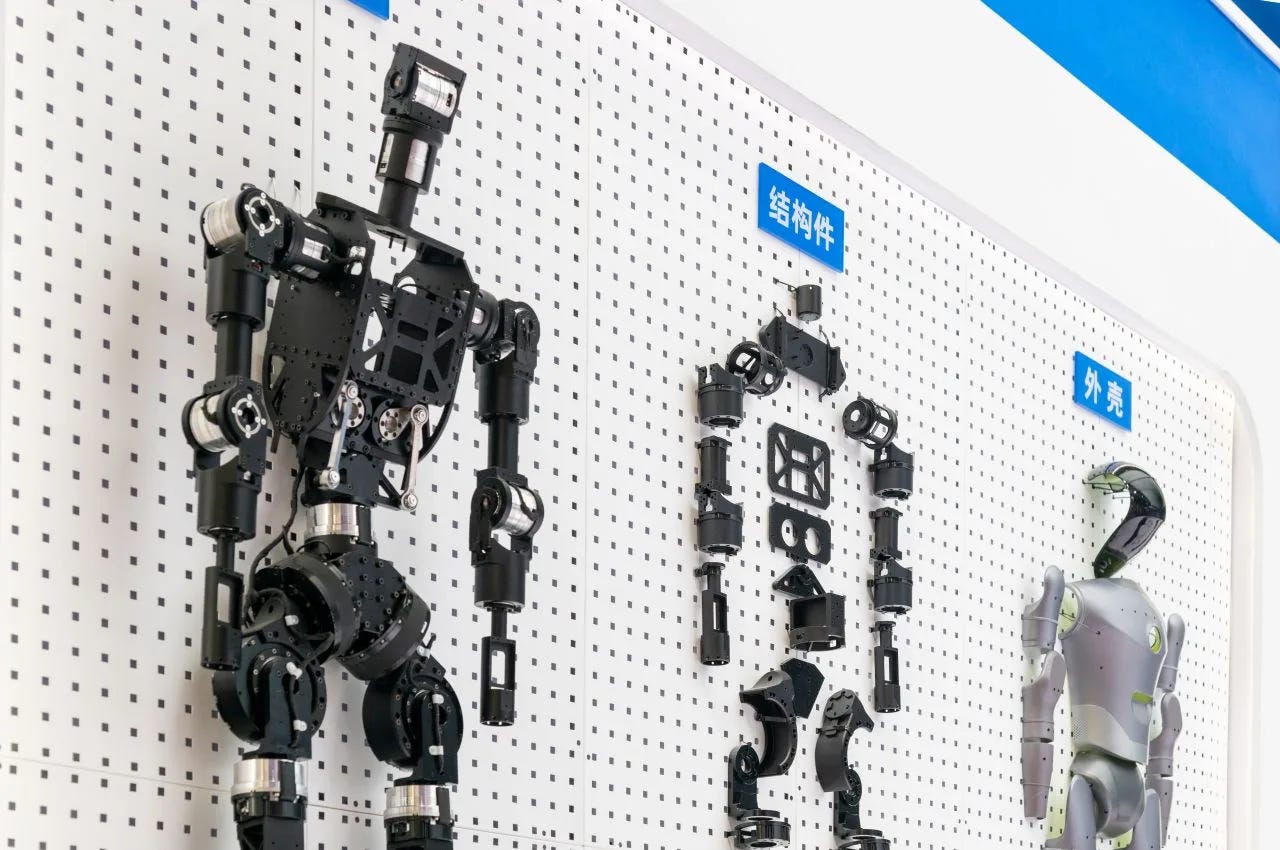
A proposed U.S. ban on Chinese-made humanoid robots could reshape the global robotics industry by protecting domestic manufacturers but also raising costs and slowing innovation. While the restrictions aim to reduce national security risks and strengthen U.S. production, they may disrupt research, supply chains, and access to low-cost robotic platforms, even as China’s dominant position in humanoid robotics is expected to remain largely intact.
xAI has launched Grok Bot, a customizable AI assistant that can automate tasks across X and connected services. Users can configure the bot to monitor information, answer questions, generate content, and complete workflows using natural language, marking xAI’s latest step toward more capable, agentic AI assistants integrated into everyday productivity.
A quick scan of new AI tools, platform updates, model releases, and startups worth knowing.
Nuphos | The AI-Native DevOps Workspace.
WebBrain | The sidebar agent for the rest of us
Munder Difflin | Make clones with Claude Code and Codex to do your work
SalesCloser.ai | Proactive sales agent that books, shows up, and runs demos
Blume | AI-ready, Markdown-first documentation framework
Thanks for reading The AI Radar.
If you found this valuable, share it with one person who wants to stay ahead in AI.
See you next week — same radar, sharper signal.
No posts
Comments
Nothing yet. Say the first thing.
Sign in to join the conversation.