
Welcome to The AI Radar — your weekly briefing on what actually matters in AI.
We track the real signal: breakthroughs, product launches, funding moves, and strategic shifts shaping the future.
Filtering the signal from the noise in AI. Smart insights, every week.

Access exclusive, high-paying remote AI training roles with flexible hours. No prior AI experience required.
Management Consultant - $154 - $210/hour
Financial Investment Analyst - $154 - $210/hour
Funds Attorney - $80 - $105/hour
Business Presentation Consultant - $30 - $55/hour
Professional Services Consultant - $40 - $65/hour
Anthropic has launched Claude Science, an AI workbench designed specifically for researchers, combining Claude’s reasoning capabilities with scientific tools, programming packages, and scalable computing resources in a single environment. The platform helps scientists analyze data, run computational workflows, generate reproducible and auditable research artifacts, and collaborate more efficiently. Initially focused on life sciences, Claude Science is part of Anthropic’s broader push into scientific research and healthcare, aiming to accelerate discoveries while making advanced AI more accessible to researchers across disciplines.
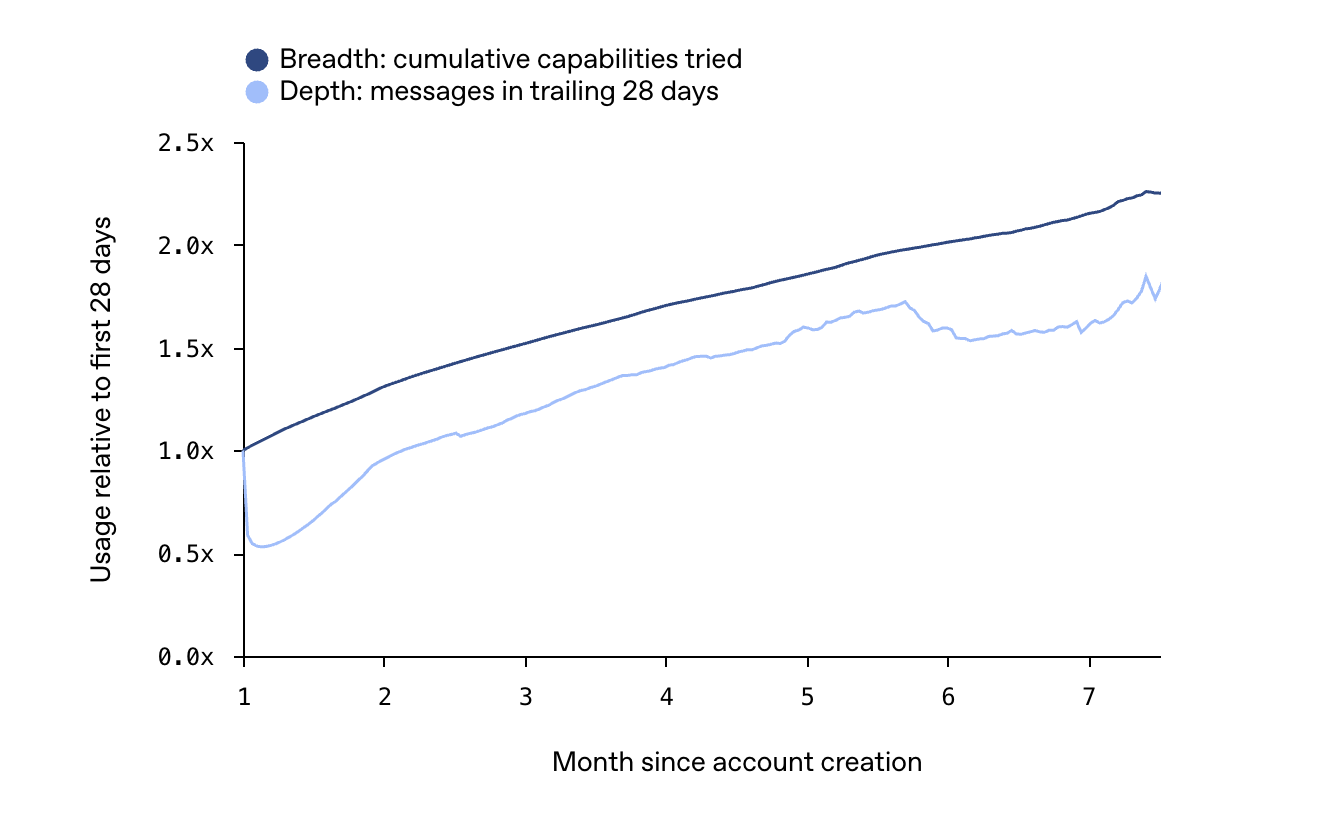
OpenAI’s latest Signals data shows that ChatGPT adoption is expanding globally, with users engaging more frequently and applying the tool across a wider range of tasks over time. Growth is accelerating across regions, the user base is becoming more geographically diverse, and adoption is broadening beyond early technology enthusiasts to a more mainstream audience. The findings suggest that ChatGPT is evolving from an occasional assistant into a recurring productivity tool, reflecting AI’s increasing integration into everyday work, learning, and personal activities.
Anthropic’s Claude models are now generally available in Microsoft Foundry on Azure, powered by NVIDIA’s GB300 Blackwell Ultra systems. The deployment enables enterprises to build and run more capable AI agents with higher inference performance and lower operating costs for complex, domain-specific workloads. The platform also integrates NVIDIA’s Verified Agent Skills and Secure Agent Workspace to improve governance and security. The announcement strengthens the strategic partnership between Anthropic, Microsoft, and NVIDIA, underscoring the growing importance of optimized AI infrastructure for enterprise-scale agentic applications.
The AI industry is entering a commercialization phase for physical AI, shifting the focus from impressive robot demonstrations to deploying robots in real-world workplaces. Recent developments—including Agility Robotics’ planned IPO, Nvidia’s launch of its Halos robotics safety platform, and Odyssey’s $310 million funding round—highlight growing investment in the infrastructure needed for scalable deployment. The article argues that commercial success will depend not only on more capable robots, but also on robust safety systems, reliable world models, and sustained investment that enable physical AI to operate effectively in dynamic environments.

The AI industry is entering a commercialization phase for physical AI, shifting the focus from impressive robot demonstrations to deploying robots in real-world workplaces. Recent developments—including Agility Robotics’ planned IPO, Nvidia’s launch of its Halos robotics safety platform, and Odyssey’s $310 million funding round—highlight growing investment in the infrastructure needed for scalable deployment. The article argues that commercial success will depend not only on more capable robots, but also on robust safety systems, reliable world models, and sustained investment that enable physical AI to operate effectively in dynamic environments.
HP has expanded its partnership with OpenAI by adopting the Frontier enterprise AI platform across its business after successful internal pilots. The deployment will support customer service, partner interactions, employee productivity, software development, telemetry analytics, and internal operations. Early results include dramatically faster code reviews and security remediation, demonstrating how AI can move from isolated experiments to production workflows. The partnership reflects HP’s strategy to embed AI into core business processes while using OpenAI Frontier as a common platform for securely deploying and managing AI agents at enterprise scale.
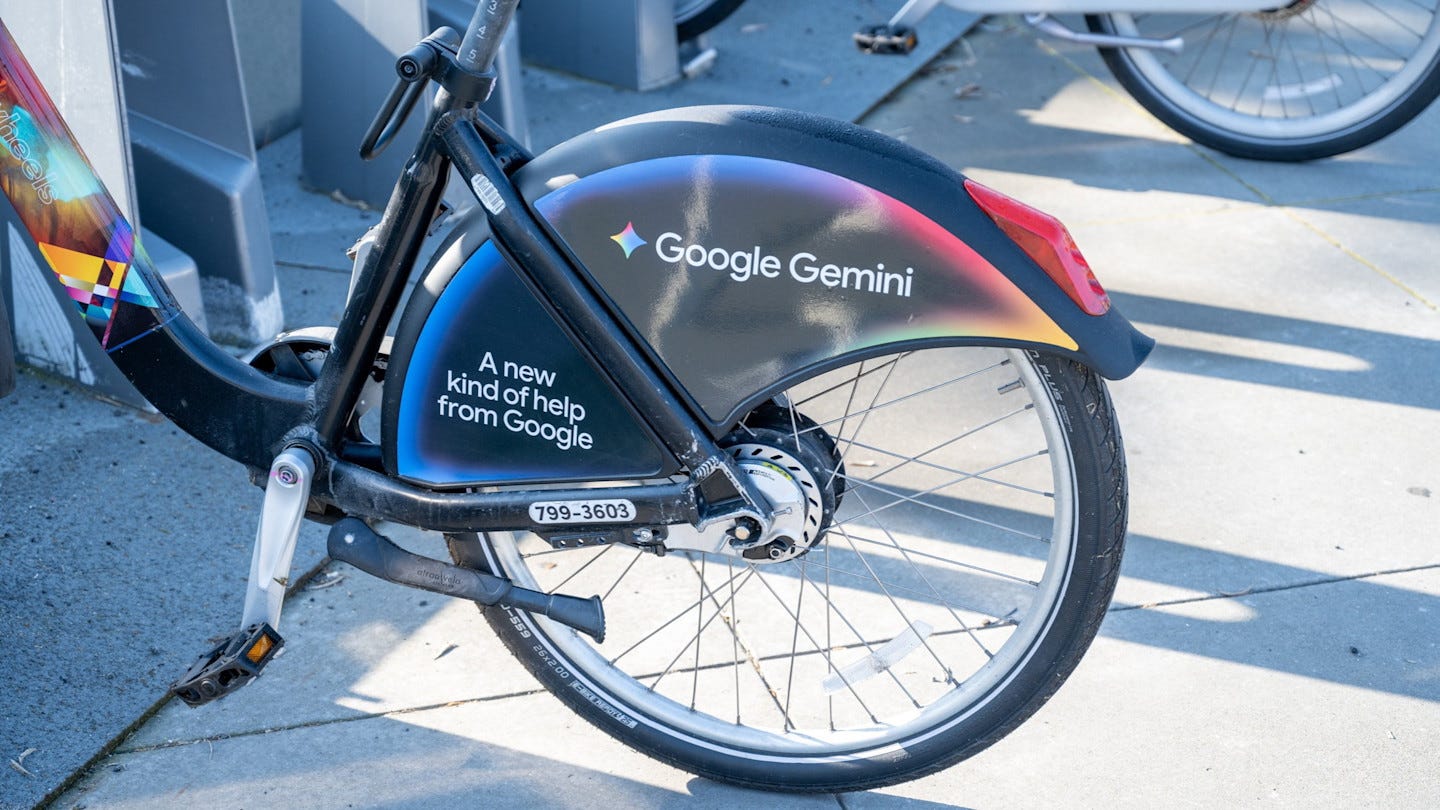
Google has limited Meta’s access to its Gemini AI models after Meta requested more inference capacity than Google could supply, exposing growing infrastructure shortages across the AI industry. The restrictions have delayed some internal Meta AI projects and prompted employees to use AI tokens more efficiently. The episode highlights that computing capacity—not model quality alone—is becoming the industry’s key constraint. As demand for AI services surges, companies such as Google, Meta, and Anthropic are investing heavily in data centers, chips, and leased compute while also trying to reduce dependence on external AI providers.
Google has integrated computer use directly into Gemini 3.5 Flash, enabling developers to build AI agents that can interact with browser, desktop, and mobile applications without relying on a separate model. The new capability improves performance on long-running automation tasks, supports built-in safety features such as user confirmation and prompt injection detection, and is available through the Gemini API and Enterprise Agent Platform for enterprise and developer use.
MIT and Microsoft researchers have developed Murakkab, a system that automatically optimizes AI agent workflows for speed, cost, and energy efficiency. By selecting the best combination of AI models, tools, hardware, and execution strategies based on a user’s goal, it reduces the need for manual tuning. In tests, Murakkab achieved the same task quality while using up to 65% less computation, 73% less energy, and over 75% lower costs than conventional approaches, showing how smarter orchestration can make AI systems more efficient and sustainable.
A quick scan of new AI tools, platform updates, model releases, and startups worth knowing.
Tencent EdgeOne Makers | Ship AI agents like web apps, in minutes.
Stripe.Directory | New way for you & agents to search for businesses on Stripe
Cursor for iOS | Build with coding agents from anywhere
Foresight by Lightning Rod | Predict anything with AI
Akiflow | Manage tasks and calendars from Claude, ChatGPT or Cursor
Thanks for reading The AI Radar.
If you found this valuable, share it with one person who wants to stay ahead in AI.
See you next week — same radar, sharper signal.
No posts
Comments
Nothing yet. Say the first thing.
Sign in to join the conversation.