
Hi, before we continue, a quick word from our sponsor.
AI agents are moving into prod. Is your secrets strategy ready for that?
Find out at the webinar on July 22.
Last week, we talked about giving AI agents a context contract: a clear definition of what information they can access, trust, and use.
But even with the right context, an agent can still make the wrong move.
Why?
Because knowing what to consider is not the same as knowing when to stop.
Imagine an agent investigating a network incident. It checks interface status, reviews recent configuration changes, and summarizes the logs.
So far, so good.
But what happens when the evidence is incomplete? Does it keep investigating? Restart a service? Roll back a configuration? Escalate to an engineer?
Without a defined stop condition, the agent has to guess.
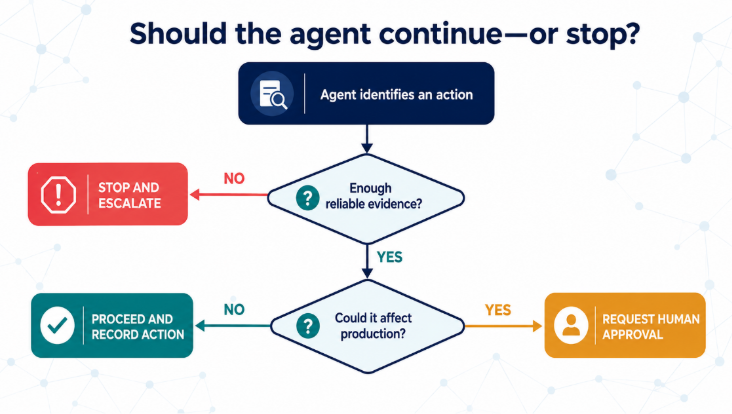
Define the boundary before the workflow
For every agentic workflow, answer three questions:
What can the agent do independently?
What conditions require human approval?
What evidence must it provide before escalating?
A stop condition might look like this:
The agent may collect telemetry, compare configurations, and recommend a remediation. It must stop before making a production change unless the diagnosis is supported by two independent signals and an engineer approves the action.
That single rule turns an open-ended agent into a controlled workflow.
A useful stop condition should cover:
Confidence: How certain must the agent be?
Impact: Which actions are too risky to perform autonomously?
Evidence: What must the agent show before recommending or taking action?
Escalation: Who takes over when the boundary is reached?
The goal is not to prevent autonomy. It is to make autonomy predictable.
Because the safest agent is not the one that can do everything. It is the one that knows when it should hand control back to you.
Before deploying your next AI workflow, run it through this five-minute test.
Download the AI Agent Stop-Condition Checklist
Thanks,
Sayali
Editor-in-Chief
P.S. What is one action your team would never allow an AI agent to take without human approval? Reply and tell us.
Take a look at our upcoming workshops that point to the same issue from different angles.

Agentic DevOps with Claude - Thursday, July 23rd · 11:00 AM EDT
Where do agents and MCP servers actually belong in a Kubernetes stack?
Most platform teams are still guessing. Michael Rishi Forrester (Accenture) spends four hours building a 33-component AI-native IDP live, on a provisioned cluster, with Claude Code doing the actual work: scaffolding Helm values, wiring up ArgoCD’s App-of-Apps, resolving sync issues as they come up. You clone the repo when it’s done and it runs.
Use code EMAIL40 for 40% off.
AI-Powered GitOps & Platform Engineering - Thursday, July 30th · 11:00 AM EDT
Most AI-in-GitOps failures trace back to one thing: stale context, not a bad model. Taylor Dolezal (Head of OSS at Dosu) has seen this pattern across 100,000+ repos, and this session runs a live query against fresh vs. stale knowledge side by side, so you can see where the token cost actually goes and where the accuracy breaks down before you build anything on top of it.
Both sessions are teaching the same shift from two different angles, Michael’s building the platform itself, Taylor’s making sure the agents on it aren’t running on stale context. Worth sitting through both if you’re the one who’ll own this stack. Bundle Pass gets you both for 25% off - use code BUNDLE25.
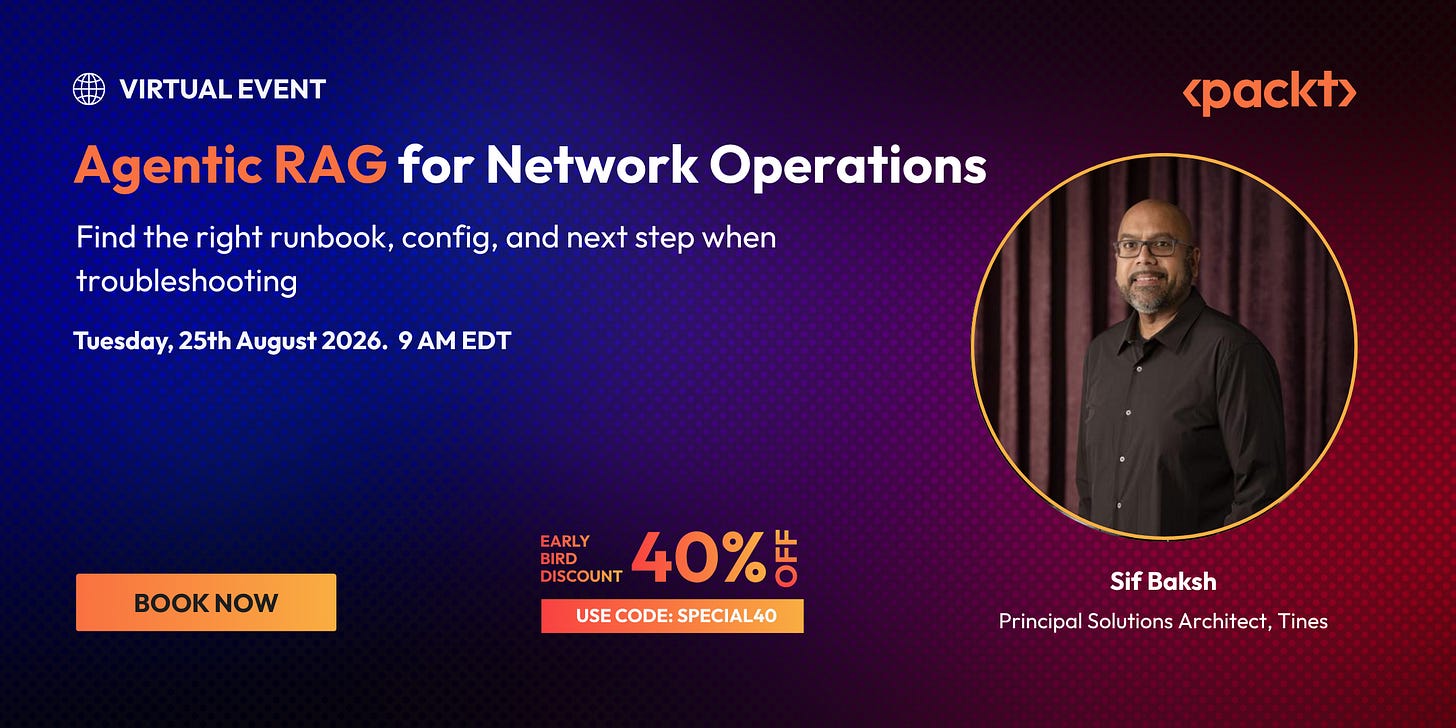
Agentic RAG for Network Operations - Thursday, August 25th · 9 AM EDT
Sif Baksh, Principal Solutions Architect at Tines helps you build a RAG-powered NetOps assistant that pulls answers from your own runbooks, device configs, and troubleshooting notes instead of generic internet answers, so it can tell you why a BGP neighbor is stuck in Active, with the actual source cited. You’ll learn with guardrail patterns that stop the assistant from inventing answers or recommending unsafe production changes, so it’s something you can actually trust during an incident.
Use code SPECIAL40 for a 40% off on the event
Before you go, maybe a few books worth having on your shelf
Operational AI with Docker - Ajeet Singh Raina & Harsh Manvar
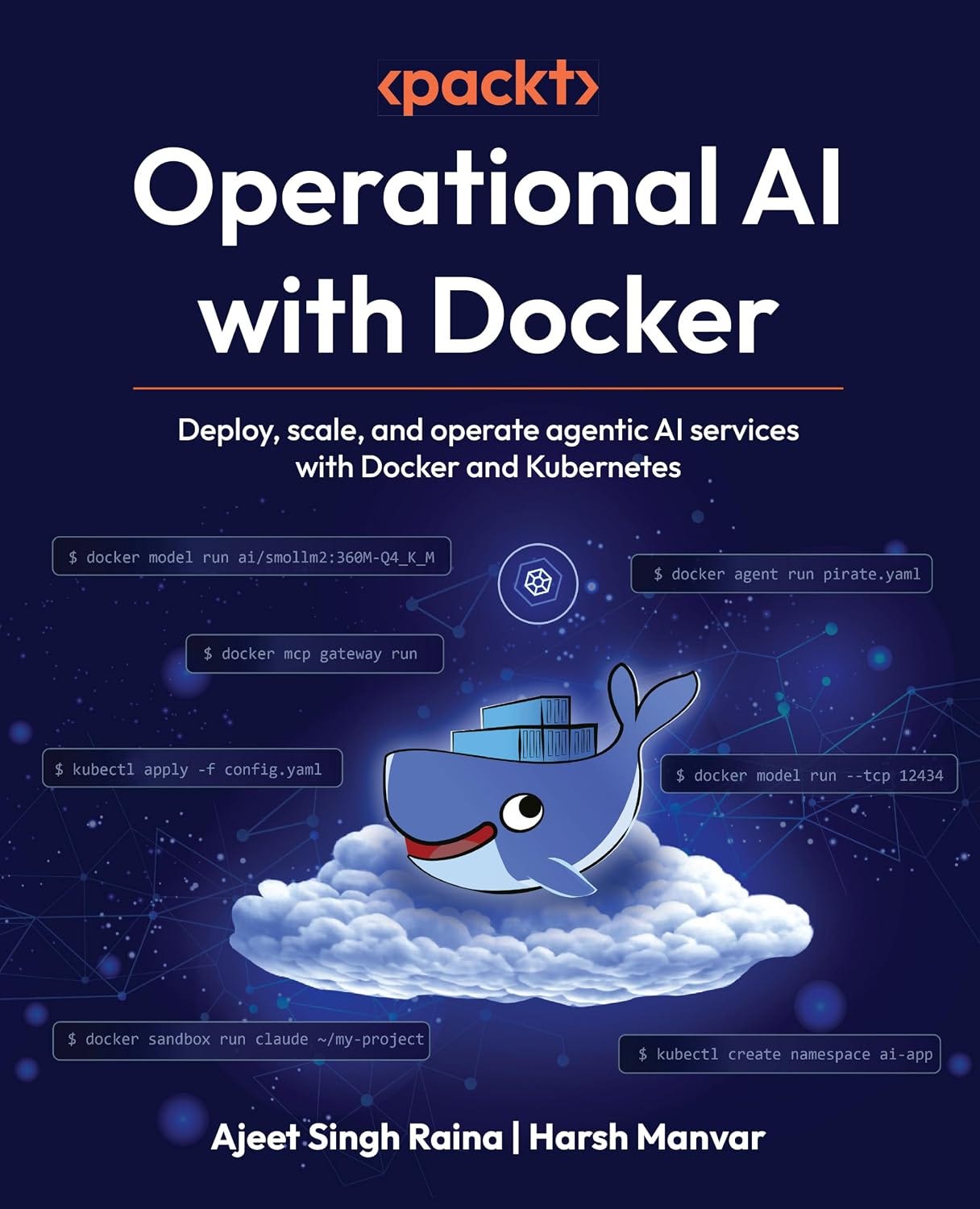
If Michael’s event - Agentic DevOps with Claude IDP build got you thinking about what it actually takes to run agentic workloads in production, not just prototype them, this is the deeper dive. It covers containerizing, serving, and scaling LLMs and multi-agent pipelines with Docker and Kubernetes, the infrastructure layer most “AI for DevOps“ content skips past.
AI Networking Cookbook - Eric Chou
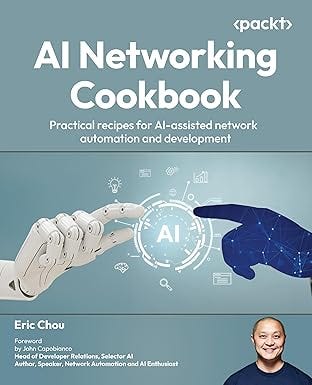
Pairs naturally with Sif’s session on Agentic RAG for Network Operations. Where the workshop builds you a RAG assistant for troubleshooting, this book is recipes for the other side, using AI to automate config, monitoring, and threat detection across multi-vendor network environments, with working code for each one.
Microsoft Intune Cookbook, 2nd Edition - Andrew Taylor
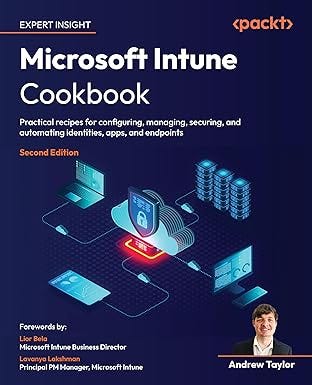
For anyone managing endpoints rather than the network layer, practical recipes for securing and automating devices across Windows, macOS, iOS, Android, and Linux, including where Security Copilot and Graph API now fit into day-to-day admin work.
No posts
Comments
Nothing yet. Say the first thing.
Sign in to join the conversation.