
Hi, I’m Raffaela, and welcome to AI Leadership Edge, the best newsletter for board directors, whether you are an independent director, VC, PE, or GP.
Subscribe for free and get the AI Strategy and Governance Certification, an eight-day executive course. Join a community of 41,000 board directors and leaders, with 13,900+ newsletter subscribers.

If you have been subscribed for a while and would like to take the certification, then you can access the certification here.

This edition is powered by BoardLens. Most boards have an NPS of -43. We are in times of AI, yet board meetings have been run the same way for the last 40 years. It is time to change that. BoardLeans brings your board to the AI era, with better intelligence for more productive meetings, better outcomes, and stronger relationships. Independent directors run it on one board. GPs run it across a whole portfolio.
Get 15 extra Credits with the Code AILE10.
Start free at boardlens.ai. There is a demo company inside, so you can try everything below without uploading anything.
It got better.
For anyone who doesn’t spend their day building AI products, these instructions are essentially the standing rules given to the model: what to do, what to check, what to avoid.
And they accumulate.
Claude makes a mistake, so you add an instruction to stop it happening again. Another edge case appears, so you add another. Each addition makes sense on its own.
Then the underlying model gets smarter.
Many of the instructions written for earlier models are no longer needed. But they are still there.
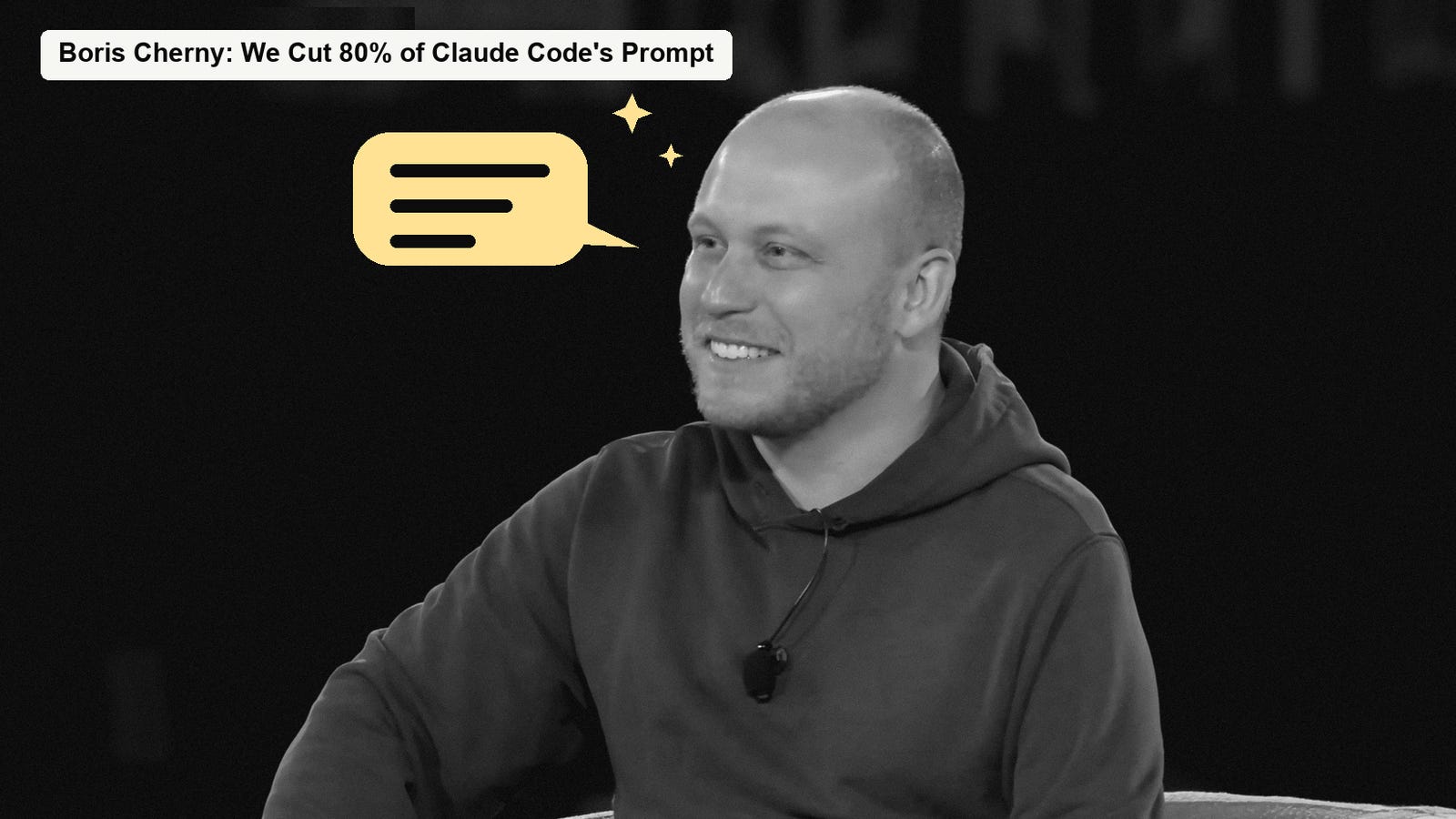
So when Anthropic shipped its newest model generation in July, the Claude Code team removed roughly 80% of the accumulated instructions. Boris Cherny, who created Claude Code, confirmed the number publicly.
And with this deletion, performance improved.
Claude Code was still carrying solutions to problems it no longer had.
Cherny has now turned that into a practice. In a Y Combinator interview at the end of July, he recommended periodically deleting Claude instructions, skills and hooks and seeing what the model can now do without them.
I think there is a much bigger leadership lesson in that.
When we want better results, we usually add more.
More context. More KPIs. More projects. More meetings. More priorities. More people in the room. More instructions about how the work should be done.
Most of these things were probably added for a good reason.
The question we ask far less often is whether that reason still exists.
A report gets created after one bad quarter and is still being produced five years later. An approval gets added after one mistake and becomes permanent. A meeting starts because a project needs attention and somehow survives the project itself.
Organizations accumulate their own version of old prompts.
And unlike Claude Code, most never get an 80% clean-out.
20% of projects usually drive 80% of the value, yet leadership attention gets spread across dozens. Strategy becomes a list of initiatives. Teams spend increasing amounts of time coordinating the work rather than doing the work.
We should hear Cherny on this.
The lesson from Claude Code isn’t that less is always better.
It is that sometimes the next improvement comes from removing what the system has outgrown.
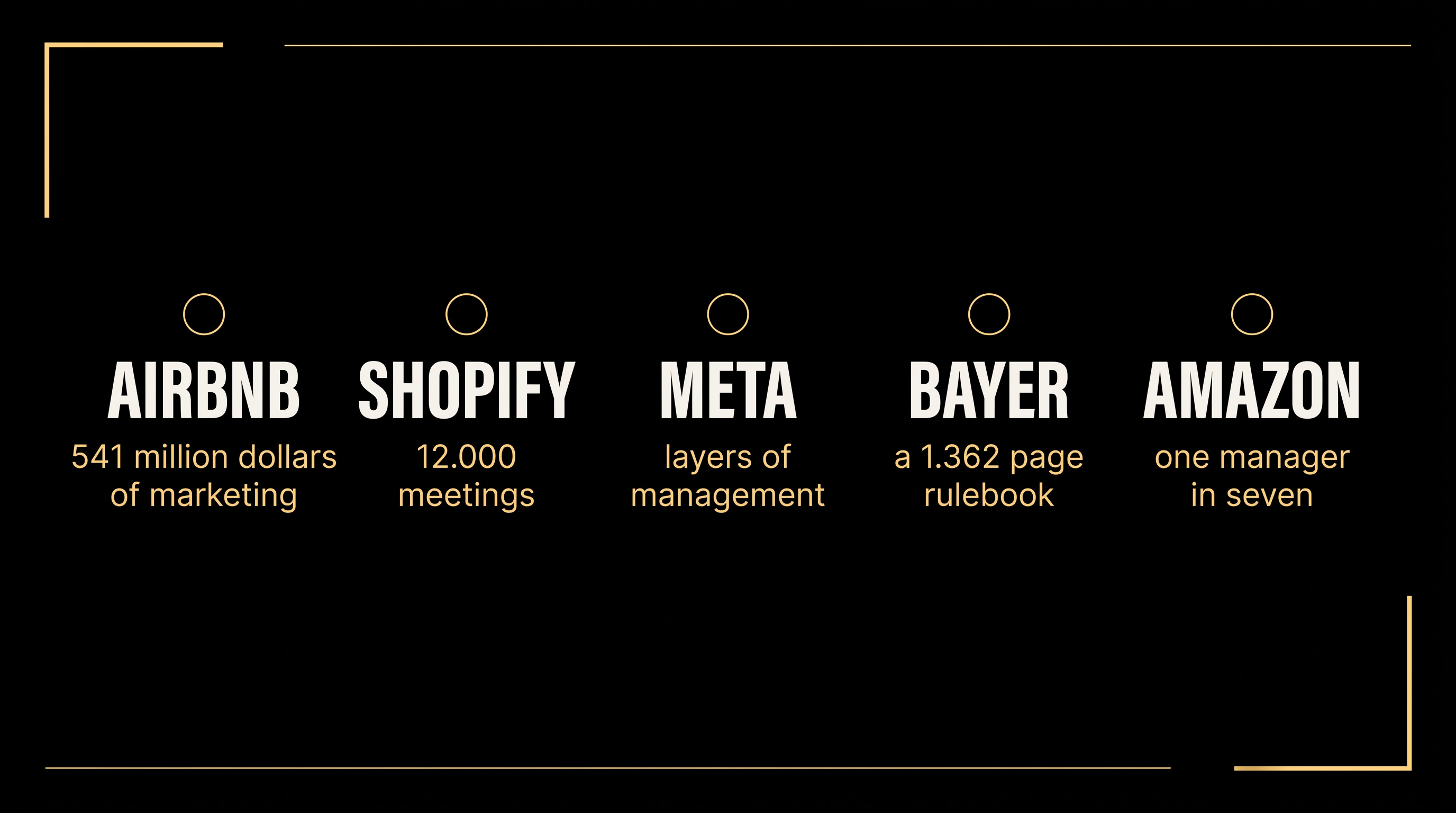
So I went looking for five companies that had removed something significant rather than adding another fix.
→ Airbnb, 2020. Cut $541m from performance marketing. Traffic returned to almost previous levels.
→ Shopify, 2023. Deleted recurring meetings of three or more people. An estimated 322,000 hours freed.
→ Meta, 2023. Removed layers of management. Operating income rose 62% that year.
→ Bayer, 2024. Halved its management layers. Some work that previously took up to two years was being done in 90 days.
→ Amazon, 2024. Set a target to increase the ratio of individual contributors to managers by at least 15%.
And in several cases, what happened after the deletion was more interesting than the deletion itself.

Elon Musk made deletion step two of his five-step design process, and he holds it even when his engineers worry something will break. His rule:
If you are not adding things back into the design at least 10% of the time, you are clearly not deleting enough.
Deleting so little that nothing ever breaks means you never found the real minimum.
🔒 Below the paywall, what happened when Airbnb, Shopify, Meta, Bayer and Amazon chose to remove rather than add.
Paid subscribers also get The AI Frontier Certification Course, the Top 10 Prompting Hacks, and The AI Leadership and Boardroom Toolkit, plus two full editions like this every week. Many subscribers expense it as professional development.

As a paid subscriber, you get every playbook in this series. The 5 most worth reading alongside this one:
1️⃣ The Board Director’s AI Prompt Library Read here ->
2️⃣ The Top 10 AI Boards Worth Watching Read here ->
3️⃣ The Post-Raise Guide Read here ->
4️⃣ The Post-Investment Playbook Read here ->
5️⃣ What the best PE boards do that the rest don’t Read here ->
🗣 Or invite a friend: refer 1 friend and you get The AI Leadership Prompt Library plus the Practical AI for Leaders course.
A community of 41,000 board directors and leaders. 13,500+ newsletter subscribers are already inside.
Comments
Nothing yet. Say the first thing.
Sign in to join the conversation.