AI coding tools stopped competing on autocomplete and started competing on autonomy. Agents moved into the terminal and the cloud. Every major vendor shipped its own model. SWE-bench cleared 80% and bunched up, flat-rate plans gave way to metered billing, and adoption rose while trust fell.
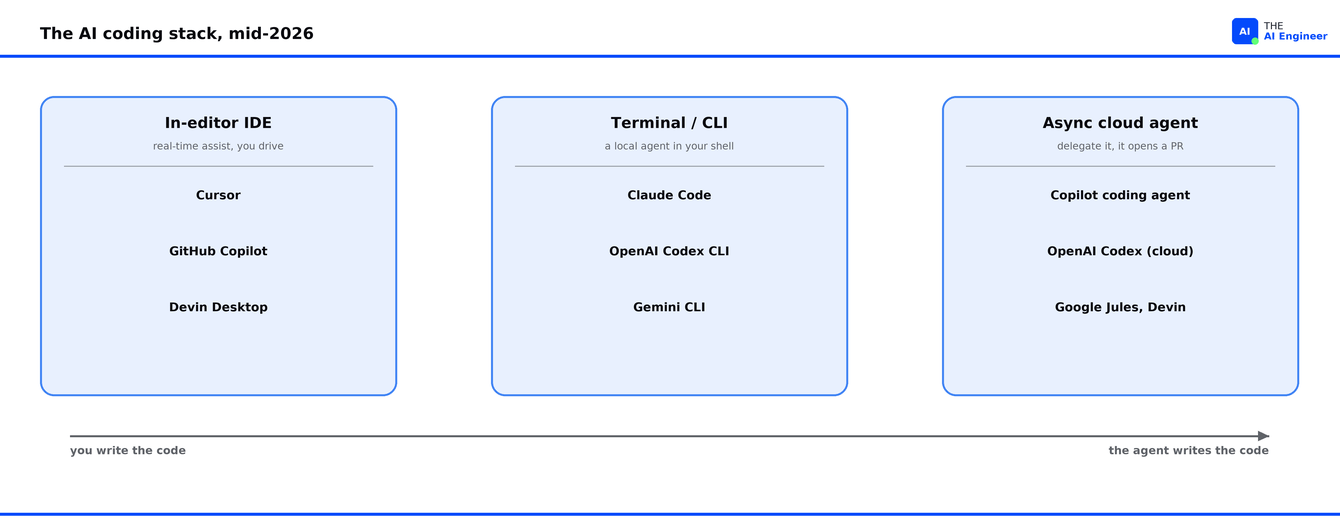
The agent left the editor. The default unit of AI coding is no longer a suggestion in your IDE. It is an autonomous agent running in a terminal or a cloud sandbox, opening its own pull requests while you do something else.
Every tool became a model maker. Cursor and Cognition now ship their own coding models, the labs ship a new one every few weeks, and at least one “in-house” model actually runs on a Chinese open-source base.
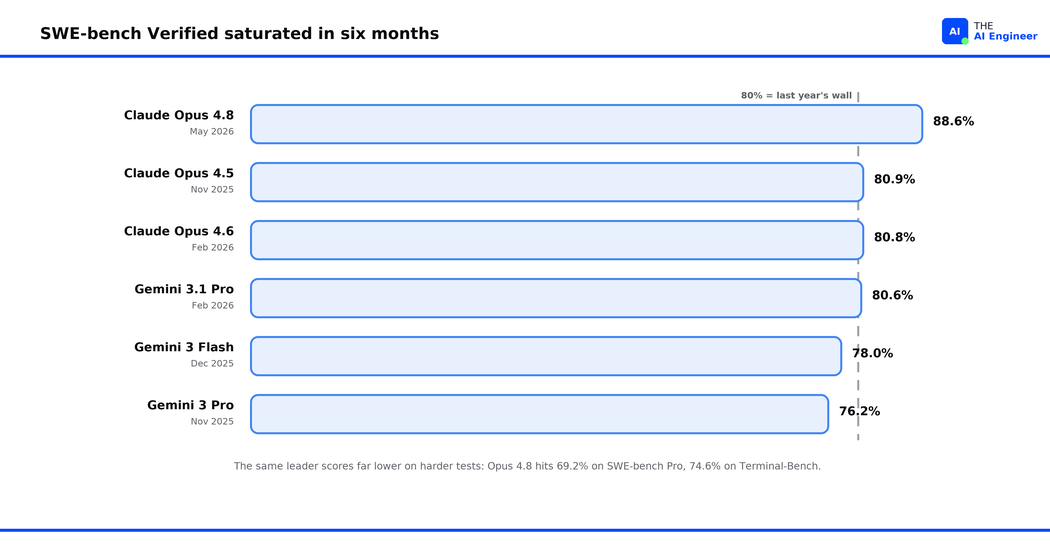
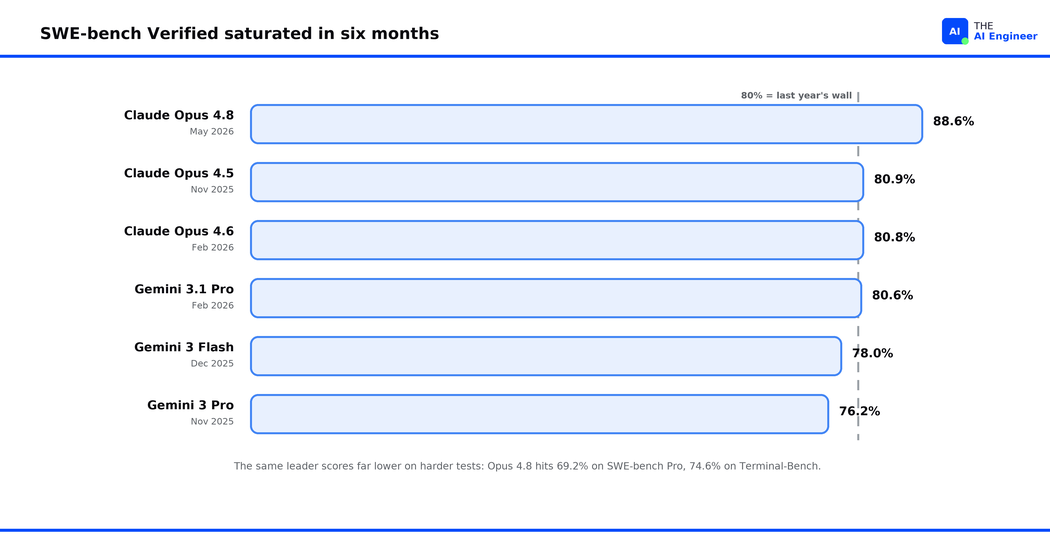
SWE-bench stopped being a flex. Scores cleared 80% and bunched up, and even the leader’s 88% on the old benchmark falls to 69% on the harder ones, so a single number no longer tells you much. Vendors have already moved the goalposts.
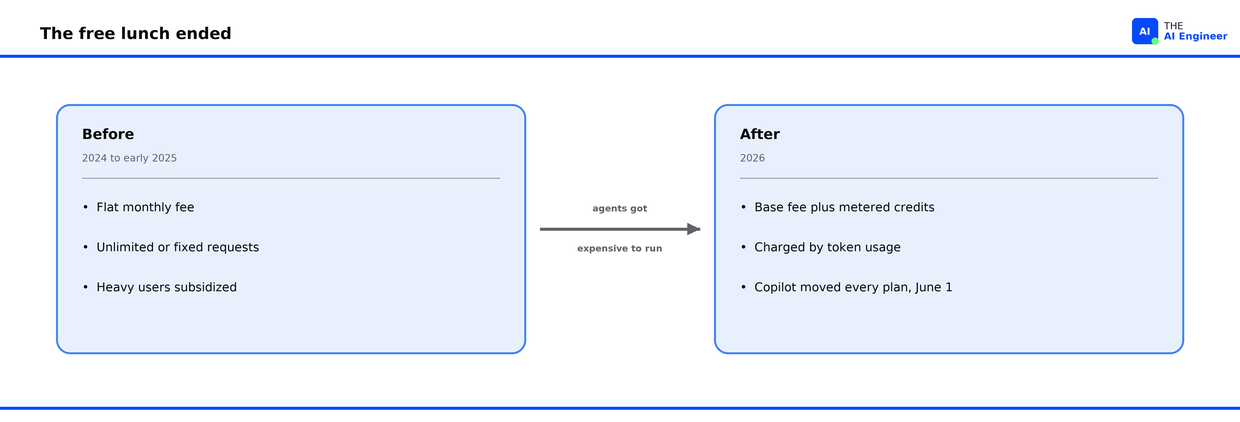
Flat-rate pricing died. Unlimited plans gave way to metered credits, capped by GitHub Copilot moving every plan to usage-based billing on June 1.
Adoption rose, trust fell. More developers use these tools than ever, fewer trust what they produce, and the most-cited productivity study spent six months walking back its own follow-up.
You spent the last six months on one product. Head down, one repo, no time for tool drama. This week you come up for air and open your setup. Windsurf is gone: Cognition renamed it Devin Desktop in an automatic update. Your Cursor plan meters usage now, and the bill is climbing. GitHub Copilot has turned into five different agents wearing one subscription. And the model you benchmarked in December is several versions behind.
In 2024, an AI coding tool meant autocomplete. You typed, it suggested the next few lines, you hit tab. The center of gravity has moved. The unit of work is now a task you hand off, and an agent that goes and does it.
GitHub's Copilot coding agent went generally available in September. You hand it a GitHub issue and it works in its own cloud sandbox, no editor open1.
Watch one run end to end. The agent clones the repo into a sandbox and greps for the export code that mangles any row with a comma in a field. It writes a failing test that reproduces the bug, patches the writer to quote fields, and runs the suite. Two unrelated tests break, so it backs out half the change and runs again until everything passes. It opens a pull request with the diff, the new test, and a note on what it tried. You never watched it work. You review the PR like any other, and the work has moved to your queue as something to check instead of something to write.
Then the surface multiplied. In February, OpenAI wrapped Codex in a desktop app it calls a command center for agents, where you fire off several coding tasks in parallel and supervise them like a team of junior engineers2.
In April, Cursor shipped its 3.0 release, codenamed Glass, and deleted the Composer side-pane that had defined the editor since 20243. In its place is an Agents Window where you run multiple agents at once across your local machine, git worktrees, and cloud sandboxes. We took that editor apart in How Cursor Actually Works.
Terminal-native agents grew up too. Claude Code, the command-line agent we covered in How Claude Code Actually Works, added dynamic workflows in May. It writes an orchestration script and runs tens to hundreds of subagents in the background against one goal. In December, Anthropic said Claude Code had passed a $1 billion revenue run rate within about six months of launch4.
Even the casualties tell the story. Windsurf, the AI editor at the center of last year's acquisition scramble, no longer exists under that name.
Cognition rebranded it to Devin Desktop on June 2, built around an Agent Command Center that shows every local and cloud agent as cards on a Kanban board5.
Underneath all of it, the IDE is turning into a control panel for agents you supervise.
For years, the coding tools were wrappers. They sent your code to someone else’s model, OpenAI’s or Anthropic’s, and competed on the experience around it. That stopped being enough.
Cursor now trains its own model. Composer 2 arrived in March, the company’s first model to use continued pretraining, tuned for the fast, agentic edits its Agents Window depends on6. Then came the asterisk. Developers found internal identifiers that traced Composer back to Moonshot AI’s open-source Kimi K2.5, a detail the launch post left out7. Cofounder Aman Sanger owned the omission, calling it “a miss to not mention the Kimi base.” Cursor did about a quarter of the final model’s training on top of it.
Cognition, the company behind Devin, took the same path. It released its own model, SWE-1.6, in April and serves it at 950 tokens a second on Cerebras hardware, 200 on the free tier8, so each of its edits streams back in a second or two.
GitHub went the other direction: instead of one model, all of them. Its Agent HQ, announced last October, turns Copilot into an orchestration layer. Agents from Anthropic, OpenAI, Google, and others run side by side under one subscription. You steer them from a single mission-control view9.
Either way, the model became part of the product, something a tool now trains, tunes, or brokers from a fleet. The open-source half of this shift, the frameworks and models you can self-host, we mapped in The Open-Source Agent Toolkit in 2026.
Eighteen months ago, cracking 50% on SWE-bench Verified, the benchmark that asks a model to fix real GitHub issues end to end, was a headline. Last November, Claude Opus 4.5 became the first model past 80%, at 80.9%10.
By February, Google's Gemini 3.1 Pro hit 80.6% and Anthropic's Opus 4.6 sat at 80.8%. The top of the leaderboard turned into a traffic jam in the low 80s11.
By May, Opus 4.8 pushed to 88.6% on Verified, but only 69.2% on SWE-bench Pro and 74.6% on Terminal-Bench12, so the best coding model still fails roughly one hard task in three13.
🏗️ Engineering Lesson: No benchmark score predicts how a coding model does on your codebase. Pick two, run them on your own repo, and let your bugs decide.
🔁 Know an engineer who’s been heads-down for a quarter and is about to open their editor to a metered bill and a renamed tool? Send them this before they panic.
The bill for all this autonomy came due. An agent that runs for twenty minutes in the background, calling a frontier model hundreds of times, costs real money to operate. Flat monthly plans were subsidizing the heaviest users, and that math broke.
The turn started with last year’s Cursor backlash, when a move to usage-based credits hit users with surprise overages and forced a public apology. By 2026 the whole category had followed. In April, GitHub said every Copilot plan would move to usage-based billing on June 114. Metered AI credits replaced the old premium request units, charged by token usage at published model rates. Base prices held, so the Pro plan still costs $10 a month. Each plan now bundles only a matching credit allotment, and heavy agent use bills past it.
Even the model makers split their tiers by speed and spend. Anthropic added a paid fast mode to Opus that charges about double for more throughput15.
What this means for you: every long agent run now carries a marginal cost you can see on the invoice, so budgeting shifts from per-seat to per-task. Before you kick off an autonomous run, you weigh how many tokens it will burn alongside whether it is a good idea.
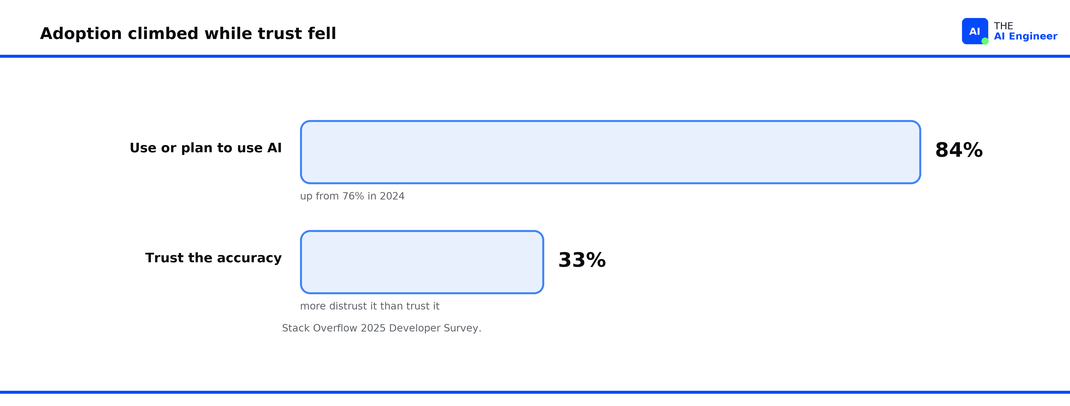
More developers are using these tools than ever. In Stack Overflow’s 2025 survey, 84% of developers said they use or plan to use AI tools, up from 76% a year earlier16. GitHub reported that almost 80% of new developers use Copilot in their first week.
Trust went the other way. In that same survey, only 33% of developers said they trust the accuracy of AI output, and more actively distrust it than trust it. The top complaint, from 66%, was AI solutions that are almost right but not quite, the ones that take longer to debug than to write yourself17. Google’s 2025 DORA report found the same split at the team level: AI lifted delivery throughput while dragging on delivery stability.
Even the researchers are unsure. In July 2025, a controlled METR study found experienced developers ran 19% slower with AI tools on familiar code, even though they felt faster18. In February, METR called the newer result “very weak evidence” and flagged serious flaws in its own follow-up. Nobody has cleanly shown these tools make experienced engineers faster, even as 84% of developers reach for them anyway19.
The failure modes got sharper too. Security researchers showed that attackers could hijack coding agents from Claude Code, Gemini CLI, and other vendors20. A prompt injection hidden in a pull request comment tricks the agent into leaking credentials. Separate research across 576,000 AI-generated code samples found that 19.7% named packages that do not exist21. Open models did it far more than commercial ones, and many fake names recurred run to run, so attackers can register them ahead of time. The failures we mapped in Why AI Agents Keep Failing are exactly the ones surfacing at scale here.
Six months ago, the smart question was which AI coding tool is best, the head-to-head we ran in Cursor vs Claude Code. That question is dissolving. The tools are converging on the same models, the same benchmark scores, and the same metered pricing, so the editor you pick matters less each month. What separates teams now sits upstream of the tool. The ones who can review and verify an agent’s output as fast as it ships will pull ahead, and the ones who can’t will drown in code nobody vetted. Review speed is the new ceiling on how fast you can ship.
💬 Which shift is hitting your team hardest, the metered bills or the agents you now have to supervise? Tell me in the comments.
🔜 Friday: Should You Self-Host Inference?, the breakeven most teams get wrong.
What actually changed in AI coding tools in the last six months? Five things. AI coding moved from in-editor autocomplete to autonomous agents that run in terminals and cloud sandboxes and open their own pull requests. Tool makers like Cursor and Cognition started shipping their own coding models. SWE-bench scores cleared 80% and clustered, pushing vendors toward harder benchmarks. Flat-rate plans gave way to usage-based billing. And adoption kept rising while trust in the output declined.
Did Windsurf shut down? No, but the name retired. Cognition folded the Windsurf editor into its Devin product line on June 2, 2026, renaming the app Devin Desktop. Existing plans, pricing, and extensions carry over. The old Cascade agent works until July 1, 2026. A faster agent and an Agent Command Center replace it, giving you local and cloud agents in one view.
Why did my AI coding tool start charging usage-based pricing? Autonomous agents are expensive to run. A single background agent can call a frontier model hundreds of times per task, so flat monthly plans were subsidizing heavy users. GitHub Copilot moved all plans to usage-based AI credits on June 1, 2026, following earlier shifts by Cursor and others. Base subscription prices mostly held, but usage beyond a monthly allotment now meters by tokens.
Is SWE-bench still a good way to compare coding models? Less than it used to be. Top models now cluster in the low 80s on SWE-bench Verified, so the number rarely separates them. The same leading model scores far lower on harder tests like SWE-bench Pro and Terminal-Bench, which is where real differences show. Treat a SWE-bench Verified score as a floor, and benchmark candidate models against your own codebase.
Do AI coding tools actually make developers faster? The evidence cuts both ways. A 2025 METR study clocked experienced developers 19% slower with AI on familiar code, though they felt faster. METR later downgraded its own follow-up to “very weak evidence” after finding flaws in it. Surveys show high adoption but falling trust, with “almost right but not quite” code the top complaint. The answer depends heavily on the task and the reviewer.

Comments
Nothing yet. Say the first thing.
Sign in to join the conversation.