
Greetings ,
I am Robin Walker. Some of you know me as the Black History Man.
On 1st August I sat down for two hours and twenty-five minutes and answered the most controversial question in African history: Who were the ancient Egyptians?
I have spent 44 years gathering that evidence. It is all in the Masterclass, and the Masterclass is here:
Who Were The Ancient Egyptians?
Today I want to go back further than Egypt.
First, a word about who’s writing to you.
I was born in London to Jamaican parents, and I’ve lived in Jamaica too. I read Economics at the London School of Economics. After that I studied African World Studies with Dr Femi Biko, and I trained as a secondary school teacher at Edge Hill College.
In 2006 I wrote the book When We Ruled, and it’s regarded as the most comprehensive synthesis of ancient and medieval African history written by a single author.
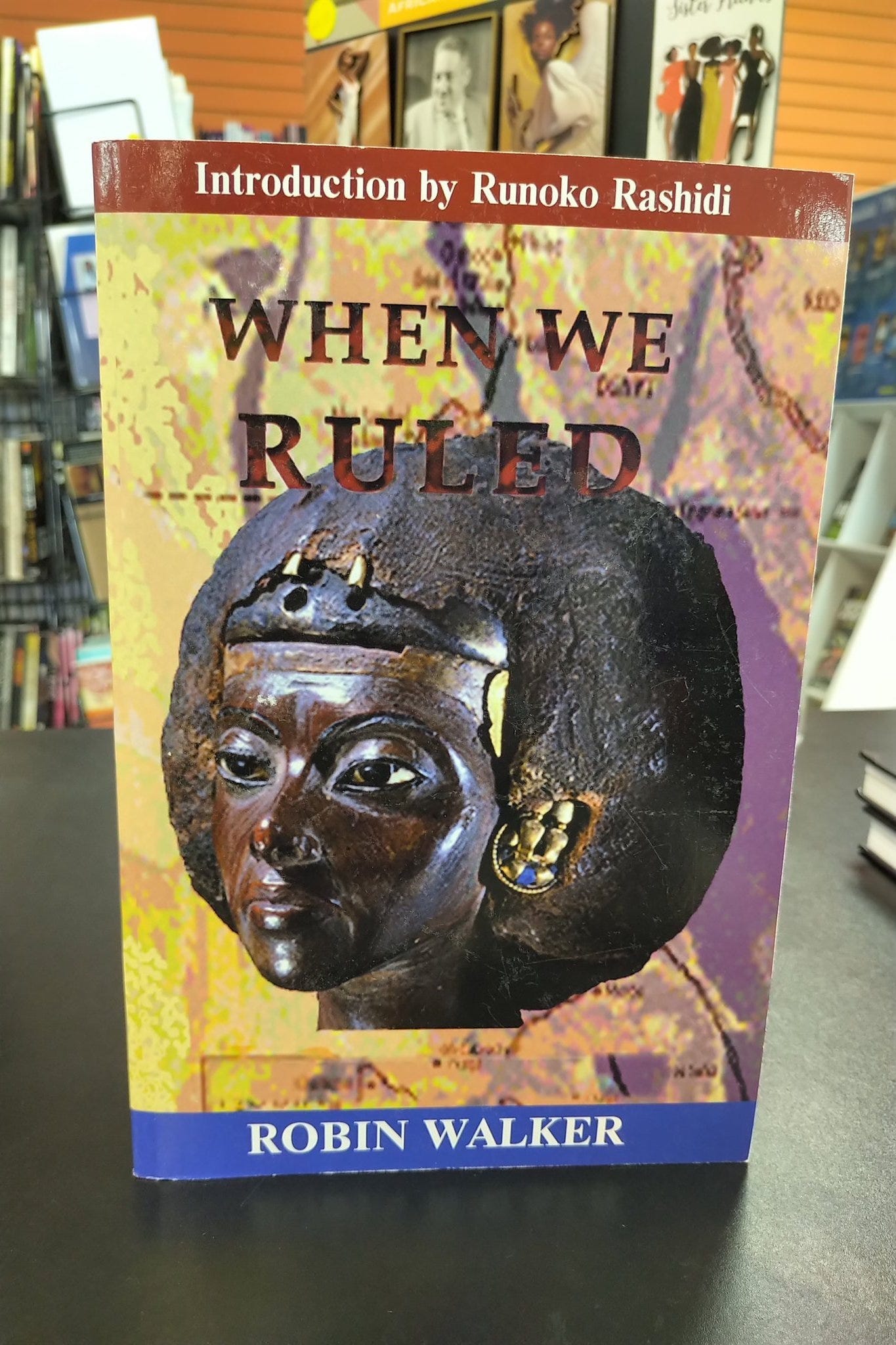
I’ve written twelve others since, the most recent being African Ancient Origins. You’ll find the whole list at theblackhistoryman.com/books.
I also run an organisation called Black Secret Education Project where we teach Black and African history.
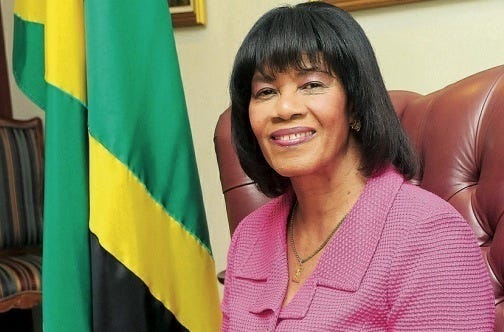
My proudest moment was when I placed a copy of When We Ruled into the hands of Jamaica’s then Prime Minister, the Right Honourable Portia Simpson-Miller. I’ve always joked that if she ever changes her name to Ra Hotep of Amen, I’m taking full credit.
That’s enough about me. Let’s get into our history.
My work challenges things most of us were taught to take for granted.
There's a graphic I like to open with.
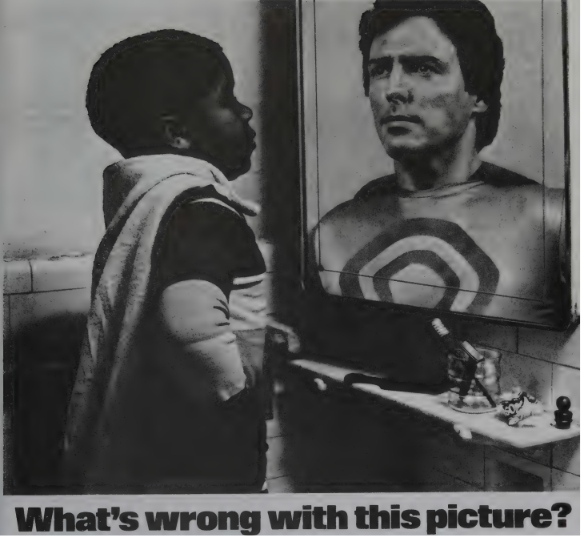
Here we have a young boy looking into the mirror and seeing a superhero looking back at him. And while that boy is in the zone thinking he could be a superhero, notice that superhero doesn’t have the same traits as him.
This is the beginning of us being programmed.
I want to put a question to you before we go any further:
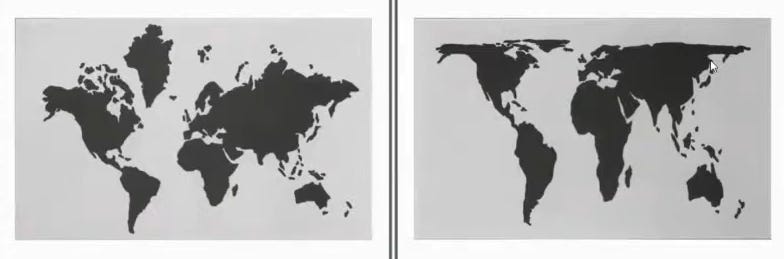
In 1569 a Flemish cartographer named Gerhard Kremer drew the map we still use to this day.
It is called the Mercator projection, and on that map, Africa and Greenland look about the same size. Europe is larger than it should be. And the countries of the southern hemisphere have been shrunk.
In reality Africa is 14 times bigger than Greenland.
If something as basic as the shape of the world has been distorted, what else have we misunderstood?
The largest misunderstanding of all concerns the people who built ancient Egypt. I answered that one in full on 1st August, and you can watch it whenever you like: Who Were The Ancient Egyptians?
In this series of guest posts for The African History School, I will be presenting the facts which prove that:
Let’s start with the Sphinx (Hor-em-akhet)
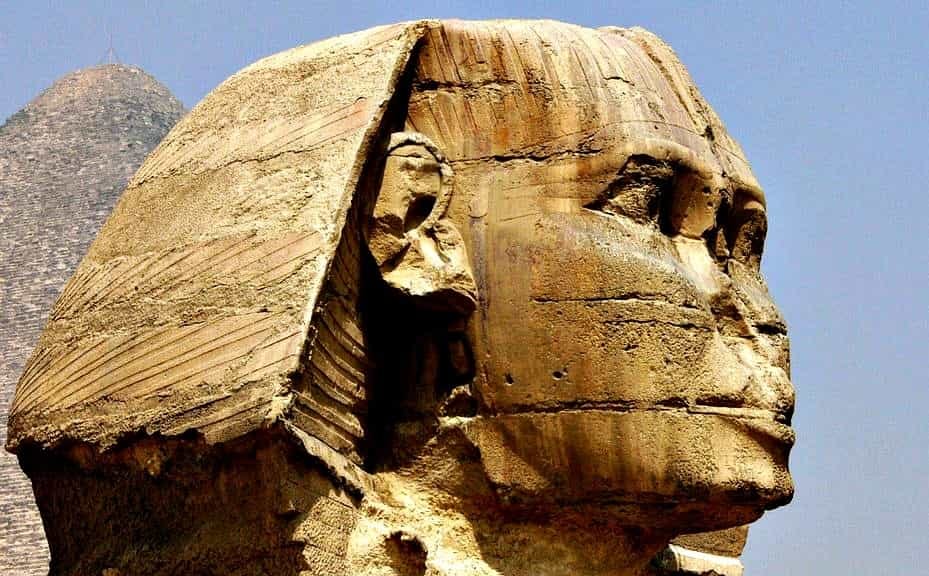
The Great Sphinx of Giza has been dated and redated. For a long time archaeologists credited the Sphinx to pharaoh Khafra and placed the work around 2500 BC, in line with the conventional Egyptian timeline.
Then in 1991, Robert M. Schoch, a geologist at Boston University, directed a study of the weathering on the monument.
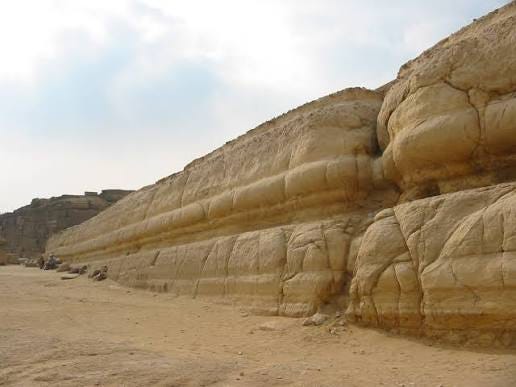
He concluded that the Sphinx had been carved somewhere between 5000 and 7000 BC. That pushes it back at least 2,500 years beyond the date the mainstream was willing to accept.
To my knowledge, no scholar has managed to prove Professor Schoch wrong.
Does that mean pharaoh Khafra's reign needs to be moved back another 2500 years?
I think that's a question worth considering.
So the monuments of Egypt may be far older than the textbooks allow. That leaves a second question.
Where did the people who carved them come from?
If we follow the trail south, we will find a kingdom you have probably never heard of.
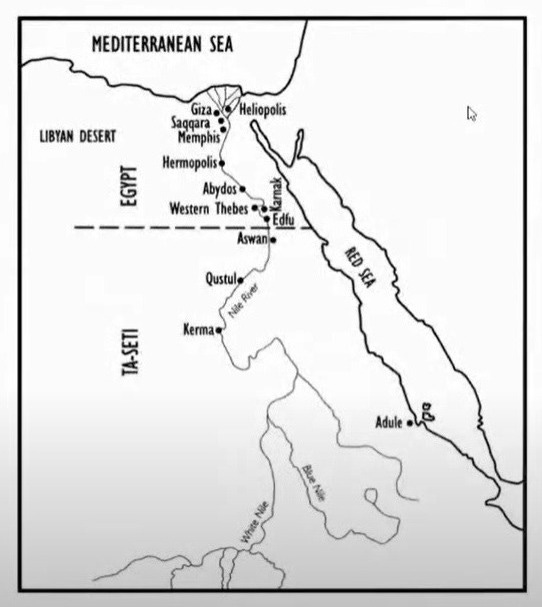
When I begin the story, I don't begin in Egypt (Kemet). I begin in Ta-Seti.
The kingdom was located in the modern region of Southern Egypt and Northern Sudan.
On 1st March 1979, the New York Times ran an article titled "Nubian Monarchy Called Oldest."
Here is what it reported:
‘Evidence of the oldest recognisable monarchy in human history, predating the earliest Egyptian kings by several generations, had been discovered in artefacts from ancient Nubia in Africa…
The discovery is expected to stimulate a new appraisal of the origins of civilization in Africa, raising the question of to what extent later Egyptian culture may have derived its advanced political structure from the Nubians…
Dr. Williams said the dating is based on correlations of artistic styles in the Nubian pottery with similar styles in predynastic Egyptian pottery, which is relatively well dated.
He said some of the Nubian artifacts bore disconnected symbols resembling those of Egyptian hieroglyphics that were not readable.
“They were on their way to literacy,” Dr. Williams said, “probably quite close to Egypt in this respect.”
Let me pause on the last point.
It wasn't that the Nubian hieroglyphics were unreadable; it was that Dr Bruce Williams couldn't read them.
He recognised the hieroglyphic symbols as the same ones we see in Egypt. He tried to read them as if they were Egyptian but it did not make sense. Then it dawned on him that perhaps the language behind those inscriptions was not actually the ancient Egyptian language but the ancient Nubian language. And that is why he couldn't read them.
But instead of reporting it that way, the New York Times reported it as though they were unreadable and the civilization was ‘on their way to literacy’.
No, he couldn't read them.
So what was found?
They found evidence of a dynasty of nine to eleven pharaohs of Ta-Seti who were ruling in Nubia before the very first pharaoh of ancient Egypt.
This is a very powerful fact, because it means that ancient Nubia is the world's first kingdom in human history.
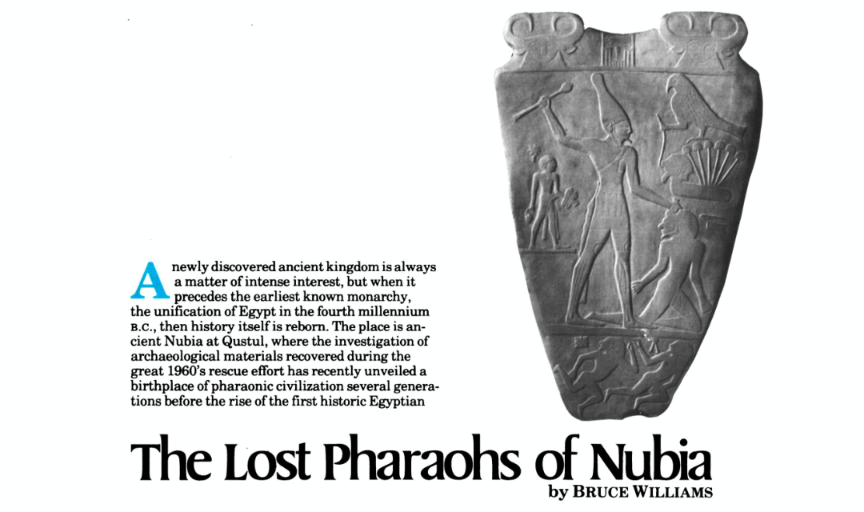
In 1980, Dr Williams published his own account, “The Lost Pharaohs of Nubia.”
He wrote:
‘A newly found kingdom is always a matter of intense interest, but when it precedes the earliest known monarchy, the unification of Egypt in the fourth millennium BC, then history itself is reborn.’
Today, Ta-Seti is called Qustul and the material, recovered during the Aswan Dam great rescue digs of the 1960s, revealed a birthplace of pharaonic civilisation several generations before Egypt’s first historic dynasty.
That is all for today.
Nubia gave the world its first kings, generations before Egypt had any.
In the next article, we’ll cross the border into Egypt and I will show you who built it.
If you do not want to wait for that, this Masterclass is a great place to go next:
Who Were The Ancient Egyptians?
Thank you for reading,
Robin Walker,
Founder of The Black Secret
PS.
Who Were The Ancient Egyptians?
The opening 8 minutes of that page is public. The full 2h 25m recording and the complete source list are for paid members of The African History School and The Black Secret.
Comments
Nothing yet. Say the first thing.
Sign in to join the conversation.