
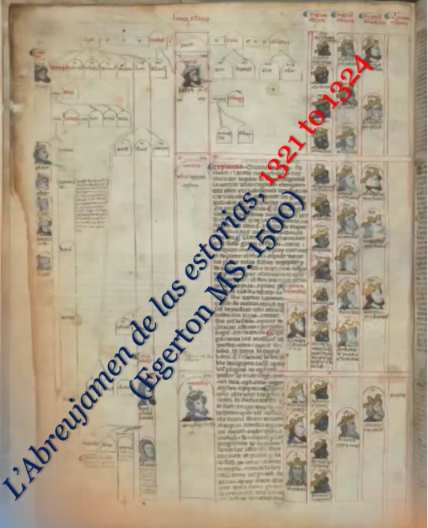
There is a manuscript in the British Library, catalogued as Egerton MS 1500, written between 1321 and 1324.
Three columns from the right, the scribe drew the rulers of ancient Egypt.
He painted them Black.
It has been sitting in a public collection in London for seven hundred years.
And if we zoom in, you can see Cleopatra, and underneath Cleopatra, Julius Caesar.
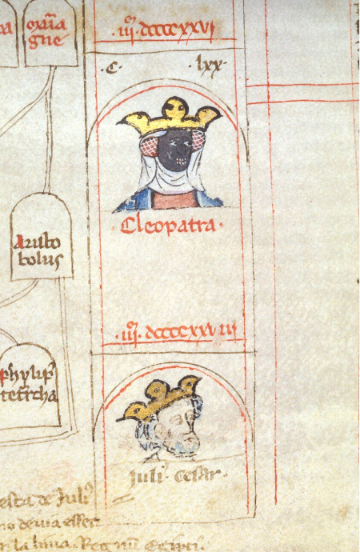
I wouldn’t have gone quite as far as that, so this is where a medieval manuscript is stepping harder than me, but there it is.
A medieval scribe painted what he understood to be true.
But when a fourteenth-century scribe is willing to say something an Egyptologist in 2026 will not, we need to find out why.
In this masterclass I want to explore what is riding on the answer, and what happened between 1324 and now that turned an unremarkable fact into the most contested question in Black history.
Ancient Egypt is a key part of world history.
But due to the research of a list of great scholars, it is also a key part of Black history.
Those key scholars:
Jamaican scholar J. A. Rogers
African American Drusilla Dunjee Houston
Professor Chancellor Williams
Senegalese scholar Cheikh Anta Diop
African American John Jackson
Guyanese scholar Ivan Van Sertima
Congolese scholar Théophile Obenga
These are the people that have made ancient Egypt a part of Black history.
The ancient Egyptians wrote medical texts, such as the Edwin Smith Surgical Papyrus and the Ebers Papyrus.
These are some of the most important foundation texts in the evolution of medicine and surgery.
The ancient Egyptians wrote mathematical texts, such as the Rhind Papyrus, the Berlin Papyrus, and the Moscow Papyrus.
These are the foundations of high school mathematics.
The ancient Egyptians wrote the Pyramid Texts, the Coffin Texts, and the Coming Forth By Day.
This is perhaps the most influential and the most profound body of literature in the whole of human history.
And ancient Egyptian history makes tourist money for the modern population of modern Egypt, who are largely Arabic and Turkish.
So there is a lot riding on the question of who the ancient people of Egypt were.
Now, in my opinion, there are three reasons why we study our history.
What you believe and what you think shapes how you feel. How you feel shapes what actions you take. What actions you take shapes the results.
And what results you get shapes what you believe and what you think.
It is therefore important that that is a positive feedback loop. And history is designed to make you aware of what your ancestors have done, and therefore what you can do, and what results you can get.
That’s why history is important.
I have to see value in you. You have to see value in me. We have to see value in each other. Where is that value?
In our shared history.
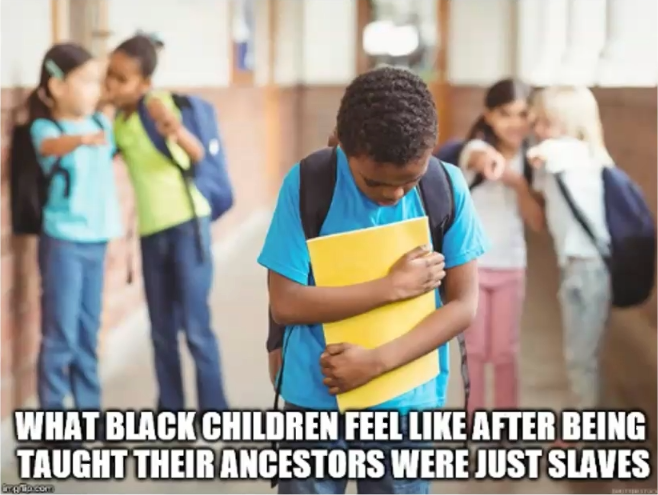
What Black children feel like after being taught their ancestors were just slaves. Everybody’s pointing at that black boy: you are the person descended from slaves.
And no doubt you were in the classroom, and people were pointing at you with similar ridicule and similar disdain.
Professor Cheikh Anta Diop, the great Senegalese scholar and historian, had other opinions.
He believed that ancient Egypt should be studied for very different reasons.
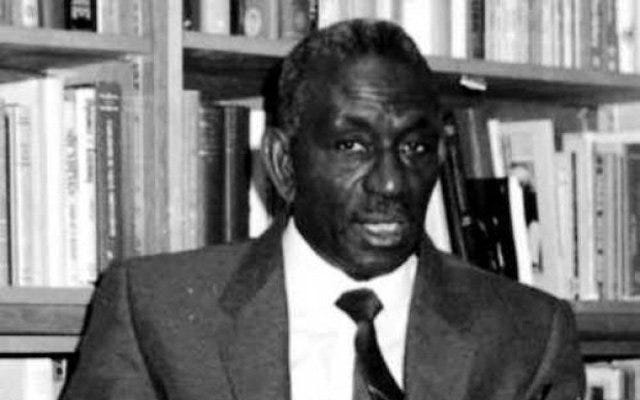
Therefore, in any discussion of African history, ancient Egypt has to be a part of it, because it’s the beginning point.
Therefore we need to study ancient Egypt for that reason alone.
Thirdly, Professor Cheikh Anta Diop invented the two-cradle theory of sociology.
And this is the idea that those people that evolved in Africa developed what he called southern cradle thinking. Those people that evolved after the Ice Age developed a very different way of thinking. And those people of Asia and elsewhere have traits coming from the northern and the southern cradle.
With this model, Professor Diop was able to revolutionise the teaching of sociology.
Fourthly, Professor Diop called for a new body of human sciences, again with ancient Egypt in there.
Let me quote him. Why do we need this new body of African humanities?
He said:
‘The history of Black Africa will remain suspended in air and cannot be written correctly until African historians dare to connect it with the history of Egypt.
In particular, the study of languages, institutions, and so forth cannot be treated properly.
In a word, it will be impossible to build African humanities, a body of African human sciences, so long as that relationship does not appear legitimate.’
- Professor Cheikh Anta Diop - The African Origin of Civilization: Myth or Reality.
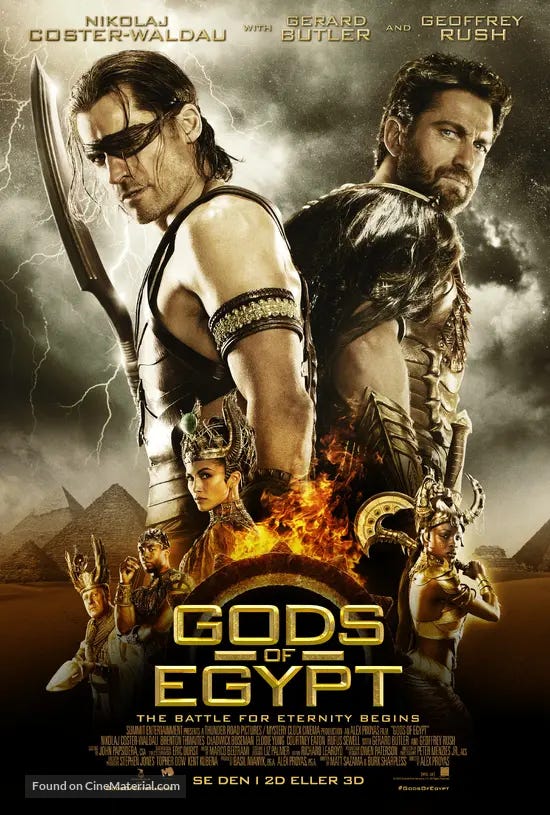
But years later, we still must contend with Hollywood’s propaganda machine.
Really?
Comments
Nothing yet. Say the first thing.
Sign in to join the conversation.