
Welcome to the era of "post-market geopolitics," where the illusion of ever-increasing integration is finally colliding with the gritty realities of power and national survival. As is now abundantly clear, the rules-based order is no longer a credible guarantee—if it ever truly was. Instead, we are witnessing the reemergence of state interest as the guiding star of both economics and foreign policy, not only in the so-called "Global South" but at the very core of the global West.
Asia is on the frontline of this realignment.
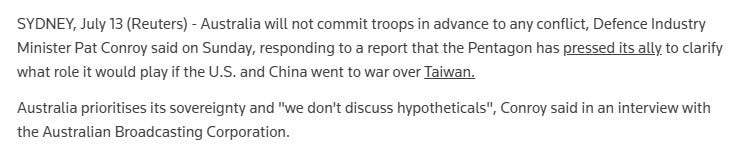
Australia, long the archetype of strategic ambiguity, finds itself the object of trans-Pacific tug-of-war. The country's Prime Minister navigates between Washington (the traditional security guarantor) and Beijing (the indispensable trading partner), all while pretending that ambiguity is still an option. The signals from the US, however, could not be starker—if you don't pick a side, someone else will pick it for you. American strategists have grown weary of calls for "dialogue" and "engagement"—the time has come for "defense" or, at the very least, for the imposition of tariffs so punitive they force clarity.
Meanwhile, China's strategic patience yields increasingly visible dividends, something that has been outlined perfectly in a recent post by our friends over Doomberg. While the West pursues renewable energy fantasies, Beijing has cornered the supply chains critical to these very ambitions while simultaneously indulging in coal consumption at a staggering scale. At the time of the first United Nations COP meeting in 1995, global coal consumption totaled 93.6 exajoules.
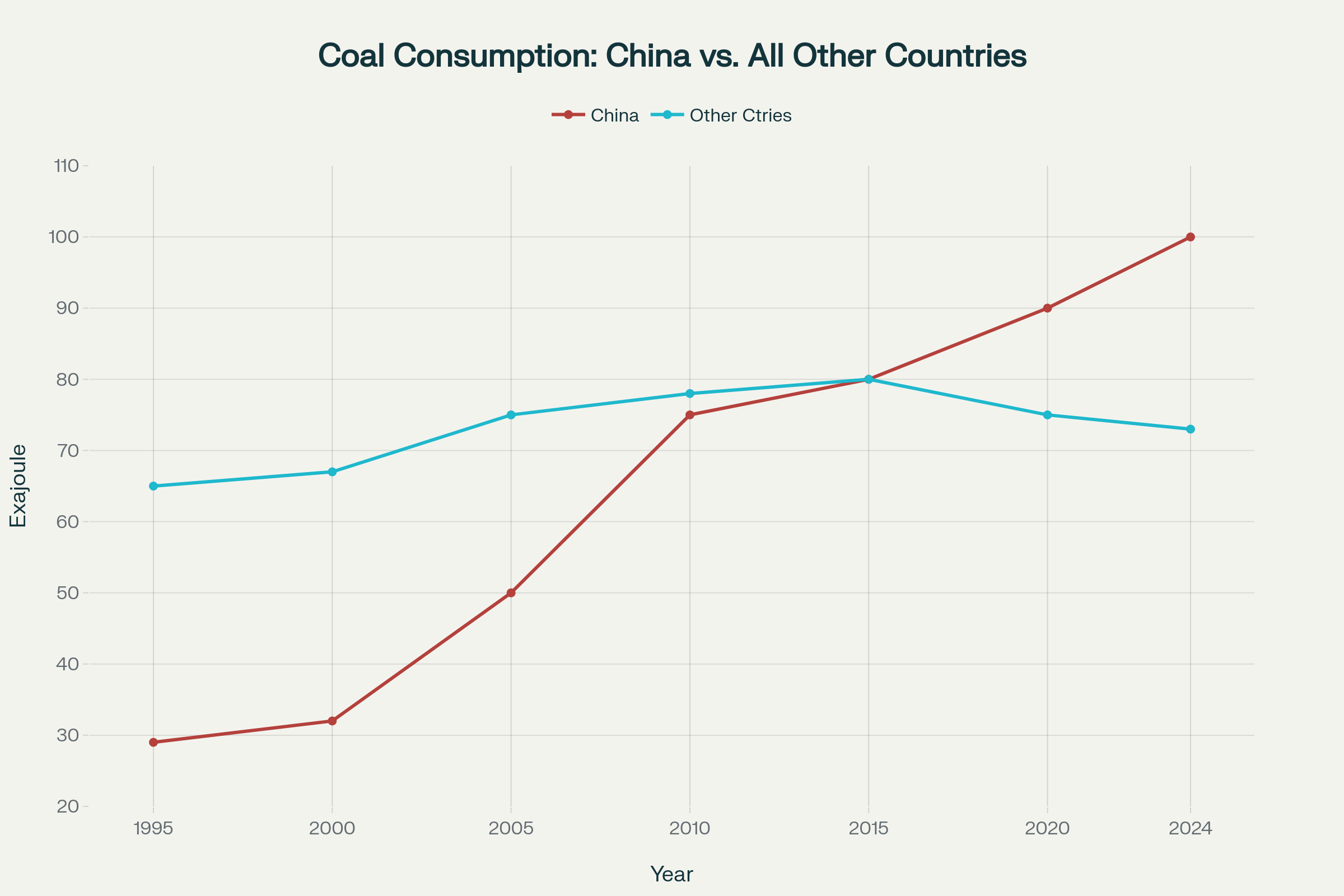
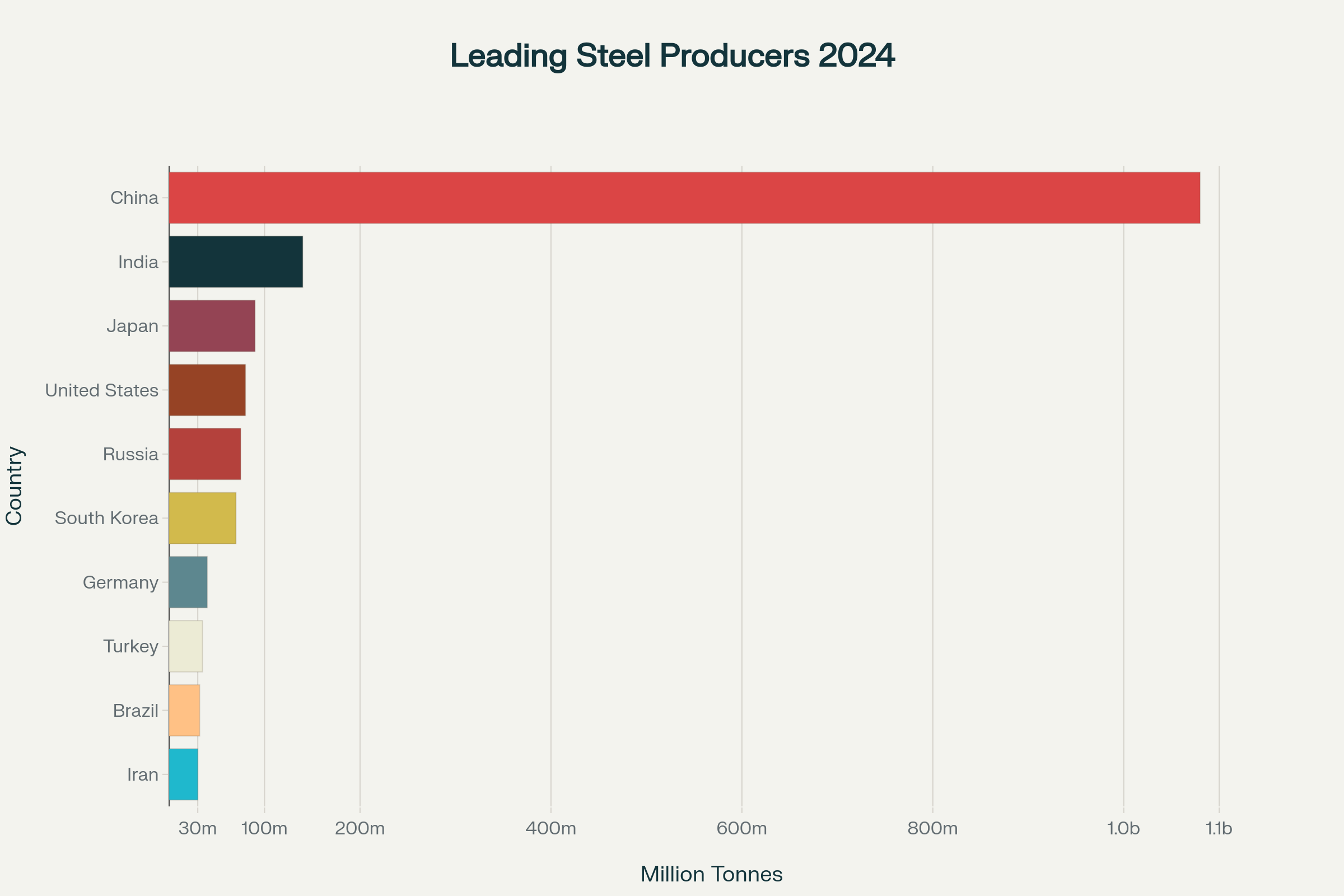
By 2024, China alone had nearly equaled that, consuming 92.2 exajoules—a full 56% of world output. When a single country's coal consumption accounts for 15% of the world's total energy supply, it gains the ability to generate enormous amounts of electricity. Today, China operates the largest—and arguably the most technologically advanced—power grid on the planet. Armed with vast quantities of cheap, coal-derived energy, China long ago made the strategic decision to dominate global steel production. Although it ranks only a respectable third in iron ore output, the world's top two ore producers—Australia and Brazil—are more than willing to supply China with as much as it can consume. Combined with a mix of domestically sourced and imported coking coal, this has enabled China to outproduce every other nation by a wide margin, beating U.S. steel output by nearly 13-fold in 2024.
Comments
Nothing yet. Say the first thing.
Sign in to join the conversation.