
You’re reading The Hundred Day Reckoning: a Creative Response to Hard Change, in which an award-winning playwright (me) mines ancient dramatic principles and a range of current wisdom to expand creativity, capacity, and freedom in the face of Life Drama (a.k.a. yours).
What doesn’t kill you makes you stronger, but how? Reckon and find out. The Hundred Day Reckoning program, live on zoom with me, is open for fall enrollment.
Day 1: Sept 7th, Day 100: Dec 15th.
Very limited capacity, has sold out every time. Explore and join.
I returned from a Stillwright retreat at Salo Farm to meet up with “Retreat Queen” Kia Corthron, who seems to be perennially scribbling in castles (true to form, Kia was just back from six weeks at Casa Ecco on Lake Como). Over a massive bread basket at the Whitney, we pondered: why does a person get more done in a week on retreat than in two months at home, yet return refreshed?
What is the power of a creative retreat? And can we bottle it for the rest of the year?
(But I haven’t been invited anyplace, I can’t take off work, I have a kid, I hate you. Skip to: Retreat for Coffee)
A Week is Six Months
One trick is, you know it’s coming.
In the case of Stillwright, the summer week began with a winter invitation (this week was for alumni of other Stillwright silent playwriting retreats with founding playwright Erik Ehn, thus the lucky rare invite).
So you make a creative date with the second week in June: I will crack this play, this book proposal, or both in the second week in June. The plan sustains you through the multiple not-retreat weeks; when you feel scattered and yearn for a clear head or a clear day to work, you whisper your date.
A Retreat is What Doesn’t Happen
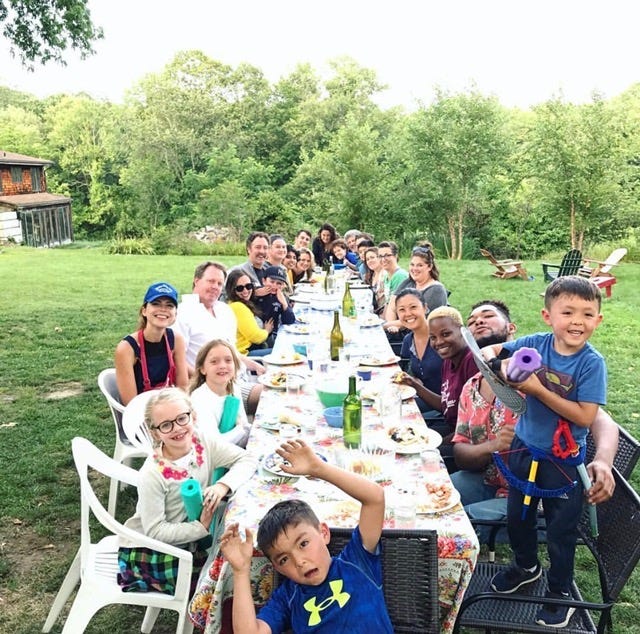
I stan Priya Parker’s Art of Gathering, which calls for “generous authority” to set a strong container. On this silent Stillwright retreat, speech and the internet were out. That’s unusual, but retreats must leave elements behind, or they are not retreats. At Hedgebrook on Whidbey Island, part of the ethos is to release women from caregiving, one reason folks can’t bring pets. The SPACE family residency (formerly at Ryder Farm, now tbd) welcomed kids, and hired counselors to play with them all day so parents could work.
Often, cooking and thinking about food are off the menu for residents. At the MacDowell colony long ago, I watched the mother of a five-year-old weep when she was served a custom omelet at breakfast.
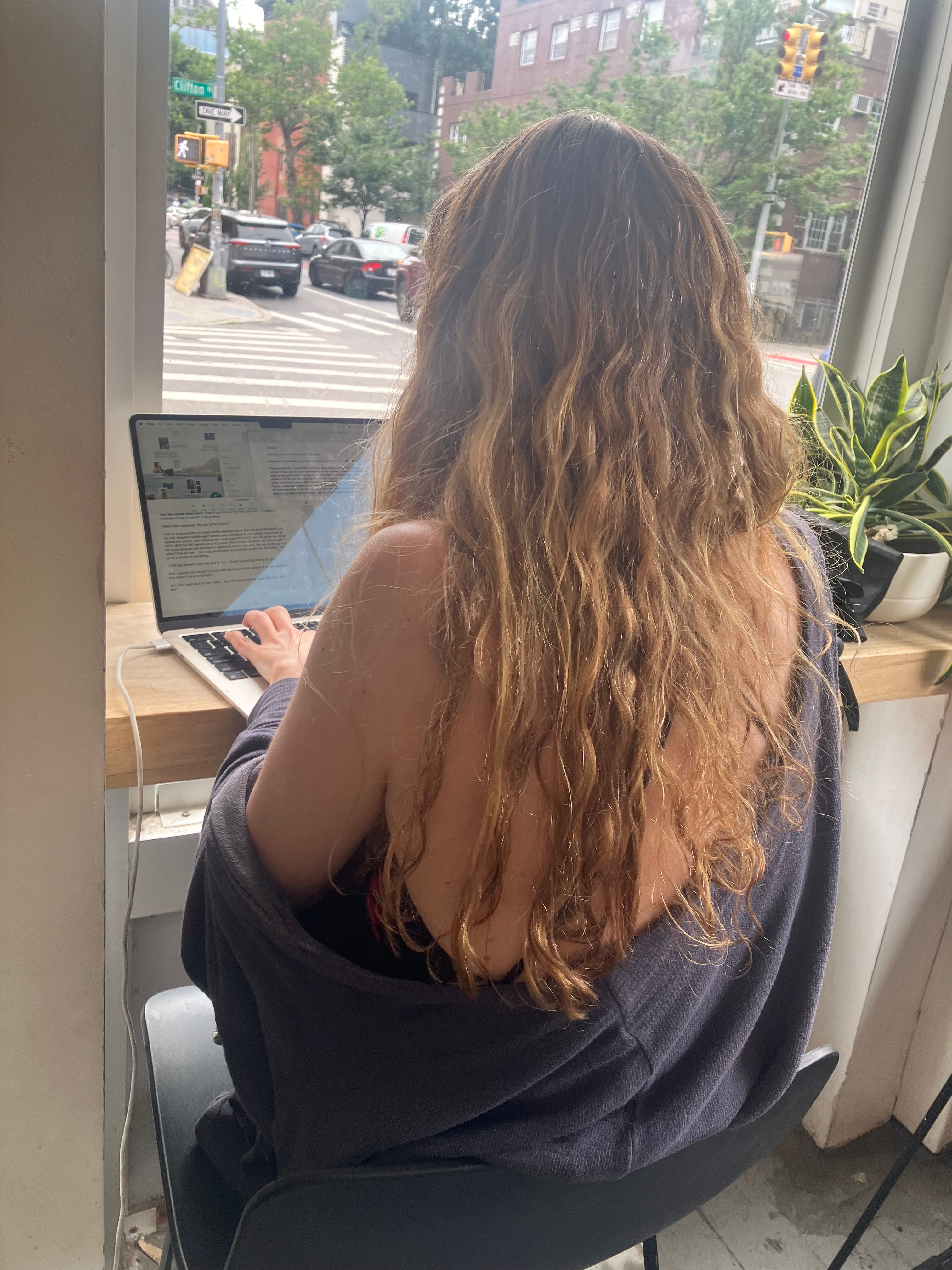
There is often a care element at a retreat. Someone supports someone else. Yet:
Luxury is Peripheral
I’ve retreated in dorm rooms with dining hall meal tickets, and in an Italian Villa with uniformed staff (yes, Bellagio). The work happens either way. (Although the beauty and care we encounter on retreats might be an artist’s main experience of beauty and care! I visited gorgeous places on retreat before I paid to go to such places, and I’m not on track ever to book myself into a villa.)
Some chores don’t detract either, but there’s a balance. Too many tasks, or a need to track them, would change the dynamic. At Stillwright last week, I was grateful to Liz Duffy Adams & Gary Winter for taking on the mental load of communication with hosts, checking the voice mail for emergency messages, etc.
When Erik Ehn runs the retreats, he hosts the creative experience as well, with cumulative prompts designed to move a writer through an entire play. For the alumni version, we co-hosted the work sessions, by taking turns sharing writing warm-ups.
You can co-host or no-host. You can even:
Retreat for Coffee
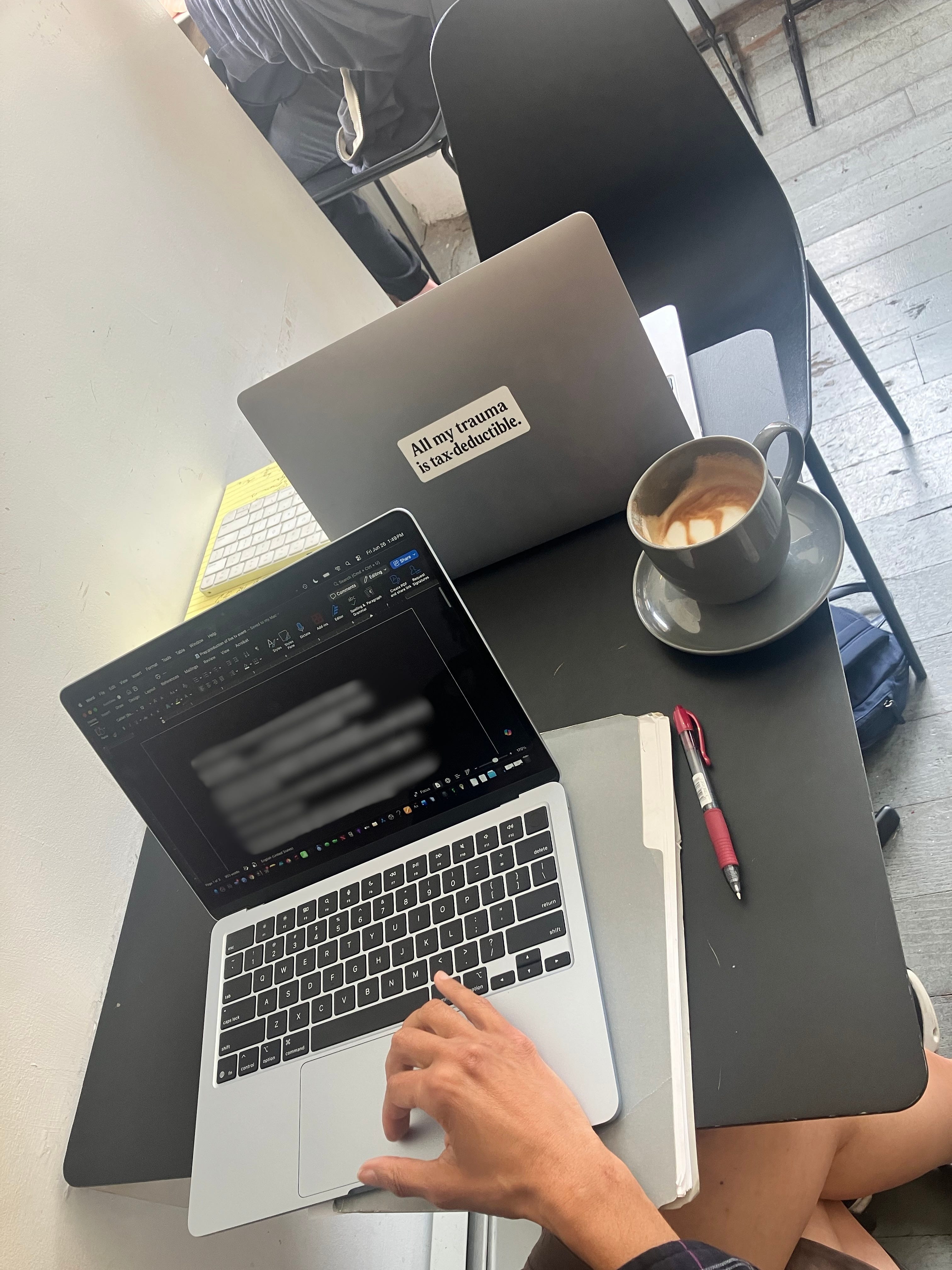
I’m writing this at the Bureau Café in Bedstuy, Brooklyn, which is not in my neighborhood, it’s near Francine, who has a new baby. So Tanya and I transit to Francine’s neighborhood to keep up a habit that we started long ago when we realized we needed to hang out more, and to write consistently, and could do both if it happened together. For years, Francine had a fancy co-work share where she could sign out a private room; now the coffee shop is the host, and we get more done, and have more fun, than if we’d stayed home. It’s the same magic.

You Don’t Even Need Walls
Evangelia Kingsley hosts a weekly writing hour on zoom for alumni of my Deep Dive year-long playwriting program. I’m a regular at Caveday, an online co-working experience, where a “Cave Guide” holds the time and gives a greeting, warmup, and closing for each session. It’s just a zoom meeting, but don’t tell my brain. I’m paying to be logistically held for that hour or three hours, to keep some things out and put other things in. It’s 100% vibes but it 100% works.
The CoLab SUMMER CAMP looks like another a kind of retreat, skillfully named to communicate that you, the grown-ass creative adult, will be the camper, playing inside a structure planned by others.
When Todd and I moved to Seattle in the 2010s, I needed friends. But I’m bad at hanging out, and so are most of the people I like. You know what worked? All-day writing and snack sessions at our place every Friday. A poet, a playwright, a sociologist, an architect, and a science writer showed up regularly. In Seattle, that’s like a lightning strike per week. It struck, and stuck, because we needed it.
Maybe we didn’t get into Yaddo or MacDowell this year (and by we I mean me). For a week or an hour, we can choose what to bring in: our project, our people. And what to leave out: the rest of everything.
We retreat to recharge. No castle needed. Except for Kia.
Links
Priya Parker’s The Art of Gathering
SPACE (formerly on Ryder Farm) in transition
This Wednesday morning post is free as always. The paid version gets you access to archived writing prompts, and most importantly, subscription fees directly support the independent creation of this work, including paying other artists. Thanks for considering an upgrade!
Curious about The Hundred Day Reckoning, a Creative Response to Hard Change, live on zoom with me? Read the very first post to learn more.
No posts
Comments
Nothing yet. Say the first thing.
Sign in to join the conversation.