
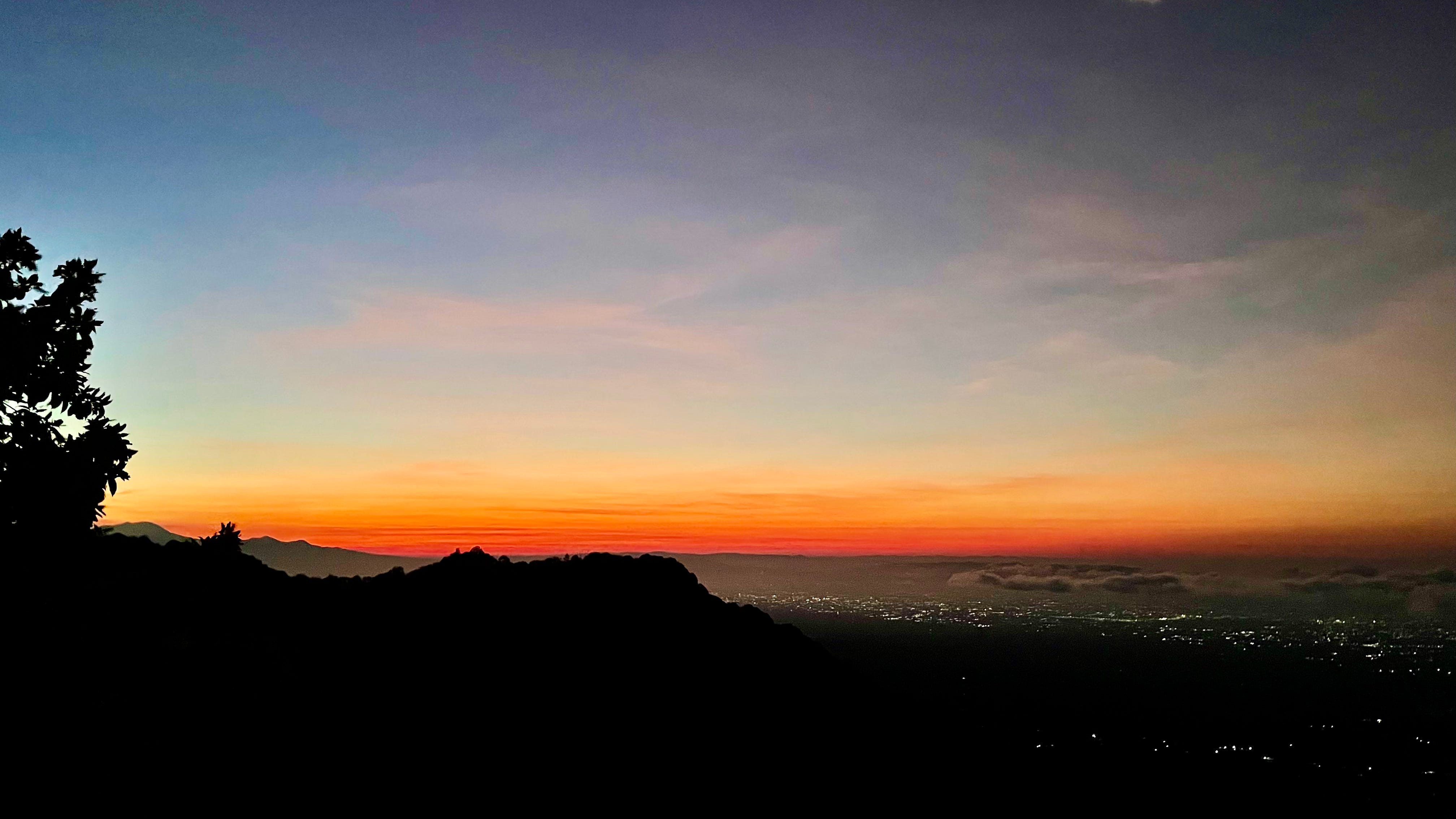
I was in the Java islands on another solo trip. One morning I was walking—headphones off, city half-asleep—when this thought hit me: maybe I’ve become too efficient.
Not in the proud LinkedIn way, but in that quiet, unnerving way where the day runs smoothly, boxes get ticked, and by evening I can’t remember anything that actually happened.
Efficiency is supposed to make life easier. And it has. I’ve built systems for everything—meeting templates, decision frameworks, even a checklist for conversations. It works. I get more done in less time. Lately it feels less like freedom and more like autopilot.
I know where it comes from. The economic part of me—Homo economicus—learned early that time is money, that efficiency is a kind of morality. Don’t waste time. Be useful. If you finish early, you’re a good boy.
But as an adult the lesson bent into something odd: the better I get at finishing work, the more work arrives. There’s no “done,” only a faster treadmill.
So efficiency, which was meant to save me from drudgery, now is the drudgery. What scares me isn’t burnout—it’s numbness. When I’m too efficient, nothing surprises me.
Brains like efficiency; they automate to save energy. But meaning lives in the parts that aren’t automatic. That’s why time feels long when you travel or fall in love or learn a new language: every tiny friction demands awareness. Maybe that’s what the Homo sapiens in me sometimes misses—friction.
Friction shows up only when I’m far from my systems.
Like travelling alone. Every tiny decision demands attention—when to leave, what to eat, whether to trust a stranger—and that constant choosing keeps me awake in my own life. It’s tiring, but it stretches time. By night it feels like three days have passed. Friction slows the clock.
The same thing happens when I write stories. I never know where an idea will go. Half the time it fails and becomes something else. That’s the fun: uncertainty, slow discovery. There’s no shortcut for that.
That’s also the reason I’ve stopped racing through books. Now I read a page or two, close the cover, sit with it. Sometimes a line haunts me for days.
When I look back, the moments that stay aren’t when I was fastest or smartest. They’re when I was clumsy, curious, a little lost. Those weren’t productive days—they were alive ones.
I don’t think it’s just me. We optimise mornings, hack sleep, count steps, track moods—as if life were a problem to solve. Solve one problem, then build five dashboards to monitor the solution.
Maybe it started from fear. Many of us watched our parents juggle jobs, loans, expectations. They didn’t have the luxury of inefficiency. Time wasn’t abstract; it was rent and school fees. We inherited a code: to waste time is to waste life. We built our self-worth on momentum. We mistake movement for meaning. Even tired, we open another tab because stopping feels dangerous—like the world might move on without us.
But I’m starting to think that maybe inefficiency isn’t the enemy. Maybe it’s what makes us human.
When I slow down—write, walk without a destination, get lost—my brain stops predicting and starts noticing. Air feels heavier. Sounds sharpen. Thoughts wander into old rooms.
When the brain’s in task-mode, it’s focused, linear, closed—great for getting things done, terrible for wonder. Drift a little and another network wakes up—the one that connects dots, remembers childhood, imagines futures. In other words: inefficiency is where meaning lives.
Time feels richer when I travel, read slowly, or write without purpose. Those moments aren’t about output; they’re about contact—with the world, with memory, with myself.
Across traditions this isn’t new. Zen has ma, the beauty of the pause. In Sanskrit there’s līlā, often translated as “divine play”—creation out of free abundance, not necessity. We just rebranded it as failure.
When I’m in that slow space—not trying to be productive or perfect—life feels less like a race and more like a conversation. Maybe inefficiency is simply the courage to waste time beautifully.
Of course I can’t just wander. The world doesn’t slow down because I want it to. My father’s generation would laugh. For them, efficiency wasn’t a trap; it was survival. “Work first, rest later,” they used to say. Most of life became “work first.” Rest was always scheduled for a tomorrow that never came.
I don’t want to romanticise inefficiency in a country where many are still hustling to breathe. The freedom to be inefficient might be a new luxury. And yet: no amount of optimisation has ever made me feel alive.
Maybe the answer isn’t to abandon efficiency, but to contain it—be efficient in what keeps me safe, so I can be inefficient in what keeps me human. I still like my checklists. I still love the little hit of a finished task. I just don’t want my life to become a spreadsheet.
Comments
Nothing yet. Say the first thing.
Sign in to join the conversation.