
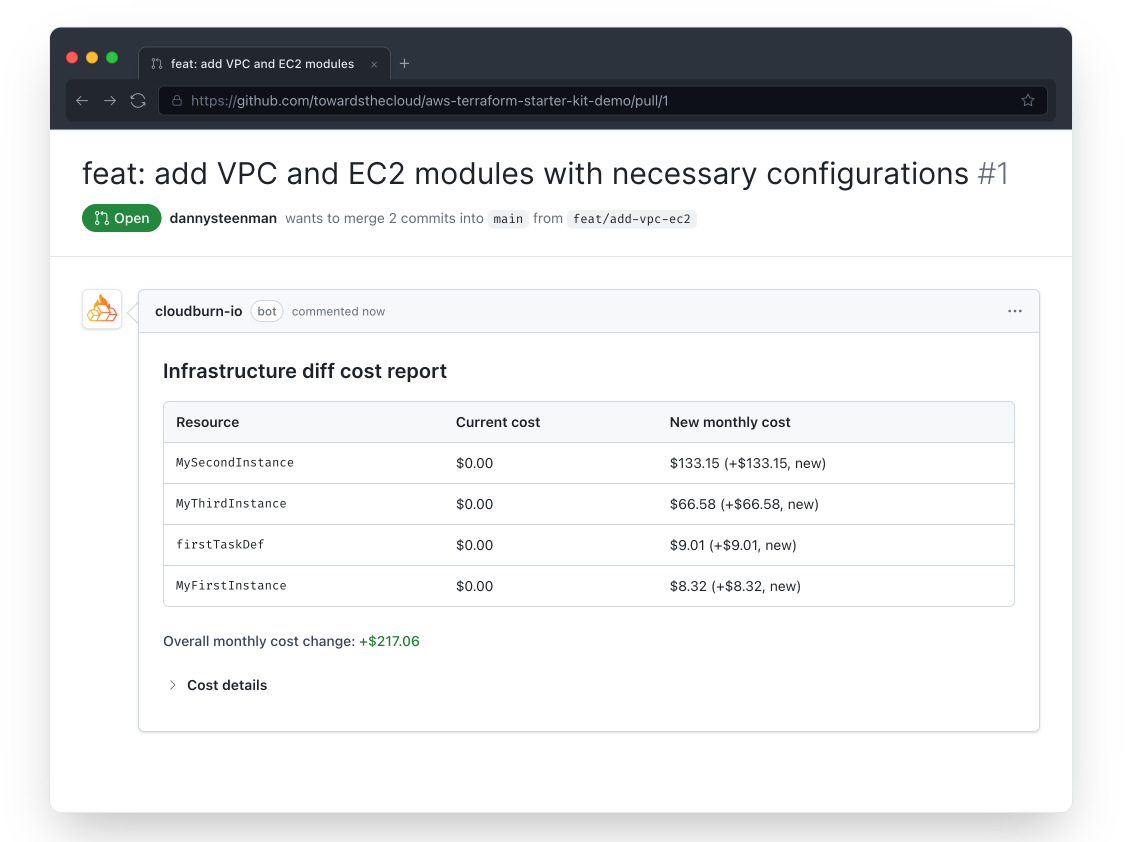
CloudBurn analyzes your Terraform or AWS CDK infrastructure changes and automatically posts cost estimates in pull requests. Catch expensive mistakes during code review instead of discovering them weeks later on your AWS bill.
I always recommend learning the Basics of Linux to anyone who is getting started in Cloud. Linux runs most of the cloud workload, and you will always find yourself troubleshooting or deploying on Linux machines.
In this issue, I wanted to share why you should learn Linux as a Cloud Engineer and some of the best resources to get started.
Free resources and references are mentioned at the end of this issue. So read all the way down.
Let’s get started…
Linux powers 49.2% of all cloud workloads globally as of Q2 2025.
This alone should convince you to learn Linux.
Think about that for a moment. Every other workload running in the cloud is Linux-based. When you’re troubleshooting a production issue or optimizing costs for your infrastructure, there’s nearly a 50/50 chance you’re dealing with a Linux system.
It’s the foundation of modern cloud computing. AWS EC2 instances are 83.5% Linux-based, Azure reports 61.8% Linux VM usage, and Google Cloud sees 91.6% Linux VMs. If you’re working in the cloud, you’re working with Linux whether you realize it or not.
Linux is the foundation of both of these technologies. If you understand Linux, learning k8s or Docker should be easy.
I have written about how container technology works under the hood in the following issue:
78% of all Kubernetes clusters globally run on Linux distributions
75% of Docker containers are deployed on Linux environments
96.4% of production Kubernetes clusters run on Linux
Container orchestration isn’t the future anymore. It’s the present. 80% of organizations deployed Kubernetes in production environments as of 2024, and projections show enterprise adoption will exceed 90% by 2027.
Every time you deploy a containerized application, you’re working with Linux. Every pod you scale, every service mesh you configure, every microservice you deploy, it all runs on Linux. Without Linux knowledge, you’re essentially flying blind in the container ecosystem.
93% of employers report difficulty finding qualified open-source talent
Linux systems administrators earn a median annual salary of $96,800, with top earners exceeding $150,320
62,808 active Linux engineer positions and 56,604 Linux administrator openings are currently available in the United States
110,000+ Kubernetes-related job listings on LinkedIn as of 2025
The demand far exceeds the supply. 61% of hiring managers actively seek Linux skills, and cloud platform expertise combined with Linux knowledge adds 15-25% salary premiums.
When DevOps engineers with Linux expertise command salaries between $115,000 and $179,000 (with top performers earning over $200,000 at major tech companies), it’s clear that this skill set translates directly into career advancement and compensation.
Many developers worldwide report using Linux either as a primary or secondary OS. If you are still not sure, you can use Linux on WSL. This is a great resource to get started.
Your peers and colleagues are already working in Linux environments. Development teams are standardizing on Linux for consistency between development and production. If you’re the one engineer who doesn’t know their way around a Linux terminal, you’re creating bottlenecks for yourself and your team.
Ubuntu demonstrates near-identical adoption rates between personal (27.8%) and professional (27.7%) developer usage, indicating that developers are choosing Linux not just because they have to, but because it makes their work more efficient.
AWS holds approximately 30% global cloud infrastructure market share as of Q3 2025
Azure holds 20% market share
Google Cloud Platform holds 13% market share
Together, the Big Three control over 60% of the global cloud infrastructure market, and Linux is the backbone of all three platforms. AWS EC2 instances are 83.5% Linux-based, with Amazon Linux, Ubuntu, and RHEL leading.
No matter which cloud certification you pursue, AWS Solutions Architect, Azure Administrator, or Google Cloud Engineer, you’ll be working extensively with Linux systems. The cloud providers have made their choice: Linux is the operating system of the cloud.
The server operating system market reached $22.28 billion in 2025 and is expected to grow at 8.90% CAGR to reach $34.12 billion by 2030
Linux holds 44.8% server operating system market share as of 2024
Organizations are migrating to Linux for cost efficiency, flexibility, and performance. 72.6% of Fortune 500 companies run mission-critical workloads on Linux.
The momentum behind Linux is undeniable. As cloud computing continues to grow (projected to reach nearly $6 trillion by 2035), Linux will grow right alongside it.
DevOps platforms rely on Linux for 82% of their infrastructure
The DevOps market is projected to expand from $13.2 billion in 2024 to $81.1 billion by 2028
DevOps positions rank second at 51% of organizational priorities
Every CI/CD pipeline you build, every infrastructure-as-code template you write, every automated deployment you configure—the underlying systems are running Linux. The most popular DevOps tools (Docker, Kubernetes, Jenkins, Terraform, Ansible) were all built with Linux in mind and work best on Linux systems.
Cloud platform expertise adds 15-25% premium to DevOps salaries, with AWS Solutions Architect being most valuable. But you can’t effectively use cloud platforms without Linux knowledge.
100% of the TOP500 supercomputers run Linux as of November 2024
64.9% of government data centers worldwide report Linux adoption
Banking and financial services increased their Linux infrastructure footprint by 21.5% year-over-year
This complete dominance in supercomputing isn’t coincidental—it’s because Linux offers the customization, performance, and stability that critical systems demand. Government-funded HPC laboratories reported a 15.6% increase in Linux kernel customization in 2025.
When organizations need maximum reliability, performance, and control, they choose Linux. That includes the most demanding computing environments on the planet.
Over 90% of organizations are now using or evaluating containers in some capacity
Gartner estimates over 95% of new digital workloads will be on cloud-native (mostly containerized) platforms by 2025
The global application container market reached $5.85 billion in 2024, with projections indicating growth to $31.50 billion by 2030
Docker maintains 87.67% market share in containerization, with over 108,000 companies utilizing the platform globally
Containerization has fundamentally changed how we deploy applications, and containers run on Linux. Even when you’re running Docker on Windows or Mac, those containers are running Linux inside.
The container market is experiencing 33.5% compound annual growth, and among IT professionals, container usage soared to 92%. This isn’t a trend you can ignore.
AI/ML workload adoption stands at 54%, with over 90% of surveyed teams expecting their Kubernetes AI workloads to increase within 12 months.
The AI revolution everyone is talking about? It’s running on Linux. TensorFlow, PyTorch, and other major ML frameworks are built for Linux environments. GPUs for AI training are optimized for Linux. Kubernetes clusters running AI workloads are on Linux.
As organizations race to integrate AI into their products and services, they’re building on Linux infrastructure. If you want to be part of the AI infrastructure revolution, you need to know Linux.
In my previous issue, I discussed what Linux concepts you should learn as a Cloud builder. Learn more here:
You don’t need to become a kernel developer, but you should be comfortable with:
Command-line navigation: Moving around the filesystem, managing files and permissions
System administration basics: Understanding users, processes, services, and system resources
Networking fundamentals: Using tools like curl, netcat, ssh, and understanding ports and firewalls
Package management: Installing and updating software with apt, yum, or other package managers
Log analysis: Finding and interpreting logs with grep, tail, journalctl
Shell scripting: Writing basic bash scripts to automate tasks
Container basics: Understanding how Linux containers work and how to troubleshoot them
Start with the essentials and build from there. Real-world problem-solving will deepen your knowledge faster than any tutorial.
Here are the three most-read resources we published on The Cloud Handbook.
If you are getting started in any cloud roles, my advice has always been the same. Learn Linux. It is an essential skill for Cloud Engineers.
See you in the next one!
- Kisan
https://www.fortunebusinessinsights.com/linux-operating-system-market-103037
https://commandlinux.com/statistics/linux-container-kubernetes-adoption-statistics/
Thanks for reading The Cloud Handbook! This post is public, so feel free to share it.
Comments
Nothing yet. Say the first thing.
Sign in to join the conversation.