
DevOps is not about tools or automation; it is a mindset change regarding how organizations develop their products. DevOps builds on the idea of breaking down the traditional silos between the development and operations teams to create a culture of innovation that develops at a significant pace.
In this article, we discuss how DevOps can serve as an accelerator to quicker product development and why CI/CD pipelines play a big role, and the cultural transformation is needed.
Let’s get started.
Over time we have seen that speed of innovation has been identified as a key business-differentiating factor. The balance in the market has changed hugely over the past years. The old paradigm of producing software every six months or every year does not apply to most industries in todays software market.
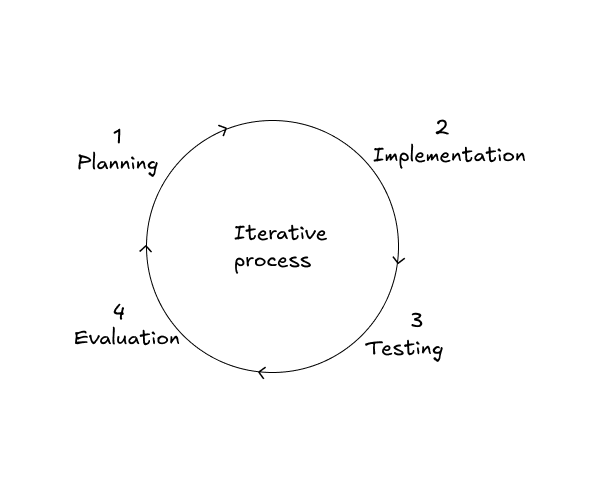
This high rate of speed required cannot be achieved at the cost of quality and stability. Users want an updated application but also they require reliable secure and performant applications. This is where DevOps comes in handy, it gives the system in accomplishing the speed and quality both.
So, What exactly is DevOps?
DevOps is not a role, or any specific tools. It’s a cultural movement.
DevOps as a cultural and technical adjustment was a reaction to avoiding friction between development and operations teams. In past, teams had different priorities, interests, tools, and even metrics of success. Developers had to push the features out into the market fast, but the operations team was keener on stableness and the uptimes.
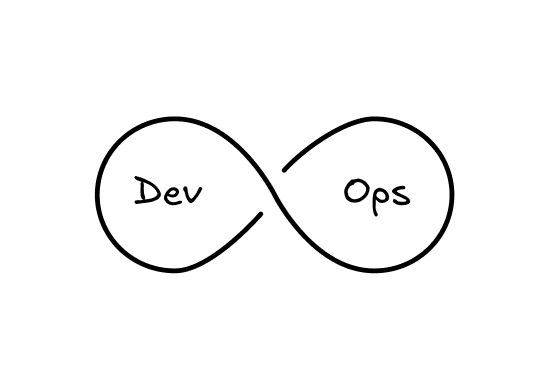
This division brought about the inherent conflict within the software development lifecycle. What would be handed over the wall is that code into the operations world and oftentimes ended up in some sort of deployment problems, and type of finger-pointing or in a delay of the release. The feed-back mechanism was long and ineffective.
DevOps is a system that prevents such barriers to coordination and collaborates between departments. It leads to cooperation, communication and integration between software developers and IT operations.
The main DevOps principles are continuous integration, continuous delivery, infrastructure as code, monitoring, and logging and a collaborative culture.
Later in this article we will discuss this in detail.
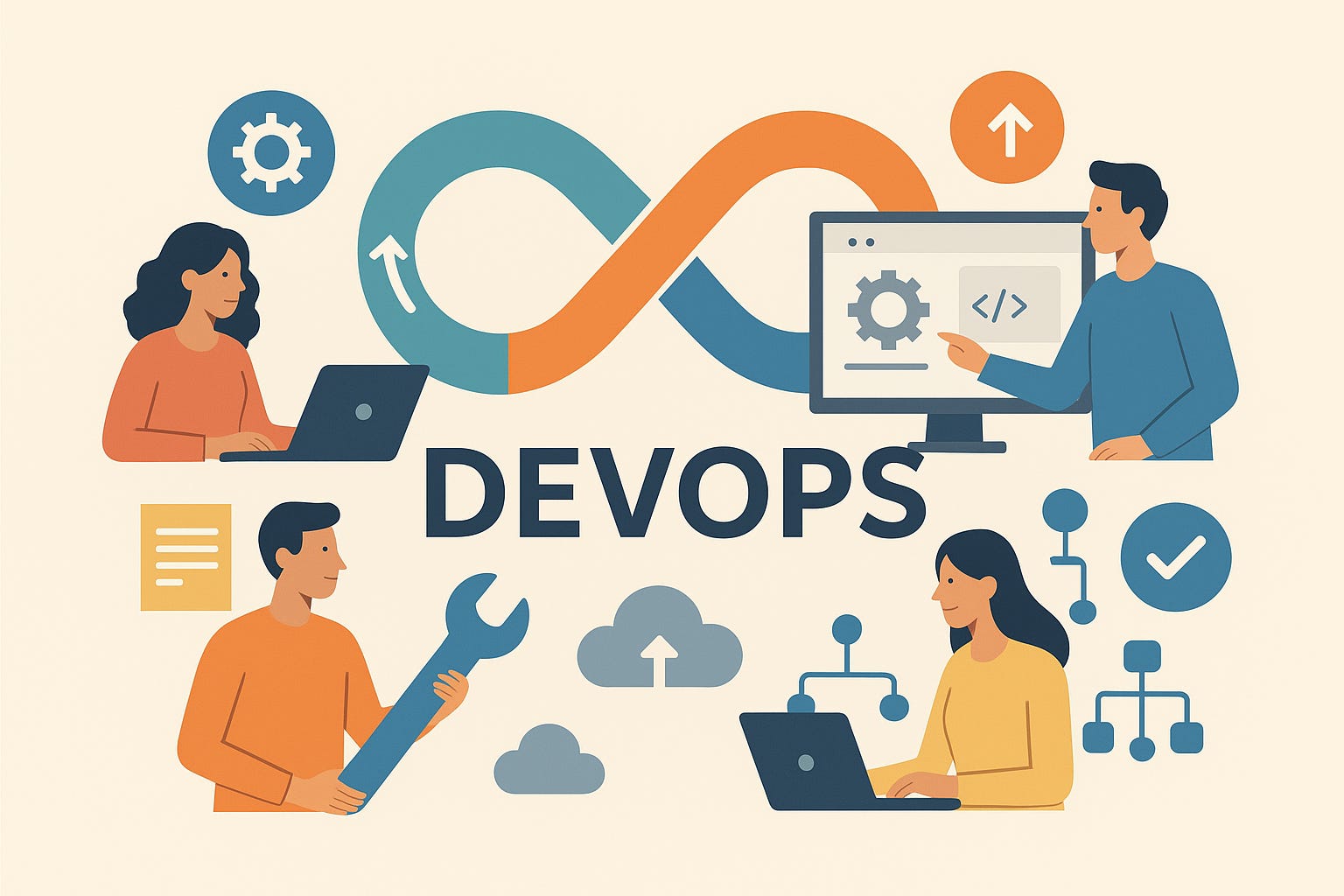
DevOps is more about Cultural shift than some specific tools as we mentioned already. DevOps clearly has a cultural dimension besides the technological one ensured by the use of CI/CD pipelines: it is all about changing the way people think.
In conventional IT organizations the development teams are traditionally evaluated on the basis of velocity of delivering features and the volume of new capabilities that they can develop. Operations teams are instead graded in system uptime, stability, and performance. The conflicting incentives that are created by these various success metrics make innovation lag.
Speed is a primary concern of the developers and stability is considered a priority of the operations teams, so it is clear that conflict will occur. Developers might want to roll out rapid feature releases, and operations might want to avoid any modifications to the system which can cause an alteration to the stability of the system. The tension produces long change approval mechanisms, large volumes of manual testing and conservative release cycles.
DevOps culture facilitates shared accountability of application performance throughout software development lifecycle.
Under a DevOps culture, operation issues such as monitoring, optimization of performance, and incident response become areas in which the developers participate. Operations engineers, in particular, find themselves engaged in the development process and give their input in matters of architecture and attempt to develop systems that are innovative but sound in operations.
The DevOps culture means a restructuring of teams so that those teams become more cross-functional with team members with a wider skill set, able to cover across multiple spheres. The T-shaped model of skills that allow employees to have in-depth knowledge on one aspect and huge breadth of knowledge in various others makes it possible to achieve independence among teams and speed up the processes.
With a thorough knowledge of development and operations issues, team members are able to make more informed decisions when it comes to making trade-offs between features, performance and reliability. They are also able to work more effectively since they do not need to wait until specialists in other departments can resolve matters within their focus of expertise.
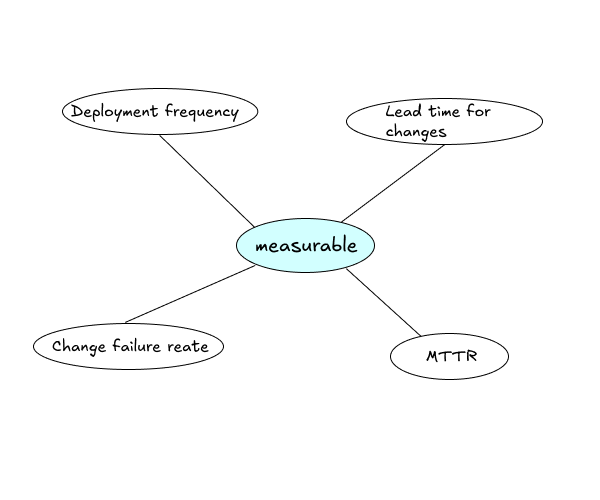
The benefits of DevOps for innovation aren’t just theoretical—they can be measured and quantified. Organizations that have successfully implemented DevOps practices consistently report significant improvements in their ability to bring products to market quickly.
Several key metrics demonstrate the impact of DevOps on innovation speed:
Deployment Frequency: This measures how often an organization deploys code to production. Higher deployment frequency enables faster delivery of new features and faster response to customer needs.
Lead Time for Changes: This measures the time from when code is committed to when it’s running in production.
Mean Time to Recovery (MTTR): When issues occur in production, this measures how quickly they can be resolved. Faster recovery times enable teams to take more risks and experiment more boldly, knowing that issues can be resolved quickly.
Change Failure Rate: This measures the percentage of deployments that cause production incidents. Lower failure rates enable more frequent deployments and faster innovation cycles.
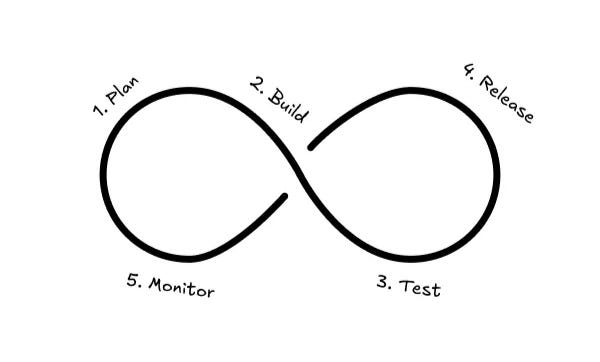
DevOps lifecycle most often consists of five stages: Plan, Build, Test, Release and Monitor. Every phase incorporates certain activities and techniques that boost the whole innovation process.
The planning stage is all about requirement, feature prioritization and development roadmap. Plan is shared and such planning occurs in a DevOps environment through the collaboration between software developers, operations team and business stakeholders.
The build stage is the process of compiling software, resolving dependencies and generating something deployable. The DevOps build practices pay much attention to automation and uniformity.
Comments
Nothing yet. Say the first thing.
Sign in to join the conversation.