
30th June 2026
In the last edition of TSCG, I introduced the eight aspects of AI that are most on my mind right now, and that I felt that I needed to write more about.
Today, I’m going to discuss one of them, mainly because it affects me personally. I’ll also cover a bit of AI news, and some of you will be glad to see I’m reintroducing the music recommendation.
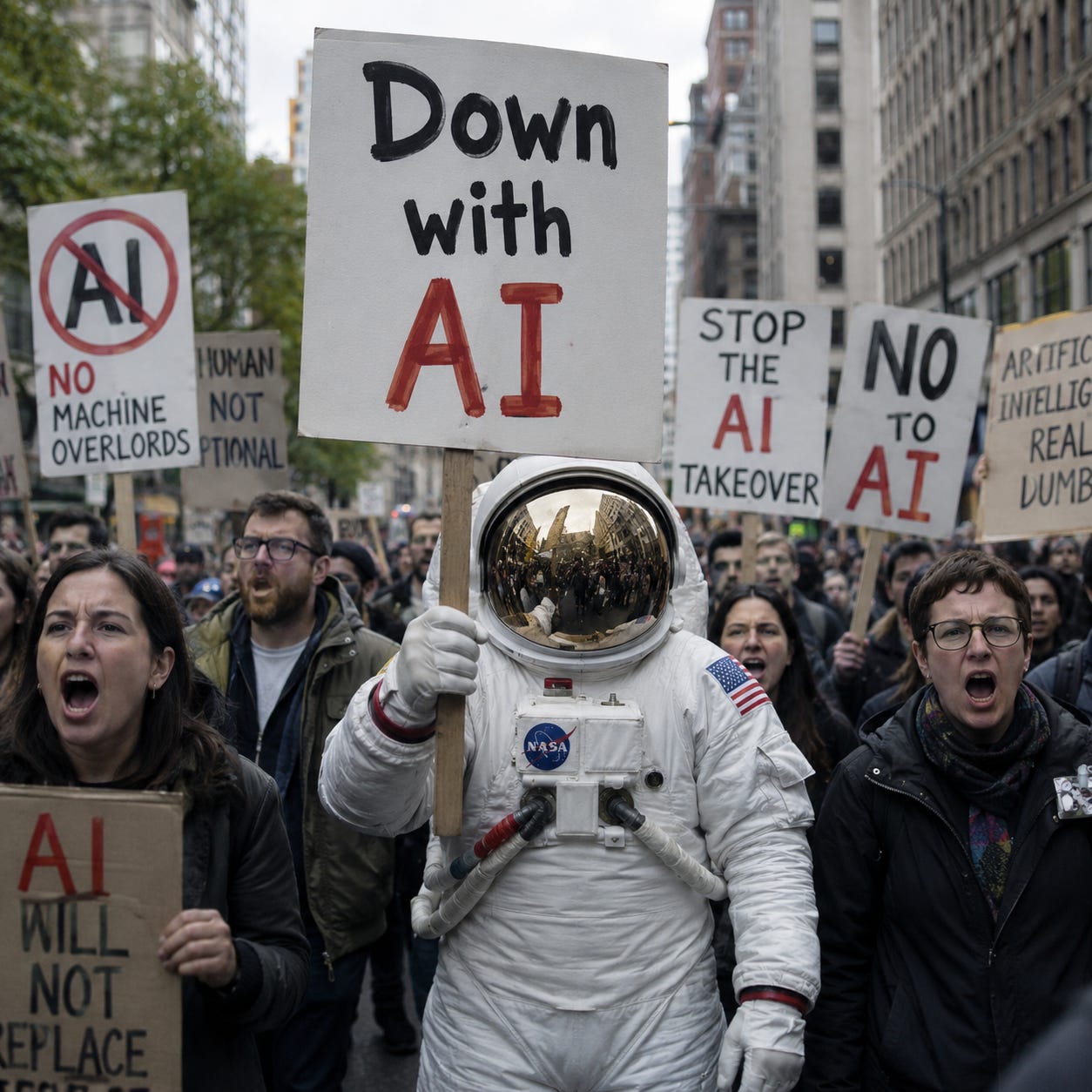
I’ve been working in AI for over 11 years now. Back in the early days, when people asked me what I did and I said I worked in AI, they generally just glazed over. After the advent of Generative AI (basically from 2023 onwards), that reaction turned into genuine interest and curiosity. Today, whilst there is still a degree of interest, the reaction can also be one of antagonism or malice. It feels like I’ve told them I work for a tobacco company.
The reason for this enmity, of course, is the backlash AI is facing across society, particularly among the Gen Z population (and Millennials - NSFW link). There are several reasons for this, most of which are, in my mind, justified: the impact on jobs (again, particularly those typically employing young people); the environmental impact due to the large amounts of energy and water that the models require for training and use; and the increasing inequality that AI is bringing, specifically focused on the billionaires who run the tech companies. Associated with that, I would also add on inclusion, or the lack of it - there are too many people getting left behind who could actually benefit the most from AI. The Economist reckons that “the backlash is only just getting started”.
Nowhere do all of the above come into stark focus more than with the data centre. Here is a massive, windowless building behind barbed wire that literally drains electricity and water from the surrounding area and requires only a handful of people to operate. Not all data centres are running AI of course, but they are now generating fervent NIMBYism on a par with fracking and nuclear power stations.
I feel that all of this is the reality check that AI desperately needs. The AI hype bubble is yet to pop, and a gradual deflation due to increased awareness of the issues is probably the best outcome (unless you are one of the billionaires!). This recent article in the FT argues that there might be a one-off “galvanising event such as a big AI-related economic dislocation, a cybersecurity breach, or other nefarious application of the technology, like we saw with the Three Mile Island accident for nuclear power or the subprime mortgage crisis for the banks”, or, it could be that “political pressure on AI might build more gradually as discontent grows with job losses, rising inflation due to high capital expenditure and a perception of rising inequality.”
That discontent is increasingly coming to the fore. Most advanced economies have been very pro-AI, fearing they'll be left behind in the race for AI dominance, but their leaders are finding that it is their citizens who are the ones getting left behind. Donald Trump is starting to restrict access to some models, but (no surprise), this is more of a national defensive posture than actually caring for his citizens. The UK has started to listen to its creative industry and is moving toward an opt-in rather than opt-out approach to licensing IP, which is very welcome. Now we just need some decent regulation to go along with it.
But the societal shift that AI is likely to bring will be generational, and recent history shows how poorly countries have managed globalisation and decarbonisation. Now that the billionaires are part of the power structure, this is not looking at all promising.
So, what can we do?
We can use AI responsibly. Limit the use of AI to only what is necessary. Generating images uses considerably more energy than generating text (and video even more so), so hold off on the memes and AI slop. Think about what AI is being used for - is it genuinely adding value / making a difference to the world, or are we just increasing click-through rates for ads? If you can, seek out smaller models, and, if you are technically able, use small language models on your own computer (they will only consume the electricity your computer uses - no data centres involved). Open-weight (aka open-source) models are where the action is right now (partly down to those Trump restrictions). Use a search engine that doesn’t automatically create AI answers, and, if possible, turn off AI ‘assistance’ in software and apps if it is adding no value. Learn how to prompt effectively - don’t waste those tokens on chit chat with a machine. Most importantly, though, spread the word. Don’t (as the Americans say) ‘drink the AI Kool-Aid’; question everything and encourage others to question it, too.
Some of the above will help, although I’d be naive to think that it’s going to solve everything. But I’d rather be a part of the solution than part of the problem. AI has tremendous potential to do good in the world, to ‘raise the tide for everyone’, but only if we focus on the good things and push back against the slop and the billionaires.
I’d like to take this opportunity to tell you about a side project I have, which I am calling Prompt Action. As I’ve already been banging on about, AI is leaving behind some of the people that it could benefit the most - people with learning difficulties, their carers, people with physical challenges, the un- and under-employed, the older generations, to name just a few. This program aims to provide hands-on AI training (in ChatGPT, Gemini, etc) to exactly these groups of people, starting with refugees. Our first session, held in collaboration with the Islington Centre for Migrants and Refugees, was a brilliant success, with the attendees learning real, practical skills that they could use immediately.
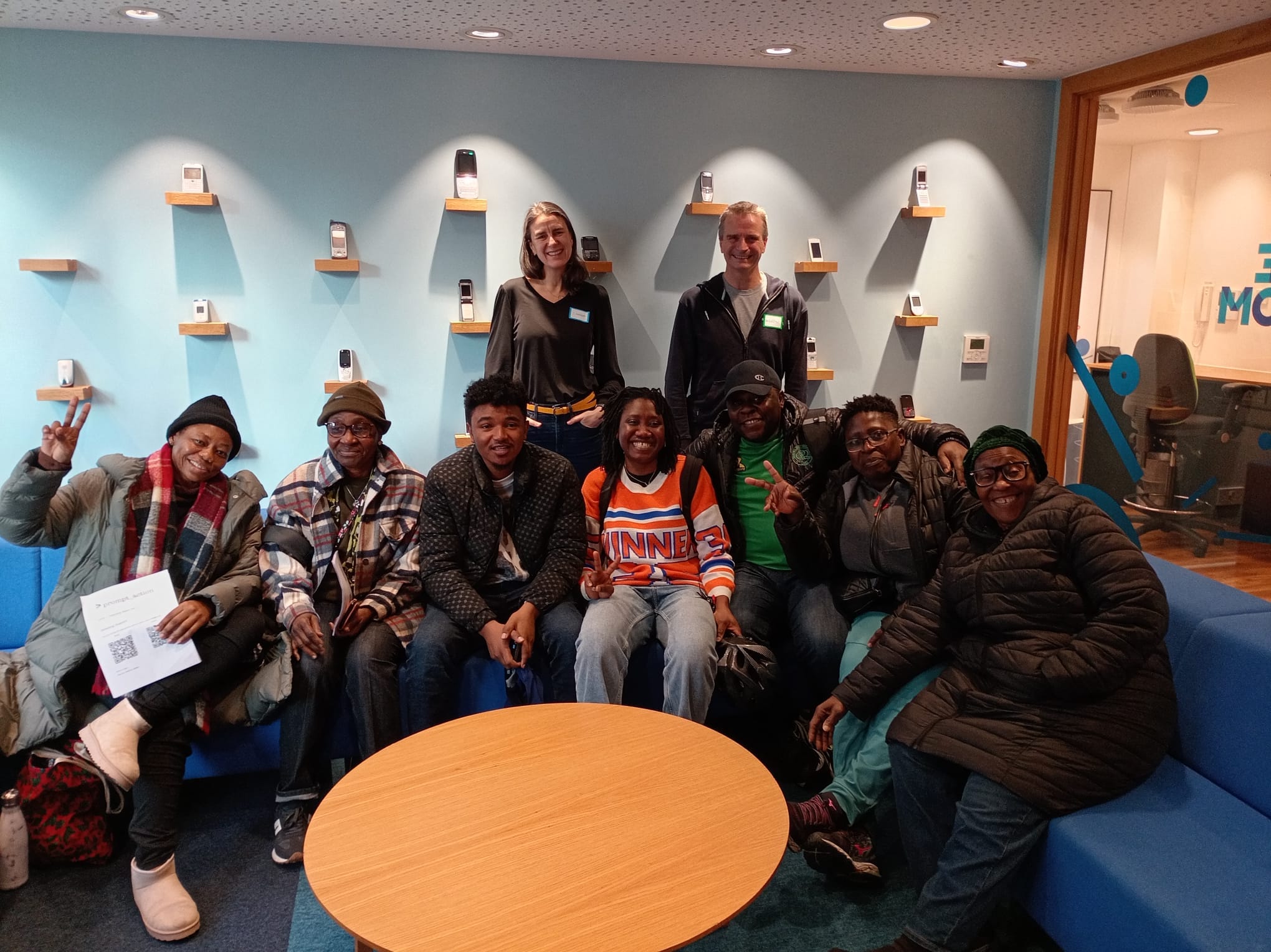
I’d like to give a huge shout out to James Carrol and Sandra Higgison who have also, without question, volunteered their time and skills. We are planning our next session for the 16th July, but we do want to reach out to more groups if possible. Let us know if you think you or your company can contribute in some way. More details here.
Okonski - Axes

Okonski is my new favourite jazz trio - I’ve been playing Entrance Music, their 2025 LP, at every opportunity. And now, with harpist Rachel Kitchlew, they have just released an EP called Axes. The third track, Easy, is bound to bring a smile to your face. Available on Colemine Records. Go listen now.
A quick note on the links that are included in the main piece of this edition, all of which are behind paywalls. I would love to be able to provide free links, but the best writing nowadays requires a subscription to access. I’m actually very comfortable with this - good journalists should be paid and recognised for their work - so it’s a bit of a ‘sorry, not sorry’ type of apology. So, if you can, please do subscribe yourself so we can keep good quality journalism alive, which is more important now than it’s ever been.
Comments
Nothing yet. Say the first thing.
Sign in to join the conversation.