
I was reading Morgan Housel’s The Psychology of Money when the sentence stopped me cold.
The book is ostensibly about personal finance. How we think about money, why we make irrational decisions with it, how to build wealth in a way that actually sustains a good life. If you haven’t read it and you’re early in your career, stop here and go get it. Genuinely one of the most useful books I’ve encountered, and not just about money.
The argument that stopped me was this: don’t save for the specific house, the specific vacation, the specific version of the future you’ve mapped out at 25. Build for financial independence instead. Because the person you’ll be at 40 will want things you cannot imagine right now, and the most valuable thing you can give her is options.
I put the book down. He had articulated a belief and a truism I always had but never could put into words.
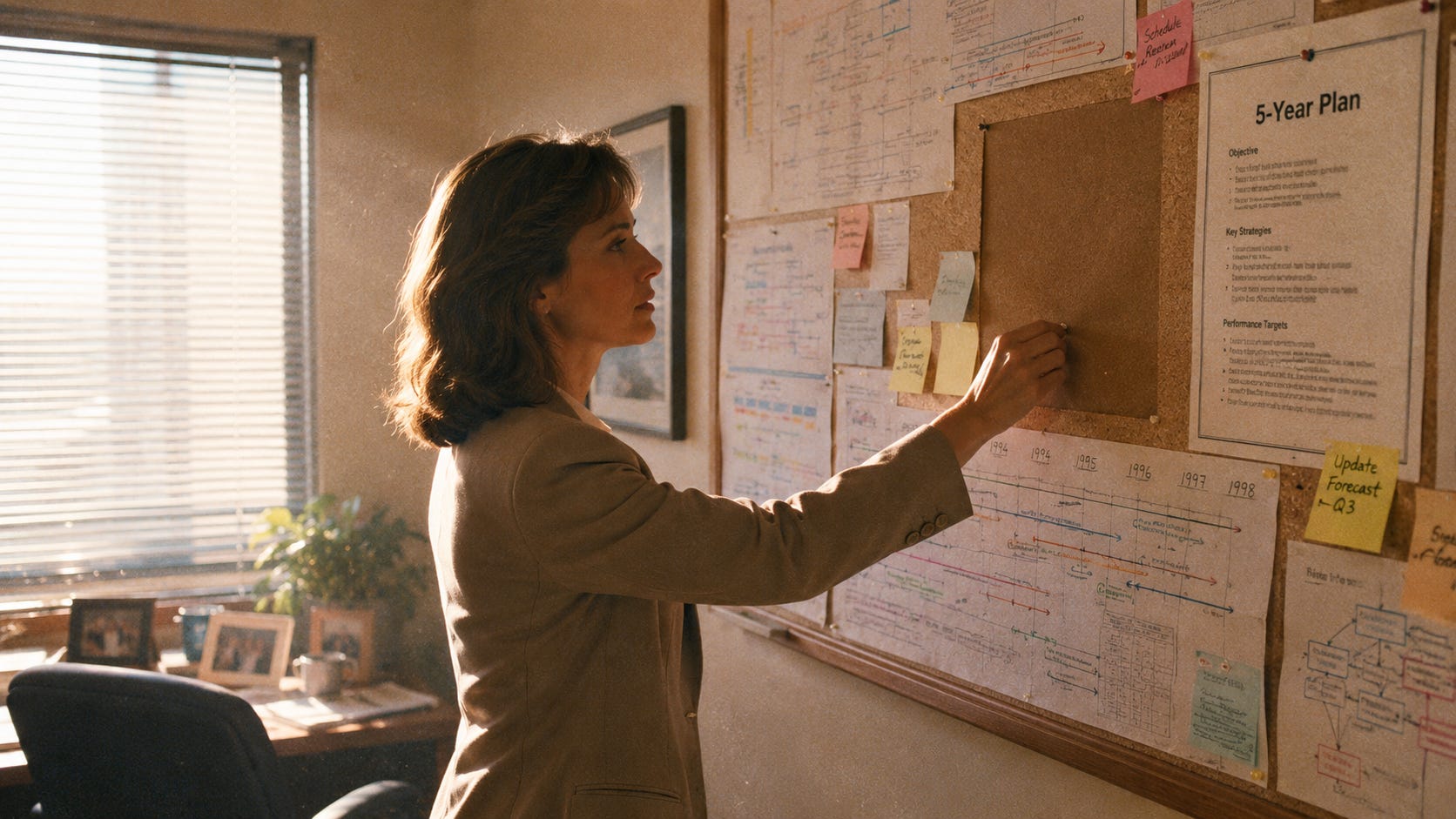
But also, it wasn’t just about the house fund. It wasn’t just about the vacation account. It was about every plan I had made for a life I hadn’t lived yet. The career path mapped out with such confidence. The identity I had locked in before I had enough data. The beliefs I held with certainty at 25 that turned out, in the fullness of actual experience, to be a first draft.
You weren’t wrong to plan. You were just planning for a version of yourself who hadn’t happened yet.
Here’s the rule, and it comes in three acts:
You choose the path before you have enough life to know what actually fits. Whether it’s the career or the story you tell about who you are and where you’re going, you anchor to that identity. This is not a failure of judgment. It is a failure of information. You did the best you could with what you had. The problem isn’t the early commitment. The problem is what comes next.
At some point the thing you chose stops fitting the way it did. Maybe gradually, maybe all at once. Instead of updating, you double down. Because changing now feels like admitting the original choice was wrong. We dress this up as commitment, as resilience, as seeing things through. Sometimes it is those things. And sometimes it is loyalty to a version of yourself that has already quietly left the building, while the current version stands in the old plan like a house that no longer fits.
You skill up for the specific role, the specific industry, the market as it currently exists. You optimize for the destination rather than the range. Then the destination moves. And it always does, because markets shift and companies restructure and the job you trained for gets automated or offshored or simply stops being the job you want. You discover that specialization, which felt like security, was actually a narrowing.
Three acts. Same trap. The common thread is this: we were taught that a good plan, executed with discipline, leads to a good outcome. What nobody mentioned is that the person executing the plan keeps changing. And eventually, if you’re not paying attention, you’re executing someone else’s plan. The someone else is just a younger, less informed version of you.
There was a period in my life when something happened that quietly reorganized everything I thought I knew about what mattered.
It wasn’t dramatic in the way life events are supposed to be dramatic. It didn’t announce itself as a turning point. It just arrived, and in its aftermath I found that the map I’d been using no longer matched the territory.
Things I’d treated as essential turned out to be optional. Things I’d deferred as optional turned out to be the point. The hierarchy of what I was working toward shifted in ways I couldn’t have predicted and didn’t choose.
The plan didn’t survive the execution of actual life.
That was not a failure. It was data. The updated version of me that emerged on the other side of that period was not evidence that the earlier version had gotten it wrong She had gotten it exactly as right as anyone can with the information available at the time. But the information changed. The experience changed. And so, necessarily, the plan had to change too.
The Psychology of Money has a line that I’ve returned to more than once since: “The most important part of every plan is planning on your plan not going according to plan.” Housel’s point is about financial resilience, but it is also, if you let it be, about the entire architecture of a life. The goal was never to execute the original plan perfectly. The goal was to remain capable of adapting when the plan met reality.
Here’s the reframe, and it is the gentlest one I have to offer:
Build for optionality, not the target.
Housel’s financial independence argument translated directly into career terms: the skills that will serve you across every version of your future self are not the ones specific to the role you want right now. They are the ones that transfer. Judgment. Communication. The ability to read a room, navigate ambiguity, influence without authority, regulate yourself under pressure. The human skills we keep mislabeling as soft. These are the ones that compound. These are the ones that survive the market shift, the layoff, the pivot you didn’t plan for, the life event that quietly reorganizes everything.
Some practical translations:
Changing your mind is not inconsistency. It’s updating. The same instinct that makes a good strategist applies to the plan you made for your own life. You revise when new data arrives. The person who holds the same beliefs at 45 that she held at 25, without revision, has not been consistent. She has been incurious. New experience is data. Use it.
The sunk cost is not a reason to stay. The years you spent in a direction that no longer fits do not obligate you to spend more years there. I know how this feels — like leaving would mean the earlier investment didn’t count. It counted. It built the version of you capable of recognizing that it’s time to go. That’s what it was for.
Audit your skills for transferability. Look at what you’re building and ask honestly: if the specific role I’m in disappeared tomorrow, what would I have? The answer should include things that work anywhere such as the human capabilities, the pattern recognition, the relationship capital. If the answer is mostly role-specific, start widening the portfolio. Not because the role will disappear, but because the person who has options is the person who can choose.
Give yourself the same grace you’d give a friend. If she came to you at 40 and said the path she chose at 25 no longer fits, you would not tell her to stay in it because she’d already come so far. You would tell her she gets to choose again. You are allowed to do the same. The earlier plan was not a contract. It was a starting point.
The point of financial independence was never to accumulate the specific thing you wanted at 25. It was to be free enough at 40 to choose whatever you actually want then.
Same for the career. Same for the identity. Same for the beliefs.
The goal was never the plan. The goal was the optionality to keep becoming.
Ask yourself which parts of your plan were made for the person you were and which ones are still being made for the person you’re becoming.
No posts
Comments
Nothing yet. Say the first thing.
Sign in to join the conversation.