
A few weeks ago my youngest got Hand Foot Mouth (HFM).
Any parent who has endured HFM with a toddler just let out an audible “ugh.” (Also cue why I didn’t write last week.)
For those of you lucky enough not to be part of this in-crowd it’s a highly contagious virus that makes your little one feel like crap and then proceed to be covered in a rash all over their (you guessed it) hands, feet, and mouth.
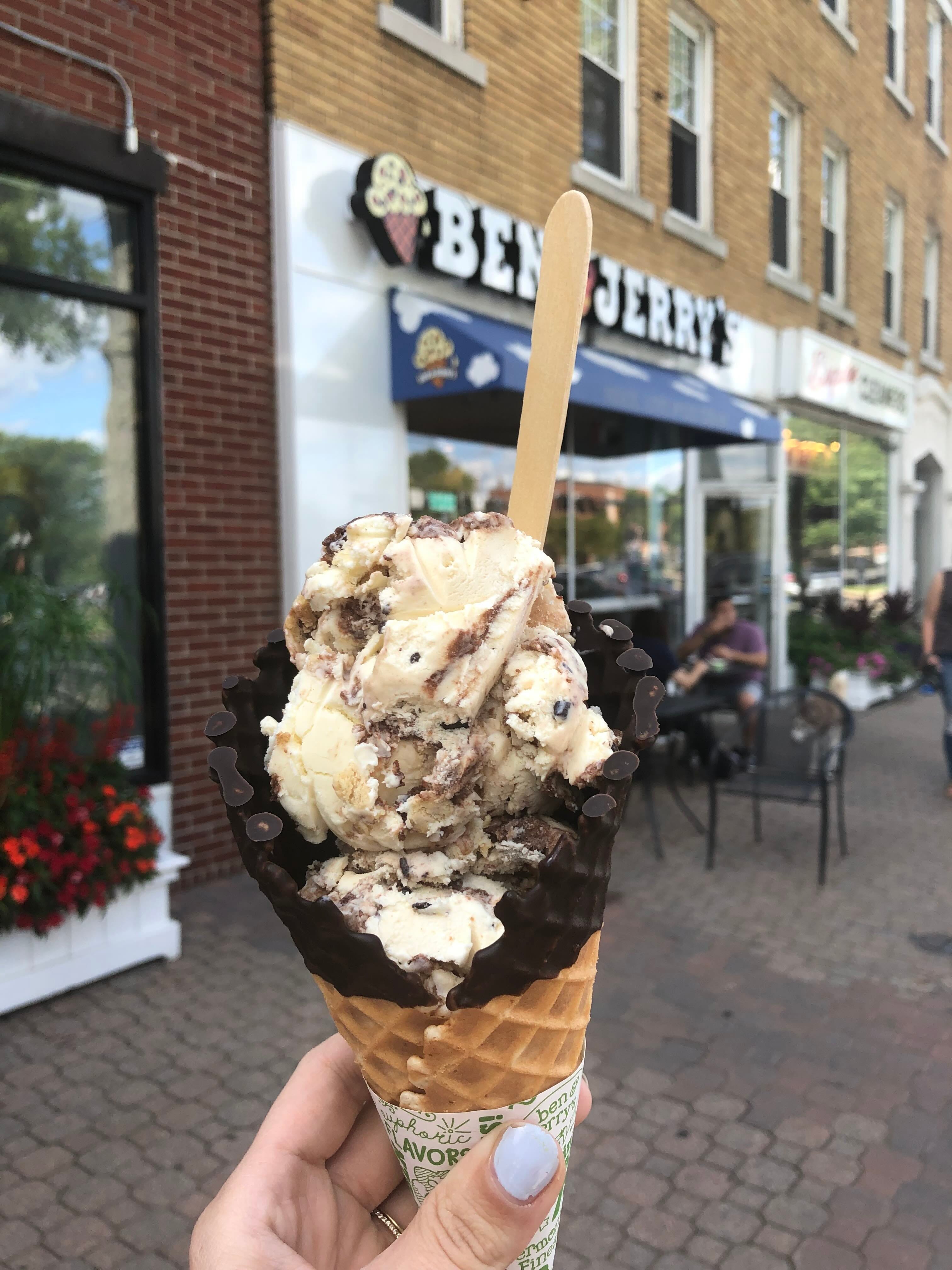
With my calendar suddenly wide open because I was now stuck at home with said toddler (and our other kids) for a week while we waited to be “safe” to enter public again, I found myself very out of routine. I tried my best to keep up on the daily habits that usually get me through my week: 30 minutes on my treadmill in the morning (assuming the house stays asleep until 5:30am, this is a 50% chance). Journalling. In bed by 9:30. But, ultimately some of my healthy habits slipped. I found myself binging a hot fudge sundae after dinner or having a glass of wine on a Wednesday night. None of these are horrible occurrences, but when enough bad habits pile up, it’s amazing how quickly it can compound.
Finally, we got back to business as usual. And the first day my journal’s first line said “Just one day back to normal routine and I already feel lighter.” I went on to ponder, “We all feel better when we make the ‘good’ choices. Our bodies feel better. Our minds feel better. If the ‘good’ choices makes us feel ‘good,’ then why are these ‘good’ choices harder to make?”
I think is has to do with immediacy. A super big chocolate brownie tastes amazing right now, while a salad and salmon is only OK. Even if we know the salmon with salad will make us feel good even and hour from now but super big chocolate brownie will probably make us feel stuffed and groggy, our brain still wants the chocolate brownie. Your brain wants the biggest bang for its buck NOW. Not in an hour. It doesn’t reason long term. And so we have to reason long term, for it.
Honestly, sometimes I feel like my brain is another one of my kids that I have to help along to make good choices, resist impulses, be reminded to stay positive when things don’t work out the way we want.
While I contemplated this idea in my journal, it made me think of all these little tricks I’ve created over the years to help with my own self-discipline and willpower. And I realized a lot of them had to do with convincing my brain to choose the long-term win over the immediate gratification.
One example is the “tomorrow you will thank you.” This is a little saying I came up with that I’ve been sharing in my YouTube videos for years. It was born over 8 years ago when I started a habit of never going to bed with a dirty kitchen sink. No matter how tired I was, I forced myself to clean my kitchen sink before bed every night (as someone who used to be chronically messy, this was a big habit.) I quickly realized how amazing it was to come down in the morning to see a nice clean sink. Often cleaning the sink led into my tidying the whole kitchen. And making a morning coffee in a clean kitchen vs. a dirty one is a much more pleasant experience. It started to become much easier to clean my kitchen sink at night because I would think about how much nicer it would be to come down in the morning to that clean kitchen.
And I started adopting this “tomorrow you will thank you” motto other places. It’s just the idea that when I had something I needed to get done and didn’t want to do, I’d remind myself how glad I’d be tomorrow when I did it. I’d be glad tomorrow morning that I took 5 minutes to pull out my outfit. I’d be glad when I got home from the grocery store that earlier that day I’d cleaned the fridge. I knew it’d feel better going into my bedroom after a long day when the bed was made. This little trick would help me trick my brain into choosing long term over immediacy.
Another thought came to mind that was similar. When I was pregnant with my second baby, I developed this habit of waking up in the morning and having a sweet while I waited for my coffee to brew. Nothing crazy maybe a piece of a cookie or a square of chocolate. I get up early, and this little burst of sugar I think made me feel a little awake. Overtime this turned into maybe just a small piece of toast, or a granola bar. Anything that would give me a quick blood sugar spike. But, I realized, overtime, that whenever I ate something first thing like that, I always felt worse a few hours later. I felt more groggy, I wanted to snack more all day, etc. I’m sure there is some nutritional science reason for this about how blood sugar spikes in the AM are bad for you. But I just knew how I felt. My brain woke up wanting the snack. Not only had it become accustomed to it, and our brains love repetition, but it would default to that immediate benefit of the small burst of energy from sugar when I was trying to wake myself up at 5am. Overtime, I had to override my brains natural inclination. I had to remind myself that eating something now would feel good for about 15 minutes but then I’d feel crappy the rest of the day. Overtime, I was able to break the “first thing in the morning snack,” by not giving in on my brain pushing me to immediate pleasure. I had to intervene when my brain tried to choose immediacy.
There are so many places in our lives this happens. Even when the “good choice” seems like the one we’d pick because the long term benefits are better, our brain defaults to the one that’s going to give us immediate payoff. And let’s be clear that I am not perfect here. Sometime immediacy wins. Sometimes, you do just want an extra large brownie sundae, who cares about the outcome. But, just understanding the idea of immediate reward that fades quickly vs long term reward that takes longer to get to helps me overcome my brains want to always choose the former.
I’ve talked before about pleasure vs gratification. Pleasure is those short term enjoyments that are easy to get but we enjoy while they are happening and then the enjoyment is gone (eating junk food, scrolling our phones). Gratification is enjoyment you have to work for, but the benefits of it last much longer and stay with you even when the moment has passed (growing a garden, reading a book, hiking, etc.)
I don’t think self-discipline is about becoming someone who never wants the brownie, I think it’s about recognizing that your brain is doing exactly what it was designed to do: chase the reward that’s right in front of it. And then understand that the problem is that our brains haven’t caught up to the modern world. Immediate rewards are everywhere now. We can order anything, stream anything, eat anything, and distract ourselves from anything within seconds. If we leave every decision up to our instincts, they’ll often choose what feels best for the next five minutes instead of what serves us over the next five hours (days, weeks, years.)
That’s why I often try to interrupt my brain when it wants to default to “what do I feel like doing right now?” with “what will I be thankful I did tomorrow (or in an hour)?”
Which brings me to that well overused quote from Aristotle (reworded by Will Durant), “We are what we repeatedly do. Excellence, then, is not an act but a habit."
And I’ve found that’s what so much of a life that feels good is built on not dramatic acts of willpower, but hundreds of tiny decisions where we choose our future selves over our present impulses.
Tomorrow really does thank you.
Please ignore typos, this was written without AI, and probably while I was sleep deprived.
This was week 7 of my 52 week writing challenge to write one article a week. To receive new posts and support my work, consider becoming a free or paid subscriber:
No posts
Comments
Nothing yet. Say the first thing.
Sign in to join the conversation.