

Besides some distinctly ‘90s kid and aughts cultural signifiers, I’m not sure if there’s any uniquely millennial coming-of-age struggle outside of your pair of skinny jeans shrinking in the dryer. Even the millennial-specific films here mostly concern themselves with the negotiation between personal aspirations and the awkward realities of growing up.
Adolescence is chaotic and embarrassing in Superbad, and its protagonists are fearful of whether their friendship will survive the transition into adulthood. The comedic tone masks deeper anxieties about change, independence, and the fragility of identity at the end of high school. The emotional turmoil lies in a sense of self-worth that’s tied to relationships, belonging, and the looming pressure of the future. Frances Ha and Lady Bird extend this theme into early adulthood, portraying their female leads who are equally ambitious and adrift. Frances and Lady Bird chase versions of themselves they haven’t grown into, stumbling through financial or emotional instability, creative longing, and strained interpersonal dynamics with either friends or family. The expectation to “find yourself” without a clear path shows how adulthood is a series of missteps and imperfect transitions. Boyhood ties these threads together by depicting coming-of-age as a long, meandering process. Mason’s growth is marked by shifting family structures, evolving friendships, and the quiet pressures of becoming someone in a world that rarely offers certainty. The realism gets at a core truth: That identity is assembled gradually through a series of experiences.
These four films reveal a shared thematic core—coming‑of‑age as a blend of vulnerability, self‑creation, and the ongoing struggle to define one’s place in an unpredictable world.
Anyways, let’s get to it…
(SPOILERS AHEAD)
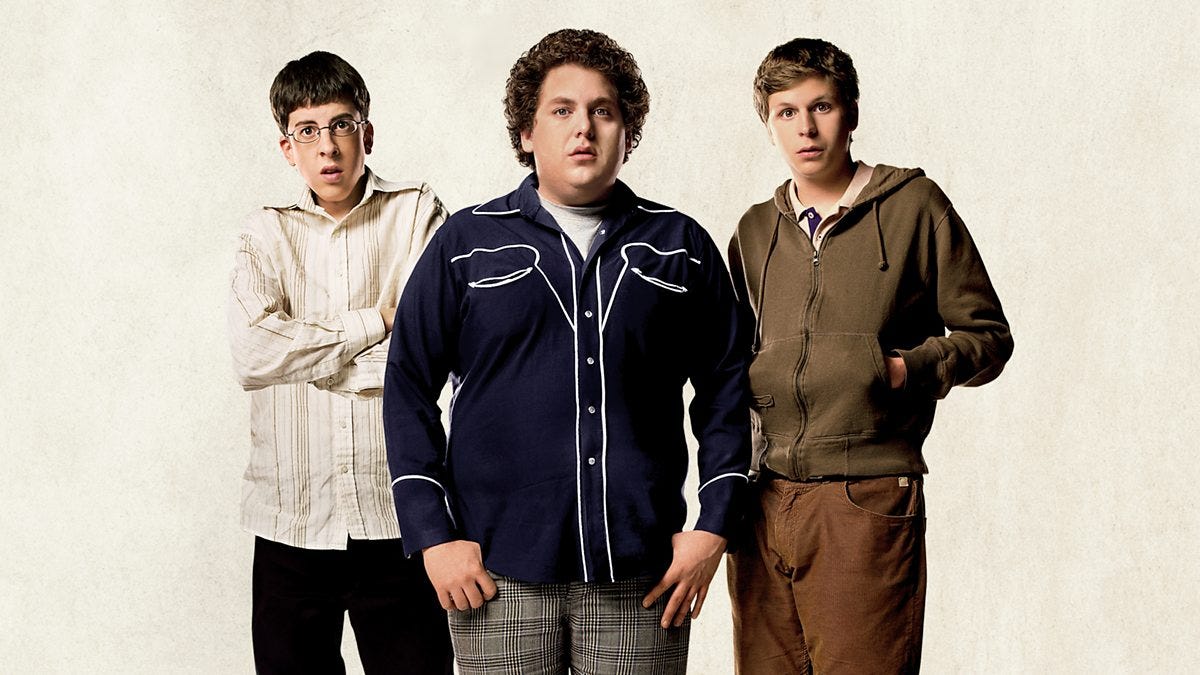
DIRECTED BY: Greg Mottola
SCREENPLAY BY: Seth Rogen, Evan Goldberg
CINEMATOGRAPHY: Russ Alsobrook
EDITED BY: William Kerr
MUSIC BY: Lyle Workman
STARRING: Jonah Hill, Michael Cera, Christopher Mintz-Plasse, Bill Hader, Seth Rogen, Martha MacIsaac, Emma Stone
Superbad came out at a time when the word “bromance” surged into popular consciousness. Beneath the crude bravado, vulgar jokes, and frantic mission for booze, we follow two teenagers roiled with an underlying separation anxiety. Seth and Evan are socially awkward seniors at a suburban high school where the specter of mockery is ubiquitous, and humiliation arises on the soccer field or in the cafeteria or in cooking class. They’ve forged a lifelong, codependent friendship that hinges on their mutual need for companionship amidst the typical adolescent minefields. When joined by the nerdy but oddly suave Fogell, the boys comprise a trio of virgins looking to get drunk and laid before heading off to college. They joke about dick-shaped food and rag on each other as a genuine form of endearment. Seth’s obnoxious and hyper-sexualized chauvinism is a form of overcompensation. Evan represents the quieter, more tender, yet equally anxious side of teenage male insecurity. What appears to be a raunchy comedy based on the mundane premise of acquiring booze stretches into a chaotic odyssey that mirrors the monumental significance teenagers assign to social milestones.
Seth, Evan, and Fogel are the type of kids who grew up watching those embellished ‘80s and ‘90s movies about teenage heartthrobs or outcasts, with rowdy house parties stocked with full liquor cabinets and promiscuous coeds. They’re obsessed with hooking up with their respective love interest–Seth impulsively flirts with his cooking class partner Jules while Evan has had a longtime crush on Becca–and they’ve convinced themselves that party + alcohol + girl = sex. The beginning of the movie constantly reinforces this misguided approach, notably in the conversation in the convenience store about how handjobs lead to blowjobs which lead to sex, and how they need to have sex a certain number of times before going to college. When pouty-lipped Jules asks Seth to secure booze for her house party, the boys see this as a golden opportunity to shed their virgin shame. As they spend the bulk of the film on a quest to buy liquor, their plans turn into an increasingly ludicrous series of misadventures as they cavort with drunken cops, fend off suddenly undesirable “blow js,” acquire an especially unfortunate pants stain, and more.
Even when they finally arrive at Jules’s party, they are still bound by the drunk sex logic. When Evan is alone with a visibly intoxicated Becca, he questions the morality of sleeping with a woman when the alcohol blurs the lines of consent, so he goes to the bathroom to swill down some “sex elixir,” because he’s convinced that his own drunkenness will erase the dilemma. But the dream is shattered for both the boys, as Becca vomits everywhere and Jules doesn’t even drink–and Seth’s belligerence becomes his literal downfall. When the cops arrive to bust up the party through “the long dick of the law,” Seth carries Evan home, realizing that their friendship is more important than losing their virginity. As they walk back home, they express a desire to have a sleepover and eat pizza bagels like when they were kids. As they fall asleep, their drunkenness allows them to express their true love and admiration for one another, something they constantly cover up with dick joke defenses for fear of appearing weak or uncool. The next day, they’re shopping for pants at the mall where they run into Jules and Becca. Without the social lubricant of alcohol, they each make plans to get closer in a more emotionally substantive context. Seth rides down the escalator, staring longingly back at Evan, expressing a sadness and an exhilaration. He realizes true relationships are created by branching out and investing real interest in a woman.
The glitzy Hollywood dream of high school is not real life. Superbad eschews the hallmarks of so-called irreverent comedies by emphasizing male friendship and refusing to languish in misogynistic exploitation.The peripheral characters also defy stereotypes: Becca and Jules avoid the bimbo or high-maintenance harpy cliches while the dim-witted police officers are weirdly compassionate. What makes this film stand out in its genre is that it captured the zeitgeist perfectly with relatable characters undergoing universal coming-of-age experiences. Films of the same mold tend to comport themselves into whatever is trendy with the current generation, pandering to specific pop culture references. Superbad plays into situations that have existed for decades, and likely won’t be changing any time soon: Teens drinking, trying to get laid, worrying about going off to college. For Seth and Evan, and really all of us, we’ll always have the memories of growing up, and we’ll still see our friends on holidays that require us to come back to our hometown. And maybe there’s the promise of a few romantic relationships that could only blossom once we stretch beyond the comfortable “bromances.”

DIRECTED BY: Noah Baumbach
SCREENPLAY BY: Noah Baumbach, Greta Gerwig
CINEMATOGRAPHY: Sam Levy
EDITED BY: Jennifer Lame
STARRING: Greta Gerwig, Mickey Sumner, Adam Driver, Michael Zegen, Patrick Heusinger
Eventually we get tired of our fuck ups, but we needed them, and if we learn from them, we eventually stumble or meander our way to where we’re supposed to be. The grey edges of adulthood feel like an aimless existence for a lot of 20-somethings, especially if that time is spent pursuing our calling despite the free market deeming it to be impractical and unworthy of commensurate pay. These clumsy post-undergrad adjustments to adulthood are the feeling of being adrift, watching everyone else around you seemingly or actually getting their shit together. We’re left to wonder at what point our post-adolescent flailing stops being charming and starts being pathetic.
The key to this film is how perfectly observed Frances’ narcissism is and how relentlessly she’s humiliated because of it. Her casually naïve delusions clash against the yuppie devaluation of anything except assured and prestigious office jobs. She’s hanging on by her fingernails to chase her dancing dreams and unwilling to settle for a career that she didn’t anticipate. This also extends to the background characters’ stubborn and immature refusal to settle into romantic relationships. It’s the stunted and thwarted millennial feeling of doing everything we were “supposed” to do, everything that was posed to us as the game-plan, and then at some juncture we failed to figure out how to take the semiotic next step: How much rent we have to pay, who are real friends are, how easily they slip into other places or relations or other procrustean sub-dimensions outside our narrowing social consciousness. In a way, this is how a lot of Americans can have extremely extended childhoods.
Frances is a 27-year-old woman, originally from California, who starts out in Brooklyn as an apprentice dancer in a small company where she’s aspiring for full membership, but is instead dropped from their roster. She breaks up with a boyfriend, presumably because of her obligation to her roommate and best friend since college, Sophie, but the breakup seems trivial. Sophie, meanwhile, is a rising star in book publishing, who makes little money while dating a Wall Street analyst who makes a lot of it. Frances uses Sophie as a security blanket, and their dynamic adds a melancholic tragedy: What happens if you’re straight and your true soulmate is of the same sex and also straight? The tension between her and Sophie, and their brief falling out, mirrors Frances’ professional journey in the sense that these two were fated to never end up together, and she is forced to accept this fact.
Sophie soon accepts an offer to move to an apartment in Tribeca that’s woefully out of Frances’ budget. As a result, Frances is functionally homeless while unemployed, artistically unmoored, and friendless. But she smiles and carries herself with a chipper bounce that contrasts sharply with all the deflating evidence that her circumstances don’t match her sense of destiny. She grabs at whatever rung she can grasp onto during her freefall; her imitation masks her despair. Her nonachievements don’t reflect her idiosyncrasies and depth of character, and this tension plunges straight into a bedrock of misery in all facets of her life. When Frances crashes at a Chinatown boho “nepo baby” apartment, one of the young men—an “aspiring comedy writer” who spends more time at the movies than at his laptop—notes that her temperament makes her “undateable.” She considers herself untouchable by the homunculi of her own circle, because she deserves a Prince Charming who is similarly bound for greatness.
In constructing this hermetic indie-world of romantic urbanity, director Noah Baumbach anchors Frances Ha in the iconography of French New Wave with shades of Woody Allen’s Manhattan. New Wave signifies a cinema of youth, while like Woody’s character, Frances doesn’t really grow as a person as much as she stares into the abyss and accepts that her life is a hodgepodge of fading maybes and settled obligations. There’s a sense of aimlessness throughout, especially in the scenes where she rides around on the NYC trains, taking odd jobs, letting go of old dreams, awkward dinner gabbing, and a spontaneous trip to Paris that didn’t live up to expectations. Along the way, we meet a variety of people who are benignly terrible and self-absorbed, and their arid and mannered nature of relating to each other is taken to frequently hilarious nadirs. Frances endures unexpected defeats, navigates friendships and apartments, and the wayward path of clumsily stunted adulthood. She is nonetheless engaged in the most classic American mission: The pursuit of happiness.
Frances eventually takes the first step in becoming a choreographer, and we catch a glimpse of the exigencies of the day job she holds while working “nights and weekends.” This could be read as a sad story about giving up on your dreams, but it’s more about maturing and facing reality. “I’m so embarrassed,” she says. “I’m not a real person yet.” The ending ultimately leaves her in a better position than where she started, from rock-bottom desperation to practical acceptance, as she changes her address with another name card. It’s a portrayal of semi-filled potential and some simmering unresolved angst, but at least we got to laugh at how a lot of millennials, at their core, are insufferable dorks.
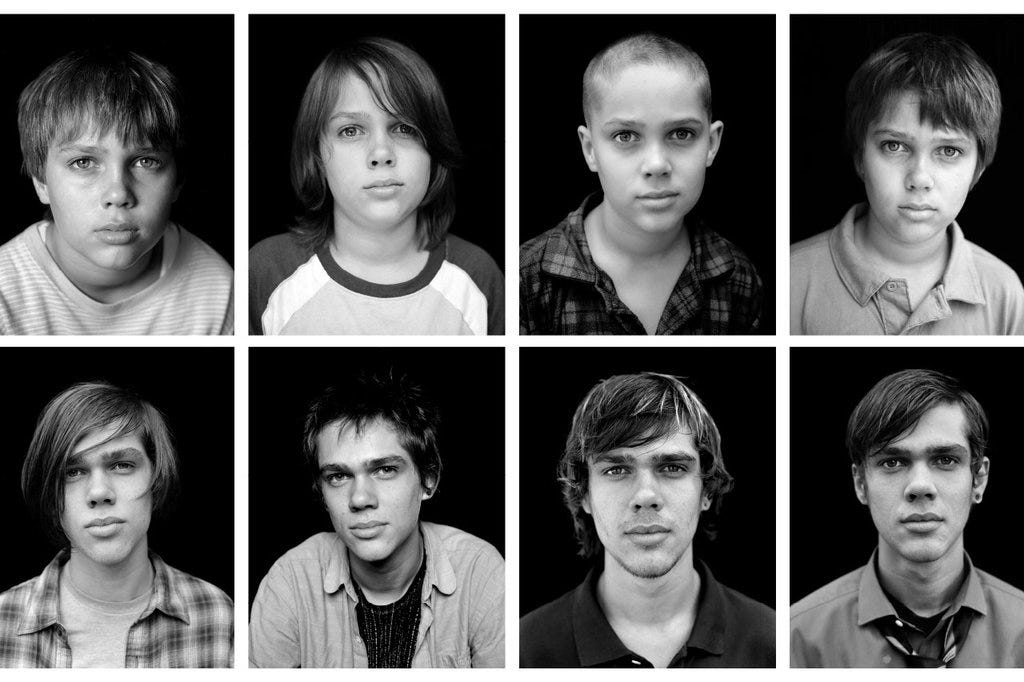
DIRECTED BY: Richard Linklater
SCREENPLAY BY: Richard Linklater
CINEMATOGRAPHY: Lee Daniel, Shane Kelly
EDITED BY: Sandra Adair
STARRING: Patricia Arquette, Ellar Coltrane, Lorelei Linklater, Ethan Hawke
There is something so naturally observational and fleeting about Boyhood that it’s genuinely moving. It’s somehow both epic in its broad scope of how our lives are constantly changing and flowing, but still mundane and intimate in the way our memories actually work. It captures a lot of specific cultural trends of the aughts, but in a way that’s powerfully shaggy and low-key. It accumulates ordinary fragments of adolescence that piece together the messy, jagged experience of growing up. A child of divorce, we watch Mason Jr. grow up, and his parents grow grey. His single mother, Olivia, tries to replace her ex-husband Mason Sr. in an attempt to bring the family whole again. Mason’s free-spirited dad pops in and out in his cool car while working a series of odd jobs. These events are never dramatized but offer a realistic look at how parents do not necessarily mature, but simply grow old. They are still the same teenagers trying to figure out their lives, with slightly more responsibilities and in older bodies. For the children, the rites of passage blur into faded memories: Laughs about the first buzzcut in fourth grade, the innocent first kiss and love, the first day of high school, the need to be the coolest and most fashionable kid while being nonchalant about it. What makes us normal and relatable? Is normality even good? Or does it disturb those who can’t function in a normal environment? All of this gives an embodiment of the fleeting nature of existence, slipping through our hands like sand.
Boyhood never treats divorce as a catastrophe, or even indicative of a broader cultural malaise. It’s something that simply happened to Olivia and Mason Sr. because they weren’t ready for an unexpected pregnancy, but they gave marriage a shot. Their divorce is relatively amicable, even if it complicates the lives of every character, and this family couldn’t be described as “broken” or even “dysfunctional.” Both parents are caring, if sometimes self-involved. Olivia bears the brunt of the day-to-day childrearing. While Mason Sr. is more distant, he’s never absent. Far from being portrayed as an overwhelmed victim, Olivia becomes a psychology teacher and leaves two alcoholic partners when they threaten the things that matter to her. Everyone in the family has their set of problems, but that makes them human.
Mason Jr.’s upbringing is also never dramatized, even when moments suggest something awful will happen. The tension quickly dissipates. In one scene, Mason Jr. and some boys are sleeping over in a home that is undergoing a renovation, a spatial symbol for his own evolving family dynamics. The boys are drinking and throwing stray saw blades at a board, dumb adolescent behavior that could quickly leave someone losing a finger or worse. Instead of adding drama, we’re left with a banal truth: Not every bad decision or potentially dangerous situation results in tragedy. Other times, like when Olivia’s drunken husband throws his glass at Mason Jr.’s plate during dinner, a bad moment never gets worse. These are admissions of realism: that reality and cinematic clichés are seldom compatible.
Even as Mason Jr. perseveres, the pain of divorce is never minimized. He and his dad are waiting in an empty rock club to see one of Mason Sr.’s former bandmates play a gig. Mason Jr. is about to head off to college, and his dad is an actuary with a new wife and a young child, every bit the traditional father and husband. As Mason Sr. is about to offer some fatherly advice about growing up, Mason Jr. kindly but bluntly tells his dad that he wishes he could’ve gotten his act together sooner to spare them all the “parade of drunken assholes” Olivia dated or married. While Mason clearly loves and respects his father, he never pretends that the past didn’t play out the way that it did just because he managed to survive a turbulent adolescence relatively unscathed. The divorce hurt him, and fundamentally shaped him, bending but never breaking him.
The formlessness of each scene mines emotional gravitas out of everyday experiences. It’s in a game of hide and seek, a walk through the woods with dad, in the refusal to wash a cereal bowl. Each scene is staggering, nostalgia pulling against the present. The larger emotions spool out, and the memory ends as soon as it begins, a life glimpsed but never fully lived. But there is still room for reflection, especially as “Hero” plays and Sandra Adair cuts to that open Texan sky, the world as boundless as can be.
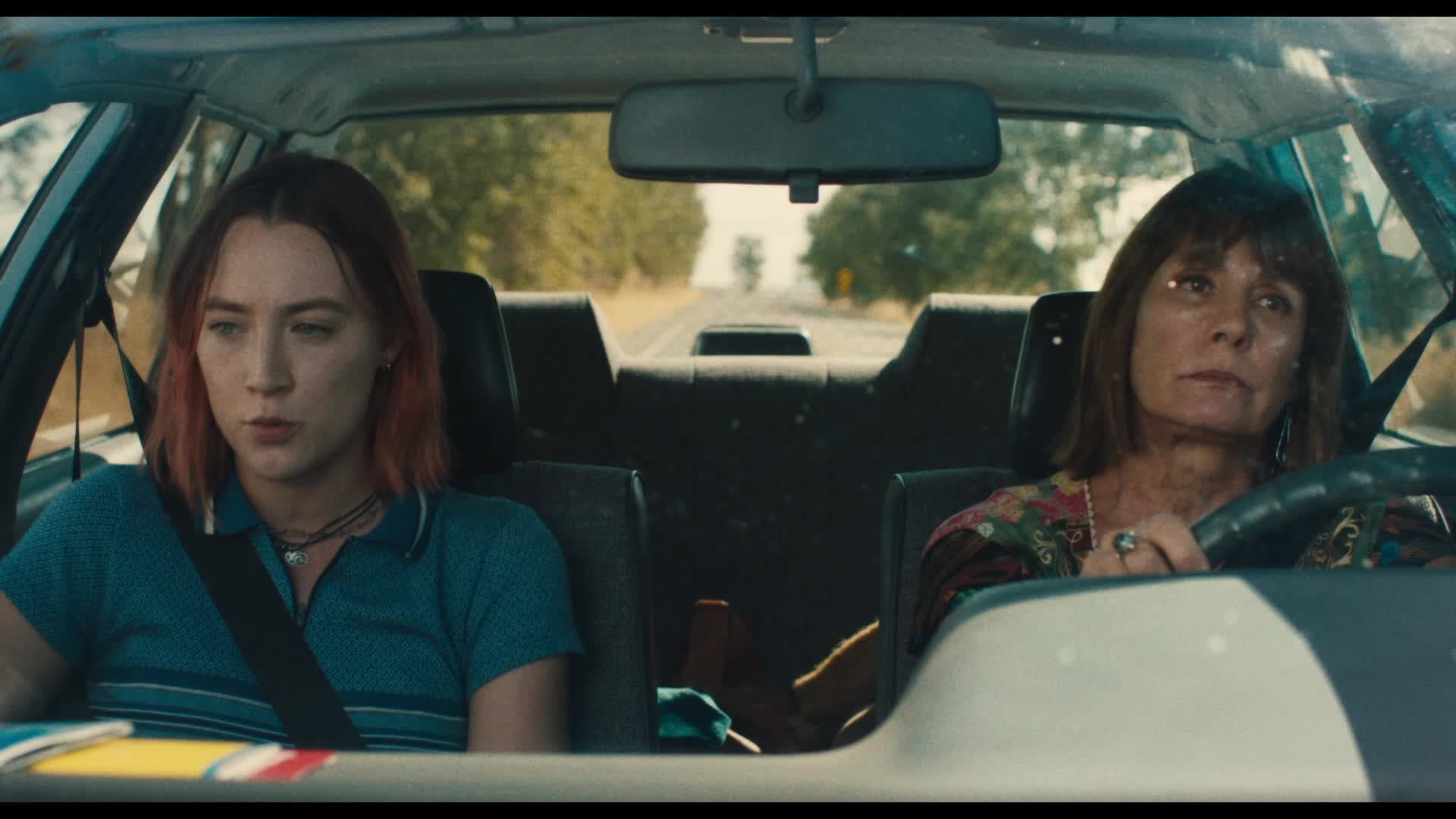
DIRECTED BY: Greta Gerwig
SCREENPLAY BY: Greta Gerwig
CINEMATOGRAPHY: Sam Levy
EDITED BY: Nick Houy
MUSIC BY: Jon Brion
STARRING: Saoirse Ronan, Laurie Metcalf, Tracy Letts, Lucas Hedges, Timothée Chalamet, Beanie Feldstein, Stephen McKinley Henderson, Lois Smith
Growing up in a stereotypically American suburb is generally defined as a weird combination of wanting to live your youth to the fullest while having ambivalent feelings about your roots. Our imperfect lives are full of imperfect relationships and unexpressed emotions that make for unforgettable memories, and that initial ambivalence shifts over time. Beyond its unflinching hilarity, Lady Bird is not only about its titular character reconciling her teenage flippancy with gratitude, but also about her family, how class infects identity, and the enduring power of a Dave Matthews Band song. Set in Sacramento from the fall of 2002 to the fall of 2003, it follows the usual coming-of-age tropes, but also breaks the conventions by refusing to portray adolescence as a dramatic arc with pivotal moments, but instead with messy detours, dead ends, mistakes, seemingly consequential happenings that quickly fade into irrelevancy, and people who float in and out of your life. The feeling of change is the connective tissue between a tidal wave of moments, feelings, and montages giving way to months of unspoken words and mountains of buried regret.
Where Richard Linklater’s Boyhood functions like a family video that extracts every moment and emotion from the protagonist’s life, Lady Bird is more like a personal diary of a teenager who endured life-changing circumstances and life-defining events during the turn of the century. Both movies share the same benign spirit, but here, we see a more rapid sense of pacing, with every scene chopped into a fraction of a memory. Lady Bird progresses through adolescent solipsism, the hazards of relationships complicated by self-image and self-imagination, fumbled romances, and unresolved familial tensions, all without any scene running longer than 35 seconds. She wants to get out of Sacramento and go to college on the East Coast, but her mother, Marion, insists that her family can barely afford to send her to state school. As a nurse who puts in long hours at work and does the bulk of household chores, Marion is the opposite of Lady Bird’s easygoing father, Larry, who completes a financial aid application for her—which drives a seemingly irreparable wedge between mother and daughter once the secret gets out.
Lady Bird has a vision of herself that will take money to foster and sustain. When Marion chastises her for being demanding after Larry loses his job, she responds with a tantrum: “I’m gonna get older and make a lot of money and write you a check and never speak to you again.” Marion’s retort is calm but cutting: “I doubt you’ll get that good of a job.” Later, as Larry tries to uncouple his depression from his job security, Marion assures her daughter, “Money isn’t life’s report card. Being successful doesn’t mean that you’re happy.” Lady Bird responds, “But he’s not happy.” This exchange shows that money both doesn’t guarantee happiness, nor does it prevent you from achieving it.
All the relationships are tempered and conditioned by money. There’s Lady Bird’s friendship with Julie, who lives in a modest apartment with her single mother. After Lady Bird and Julie join the school’s drama club, she gets a crush on Danny, whose grandmother lives in her “dream house,” and their family doesn’t fight at the Thanksgiving table. This seems like the life that Lady Bird aspires to, that if she dates Danny—who winds up being the stereotypically gay theatre kid—she’ll become more cultured. She also curries friendship with Jenna, a snobby queen bee, by lying about being a rich kid by pretending to live at Danny’s home. This leads to her next romance with a pseudo-intellectual rocker, Kyle, who delivers lines about how phones are tracking devices and that he “hates money” while attending a costly private school and living a life of comfort on his parents’ dime. But he’s a douche who lies about being a virgin so he can sleep with Lady Bird, and while she has an idealistic image of what should happen when she loses hers, it’s a standard first experience with sex, only with 9/11 news coverage playing in the background during foreplay. These characters are the inverse of the world Lady Bird aspires to; Kyle seems like a cultured man that she desires to find on the East Coast, but he’s mostly full of shit.
The relationships found and lost within this dynamic make for a film about the textures and sensations of picking up that phone and calling your parent, pressing each number as your head gets heavier and the world swirls as you try to say what you’ve been thinking for years. The two scenes that communicate the fierce mother/daughter dynamic, the sharp edge between “truce” and “war,” are when they go shopping and veer from bickering to joyous agreement, and when Lady Bird is off to college and immediately gets wasted, lying about her past to the first guy she meets. There’s a love/hate relationship, but one end of that is defined by Lady Bird’s self-doubt and insecurity. Marion’s solo drive around the airport is crushing, but when she drives by herself is rich in subjectivity. She quietly takes in the parts of the city she loves, the only blissful moment of her daily routine. The next time she drives is when she chooses to pick up Lady Bird from Kyle’s on the way home—not because Lady Bird needed her, but because “it was easier.” Easier for who? Marion alternates between calling her daughter “Christine” and “Lady Bird,” one of many ways mama bird shows love, but the lady bird can’t see it. That clarity may have begun to arrive when the nun asks Lady Bird a question that defines the whole film: “Don’t you think that’s kind of the same thing? Love and attention?”
That’s it for this week’s instalment of The Watchlist, brought to you by Beaglesgate Productions.

Next week, we’ll be diving into more coming-of-age films. In the meantime, let me know your thoughts on these movies, where they place among your personal favorites, or if you think they’re overrated.
Comments
Nothing yet. Say the first thing.
Sign in to join the conversation.