
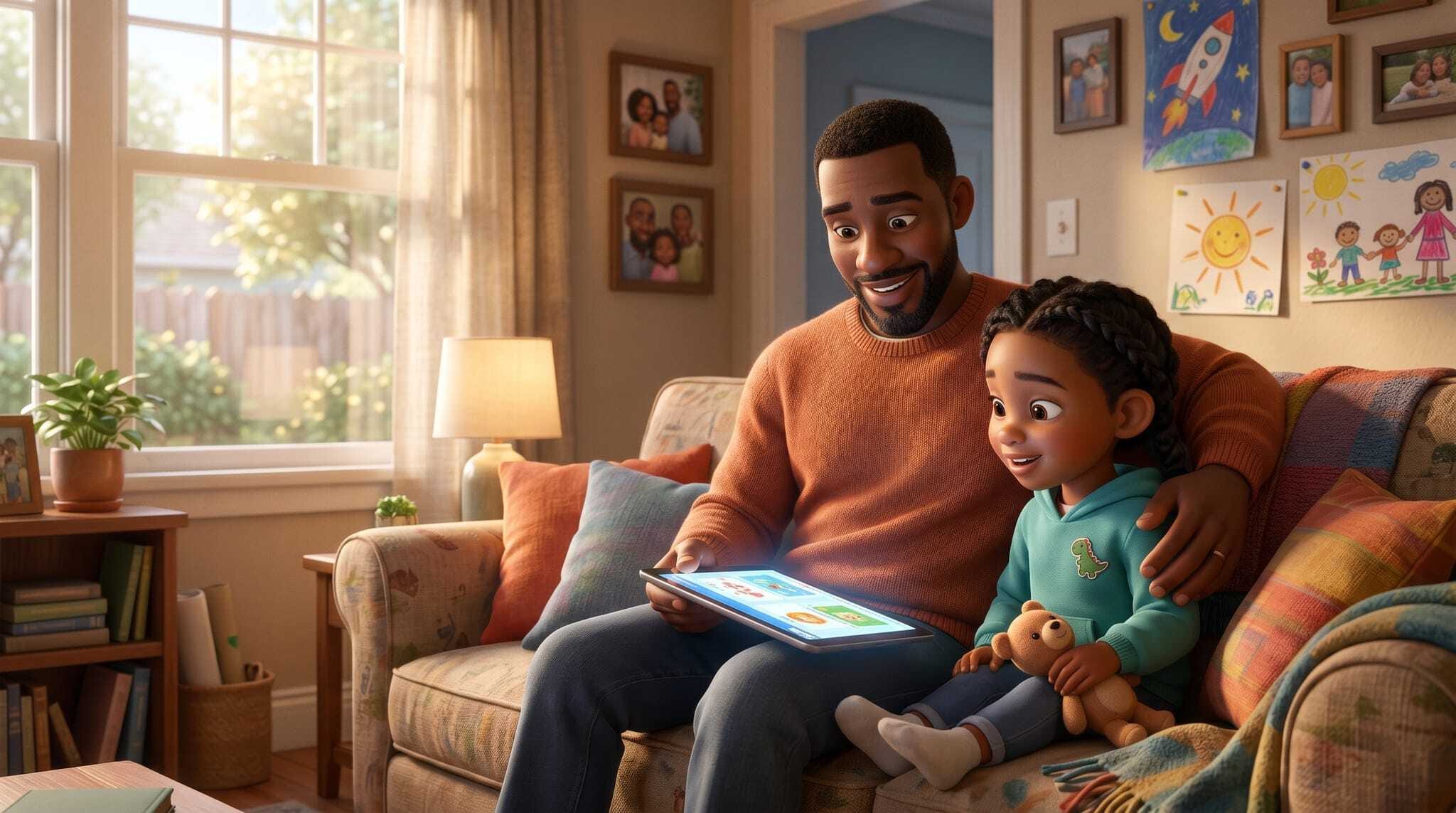
Walk into any school pickup line, scroll through any parenting subreddit, sit in on any cabinet meeting where children’s wellbeing is on the agenda, and you will eventually hear it. The screen time debate is back. It never really left, of course. But for a few years, it got a bit quieter. Now it’s louder than it has been in a decade, and the shape of the conversation has changed in ways worth paying attention to.
For most of the last twenty-five years, parents had one dominant mental model for thinking about technology: the clock. Two hours a day. None for kids under two. The timer on the iPad, the arguments at bedtime, the guilt at the end of a long week. Almost every conversation about kids and screens, formal or informal, traced back to a number.
That number had a specific origin. The American Academy of Pediatrics first introduced a time-bound guideline in a 2001 policy statement on children and television, and reaffirmed it in updates over the following decade, including the American Academy of Pediatrics’ 2016 recommendations. By the time most of today’s parents were raising kids, those rules had calcified into a single mental shorthand: the clock. That meant no digital media for kids under 2. One hour a day for kids 2-5. Consistent limits for everyone older. When I started Kinzoo in 2018, the number one question parents would ask me was “how much screen time?” The clock was doing the work.
Even then, I thought we were measuring the wrong thing. Arguing over heroin and potatoes was never going to get us anywhere. A child spending an hour animating their own video is very different than a child spending an hour scrolling social media. Pretending that those are the same, because they spent the same number of minutes looking at a screen, was always going to fail us.
You remember what the pandemic years were like. We were all home, all the time, with kids who needed to be educated, entertained and connected to family we couldn’t visit. Screens did all of it. They were the classroom, the playground, the babysitter and the family reunion, sometimes in the same afternoon.
The screen time clock didn’t survive the pandemic. It couldn’t. Experts who’d spent careers cautioning against screen time were publishing op-eds essentially saying: don’t beat yourself up, screens aren’t that bad. Pediatricians softened their messaging. Parents retired the timer. For a moment, it felt like the entire screen time debate had been stuffed into a drawer.
But in the years since, parents have started to understand something the clock could never measure: a lot of what kids encounter on screens isn’t neutral. Big tech companies have spent decades refining their platforms to maximize engagement, and they’ve been so successful at it, particularly with young users they were ostensibly never targeting, that some now argue the failure to keep kids off these platforms wasn’t a failure at all. It was a strategy.
Parents have seen this play out at home. The platforms that grab hold and won’t let go. The algorithms that reach for the most extreme version of whatever a kid showed mild interest in. The strangers with friend requests. The pressure cooker of social comparison disguised as a feed.
I wrote about all of this in 2019 when I published my first book. At the time, I felt like I was part of a vocal minority, but now that’s changing. Social media bans for young users are passing in jurisdictions around the world. Landmark lawsuits are showing that tech platforms can be held accountable for design choices that knowingly harmed kids. Whistleblowers have given us internal documents that confirm what parents have suspected all along. And understandably, parents are returning to the question that started this whole conversation. How much screen time is safe?
I get why we still default to the clock. It’s the framework we were handed, and when something feels overwhelming, reaching for a number feels like control. But the answer was never hours and minutes. It was always content, context and design. What is my child doing on this screen? Who built this experience, and what are they trying to get out of it? What is this displacing in my child’s day? Those are harder questions. But they’re the right ones.
In January 2026, the AAP released its newest policy statement, Digital Ecosystems, Children, and Adolescents. The statement effectively retires hour-based screen time limits for most children. In place of the clock, the AAP introduces what it calls the 5 Cs: Child, Content, Calm, Crowding Out, and Communication. Parents are encouraged to think about who their child is, what they’re consuming, whether the experience helps them regulate or dysregulate them, whether screens are crowding out essentials like sleep and movement, and how the family talks about media together.
But the deepest shift is in the framing. The new statement names something many of us have been saying for years: that a child’s relationship with technology isn’t just a family-level problem. It’s shaped by the design choices of platforms, the commercial incentives behind those choices, and the policy environment that allows them. The statement acknowledges, plainly, that digital media is “designed to maximize time, reach and activity on platforms” and is “not necessarily optimized for children’s well-being.”
It moves the question from how do families cope with this to why is the ecosystem built this way in the first place. It puts the responsibility where it belongs. Not entirely on parents, and certainly not on kids, but on the systems and incentives that produced this environment. That’s the conversation we should have been having all along.
A lot of people have been making versions of this argument for years. Researchers, pediatricians, educators, advocates, other parents. The shift is collective and overdue. For twenty-five years, the screen time conversation was anchored to a number that was always going to fail us. We’ve finally started asking better questions. Not how long, but what, with whom, and why. Not how do we limit screens, but how do we build a digital world that’s actually good for kids?
The screen time debate is back. But it’s a different debate now, and a better one. This new conversation gives us a better chance to give our kids the digital world they deserve.
Here are a few helpful resources in case you want to really dig into today’s topic:
If you want to see exactly how much the conversation around screen time has changed, dig into the new policy statement from the American Academy of Pediatrics. Today, their advice is much more nuanced, with frameworks and recommendations—and a deeper discussion about what kids are doing on screens, not just how much time they’re spending with them. They move away from time limits, only mentioning them once for families who want that advice.
In an effort to protect kids from some of the harms of excess screen time, lots of schools have adopted cell phone bans, and they’ve been popular among educators, parents and policy makers. But according to new research, the results from the bans are somewhat mixed. Teachers love them and report that students are less distracted in class. Students also report an increase in overall wellbeing. But the bans did not improve test scores or students’ perception of bullying. As well, some schools reported more suspensions after bans went into effect.
Too long; didn’t read. It shouldn’t be a full-time job to keep up on industry news, so here is a mercifully quick summary of some other notable developments:
Momentum is building to ban AI chatbots for children. Back in April, the Senate Judiciary Committee voted to advance a bill that would make AI companies implement age verification to stop minors from using their platforms. It would also mandate that AI platforms regularly remind all users that they’re AI, and impose criminal penalties on makers whose platforms have sexual conversations with kids or encourage suicide.
While gaming platforms weren’t included in Australia’s social media ban, the online safety commissioner is turning her attention on them now. She’s ordered Roblox, Minecraft, Fortnite and Steam to explain how they protect children from grooming, exploitation and extremism. If they don’t respond within 30 days, they’ll face fines of up to $590,783 a day.
Here are a few more pieces of original writing from me and my team—just in case you’re keen for more:
A lot of parents are wondering whether screen time is making their kids anxious. If yours melt down when you take away the iPad, this article is for you.
And if you want a clear breakdown of the action points in the new APP guidelines, check out this piece from my team.
No posts
Comments
Nothing yet. Say the first thing.
Sign in to join the conversation.