
“Fog” is the first of a planned series of four science fiction novels. Writing is complete at 110k words, more editing is in progress (rewriting the ending… again) and alpha/beta readers are being sought. Each book in the series is in the same universe and connected, though they also stand alone and can be read in any order. In fact, in many ways, they are very different with tremendously different protagonists, settings and stories. This one is the least “hard” science fiction of the four.
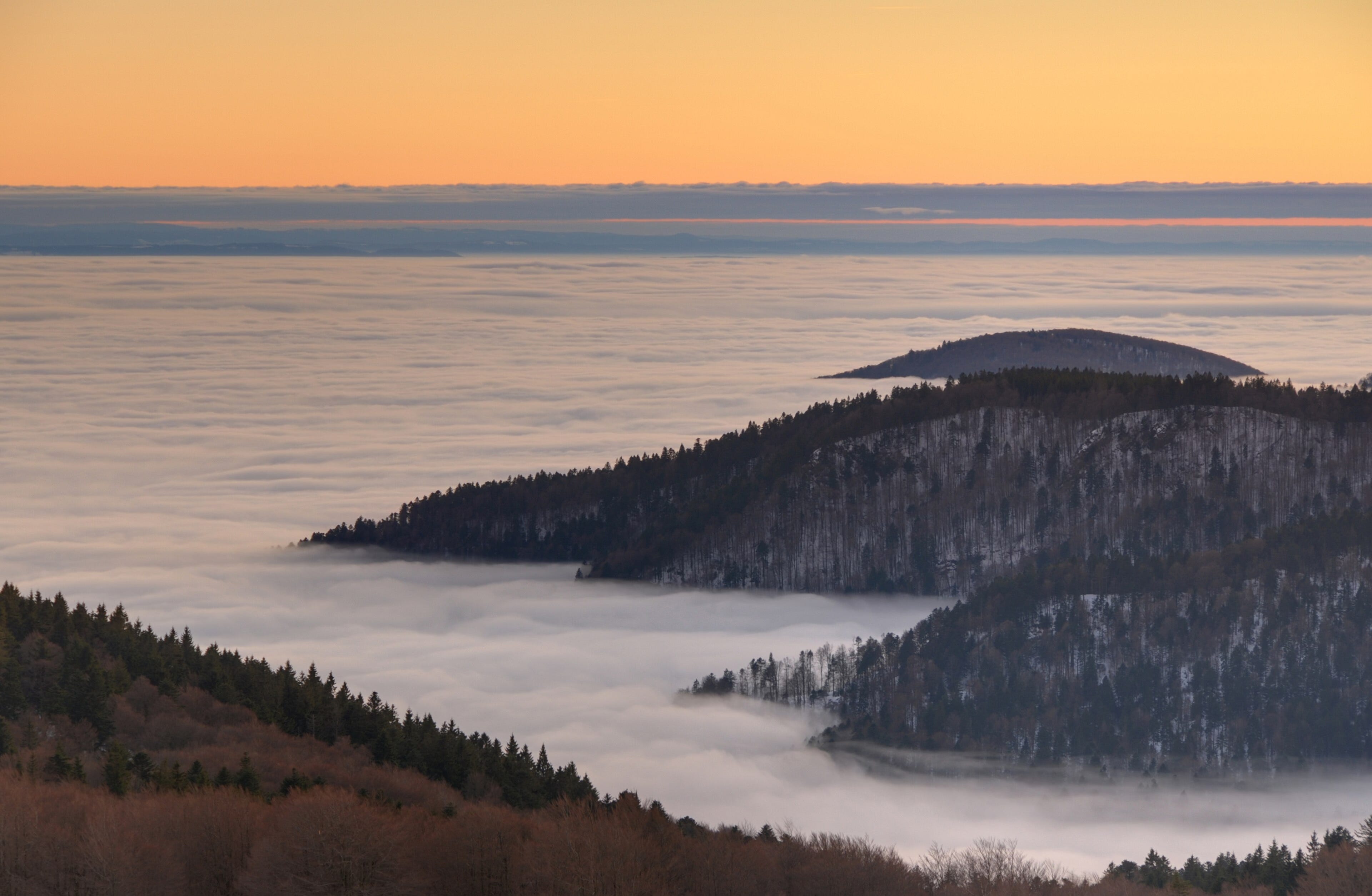
“Fog” takes place in an unnamed land of towering trees, a large bay and ever-present seasons of fog. The protagonist is a young man, Yust, coming of age to enter as an adult in a mixed subsistence (hunt, fish, gather, some agriculture) society. He is faced with a decision all of his orientation (LGBT, though not explicitly named as such) must make. The decision brings love and harrowing adventures that lead Yust to discover their society is not what their stories describe.
There are a lot of concepts that have inspired this story:
Kin Selection and sexuality: Kin selection is the theory of “natural selection in favor of behavior by individuals that may decrease their chance of [reproduction] but increases that of their kin (who share a proportion of their genes).” The eusociality of bees and ants are a common and an extreme example. Naked mole rats, Florida scrub jays, Pied Kingfishers, and even slime mold are examples in varied degrees.
It has been hypothesized that homosexuality (and other of the LGBT spectrum) evolved as a sort of kin selection. Foregoing or minimizing reproduction allows these individuals to assist their kin to survive and reproduce. Though not ‘proven’ as one reason for the evolution of homosexuality, it is a strong hypothesis as one factor.
The society in “Fog” have ‘institutionalized’ this idea. Individuals of this “orien” (I need a better, less obvious word) are faced with a choice. They must become a Memory, a story teller and keeper of their histories, or a Care, a healer and carertaker of those without families to do so. Someone like Yust must choose which to train for and be or be exiled (or live in secret) as a “rogue.”
Tradition: Tradition plays a large part in this and many societies, though perhaps somewhat more strictly in the society of “Fog.” Breaking tradition is just something not done. The story attempts to explore why tradition is both advantageous and disadvantageous in society.
Fog: Both an ever-present part of the landscape and a symbolism of how much of their origin is obscured.
Anthropology: Some of the concepts in the story are based loosely on things I learned or read about over the decades. For example, in the society of “Fog,” men move to the woman’s village (never the other way around). I had read somewhere the hypothesis that societies like this have fewer domestic violence issues, the idea being the relatives of the woman suppress that more than the other way around. It also possibly leads to a more equal power balance between genders.
I am seeking beta readers if you are interested.
Comments
Nothing yet. Say the first thing.
Sign in to join the conversation.