
Hello Substack friends. Today is a BIG DAY! I’m here to announce a very special project that I am lucky to be a part of— the Poison Garden. The very first edition, The Purpose of Poison is on sale today!
(credit to Mila for the cute promo video above!)
This publication is a love letter to poisonous, toxic, and dangerous plants. Mila Roeder is the leader of this project. Better known as Spirit Dirt online, they have cultivated an amazing community behind this publication. She also has a wonderfully written substack as well. As a person who lived through climate disaster in the form of an F4 tornado, Mila’s reflections on post-disaster aid and community really struck a chord with me. Give her a follow.
Though I am relatively new to exploring them as a whole, poison plants are fascinating. They are a lesson in boundaries, both testing them and respecting them. “The dose makes the poison” after all. Many of the plants in this category, despite their dangers, can still be used as potent medicines, if only in the right amounts or processes. Others, however, ask for a lot more psychical space, as even touching certain plants like poison ivy can cause extreme discomfort, or irreparable damage on your skin in the case of plants in the Heracleum genus. Despite this, they still have things to offer their surroundings. The Poison Garden challenges us to re-imagine plants from a human-centric viewpoint and consider their diverse impacts on the natural world. This substack entry will be a deep-dive into the somewhat funny story behind my piece in The Purpose of Poison; The Fires of Heracleum.
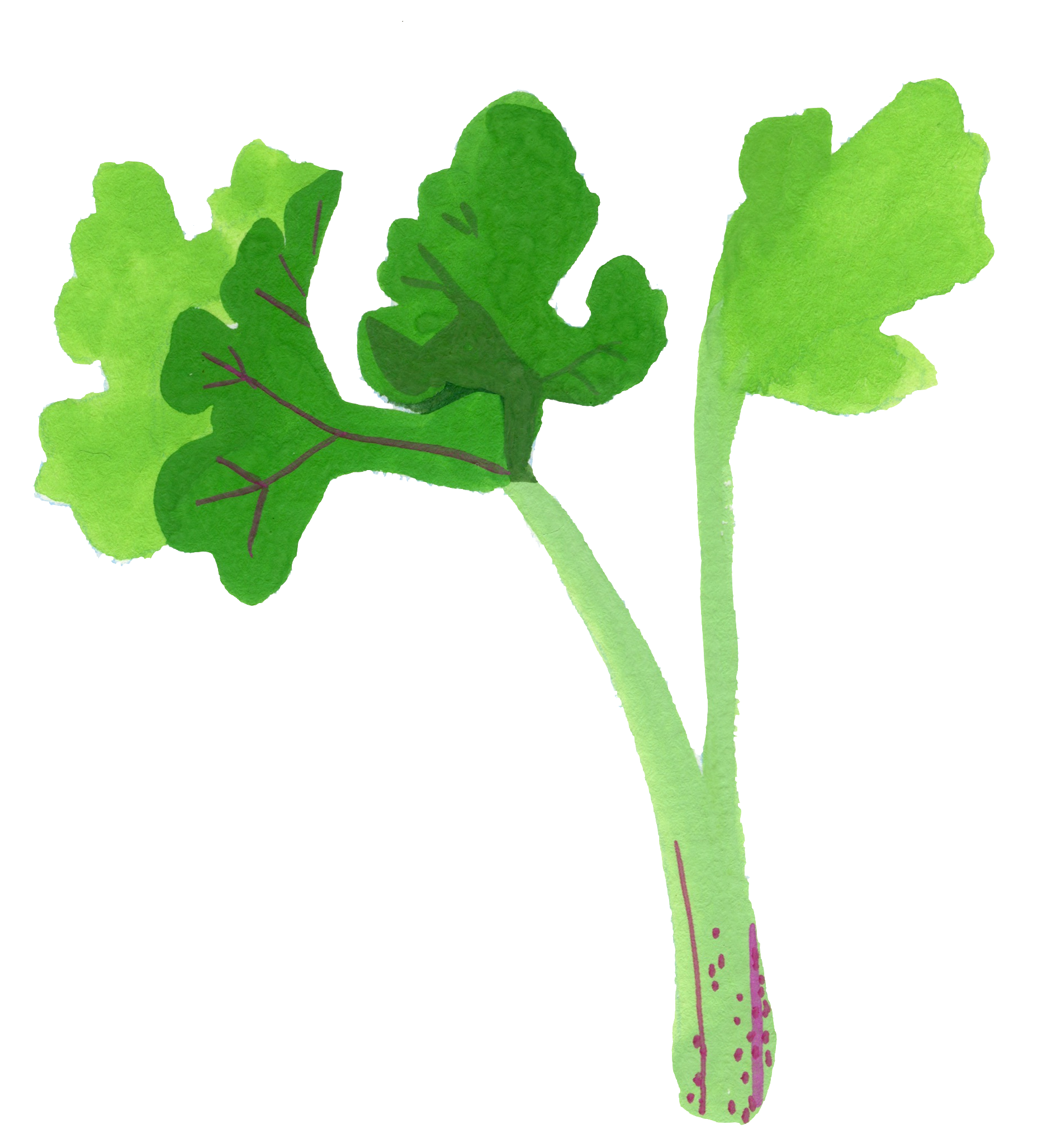
It was another steward Sunday in my community garden. People gather together to work on projects and enjoy our shared space; a dwindling resource in our world with it’s increasing individuality and shrinking commons. The sun was screaming down from the early July sky, a day whose morning was already beading sweat on the skin, yet another promise of brutal heat to follow later. I was getting after some weeds in my community plot, which was slowly becoming the absentee landlord special. Not on my watch, I thought, pulling bermuda grass and bindweed. I wore a t shirt, overalls. Nothing about this moment was more remarkable than any of the other thousands of times I’ve had my hands in the soil. Then, I saw a familiar but unwelcome stem emerging from my garden bed. A purple-pocked base with flared and deeply lobed leaves, identification markers of the Socratic killer known as Poison Hemlock. With relief, I pulled it out, along with a couple similar starts nearby, glad to remove it from a place where folks go to harvest for their families.
I get home that evening, perform the rest of Sunday’s mundane demands, and after my dinner I notice a few red spots on my right hand, wrist, and forearm. There are so many ways to write off minor skin injuries after a day in the garden, and these had no qualities of immediate concern like itchiness or pain, so I ignored them. The next morning, I woke up and the spots were still there, and they were worse. One on my right hand had actually formed into a full boil. This was the point where I do what any sane person would do. I asked Google for help.
For what it’s worth, my fellow plant people, when you’re furiously googling “burn out of nowhere rash from plant missouri poison hemlock lookalike zone 6a boil no pain”, it’s important to keep a level head. The results that come up can range from “nothing” to “pure melanoma”. But, you probably already know this, given Google’s robust role as nurse-practitioner.
I finally landed on something that felt the most plausible. The plant was called giant hogweed. Yes, hogweed. A plant with an extremely unserious name could have been the guy who caused my arms and hands to be splotched with potentially serious burns. In its juvenile stage, this plant looks a lot like poison hemlock; but, where hemlock is deadly to eat, hogweed is dangerous to touch. Hogweed is a member of a larger group of poison plants, Heracleum— a genus with a deep history of human interaction, at least 300 years. Herculeum plants are some of the most phototoxic in all of our planet, meaning toxic in light. The sap of the plant contains chemicals that, when exposed to sunlight, will cause human skin to burn, sometimes to second degrees, forming large blisters and hyper-pigmentation in its wake. The way Heracleum plants do this is fascinating. Without using too much science jargon, the chemicals in the sap soak into your skin and corrupt the DNA that protect it against UV damage. Some research suggests that skin previously affected by phototoxicity will always be discolored, more prone to sunburns, even more susceptible to skin cancers in the future.
At this point in the googling, I had to get a glass of water. Was I going to have to wear long sleeves the rest of my life? How can I protect a burn spot on my right hand when I garden almost every day? Wear gloves 24/7 like Michael Jackson? The ideas were not my brightest, but fear does that. I kept researching.
The reason the plant is so effective at doing this is that you do not feel the sap as it is burning. Of course, if I had felt a cartoonish sizzle on my skin while weeding this plant, I would have rushed to wash it off with soap and water (which, for what it’s worth, is what you should immediately do if you come into contact with the sap). Also, if hogweed sap gets into your eyes, and you keep them open in daylight without rinsing it out, it can theoretically blind you (though no cases of this have happened on record). Either way, it’s a very serious plant to play around with. Understandably, some local governments have even made special teams to deal with the removal of giant hogweed. Safe removal requires full PPE and is (and should be) taken extremely seriously, as people who have mistakenly trimmed the plant shirtless have been hospitalized in burn wards. Looking at my hand and arms, with their small splotches, not so dissimilar from the stem of the plant itself, it occurred to me that I actually got off lucky, considering how it could’ve played out.
Now that I was on the Wikipedia page for the Heracleum family, I figured I might as well refresh my memory on the Greek God himself, and I couldn’t help but draw parallels. Heracles is known for his ferocity in battle, courage, and sexual prowess; similarly, the beefy plants in this family show exceptional flower production, can range up to twelve feet tall, and are extremely successful at spreading due to their tough aerial (leaf) parts, and easily transportable seeds. They can feed hordes of insects and birds with their flowers and plentiful seeds thereafter. Moreover, they easily survive in some of the harshest growing conditions and happily make habitat from land scarred by humans. The more I read about this plant, the less I could view it like some dangerous enemy. It had its reasons for developing this quality. Had I known it before, I would’ve respected it’s boundaries. But, all I could do now was tend my burns, and thanks to the help of some other plants they healed quickly enough.
It was about two weeks later that my friend Joy sent me the open call for The Poison Garden. She had been a longtime fan of Mila’s and encouraged me to apply. The last two or three years, when a friend sends me an open call or application, I usually go for it, if nothing else to honor that the friend thought of me in the first place. A lot of the time, it pans out.
A week or so after I applied, I remembered something. Something almost… funny. I went back to Wiki. The Heracleum genus is a pretty big one, that contains 88 plants, but it is part of an even larger, also somewhat phototoxic, plant family called Apiaceae, which contains common table veggies like carrots, celery, and parsnips. Parsnips. Like the kind I sowed in my community bed earlier this year. Oh man. Was I poisoned by my own food? And not some phototoxic, sap-burning, 10 meter tall baddie? What kind of story is that?!
I sat with my question like a child who had just come into its parent’s room to announce a midnight throw-up. Did I accidentally lie on my application about being “touched by Heracles”? Did I really pull hemlock but then poison myself when I harvested my parsnips that day?
There was only one way to find out.
The next sunny day I went back to Manheim to my community plot. I had on a longsleeved shirt to protect my previous scars from sunlight. With one gloved hand I tore off a parsnip green and cracked the stem to squeeze out a bit of sap. I rolled up my left arm sleeve, chose a spot, rubbed the parsnip sap on, set a timer for 15 minutes, and exposed my skin to the sun. A friend was there with me and she was so worried for my crackpot self-science experiment. But I had to know. The timer rang, and I went to the spigot and washed it off with soap and water. Of course, I stuck around to do some real garden work, too. But with my main mission complete, all I could do was wait for the results.
Later that evening, sure enough, the skin grew red, and the next morning it was irritated in a similar way, but to a lesser degree than the first batch of burns. Was it because it was only exposed to sun for a short time? Or was the burn less severe because it was from a different species? There was definitely a reaction, but it didn’t grow to a boil, didn’t play out exactly like the others. If anything, all it told me was that parsnip could have been the culprit. But, maybe not. Should I have sat longer in sun, or the mystery? All I can say for sure is it soured me on my parsnips for the rest of 2024. I didn’t eat a single one.
Time passed, and so did the burns. Just as I was beginning to forget about this small ordeal, an email came into my inbox from the Poison Garden editors requesting sketches. It wasn’t a complete “you got into the publication” but more of a “we’ll be able to make a better decision if you help us” thing. I love these opportunities because I feel it’s where I can shine the most— extra credit effort. However, this email came right before I went on a big trip. But I really wanted to get into this publication, so I actually ended up drawing the sketches while incredibly sleep deprived and waiting on a connecting flight in Athens. Yes. I drafted an art piece about a poison plant and Heracles in Greece. Life is a poem, or punchline. Either way, I’m laughing.
While I was still in Greece I got told on September 15th that I had been accepted. When I got home on the 26th, I was shaking off the jet lag to reply with my next steps. The editor’s deadline was on the 15th, but because of my sisters wedding, my personal deadline was bumped up to the 9th. That meant I had two weeks to do a potentially full spread piece with a poem and several illustrations, basically starting from scratch on both since I’d been working on other art pieces during my residency. I’ve written about how a tight deadline can actually be the best cure for my own artistic indecision, because I don’t have the luxury of going back and forth on something, I just have to go for it. That was playing out in full here.
The poem wrote itself, for the most part, as poems tend to do. For the visual art, I got to bend references and twist reality a bit in only the way illustration can. It was also a wonderful challenge to try new things and break my own mold of “I just draw vegetables, okay?!” I rented four books from my library on Greek sculpture, and found all the instances of Heracles I could.
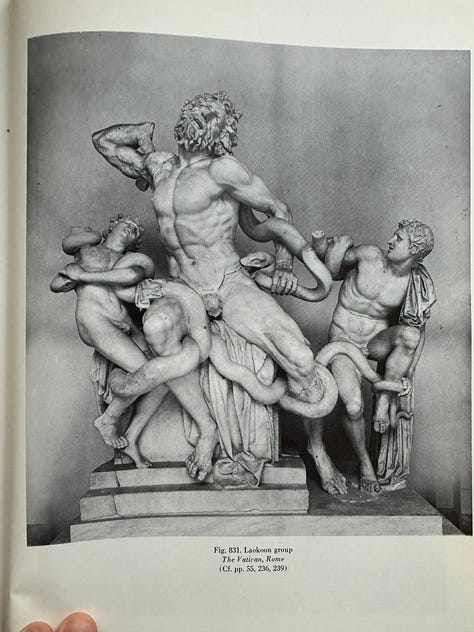
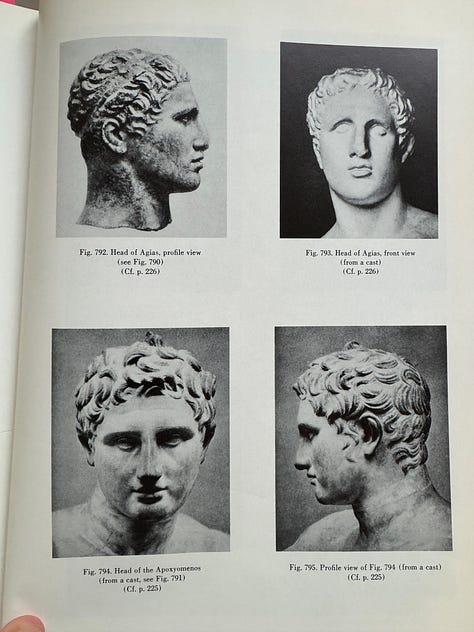
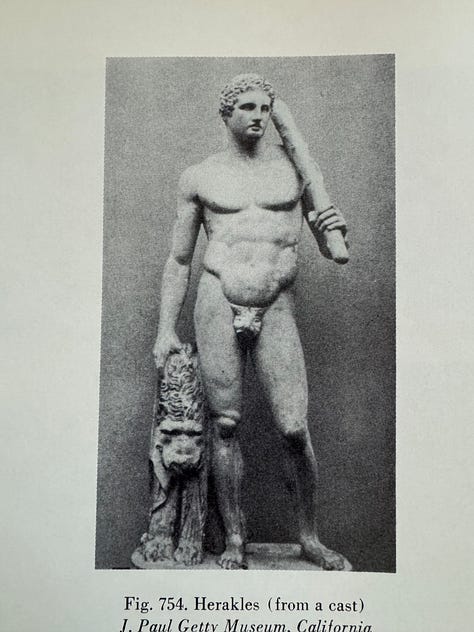
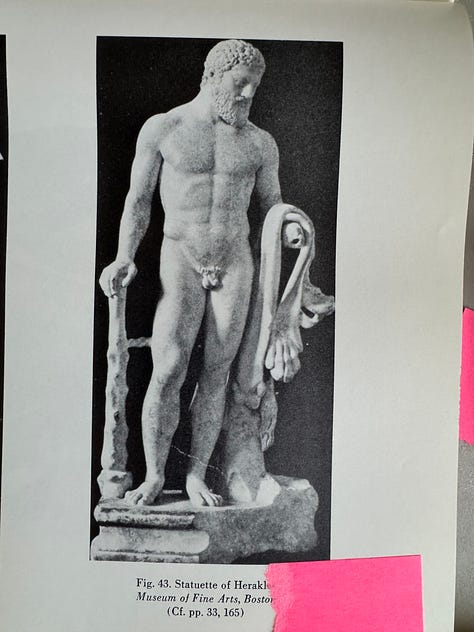
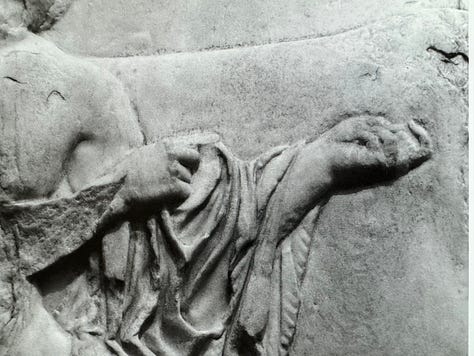
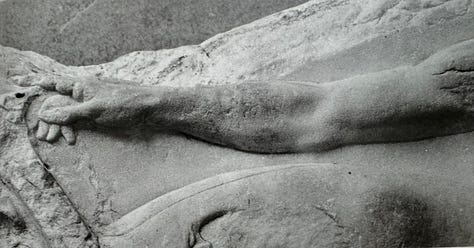
Using the books, I knew I had found the references for the parts of the poem that say “hand, ankle, fist”, and could use them pretty much as is, thanks to the detail and naturalism of Greek classical sculpture. But, I also wanted to tell a specific story about Heracles that wasn’t shown in these stiff marble figures, one with action, swords, drama! Fire!
I searched the internet at first, looking for references of burly men slashing a sword, but felt dissatisfied at angles, details, google in general. So I reached for a book I had only used sparingly since I had bought it in Japan. The real action pose reference guide. This book is a compilation of young women in extreme action poses, sometimes in sailor uniforms, sometimes without, and most importantly, sometimes with swords.
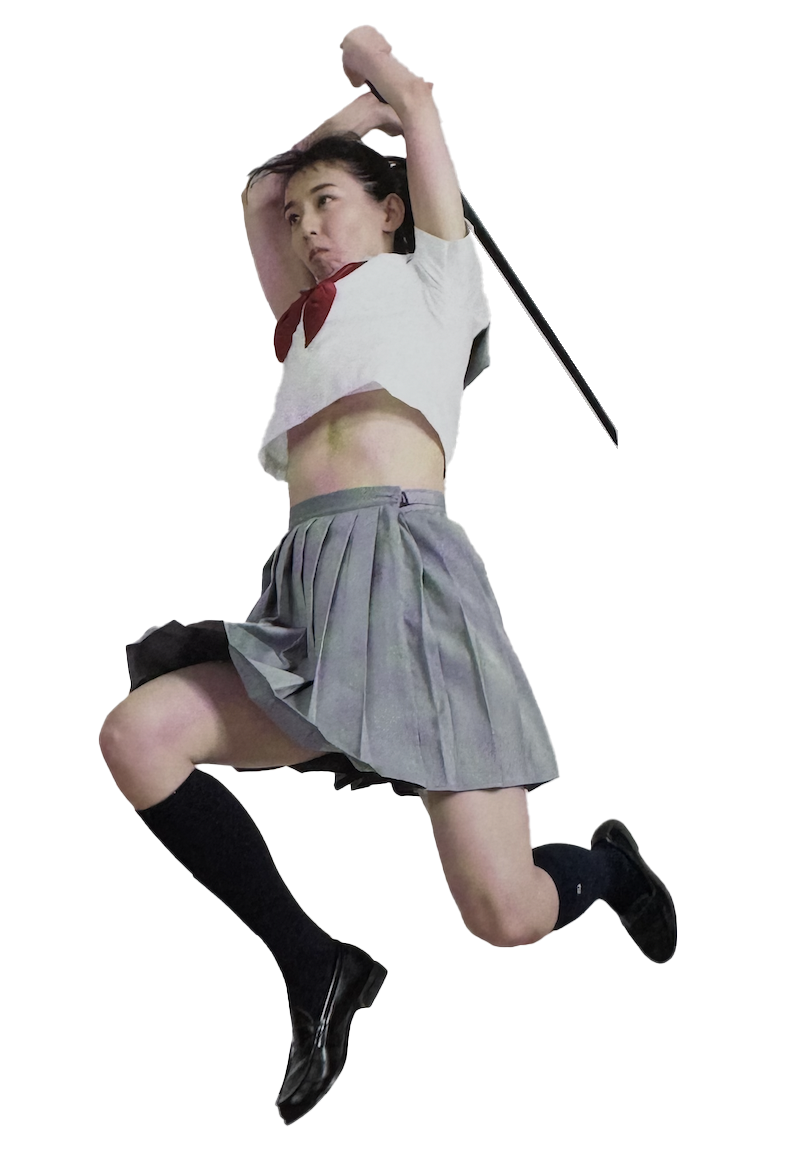
As I flipped through the book, I started sketching some dynamic poses, shaking off the figure drawing dust, and hunting for the perfect match for the scene slowly forming in my head; Heracles with a flaming sword fighting Heracleum. The challenging part was because I wanted to draw Heracles and not a Japanese schoolgirl, I had to guess where muscles would be in lieu of seifuku. As I drew the above pose and morphed her into a the hero I had in mind, the brick dropped on my head. There’s an inside joke about art history here.
Throughout time, artists sometimes used male models when creating replicas of female subjects. For Michelangelo, it was 90% cultural norms and 10% preference; it was not common (or seen as appropriate) for women to model nude in front of men, and Mikey, given his unwavering commitment to painting baras, wouldn’t have had it any other way. Greek sculptors weren’t prohibited from referencing female models per se. But some historians suggest that during mass re-production of their marble works a male sculpture template was used for a female subject or male models were studied instead of female ones (because of availability and women’s social status). In some of Michelangelo’s paintings, women have muscle groups that are quite masculine indeed and some Greek classical sculptures of goddesses are flat and boyish. Though these theories can’t be proven 100%, I find them plausible and very interesting, and here I sat, chuffed to be repeating this in my own piece. But opposite. I was referencing a young thin woman as a model to draw a grown muscular man. Anyway, now all’a y’all are in on the joke too. It’s okay, you don’t have to laugh laugh. Just breathing out of your nose is fine.
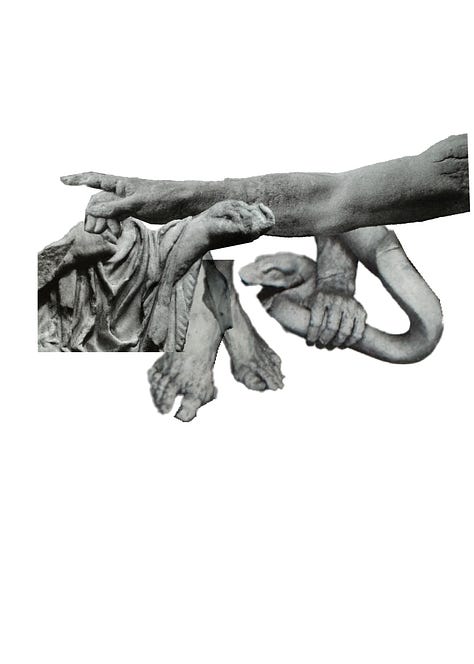
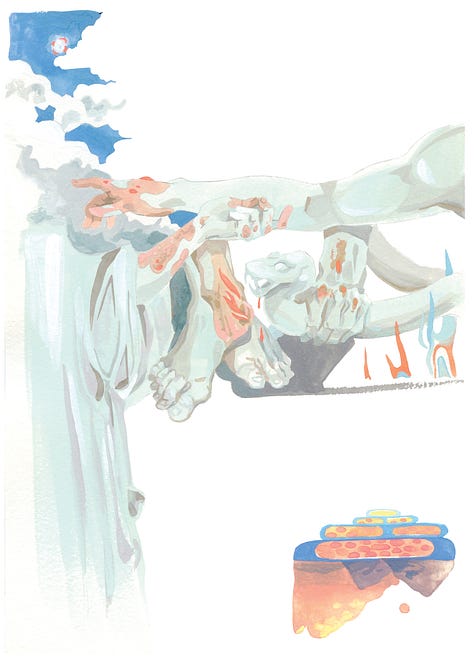
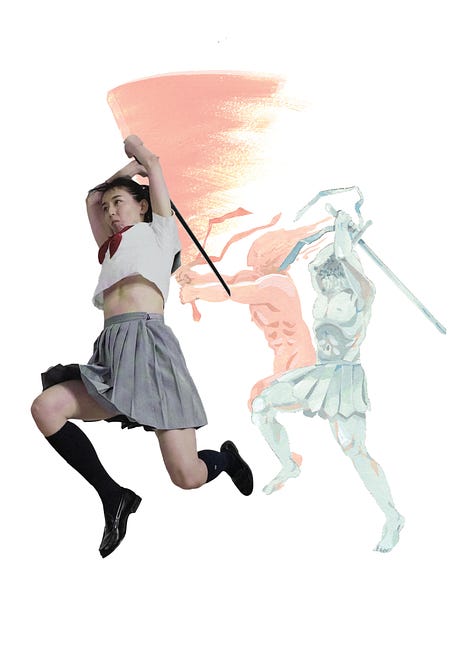
So these are all the stories and secrets behind my piece. Giant hogweed or parsnip, Heracles or Setsuka the third year, the work came together in a way that only lived experience can provide— with levity, raw inspiration, and flexibility to change. I’m very grateful for the opportunity to expand and think differently about what would have otherwise been a one-dimensional injury and transform it into a piece of art that I’m truly proud of amongst other artists that truly inspire me. That I can bond with other artists over a shared love of poison plants seems to be icing on the cake of this interesting tale. If you too are interested in connecting with other poison-loving artists, join the Poison Garden discord. We’d love to have ya.
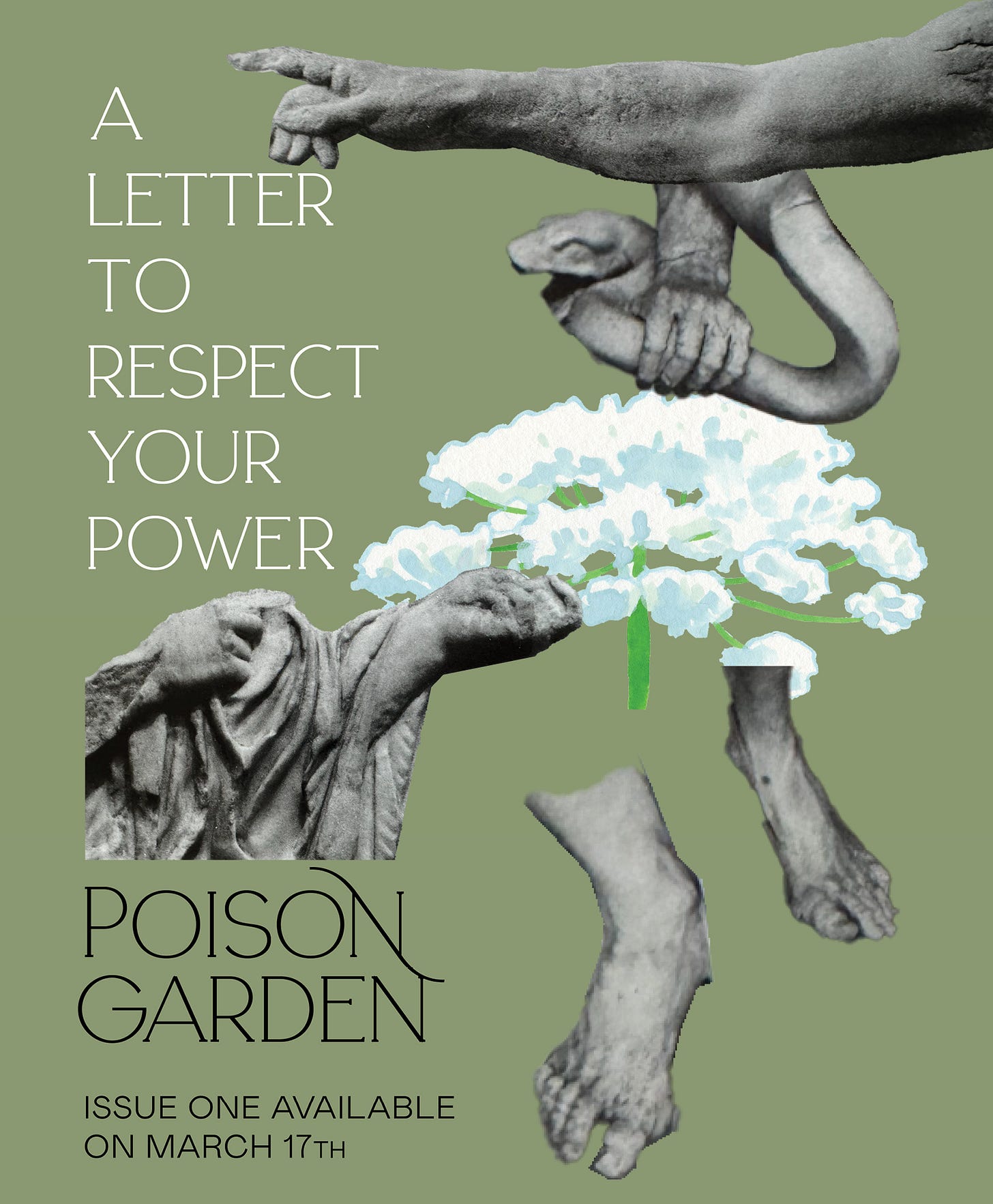
Thanks for reading, and click on the promo image below to go purchase your copy! Mom, if you’re reading this, I’m already buying yours.
Comments
Nothing yet. Say the first thing.
Sign in to join the conversation.