
Every generation must, out of relative obscurity, re-discover Frantz Fanon, learn his lessons, or forsake them. So it is for our times. The most important philosopher of the African revolution has emerged as a key reference for radical movements. But given the importance of religion for public life on the continent today, it is far from given how to read him in this context. Like Fanon said of Marxism in the colony, Fanonian analysis must be stretched to think religion in the African revolution.
The ongoing struggle to decolonize the world has kept Fanon’s body of work in view. By decolonization, I mean the unfinished task of dismantling the durable relations of domination between the West and the Rest. His reflections on the dialectical role of violence in both maintaining settler-colonialism and in national liberation has become unavoidable after Al-Aqsa Flood on October 7, 2023 and the still ongoing genocide in Gaza, accelerated displacement in the West Bank, and the American-Israeli war on Iran. However, the religious character of the Axis of Resistance both invites comparisons with the Algerian War of Independence and reveals such comparisons to be imperfect. After all, Fanon did not systematically theorize the role of religion in revolutionary struggle.
While I cannot claim any special insight into the current hot zones of imperialist war in southwest Asia, I read Fanon with a view to ongoing developments in the greater Western Sahel where two truths make thinking with Fanon both imperative and inadequate. The first is that the movements for popular sovereignty that expressed themselves in military take-overs among the Alliance of Sahel States and in democratic elections in Senegal signal the embrace of anti-imperialist discourse if not politics at the level of government. These developments suggest a popular will to return to the work of a long but episodic African revolution. The second truth is that it is virtually impossible to imagine the continued development of the decolonizing process in West Africa today without a serious role afforded to religion in general and Islam in particular.
In what follows, I will sketch out the problem posed by a Fanonian reading of religion in the African revolution. Note that this reflection starts a new experiment in thinking out loud and in public as it relates to ongoing academic work. Moving forward, I will share notes from my research and reading on this question on my substack feed as I prepare a paper for publication on this topic. I look forward to your feedback, questions, and challenges as I develop my argument.
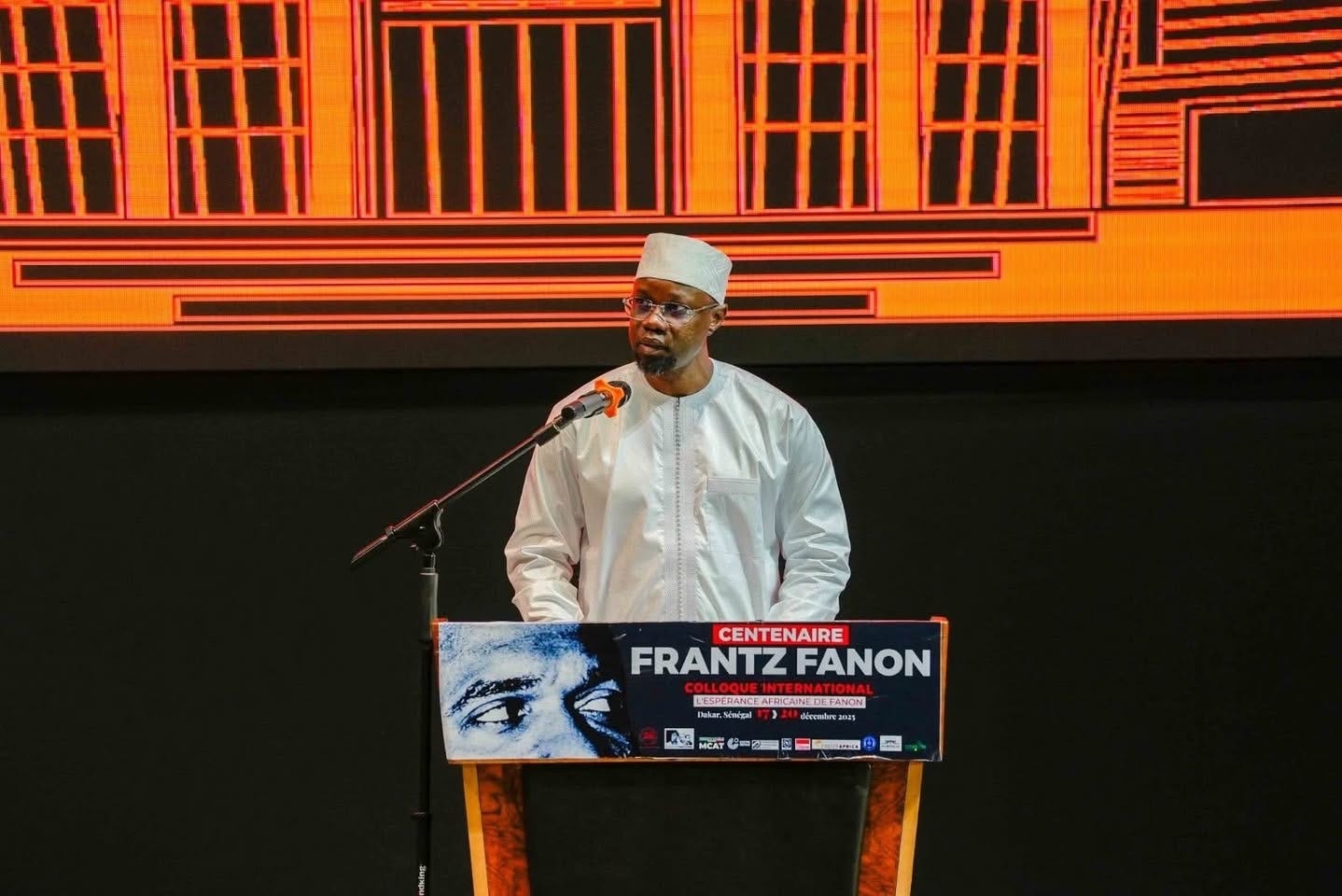
A bit more context might be useful. Last year saw the one hundredth anniversary of the births of three notable African revolutionaries: Patrice Lumumba, Malcolm X, and Frantz Fanon. Note that these last two were not born African but became African as a product of their political commitments and actions. This occasion was marked around the world with rituals of remembrance, conferences, and returns to reading the work of these figures. For Fanon, this included the publishing of many articles, the publication of a new biography, and the production of countless podcasts. The work of memorialization was spearheaded in no small part by the Frantz Fanon Foundation. Amid all of this work there is an ongoing struggle to represent the meaning of the Caribbean-born thinker. Senegal would not be kept out of this conversation, hosting the concluding event of the centennial year in Dakar at the Musée des Civilisations Noires. I had the pleasure of attending this event and heard a singular speech on the ongoing relevance of Fanon for Africa’s decolonization by Senegal’s prime minister, Ousmane Sonko. I have never heard such a politically intelligent speech from a politician that high in a government anywhere. The event effectively brought revolutionary theory to primetime television and the people’s social media timelines.
This is where a simple return to Fanon becomes difficult. How does the philosophy of an existentialist Marxist and committed secularist land in the country that polling often describes as the most religious country on earth? Ninety-eight percent of respondents in Senegal say that religion is important or very important in their everyday lives. Moreover, this attachment to religion is not limited to the private sphere. Sufi Islam, a powerful tradition of contemplation that emphasizes the experience or taste of the divine through intercession, has long informed what is known as the Senegalese social contract, a political order forged in the colonial period in which Sufi personalities or marabouts would mediate the state and the subject population. While recent decades have seen the relative weakening of this mode of informal representation, especially with the rise of the more reformist Islam of Ousmane Sonko, the histories, symbolism, cultural forms and social practices of the orders offer potent repertoires for the performance of public life.
Several readers of Fanon describe his view towards religion as ambivalent. Perhaps this should not be surprising given his analytical framework of historical dialectics. There are contradictory forces in society that are in conflict and that change according to a dynamic contest. Ambivalence appears as a result of recognizing these contending forces.
In Wretched of the Earth Fanon is univocally critical of the marabouts as representatives of tradition that side with colonial interests. Accordingly, they are obstacles in the modernization process, which is to be led by the nationalist bourgeoisie. In the case of Senegal, however, the most important economic shifts were led by Sufi organizational networks, featuring strategic investments in transportation and commerce after national independence as the colonial groundnut economy would go into decline. By and large, the most enterprising of the bourgeoisie relied on the “informal” structures provided by the orders to absorb some of the risk and to re-distribute the profits. The so-called nationalist bourgeoisie however stayed close to the orbit of the state for access to resources.
In contrast, a generous reading of “Algeria Unveiled” and Fanon’s letters with the Iranian scholar Ali Shariati, along with his siding with the Algerian struggle suggest Fanon had an instrumentalist view of Islam. It was good, insofar as it could help the revolution, but afterwards, like modernization theorists typically argued, religion would recede in importance.
To be honest, my framing of the “role” of religion resembles Fanon’s instrumentalization. A more rigorous religious studies perspective would resist reducing religion to simply playing a “role” as its normativity has a force all its own. It would seem that much like Fanon said one must stretch Marxism in the colony, one must stretch Fanonian analysis in the reading of the religious in Senegal. I’m trying to figure out how.
I have been re-visiting Fanon’s major works Black Skin, White Masks and Wretched of the Earth, and I have been feeling like I am discovering anew someone I thought I knew well. I am also reading for the first time A Dying Colonialism and Towards the African Revolution. I have also been reading some of the more biographical works including Adam Shatz’s Rebel Clinic, Alice Cherki’s Frantz Fanon: A Portrait, as well as Lewis Gordon’s philosophical introduction, What Fanon Said. Then there is a small group of texts that focus on the religious dimensions of Fanon’s thought. Finally, being fairly convinced by Lou Turner’s interviews and article on Fanon’s clinical work, I am taking the plunge in my reading of the collected writings Alienation and Freedom. As I work my way through this body of material, I will comment upon them through this platform. I hope you will follow along with me in these readings and help me think the question of religion in the African revolution through.
Sharing is caring. Each one teach one.
No posts
Comments
Nothing yet. Say the first thing.
Sign in to join the conversation.