
First of all, what the hell happened? The other day it felt like it was 2011, and now it’s 2026. I genuinely don’t know where the time went.
Last time, I took you through my early studios which included my bedroom setups, hijacking my dad’s studio, recording bands at questionable hours, and building a garage room that sounded like somebody had trapped a snare drum inside a plasterboard box. Back then, I thought I was heading towards a career in music production. I spent countless hours recording guitars, programming drums, and generally annoying anyone unfortunate enough to be within earshot.
What I didn’t realise was that my career was moving in a different direction. By the early 2010s, I was becoming less interested in making music and far more interested in post production. Not that I knew it at the time; like most career changes, it happened so gradually that I barely noticed.
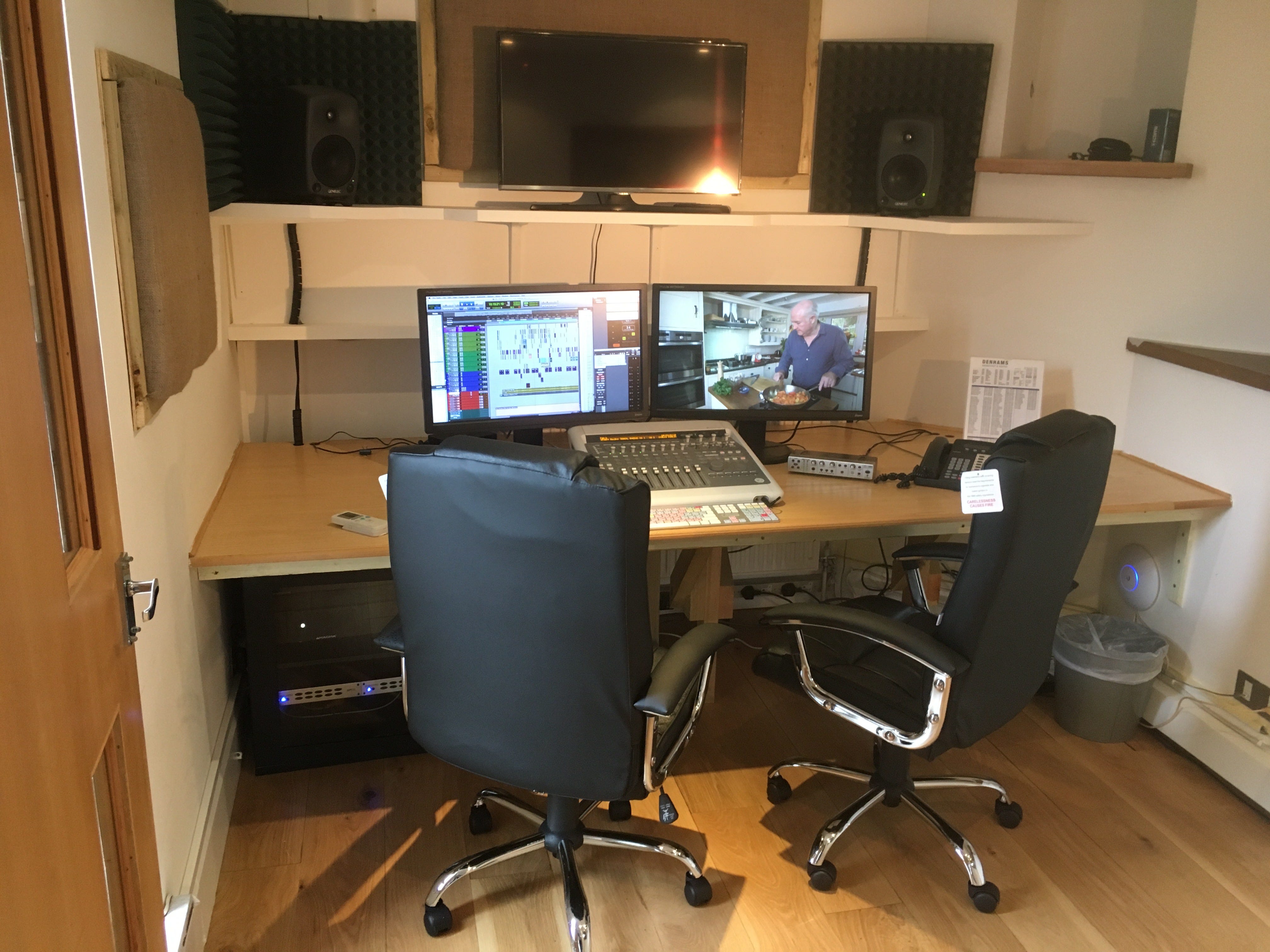
At the television production company, I managed to expand. This sounds much grander than it was.. essentially, I moved into another room and inherited an entire outbuilding to myself. To me, this was enormous. Until then, I had been working with some rather large Spendor studio monitors. Lovely speakers, but they occupied a significant portion of the available real estate. When your speakers are bigger than your desk, you start to question your priorities.
After some careful lobbying, and what I suspect was a degree of persistence that eventually wore them down, I convinced management to let me get a pair of Genelec 8020s. For anyone unfamiliar with Genelec, they’re one of the most respected manufacturers of studio monitors in professional audio. The 8020s were compact, accurate, and took up far less room. They also looked considerably more modern than the speakers they replaced.
I upgraded from the trusty iMac to a souped up Mac Mini, paired with the ever-faithful Digidesign 003 interface, which by that point had become less of a piece of equipment and more of a long term colleague. Pro Tools had also undergone some major changes. For years, Avid had tightly coupled Pro Tools software to their hardware; if you wanted the software, you bought the hardware, and if you wanted the hardware, you bought the software. Then reality arrived.
The rest of the industry was moving towards flexibility, and Avid eventually followed. Pro Tools 10 was a massive step forward. It introduced clip gain, which completely changed dialogue editing workflows. It improved file handling, offered better automation features, and generally felt far more modern than previous versions. For somebody spending most of their day editing dialogue and mixing television, it was a huge upgrade.
Next door was my old room. Rather than leave it unused, we converted it into a voice booth. “Converted” may be slightly generous, as it was essentially plasterboard, carpet tiles and optimism. Still, it worked, and sometimes that’s all you need.
I used an HDMI splitter to duplicate the output from a Blackmagic video card, allowing the talent in the booth to see the picture while recording voice-over. For post-production, this is incredibly important; timing, pacing and performance all benefit when the presenter can actually see what they’re talking about. The microphone at the time was a Rode NT1. For the money, it remains one of the best large diaphragm condenser microphones around quiet, reliable and perfectly capable of producing professional voice-over recordings. Most importantly, clients never complained, which is usually a good sign.
For several years, this was largely my setup. At home, I had moved house and had no real desire to build another studio. My obsession with music production was fading, not because I stopped loving music, but because I simply found myself becoming increasingly busier with work.
Then came a turning point. In 2015, my friend, mentor and all round maestro Paul Roberts began winding things down. Paul had mixed numerous Rick Stein series over the years and had built up an incredible body of work. The next series, Rick Stein’s Long Weekends, was coming up and I was going to be mixing it. No pressure then.
We also needed to record the voice over, which meant the booth needed an upgrade. Fortunately, Paul generously donated materials from his own studio. We travelled to his place, dismantled his old booth, and transported the materials back. It felt slightly like stealing a small building. The booth was rebuilt properly using RW45 acoustic insulation and a much more substantial structure. For the first time, it felt like a genuinely professional recording environment.
Meanwhile, the 003 was still hanging on barely. By this stage, it was beginning to show its age. It still worked, but there was a definite feeling that every session might be its last, like an ageing rock star insisting they’re absolutely fine before immediately needing a sit down.
After recording Rick Stein, I finally managed to upgrade. The Digidesign 003 retired after years of loyal service, replaced by a Focusrite interface and a Slate Raven touchscreen controller. This felt like stepping into the future. The Slate Raven was essentially a giant touchscreen running Pro Tools, where instead of using traditional faders and controls, you interacted directly with the software. It looked incredibly futuristic. It also meant visitors would walk into the room and immediately assume I knew what I was doing.
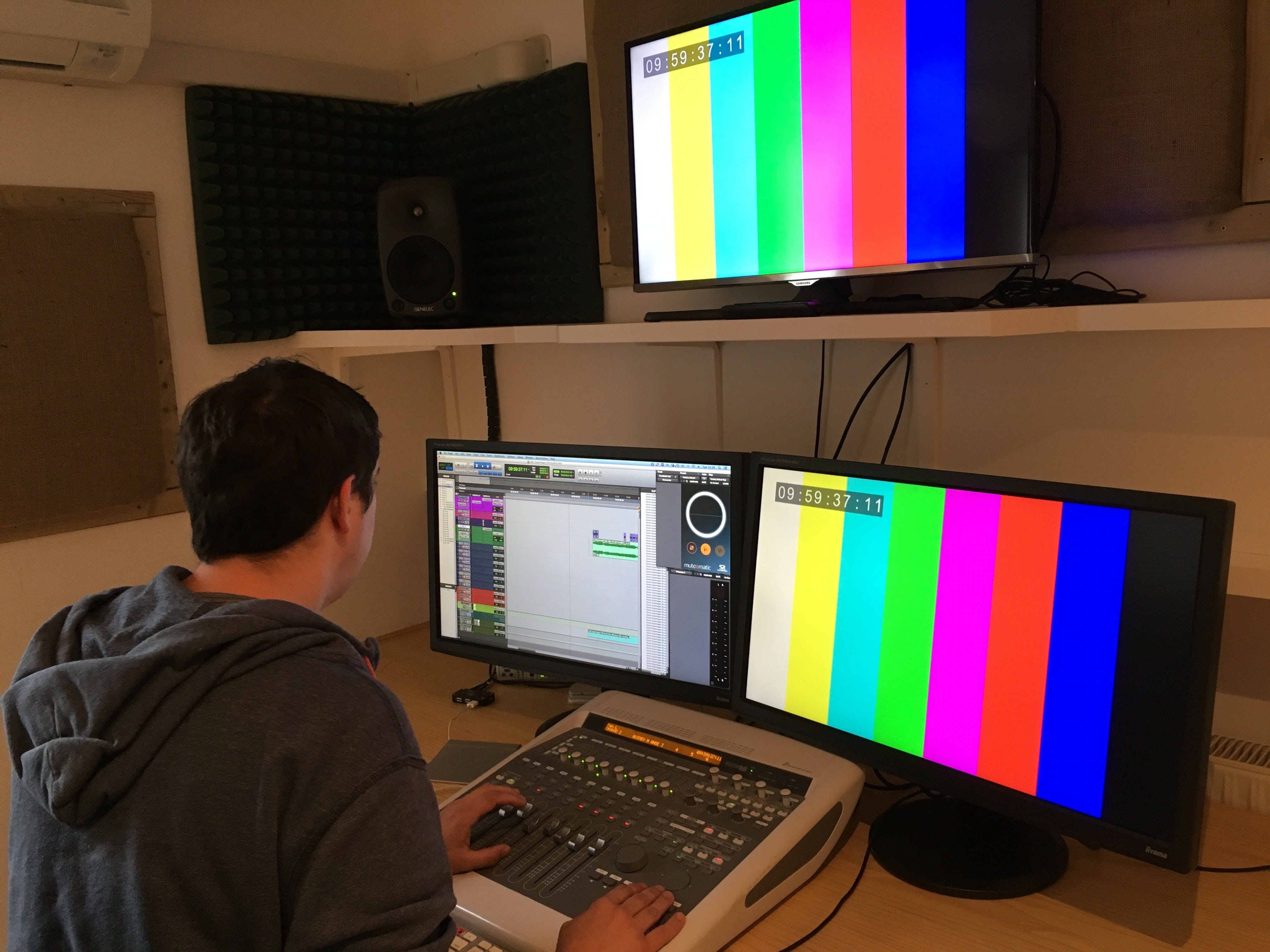
The microphone was upgraded too. I bought an Aston Origin, and I still think Aston microphones are some of the best value microphones available. There’s something about the lower mid range response that I really like, particularly for spoken word. Voice over recordings just seem to sit nicely without needing much persuasion.
One of the strange things about building a studio is that eventually people start using it. I know: madness. While working on a series about Korea with John Torode, he came down to record voice over. At some point, I realised that what had started as a slightly improvised setup was now attracting genuine broadcast work.
We began marketing the studio more actively, which led to projects for other production companies, more voice-over work, more ADR sessions, and more opportunities. Over time, we recorded voice over with people such as Dawn French, and we recorded ADR for productions including Sex Education. There was a session with Emilia Fox for an ITV drama, all while I was still doing the bread and butter work.
I continued recording Rick Stein and mixing series including Road to Mexico and Secret France, both of which were mixed entirely on the Slate Raven setup. At the same time, I was increasingly being hired to work in larger facilities. Suddenly, I was encountering equipment that lived in an entirely different league Avid S6 control surfaces, Pro Tools HD systems and purpose built rooms. They were the sort of places I’d have drooled over as a teenager.
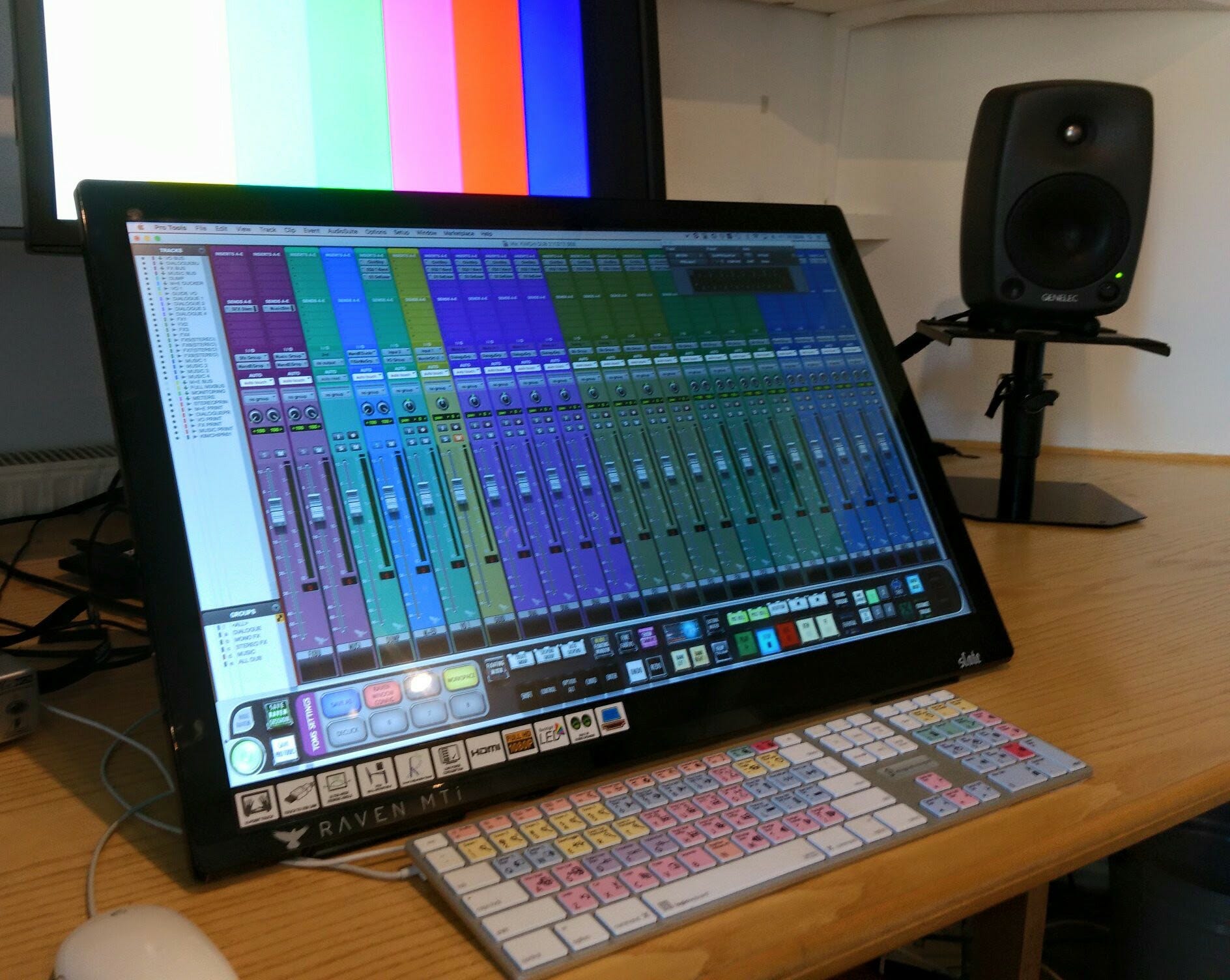
When I look at these studio photos now, what strikes me isn’t the equipment; it’s how the goal changed. Back in the early 2000s, I thought music production was the destination. Everything pointed in that direction the studios, the gear, the projects and the ambitions. Yet, somewhere along the way, I discovered that what I really loved was post production: dialogue, storytelling, mixing, and the process of shaping a programme until everything felt invisible.
None of that was planned. If you’d shown eighteen year old me a picture of what I’d eventually be doing, he probably would have looked confused and asked where the drum machines were. That’s the funny thing about careers: you don’t always end up where you intended. Sometimes you simply follow the bit you enjoy most and eventually discover it has taken you somewhere entirely different.
Anyway, because I enjoy dragging stories out, I’ll save the next chapter for Part 3. That one involves Covid, more studio changes, and where I find myself today, which somehow still doesn’t feel like 2026.
Sign up to my substack here for more creative insights of the television and audio industries.
No posts
Comments
Nothing yet. Say the first thing.
Sign in to join the conversation.