

Cockpit view from the Millennium Falcon in Star Wars at the moment the hyperdrive jumped to lightspeed.
I recently gave a talk at the Coronado Public Library. Coronado is a small island off the coast of San Diego, with a population of 25,000. It is connected by a long bridge, making it feel like a village. The Hotel del Coronado is a famous landmark, featured in the movie “Some Like it Hot.” I have given many public lectures. On a book tour in China in 2018, I gave a lecture to a fintech group of 2,000, and it was streamed to 10 million Chinese viewers. Back then, AI was so new that most of the questions were informational, like “What will be the next big application of AI?” This group was much smaller, filling a room with 100 mostly Coronado residents. The questions were less informational. There was an undercurrent of concern. One mother said her two children were anti-AI and did not want to use it. She asked me what she could say to them. I was at a loss for words. I told her that she was asking the wrong person since I don’t have children.
Who Will Be Most Affected?
Newspapers are filled with stories about AI taking away jobs from white-collar workers, which might account for the dramatic shift in public sentiment. When asked this question in the past, I said you would not lose your job, but your job would change, and you would need new skills. I thought the older workforce might have trouble adapting to new technology. I thought that younger workers would have less difficulty adapting to AI, as happened with the introduction of computers and the internet. What I did not anticipate was that younger workers would be the ones most affected.
At the dinner after my talk hosted by my colleague Ralph Greenspan and his wife Dani, a smaller group was more upbeat, sharing stories of using AI in their professions and daily lives. One of them had a better version of my advice on losing a job: “You won’t lose your job to an AI, but to someone who is using AI.” I was sitting next to a cardiologist who said that AI was being widely adopted by his colleagues and it was improving the medical care for their patients. None of the doctors had lost their jobs. All technologies have risks and benefits. It appears that the older generation is more responsive to the benefits. In comparison, the younger generation is more attuned to the risks. Transitions to a new technology are unpredictable. In previous technology shifts, the younger generation had the advantage, but with AI, the older generation of experts has the advantage.
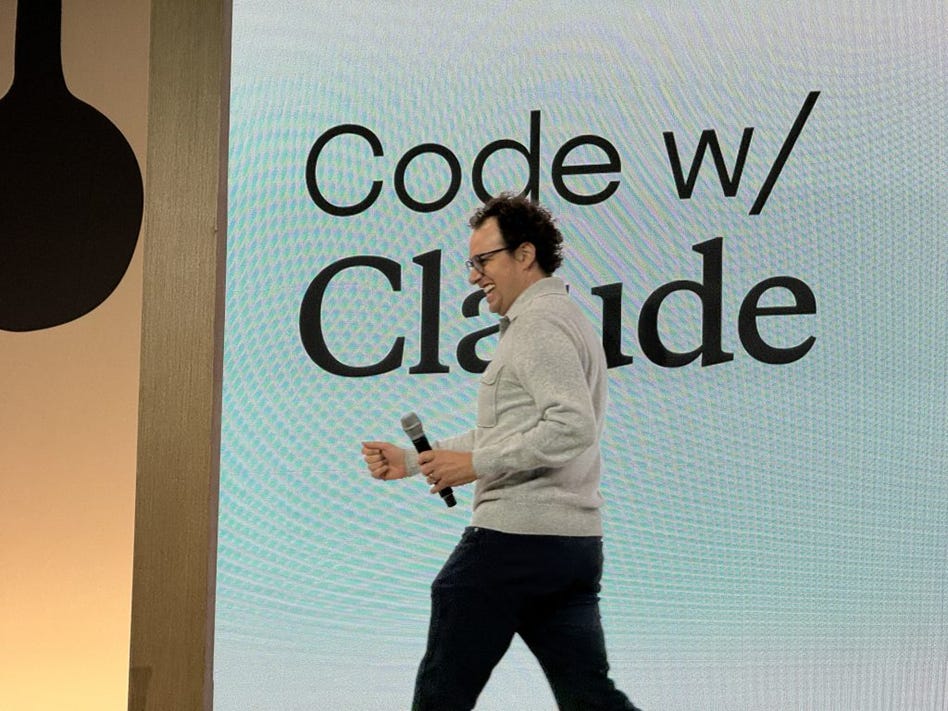
Figure 1. Dario Amodei, chief executive of Anthropic, at the Code With Claude developer conference in San Francisco in 2025
Who Will Benefit?
When Claude Code was released, the programmers in my lab adopted it wholeheartedly, enabling them to debug a large and complex program with a Claude assistant in an hour that would have taken them a week on their own (Fig. 1). The same shift has occurred among other proficient programmers with a deep understanding of large-scale programming environments. Novice programmers have not benefited as much because they lack sufficient experience to advise the AI assistants. Computer Science has traditionally been one of the most popular majors on campus, and a CS bachelor’s degree was an entry into well-paying jobs at top companies. This year, those jobs have become much scarcer.
The Rise of Data Science
Five years ago, the Halıcıoğlu Data Science Institute (HDSI) was founded at UC San Diego. I am a Fellow at the HDSI, and I have seen it grow from a few founding faculty to 50. This unprecedented growth was accomplished by social engineering. Every department has data to analyze, and HDSI offered half-faculty slots for joint recruitments. In addition to starting PhD and Master’s programs, a new highly popular data science undergraduate major was established. Their newly minted majors are in great demand, as companies of all sizes and shapes desperately need help leveraging AI tools. So the problem for youth may not be their age, but their training. It may take a generation for colleges and students to shift to an AI-oriented curriculum.
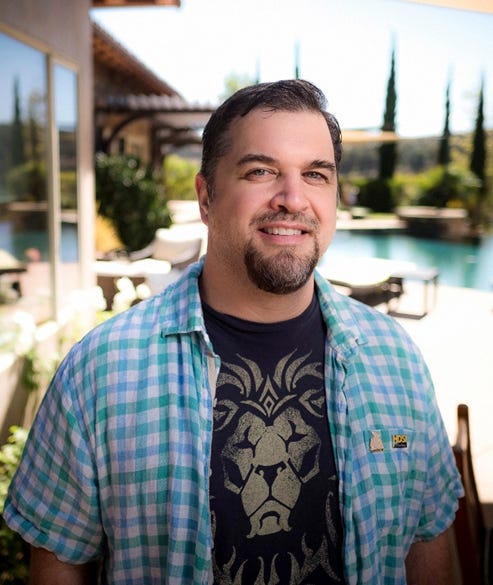
Figure 2. Taner Halıcıoğlu was employee #1 at Facebook, just after the founders. As a software and operations engineer, he single-handedly built and architected the initial core hardware infrastructure that allowed Facebook to survive its explosive early growth.
In April, UC San Diego announced a new Halıcıoğlu School of Data Science and Computing, alongside the Schools of Engineering, Medicine, Biological Sciences, Physical Sciences, Social Sciences, and Arts and Humanities. This rise in the world of academia is nothing short of meteoric, fueled by $125 million in gifts from alumnus Taner Halıcıoğlu, a Lecturer in Computer Science and Engineering at UC San Diego (Fig. 2). Equally important was the leadership of Rajesh Gupta, who steered the Institute through many narrow academic passages. It also helped that UC San Diego has an entrepreneurial culture.
The Times They Are a-Changin’
Not only has the world changed in the last four years since ChatGPT arrived on the scene, but the rate of change has changed, too. It reminds me of an iconic moment in Star Wars when the jump to lightspeed was engaged. It felt so real, I grabbed my seat.
No posts
Comments
Nothing yet. Say the first thing.
Sign in to join the conversation.