
For several years now, audiobooks have been the fastest growing segment in publishing. In fact, in Canada, the number of readers who prefer audiobooks has risen from 8% in 2019 to 13% in 2023. Over the same period, the number of readers who prefer print books declined from 65% to 59%. That alone makes this topic important to writers, readers, and publishers.
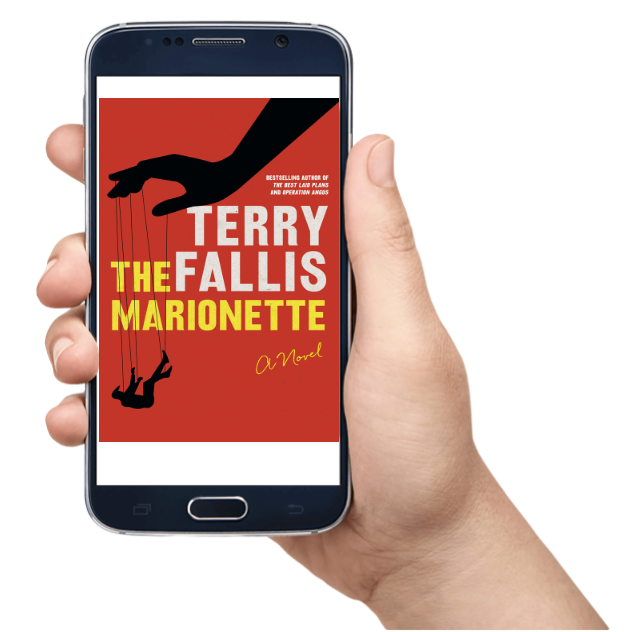
Audiobooks often provide lapsed readers with a more convenient—and arguably less demanding—return to books. Moreover, audiobooks might also serve as a “gateway drug” to those who have never really read books but might just start when reintroduced to the power of storytelling. As well, newly-minted podcast aficionados might find the transition to audiobooks smooth and easy. So, the emergence and growth of audiobooks in recent years is a good news story across the board. In short, audiobooks seem to be expanding the pool of potential “readers.”
For a few reasons, I’ve always thought that this rapid rise in the popularity of audiobooks is a side-effect of the digital revolution. Firstly, smartphones and tablets have made finding, purchasing, and listening to audiobooks, extraordinarily simple, convenient, and relatively cost-effective. In the same vein, it has never been easier for voice actors to record their narrations—from the comfort of their own homes—and submit their high-fidelity audio files to publishers. Finally, the digital revolution, including social media, created unprecedented competition for readers’ eyes and minds, shortened our collective attention spans, and put considerable pressure on writers and traditional publishers to maintain existing, and attract new, readers. The audiobook is one way of ensuring books remain an important part of our cultural landscape.
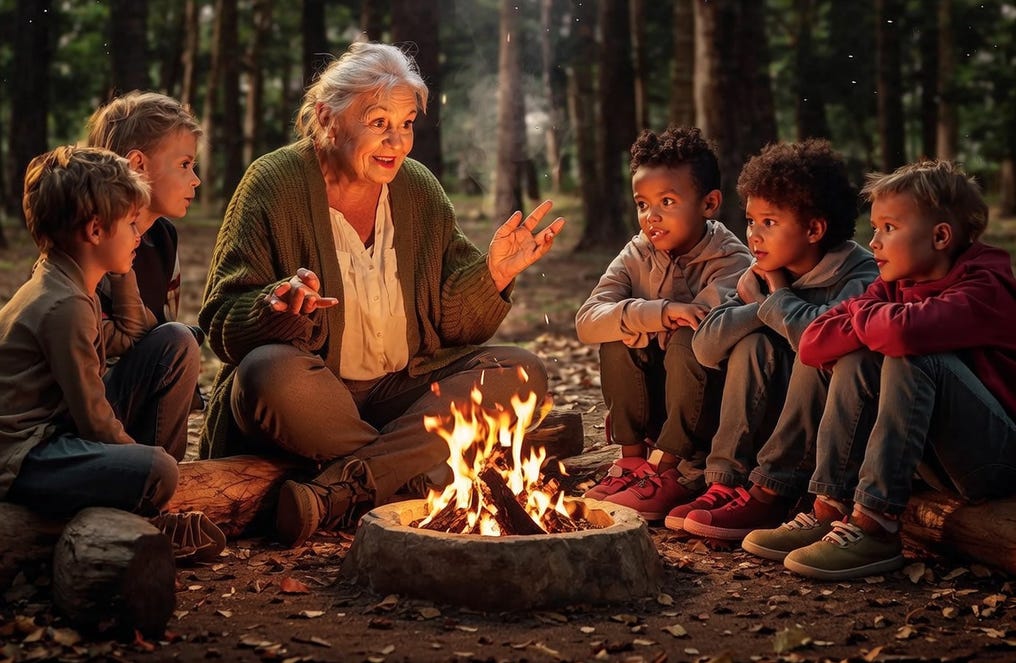
Remember when we were young and our parents or grandparents would tell us stories that had been handed down to them by their forebears? The oral storytelling tradition is deeply rooted in human history and represents our earliest attempts at entertaining and teaching one another through words alone. Some suggest that we are hardwired for storytelling, that it’s actually part of our DNA.
I would argue that listening to a story is similar to, but not the same as, reading it. I wrote a post last month (How to give your imagination a workout) wherein I posited the idea that films provide “passive engagement” because we are generally not called upon to use our imaginations in a movie theatre where the story is delivered fully formed to us in vivid moving images and Dolby stereo sound. Conversely, I argued, books provide “active engagement” because readers are called upon to create the scenes and characters in their imaginations based on the often brief and incomplete descriptions provided by the writer.
The most talented spoken word artists and storytellers animate their stories with brilliant combinations of inflection, intonation, pacing and volume that can often impart much more atmosphere, texture, and character to the listener than words on a page can. So, I suggest that the experience of listening to a great audiobook tends towards “passive engagement” thought not as passive as when watching a film. In audiobooks, the listener is “receiving” the story narrated by a talented voice artist. When reading a book, I think there’s a stronger writer-reader partnership, where the writer asks the reader to invest more in the story by consciously or subconsciously visualizing the scene and the characters in their mind’s eye.
In the end, whether reading or listening, the story is still made real for us, but through different means.
But I’m a big fan of audio. To me, it’s the modern manifestation of telling stories around the campfire.
In a way, audio was really how my writing life began.
As I’ve written in this space before, I wrote my first novel, The Best Laid Plans, in 2005. Then in 2006, I spent the year peddling the manuscript to literary agents and small presses resulting in exactly zero rejection letters. Yes, it’s true. I didn't make a big enough impression on the traditional publishing establishment with my Canadian political satire, to generate an automated rejection letter. So I reluctantly decided to self-publish it, which meant I’d need to build an audience for it on my own. Coincidentally, that same year, 2006, I also became a very early podcaster. My colleague and friend David Jones and I started a weekly podcast about our day jobs as communications professionals, called Inside PR.
So, by necessity, we learned how to record, how to edit—including cutting out throat clearing, and coughing, and the occasional ringing phone or police siren outside—how to add our theme music and voiceover intro, how to write up the show notes, and finally, how to upload it to our podcast hosting service. David and I were learning on the fly, and more than once managed to not record an entire half hour show because of some technical glitch—like not hitting the “Record” button, for instance—thus forcing us to redo the entire episode. But the experience also taught us both how to use our voices and conversation to make the content easy and interesting listening.
But recording and producing more than 200 consecutive weekly episodes of Inside PR did equip me with the bare minimum of skills to try something new—podcasting my novel.
I’m glad I didn’t know it at the time, but I later learned that a podcast novel had never been tried in Canada and only a few times beyond our borders. Ignorance is bliss. So, in January of 2007, nine months before my first manuscript would become an actual book, I started recording, editing, and publishing chapters at one week intervals, for free, on what was known back then as iTunes (now Apple Podcasts).
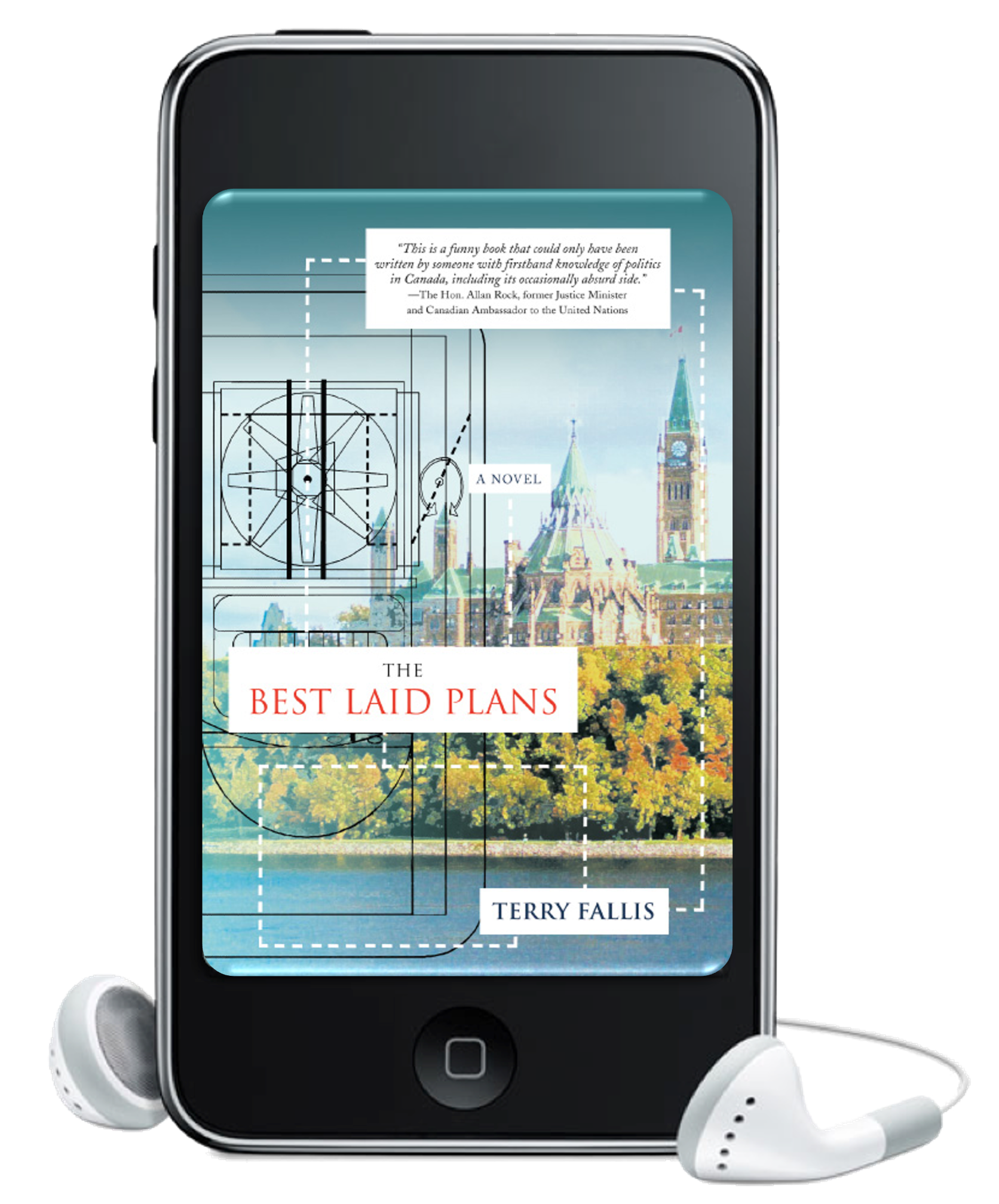
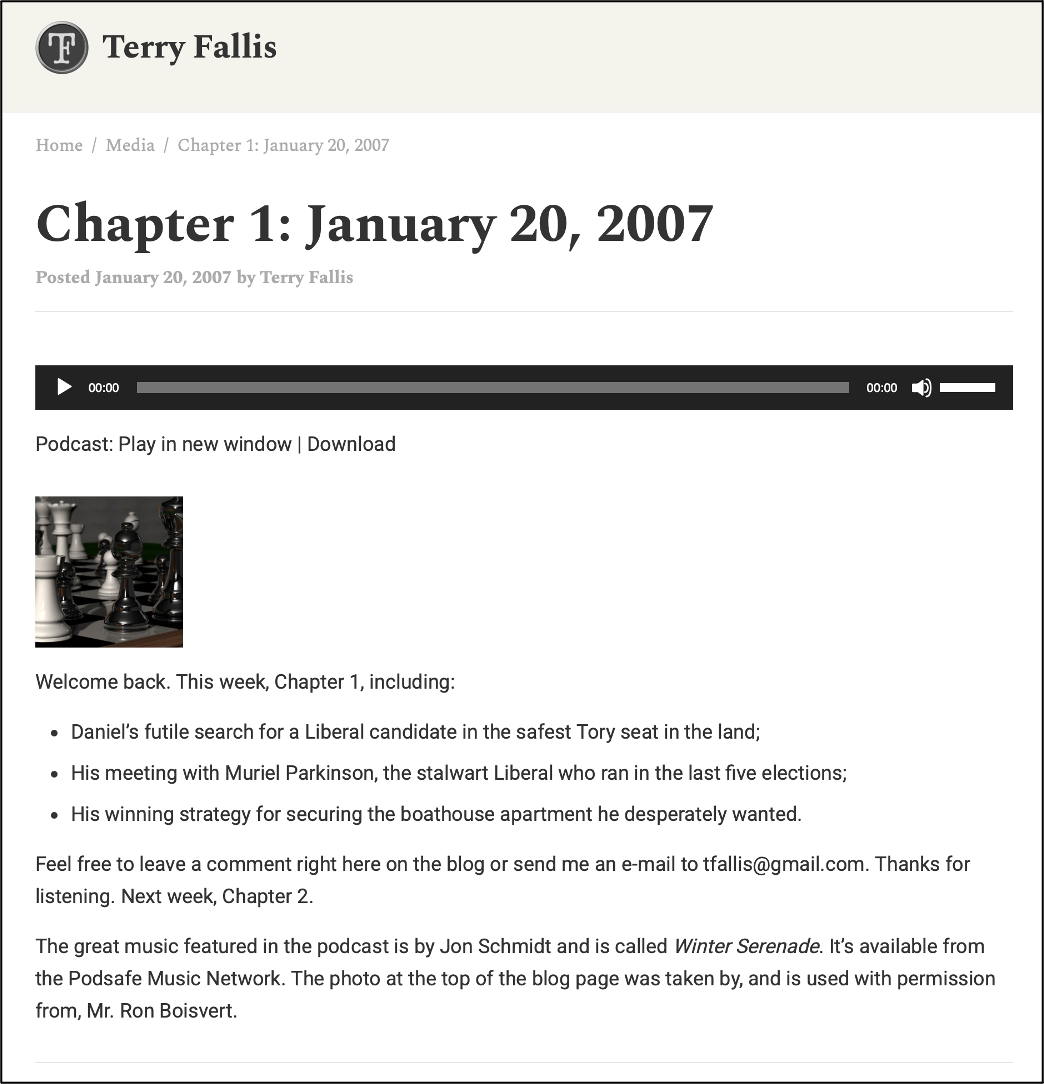
Yes, I podcast my debut manuscript. I also made my podcast book available on my website, where it still resides. In fact, click here or the image below to listen to a sample Chapter.
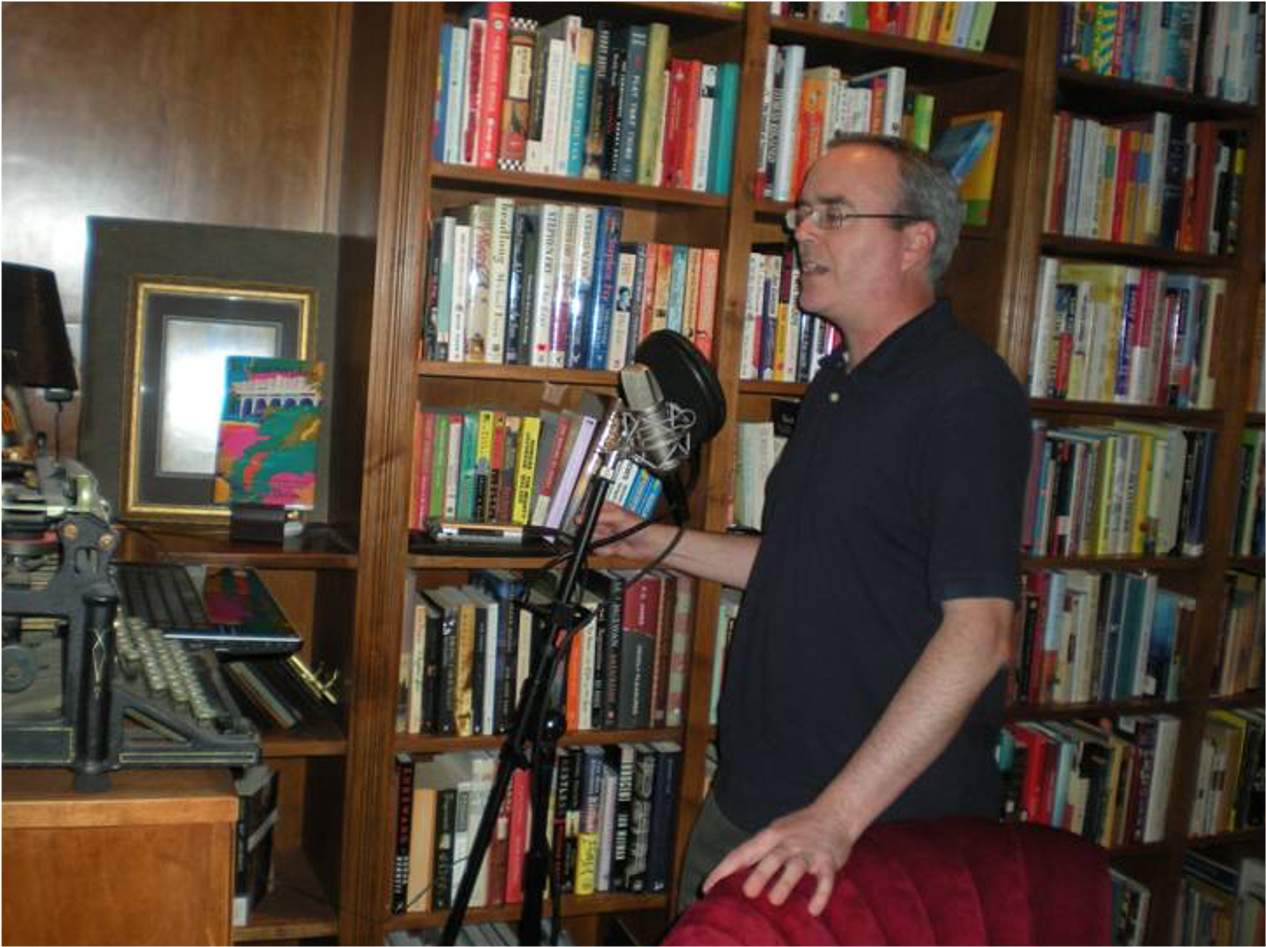
In the end, I podcast my first six novels in this way. One unexpected side benefit was discovering that reading my manuscript aloud is a great way to edit. I found many sentences that looked lovely on the page, but when read out loud, sounded clunky. A great—though perhaps obvious—lesson to writers. Read your prose out loud.
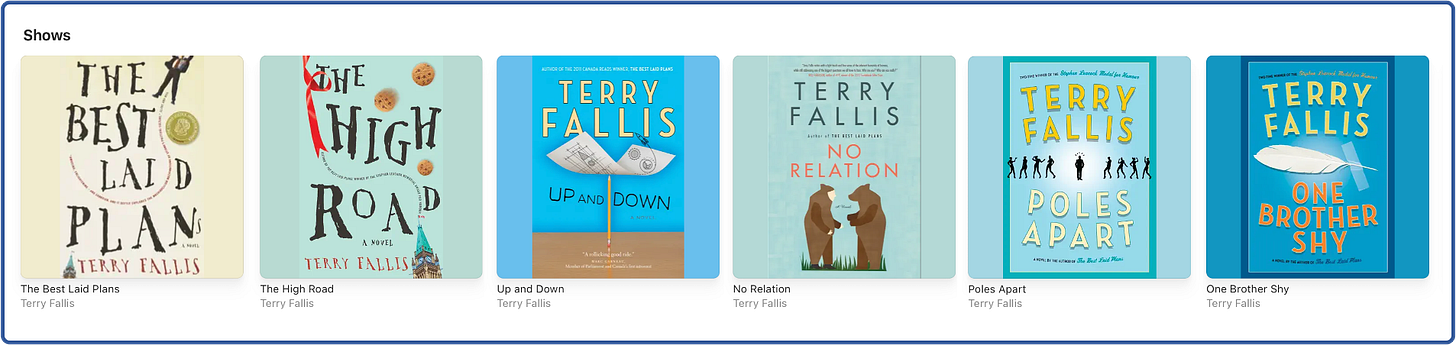
In case any of you are interested, all six of my chapter-by chapter podcast novels can still be found for free on Apple Podcasts and many other podcast directories. Click here or on the image below to find them all on Apple Podcasts. Yes, they’re still there after all these years, and as far as I’m concerned, will remain there.
Looking back, I guess I learned how to read my novels aloud for the podcast by… well… by reading them aloud for the podcast. I like to think my performance as an audio narrator improved from novel to novel. And it was certainly great preparation for what was to follow.
By the time my seventh novel, Albatross was due to be published in 2019, my publisher, McClelland & Stewart/Penguin Random House had started their own in-house audiobook production unit. So from Albatross onwards, I’ve been recording the official audiobook editions of my novels. While the audio versions of my last four novels are no longer free—sorry about that—the production values on the official audiobooks are higher. And for me personally, it’s nice to be paid as the “voice artist” on the audiobook, and it’s fantastic to work with an engineer and producer, and not have to handle all the recording, editing, and production work myself as I did on my first six podcast novels. I’ve learned a great deal from the experienced team supporting my audiobooks.
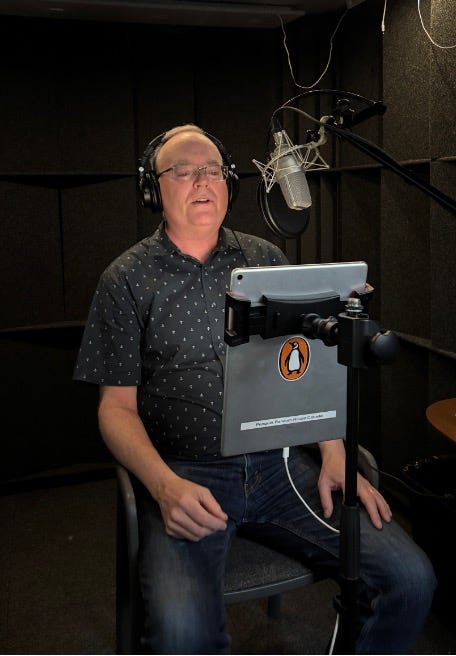
You may wonder why I narrate my own novels when so many other authors use talented voice artists to read their books. Good question. I wondered that, too. According to my producer, market research suggests that many readers prefer to listen to the story read by the author rather than an actor or voice artist. The rationale seems to be that the author knows their work better than anyone else, and therefore can usually deliver the nuance, tone, and voice of their novel more effectively.
Now of course, there’s a big caveat here. Not all authors have the voice, performance sense, vocal chops, or even the desire to play that role in their audiobook production. Some authors are just uncomfortable with the whole idea.
In my case, I like to think that the experience of voicing and producing the audio podcast version of my first six novels, served me well when my producer was considering who should narrate my official audiobooks. We haven’t had too many complaints about the amateur narrator, though there have been some. And if my producer ever suggests in the future that perhaps I should let a professional do the job, I’d happily turn over the microphone.
As noted off the top, audiobooks continue to grow faster than any other segment of publishing, but they don’t yet constitute an enormous share of overall book sales—at least that’s certainly the case for me. The graphic below shows the relative sales share for physical books, eBooks, and audiobooks, across my last four novels that all featured official audiobooks.
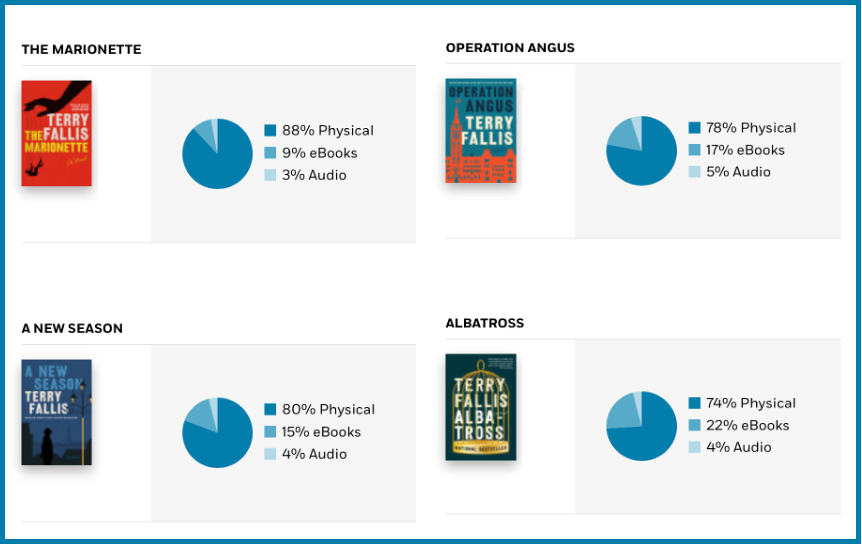
As you can see, audiobooks only account for 3-5% of my sales, and I think that’s generally the case for most novelists. But audiobooks are consistently growing. Each year there are many more converts from words on pages to voices in earbuds. And there’s no sign that the popularity of audiobooks will weaken anytime soon.
Onwards!
Thanks for checking this out. Here’s hoping you’ll subscribe—it’s free and easy—so you don’t miss any future posts. See you in two weeks.
No posts
Comments
Nothing yet. Say the first thing.
Sign in to join the conversation.