
Here’s something a little bit different. I thought I’d share a story from my past that remains so fresh in my memory that it could have happened yesterday, and not more than fifty years ago. I figure everything I’ve experienced in my life has somehow come together to make me the person—and more to the point, the writer—I am today. This is just one of those experiences… and it was wild.
(Just a note before we begin, everybody involved in what follows made a quick and full recovery.)
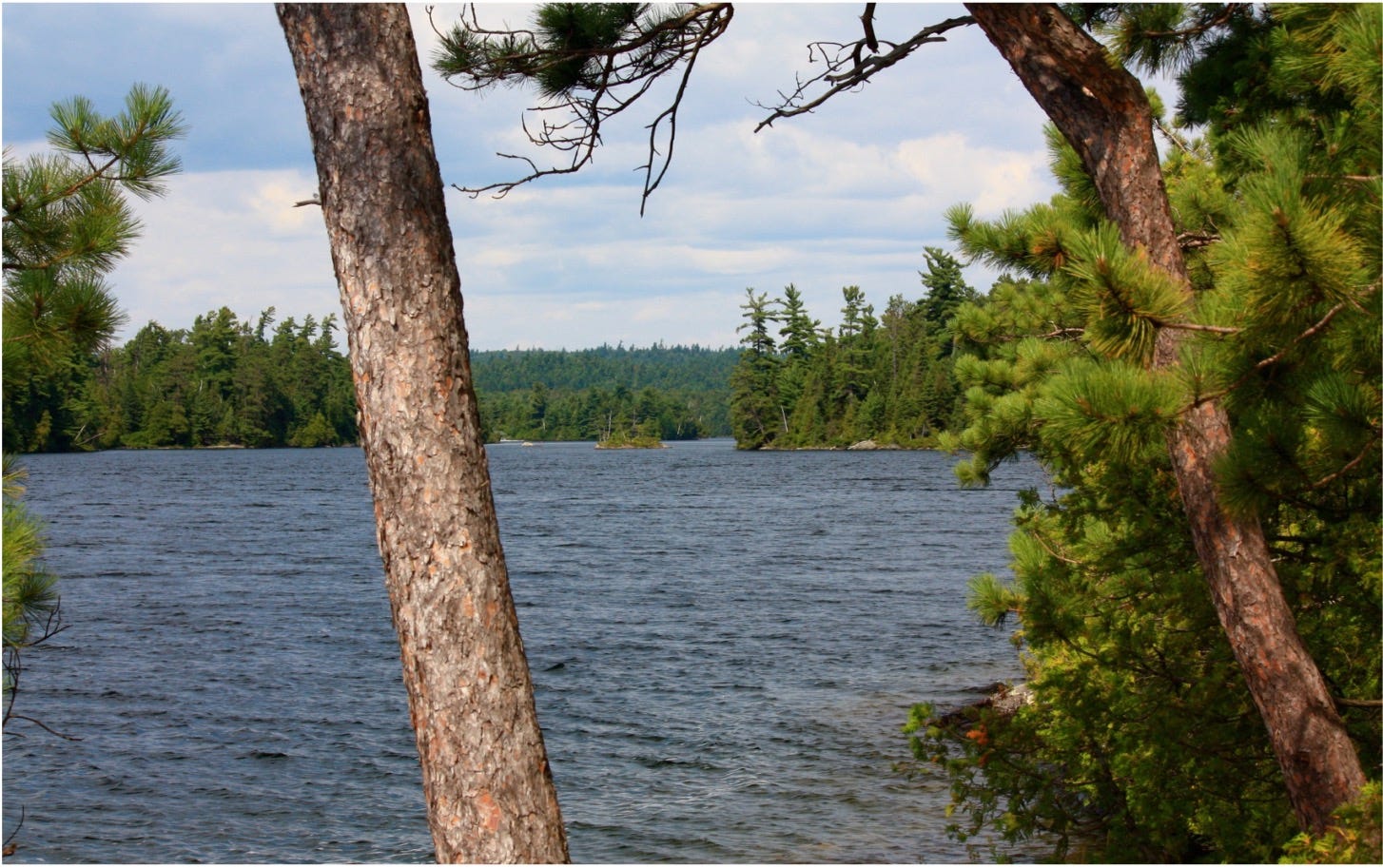
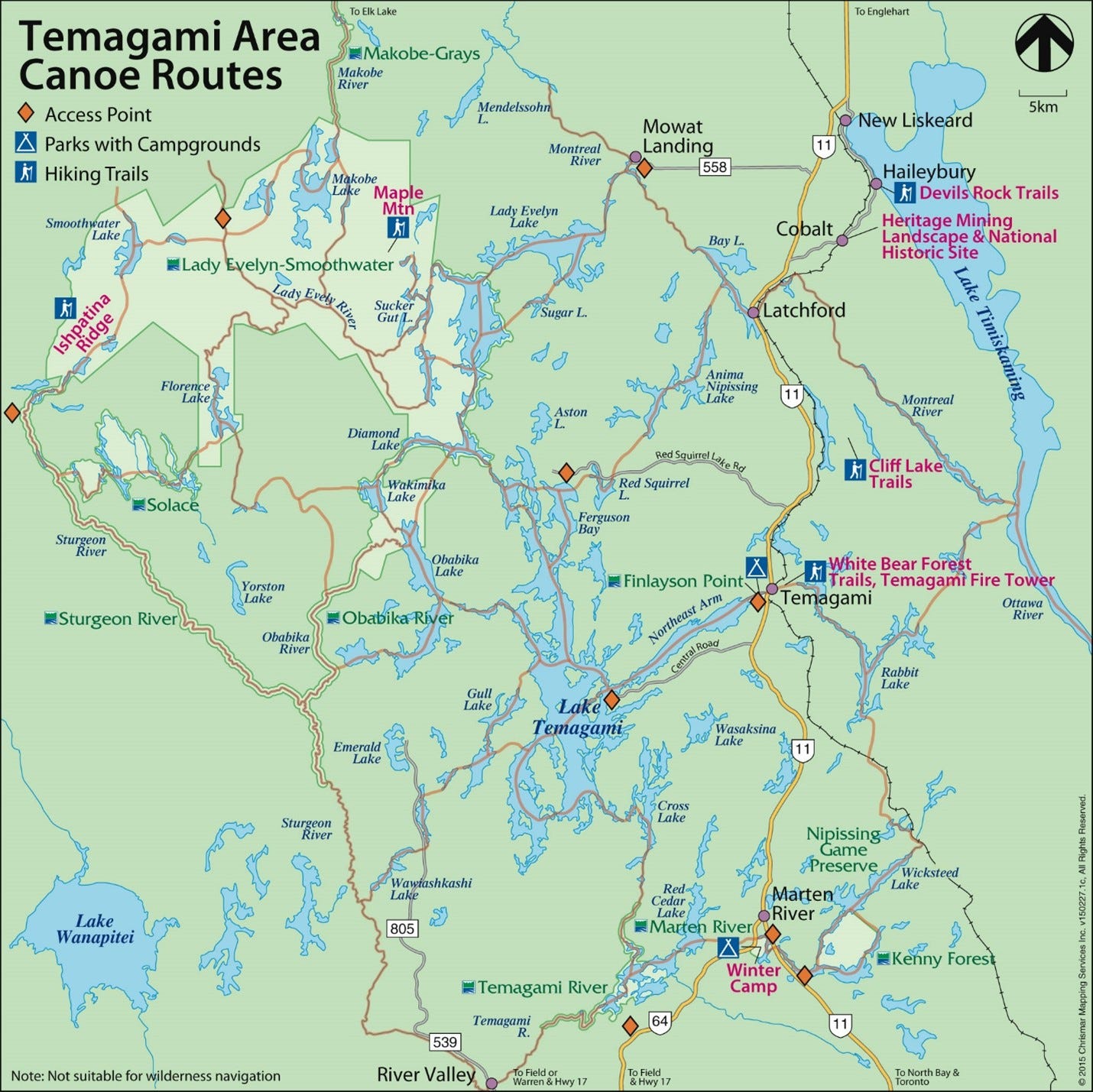
In the last four years that I’ve been writing this Substack, I’ve offered fleeting references to Lake Temagami, a sprawling lake sixty miles north of North Bay in Ontario. It’s a special place to me and has found its way into at least one of my novels—Albatross (2019). The encounters with nature on Lake Temagami captured in Albatross are all based on real experiences I had while at Camp White Bear, particularly the scenes with the loon and the bear.
You see, for many years, my father and mother were doctor and nurse respectively at Camp White Bear, a summer camp on a twenty-acre island in Lake Temagami’s remote southwest arm. Boys camp ran in July, and girls camp took over for August. My identical twin brother, Tim and I spent the first 16 summers of our lives at Camp White Bear. Yes, we were there as infants. When we turned six years old, we started going as fully-fledged campers. At some point, my parents retired from their roles as camp doctor and nurse, but Tim and I kept going back summer after summer as campers. Oh, and when we were fifteen, our parents returned to White Bear to staff the camp hospital once again during girls camp. So Tim and I, having just successfully completed our Counsellor in Training program, stayed on at camp, accepting jobs as kitchen boys for the duration of girls camp. What a hardship that was.
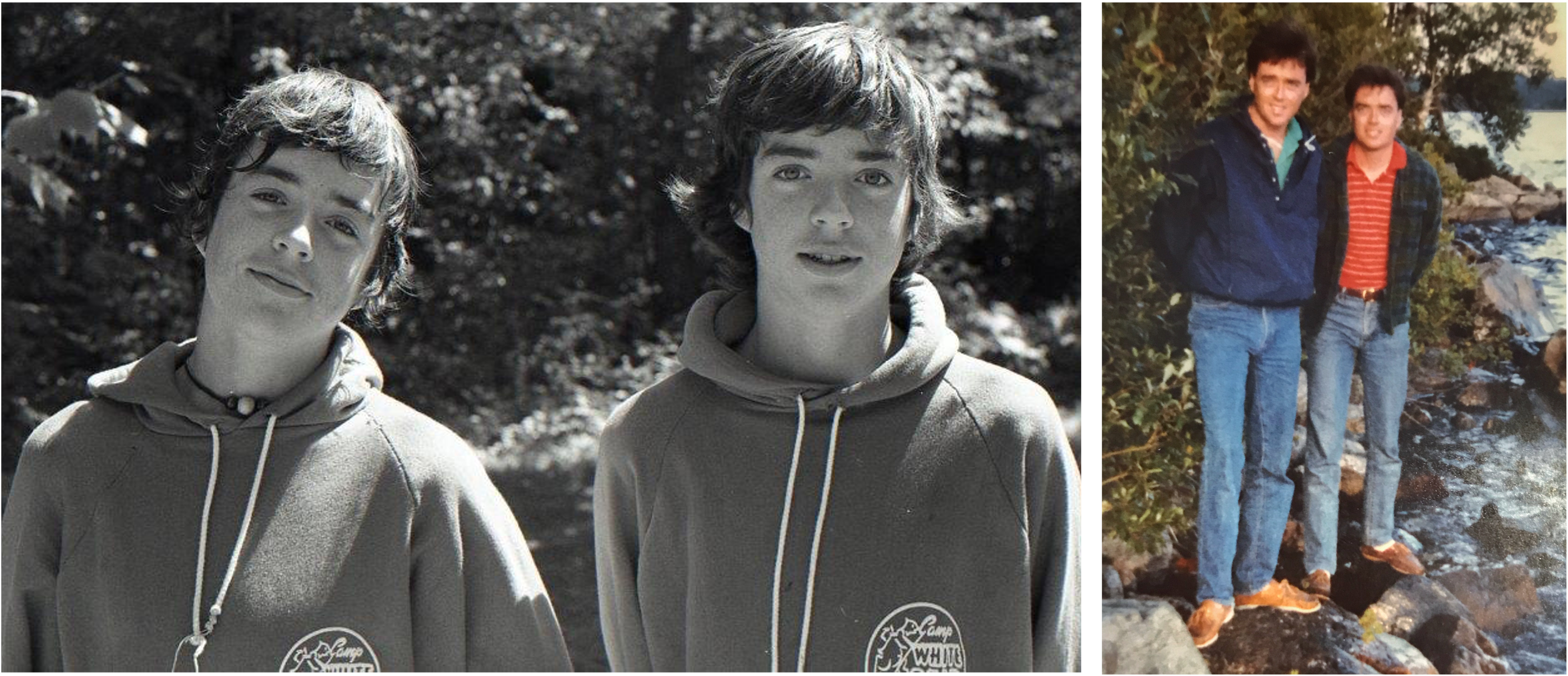
Camp White Bear eventually folded, as many summer camps did. But for our formative years, the camp had a significant impact on both Tim and me. We loved it and learned so much about leadership and life from so many extraordinary camp staff. Over the years, we have returned to Lake Temagami and to that special island in the southwest arm just to try to recapture so many great memories.
Those of you have been blessed to visit Lake Temagami will know what a special, pristine, natural wonder it is. Temagami is an Ojibway word meaning “deep water.” But the lake can turn from calm and shimmering, to fierce and frightening in a remarkably short time. This is a true story of Lake Temagami during one of the most violent storms ever to sweep across the land and the water. And for better or worse, I was caught in it.
It was the summer of 1974. My twin brother Tim and I were fourteen years old at Camp White Bear and part of the oldest cabin group. As the senior-most cabin, we tackled an arduous canoe trip during our three weeks at camp that year. I can’t even remember our route, but we were out of camp for five or six days. What I do recall is that we had clear skies and sunshine for almost the entire trip… except for the late afternoon of that final day.
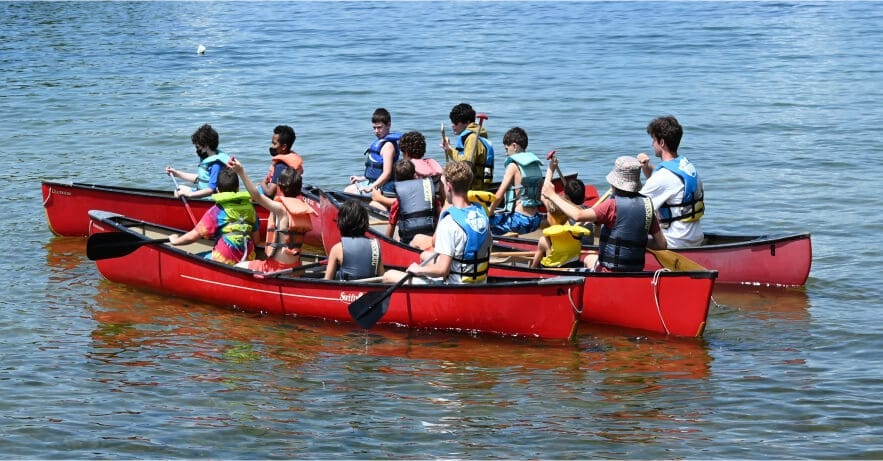
We were really not far from camp when it hit. We were so close—just not close enough. We could see the storm chasing us from the north, the wind’s cats’ paws darkening the water behind us. Yet we were all in good spirits. We thought we would beat the storm back to camp in time for dinner. But we didn’t.
In a matter of minutes, the ugly black clouds were upon us. It was late afternoon, but dark enough to pass for evening. The wind hit us first, cold and nearly strong enough to wrest control of the canoes away from us. Then the rain hit with such power and volume that our canoes started filling up with water. With the last bit of strength we had, all five canoes somehow managed to make it to shore. We hauled our canoes up the sloped rock face several metres from the water‘s edge. Then we huddled together in just our bathing suits trying to keep warm as we waited out the storm. To this day, I’ve never seen rain like that. It didn’t seem to be falling by gravity alone. It was more like it was hurled down on us in sheets by some unseen force. But still, we were okay and resigned ourselves to staying put until the storm passed and we could set out once again—soggy but safe—for the last hour or so of paddling back to camp. A little rain never hurt anyone.
But then came the lightning.
We noted each lightning flash and then counted “steamboats” until the thunder landed. With the time interval shortening, we knew the storm was coming, but we were still counting several seconds between flash and crash—until all of sudden the lightning and thunder hit in the same instant. Very quickly, the storm was right on top of us. On instinct, we flattened ourselves on the rock, staying as low to the ground as we could, so as not to give the lightning a viable target. At first glance, this seemed like the logical and reasonable—even safe—thing to do. In hindsight, throwing ourselves flat on the rocks turned out to be… well, not our best decision that afternoon. But we didn’t know then what we learned later.
For the next twenty minutes or so, lightning and thunder were synchronized all around us as we lay flat on our bellies on the rock. Seven times the lightning struck and the thunder crashed in unison. And each time we were jolted with electricity. I remember feeling myself lifted just clear of the ground whenever the lightning struck. After the first strike, I looked at my cabin mates, including my brother, Tim, and our counsellor. Many, though not all, of them were unconscious, lying still. Seven times it struck. Seven times it lifted us and then dropped us back onto the rock. We had no idea what was happening. Most of our group regained consciousness in a few minutes, but not everyone. I watched those who were still “out” bounce like rag dolls each time lightning struck—seven times. It was—and remains—the most terrifying twenty minutes of my life. I honestly thought that was it—that we were not going to make it. At the height of the storm, I actually believed we might not survive. I know that sounds melodramatic, but I was fourteen at the time and had no idea what was happening to us on that rocky slope.
When the storm finally passed, everyone eventually regained their faculties, but some were not really in good shape. None of us noticed until after the storm moved past us, that our canoes were no longer where we’d dragged them up the rock face and secured them away from the lake’s edge. They were nowhere to be seen. They were gone.
Thankfully, about half an hour after the storm blew through, a rescue boat from camp found us on the shore, with some of us—my brother included—in various stages of shock—and I mean medical “shock” not acute surprise.
The happy ending is that everyone recovered in the days that followed, with no ill-effects. And it left us all with a great story to tell.
After we made it back to camp and described our harrowing experience in great detail, a logical explanation emerged from those who had lived on the lake for much of their lives and experienced Temagami’s fierce storms. We had not been struck by lightning. Nobody was burned. There were no charred pine trees near us. We’d been huddled part way up a large rocky hill. We learned later that there is a small lake at the very top of that incline, quite far away from where we were. Apparently, lightning struck that lake above us seven times, sending ground shocks—literal jolts of electricity—down the hill to where all of us were lying flat on the ground presenting as much of our own surface area as possible to the electrical current flowing down the hill, flowing through the rock.
If we’d all been crouching on the balls of our feet, we still would have felt the jolts, but not nearly as powerfully as we did when we’d stretched out, face down, on the very rock through which the lightning’s electricity was surging.
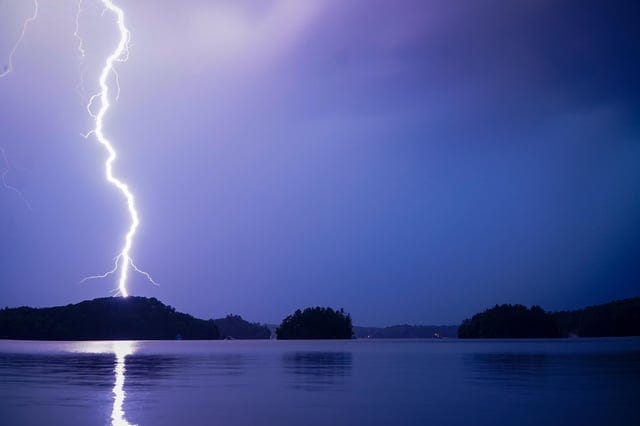
So, we’d all suffered ground shocks from seven lightning strikes. The only one of our group who was unaffected had been more forethoughtful than the rest of us. Before the storm hit, one of our cabin mates donned a rain suit and rubber boots. I think he was more traumatized than the rest of us because he had no idea why we’d been flailing around, bouncing off the ground, and slipping into unconsciousness. He felt nothing. He was completely insulated from the electricity flowing beneath his rubber-booted feet. Whereas the rest of us were barefoot in bathing suits. After some time passed, the future engineering graduate in me was fascinated by the science involved in our little adventure.
As for our canoes, it turned out that the intense winds had literally blown all five of them off the rocky shore and back into the lake. It took several days, but eventually, all the canoes were located—a few of them were carried miles. Several paddles and some of our belongings were never found.
We also discovered the following day that it had been one of the most violent storms to hit Lake Temagami in decades. We were told that more rain fell in that half-hour or so than in the previous two years. It seems we endured a storm for the ages. Everyone made a full recovery, though many of those who were unconscious had little or no memory of the event.
Good question. To be honest, I don’t really know. It just seems like one of those rare experiences that writers like to collect for future use. Writers have always drawn on events in their own lives to write their stories. Of course, novels often feature crises, or climaxes, and turning points, that are unusual or rare, yet still plausible. Those writers who have been lucky enough to live rich and varied lives—including unlikely experiences—naturally have more to inform and animate their writing. And they can write with greater clarity and authenticity if they adapt their own experiences in their stories, even when they’re writing fiction. I’ve often done that in my novels.
Now I don't claim to be among those writers who have lived particularly interesting or eventful lives, but I do know that I feel better equipped to include in a future novel a dangerous lightning storm on a remote lake because of what happened to me and my cabin mates more than half a century ago—a memory that remains crisp and clear in my mind. Will I ever fictionalize this ordeal in a story? I’d say the odds are good that I will, someday. Why wouldn’t I? Relatively few have encountered what we did that afternoon in 1974. After all, it’s easier to write authentically from firsthand experience. And I remember just how it all felt—beginning, middle, end, and aftermath. I have no idea when it might appear in one of my novels, just that it’s likely it eventually will.
Hemingway once said:
“In order to write about life, first you must live it.”
Perhaps making it through a severe lightning storm counts.
Thanks for checking this out. Here’s hoping you’ll decide to subscribe to A Novel Journey—it’s free, fast, and easy—so you don’t miss future posts. Stay tuned for more developments related to my upcoming eleventh novel, An End in Itself. See you in two weeks.

No posts
Comments
Nothing yet. Say the first thing.
Sign in to join the conversation.