
Since last week Tuesday, I have visited Aurelie and Loic Barrat, from Champagne Barrat Masson in Vilnauxe-la-Grande, Vincent Laval, at Champagne Georges Laval in Cumières, and Eric and Mikael Rodez at Champagne Rodez in Ambonnay, I also stopped by at La Villers, Champagne Roederer’s iconic Cristal Rosé plot in Ay; that this year will be pressed directly (instead of going through infusion). Jean-Baptiste Lécaillon, Champagne Roederer’s cellar master decided to not produce Cristal Rosé this year because he feels the tannins are too desiccating, even if the grapes and (white) juice I tasted were delicious. In fact, all juices I have tasted so far have surprised me by their density, balance, flavor and freshness, especially once I find out how high the potential alcohol degrees really are, and how low the pH’s are.
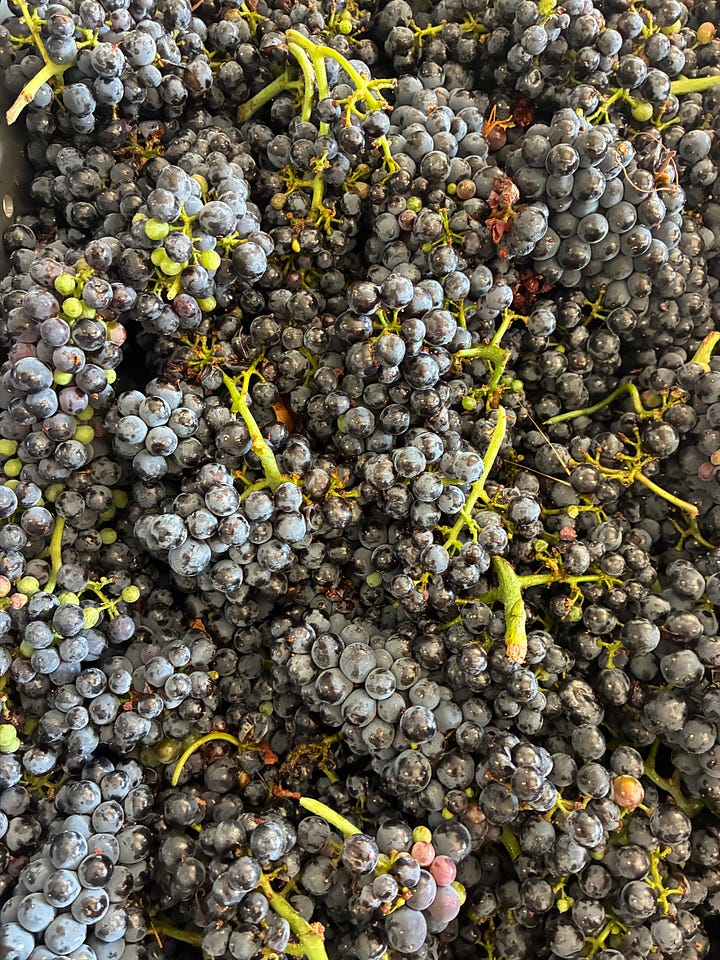
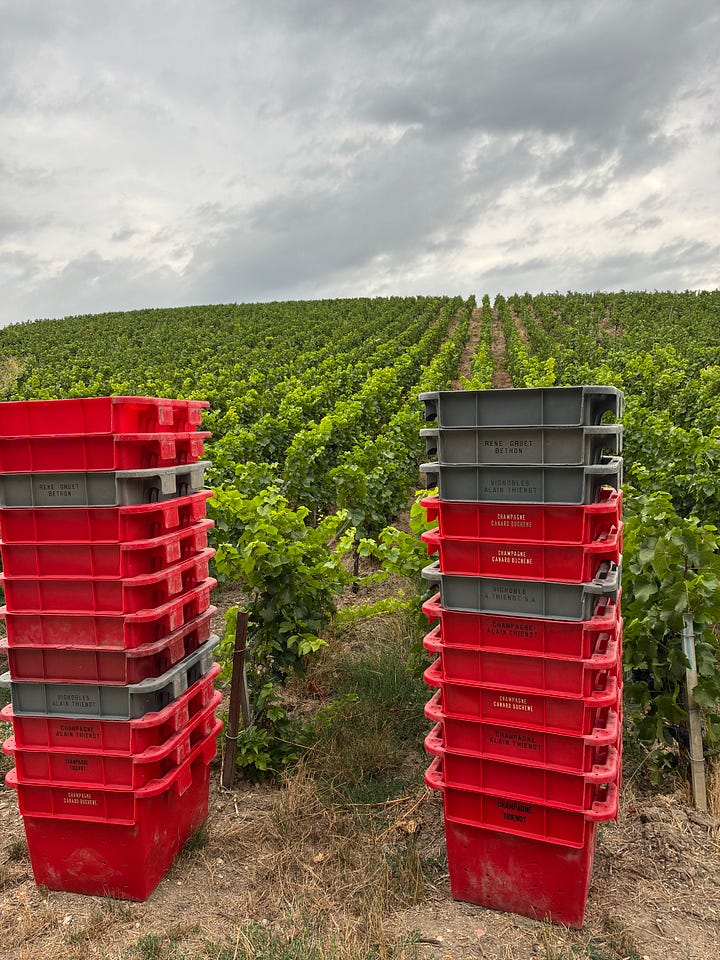
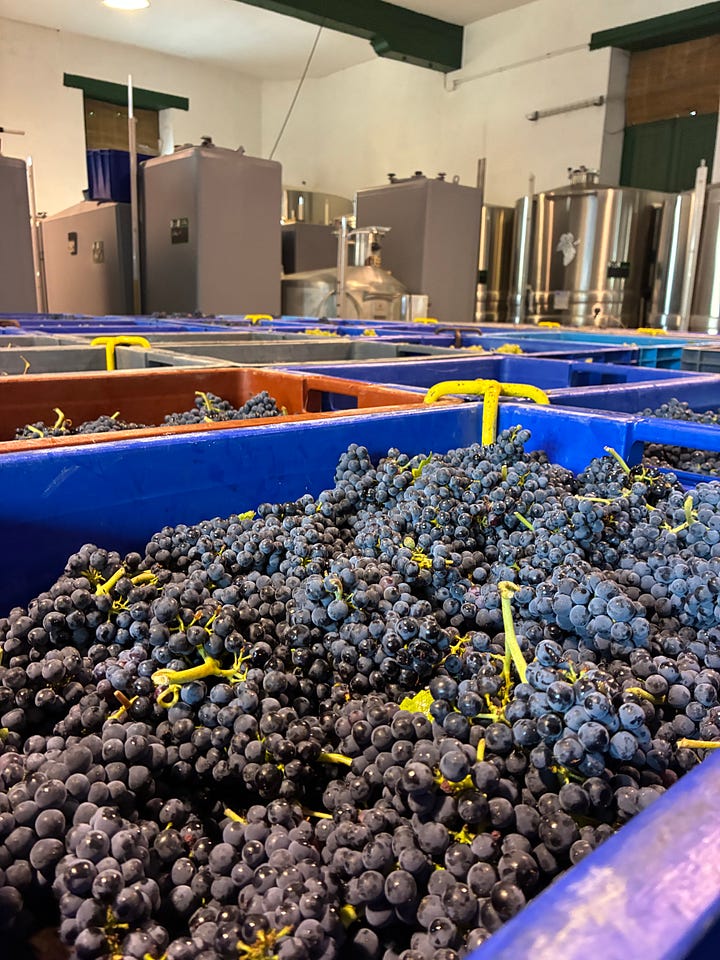
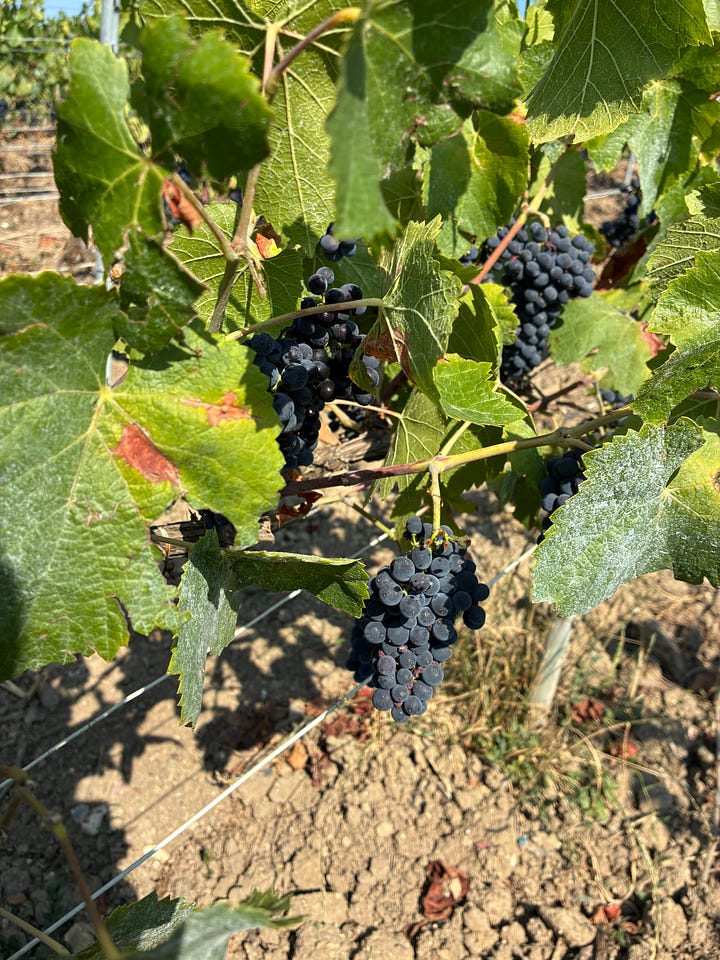
The weather has been absolutely sweltering last week; hence it was natural that my harvest conversation regularly veered back to the heating planet and the impact for Champagne. Maybe the most important difference with any of the other 14 harvests I have followed since moving here, has been the overall elevated potential alcohol degree. It is also something Champagne is not used to and will need to work with, according to Sébastien Debuisson, the Comité Champagne (CIVC)’s research, development and innovation director, who believes this harvest sets the tone for years to come.
There are also several lessons to learn from the acceleration of the growing season, that, despite surprising just about everyone, may not have been that unpredictable for anyone keeping a close eye on their vines and /or paying careful attention to the information the CIVC’s research, development and innovation team published along the way.
On Sunday 16th August, it remained very quiet on the harvesting front. At the Roederer Aÿ press center, only 2 presses (out of five) had been deployed when I arrived there just after lunch time, with very little grapes waiting to be pressed, and at Rodez I saw only one of the three presses in action. One of the reasons for this relative calmness, are the small quantities in the vines, and maybe more telling, the fact that many growers have yet to start picking.
Besides not being ready, translated as not having pickers, vans, catering services, or other logistic restraints at hand, potentially too many growers have opted to start this week (which by the way still remains relatively quiet so far) for financial reasons. (Saturday was a public holiday and salaries for working on a public holiday or a Sunday are subjected to mandatory bonuses by French law). Many producers may have preferred to avoid extra costs, especially in a year where yields are expected to be at a record low, and grape prices have fallen.
Finally, in my opinion, too many producers continue to hang onto the myth that the rain, forecasted for tomorrow, will dilute the alcoholic degrees and plump up the berries (thus add weight). They seem to hang on to an idea that worked in the past but forget that 2026 is uncharted territory, that so far has not abided by any rule that applied in the past. Therefore, it is more likely that waiting will have the opposite effect: the recent heat has had berries shrivel up a little further increasing the potential alcohol degrees and decreasing the weight, without mentioning the complications waiting will have on the pressing and winemaking processes.
From my conversations with the Barrats, Lavals, father and son Rodez and the Roederer team and my analysis of the CICV pre-harvest documents, the current blasé approach to harvest and climate change shows how unwilling many Champenois are to embrace today’s realty.
Comments
Nothing yet. Say the first thing.
Sign in to join the conversation.