
I am a village nerd.
It consumes my life, and it is the healthiest obsession I can imagine.
But I’ve found myself squarely disappointed with the lack of data-driven evidence around the village building movement.
Here’s what we don’t know:
How many village projects actually fail in their first three years
What really influences success or failure in villages
What percentage of communities actually achieve financial sustainability
Which development models correlate with long-term resilience
Where the village movement is heading
We’re building villages on stories of what worked, maybe once, somewhere else.
I love a good story as much as anyone. But when founders are risking life savings, when families are uprooting to join experimental communities, when investors are deciding whether regenerative villages deserve capital….we need more than vibes and best guesses.
We need data that shows patterns, reveals failure points, and helps us stop reinventing the wheel every single time.
Six years ago, I read Together Resilient: Building Community in the Age of Climate Disruption and felt lightning strike. Here was actual statistical evidence about community living presented in measurable health outcomes and positive environmental impact. This book treats the village movement with the rigor it deserves.
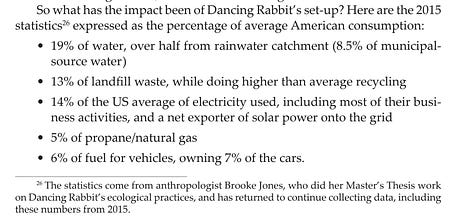
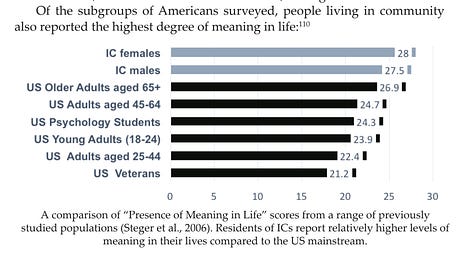
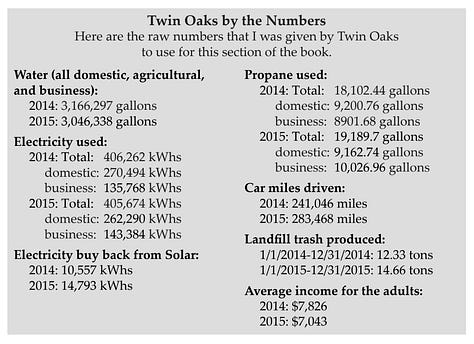
I haven’t seen anything like it since, and it was published in 2017.
That gap has been gnawing at me.
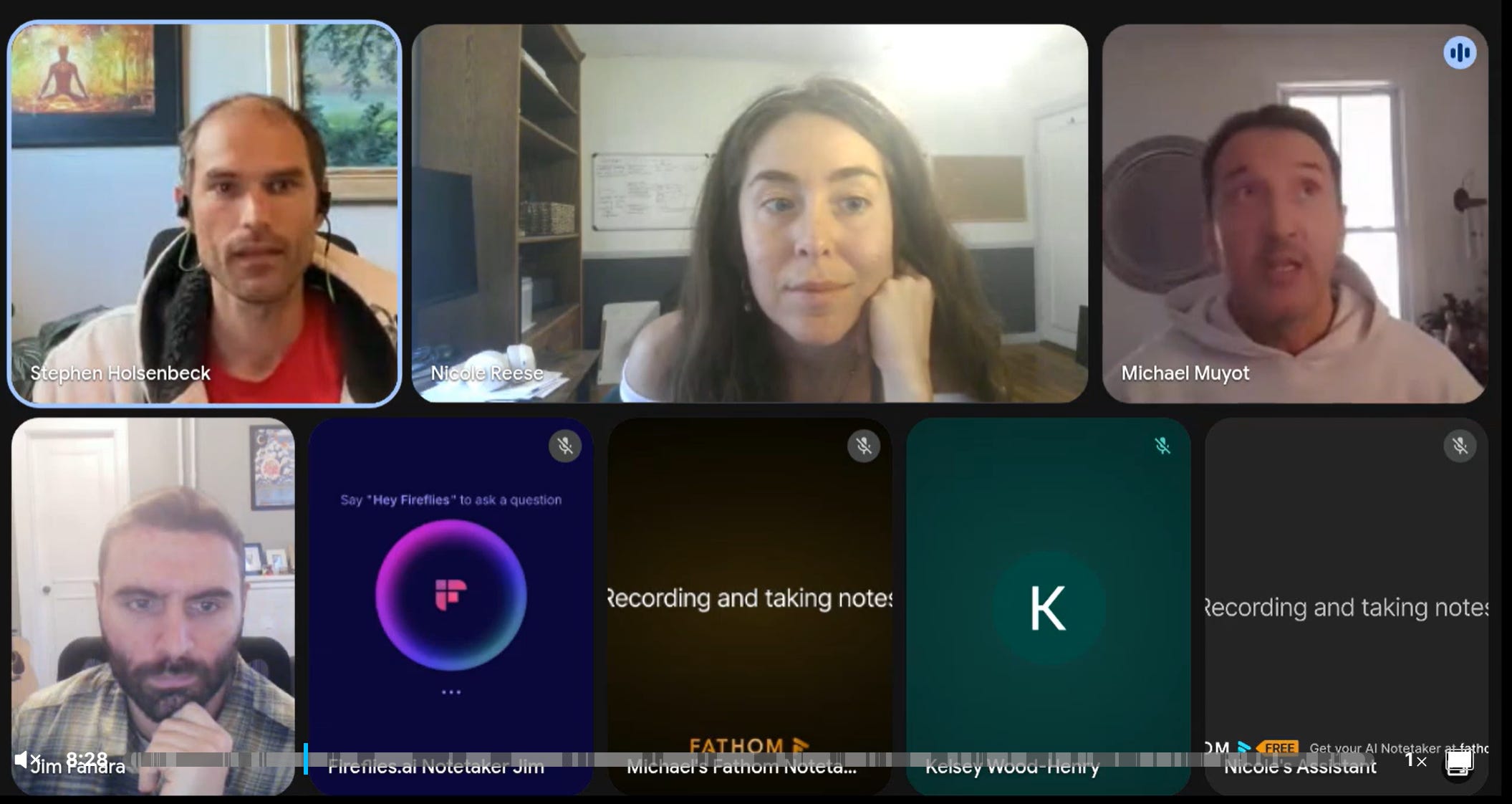
So I assembled a seven-person research team, consisting of 2 data analysts, 2 village designers, an open source web3 builder, a village founder, and a marketing professional focused on regenerative business.
Our goal was to design something the movement has been missing: a survey of the village building movement. The survey we created is like a census of village builders, seekers, researchers, and existing community members to provide necessary data.
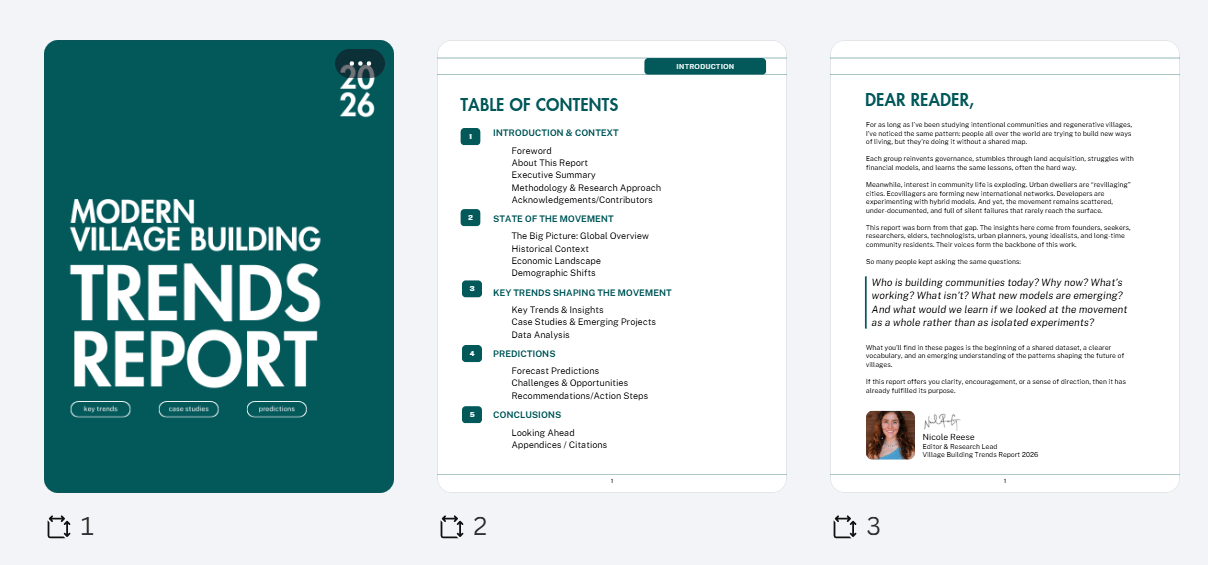
We’re going to use this survey to create the 2026 Village Building Trends Report, designed to answer the questions that keep community builders up at night.
Village failure is practically invisible. Founders burn out, communities dissolve, and no one documents what actually went wrong, so the next generation repeats the same mistakes.
This survey is designed to break that cycle by exploring these hypotheses:
We’re testing whether terms like “ecovillage” are declining while “coliving,” “regenerative village,” and “smart neighborhood” rise.
Language shift may signal demographic change: younger, more urban, professionally embedded builders who want modern technology blended with ancestral wisdom—not a return to pre-industrial frugality.
Implication: Villages need to update their branding for a new generation
We’re testing which phase kills projects the most. Is it visioning, land acquisition, funding, recruitment, or operations? We’re also examining if failure is primarily social and operational (governance breakdowns, conflict avoidance, burnout) rather than ecological or ideological.
We’re also challenging the common statement that 90-99% of communities fail in the first 3 years. The statistic is randomly tossed around, changes number frequently, and isn’t backed in data.
Implication: Failure is preventable with better training and support systems, and is more likely at certain phases (rather than a blanket likelihood of failure).
Developer-led models are surging. We’re examining whether hybrid approaches (where developers build infrastructure and residents self-develop homes) are outpacing purely community-led, grassroots models, and what that means for speed, capital access, and cultural coherence.
We’re also looking at how retreat centers, hotels, and community builders are converting existing infrastructure to community-oriented models.
Implication: Knowing which paths are viable helps you choose the right structure for your context, and avoid chasing models that only work with massive capital or institutional backing.
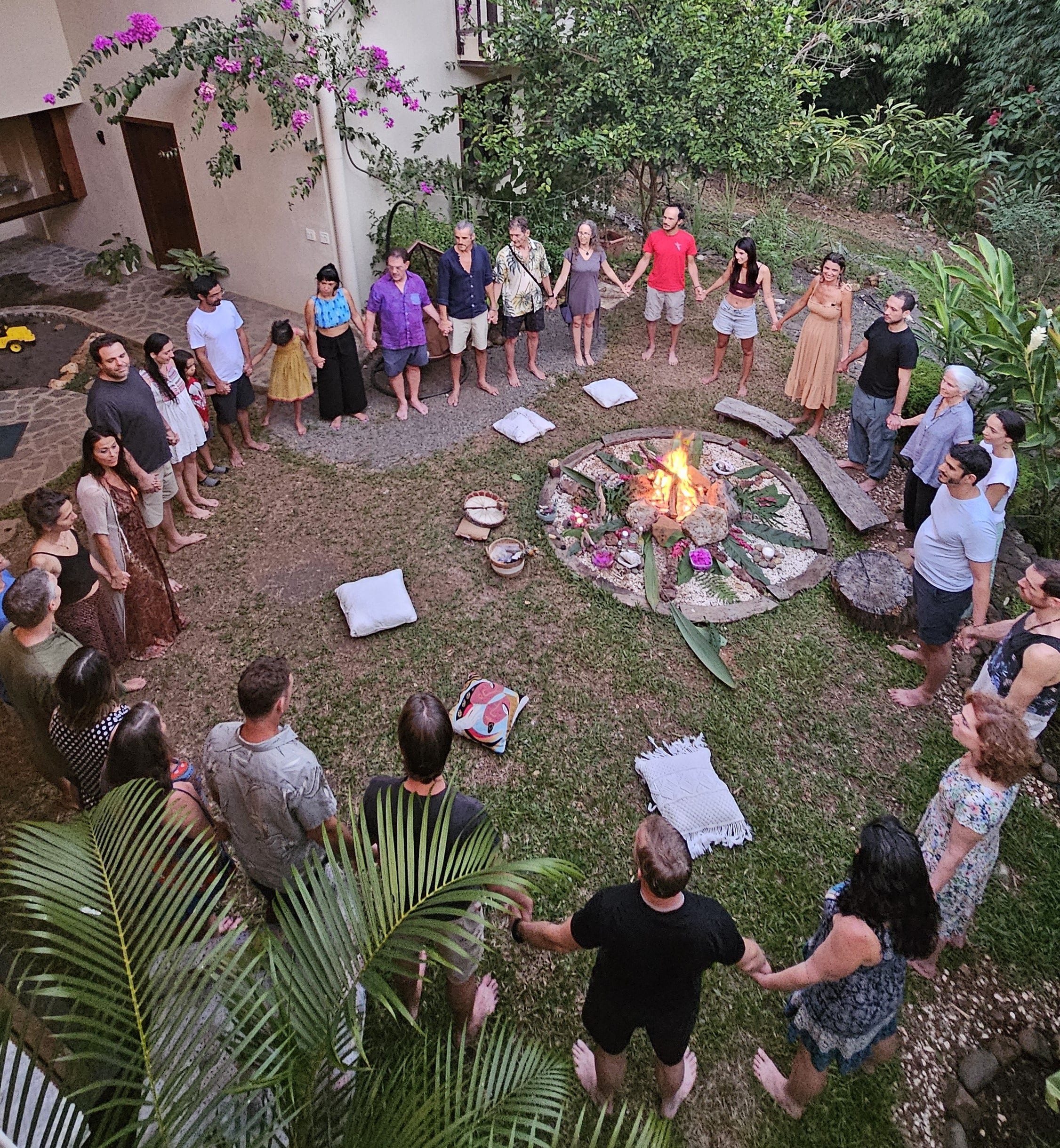
Are villages diversifying their revenue streams beyond tourism? Is there an innovation adoption lag for new governance models like sociocracy, DAOs, and tokenized systems, and if so, why?
Implication: Understanding what’s actually being implemented (versus what’s just trendy) helps you avoid expensive experiments that don’t fit your community’s capacity.
We’re investigating whether urban pressures (housing costs, isolation, burnout) are accelerating suburban and agrihood models faster than remote rural projects.
We’re also examining whether political polarization and authoritarianism are intensifying interest in villages as spaces of safety, autonomy, and mutual care.
Implication: Understanding why people are turning to villages help design villages that actually solve those issues.
Are people seeking tech-integrated communities or tech-averse ones? Is generative AI accelerating early-stage formation by helping builders visualize and communicate their vision, or is it just creating polished hype without substance?
We’re also examining the gap between interest in decentralized governance (DAOs, tokens) and actual adoption in land-based communities.
Implication: This shapes how you present your project and what tools you invest in.
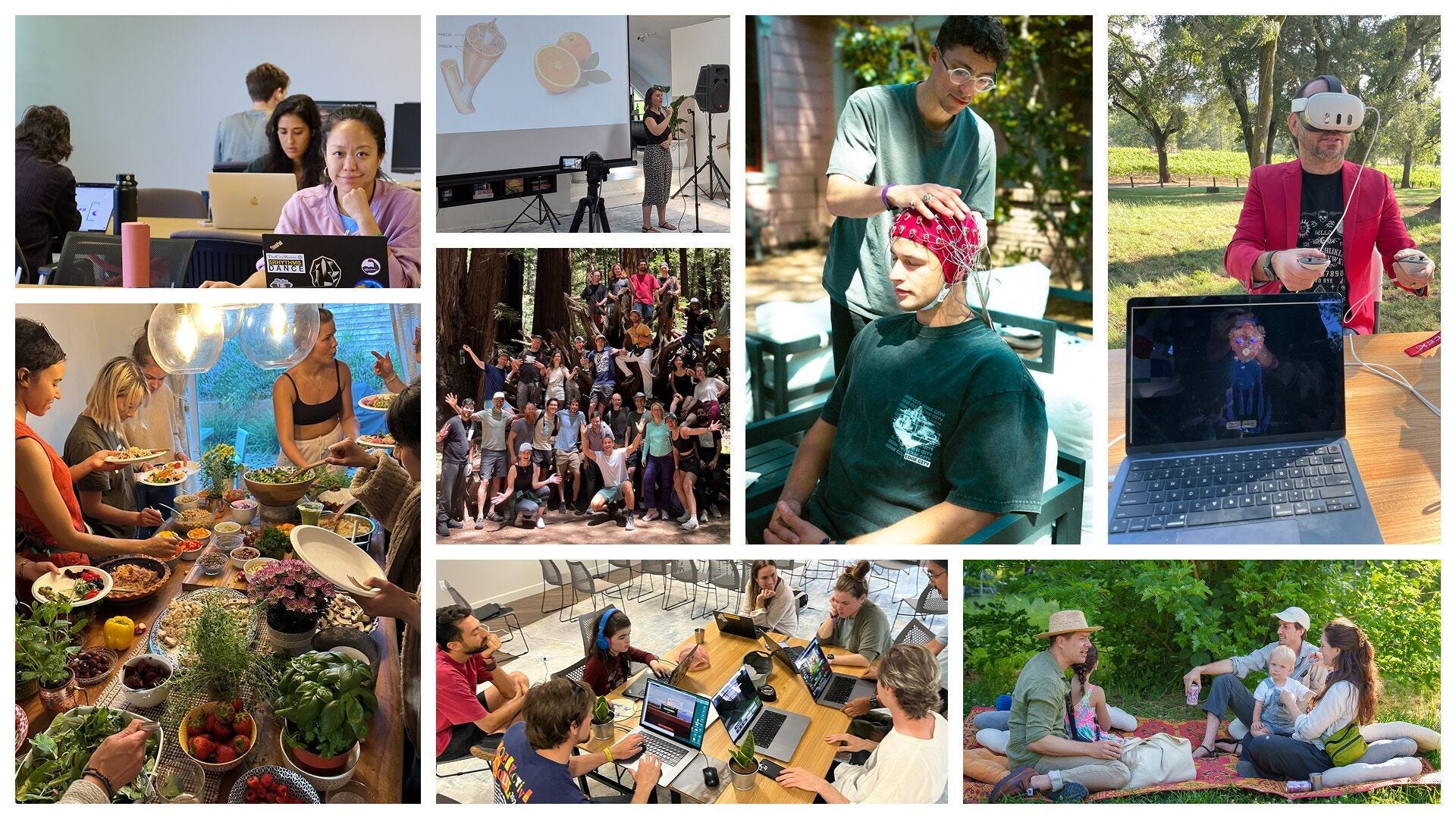
We’re tracking the shift toward networked, nomadic, and pop-up village models that prioritize flexible participation over permanent land-based commitment.
We’re also examining whether village concepts are gaining mainstream acceptance through sanitized narratives (i.e. “live with friends", mutual care) that distance from countercultural ecovillage identity.
Implication: Village concepts are modernizing and taking many forms
Survey responses will be synthesized into a publicly available report featuring:
Data visualizations showing trends, correlations, and regional variations
Case study snapshots of projects at different stages with anonymous failure case studies included
Actionable insights for founders, investors, policymakers, and service providers
Failure analysis of what kills projects, and how to design around it
Trend predictions that indicate where the village movement is headed
The survey closes end of March, and we’ll release the report by May 2026. All findings will be open-access — this belongs to the movement, not behind a paywall.
If you’ve ever dreamed about starting a village, joined one, left one, funded one, or helped design one, then we need your input.
Take the survey
Support the report
Share with your network
The survey takes 10-15 minutes and covers everything from your project’s legal structure to what you wish you’d known before you started.
Take the 2026 Village Builder Census
Your responses are anonymous unless you opt to give your email to receive notifications about the report release. Every answer helps us build a clearer picture of what’s working, what’s broken, and what the movement needs to scale.
The survey is custom coded. If you find any bugs, you can report them here.
This is the first of many research projects I'm building through Terrenity and collaborations—and it's entirely self-funded
This project is an act of service to the village building ecosystem. So far, I’ve invested $175 in database infrastructure and survey tools.
As the dataset grows, so will the costs: data analysis software, visualization design, report production, and translation into multiple languages so this research can serve the global movement.
This report will be valuable to you, whether you’re a founder stress-testing your model, a funder evaluating opportunities, or a policy advocate building the case for zoning reform.
Consider contributing to its development.
Every dollar goes directly into making this research more rigorous, more functional, and more accessible.
We’re at an inflection point. The village building movement is gaining momentum with more projects, more capital, more public interest. But without shared data, we’re all building in the dark, repeating each other’s mistakes, and losing credibility with the stakeholders who could help us scale.
This census is how we grow up as a movement.
Take the survey. Share it with your network. And if you can, support the work financially.
Let’s build the evidence base our movement deserves.
P.S. Know a village builder, seeker, or researcher? Forward this article and help us build the most comprehensive dataset the movement has ever had.
Comments
Nothing yet. Say the first thing.
Sign in to join the conversation.