
2026 is going to be my year of reading, meditating in community, cooking in community, and walking. I don’t have any goals for “producing” this year. Releasing a poetry book last year was such a years-long effort, and this year I’m excited to focus more on consuming, digesting, and sharing others’ work. (So if you have a book coming out this year, I’d love to take a look and consider reviewing it. My inbox is open).
This February, I’m going to begin a four-month kitchen apprenticeship at a meditation center. My plans and intentions are simple—meditate more, get better at cooking, meet new people, feel grounded and stable, stick to a routine, read, walk, and journal on my breaks. Chop food boil water. Ambition of no ambition. But still a big ambition.
I have big ideas for what I’d like to be doing afterwards too (hint: I am itching to walk another Camino, this time the infamous Camino Francés). I am holding the goal loosely, open to what God wants to do with me this year, flexible to how the chips fall. But the seed of desire has been sprouting in me for some time. Many lessons have alchemized in me since I walked the Caminho Português from Lisbon, Portugal to Santiago de Compostela in the summer of 2022, and I am deeply curious to see how this changed and changing body/mind would experience this again. I’d be walking an entirely different route, with many many more people and more historical sites along the way, and more committed to waking up early and being less on screens. I was still underwater in my social media addiction on my last pilgrimage, and got covid which affected the last month of my walk, so I imagine I could have a very different experience. But I also have more chronic health conditions now that I manage with medications, so there would be an entirely new set of challenges to navigate. This is all still just an idea, nothing set in stone yet at all, but I’ve been dreaming and scheming and saving so that hopefully, these goals can be realized before my next settling down.
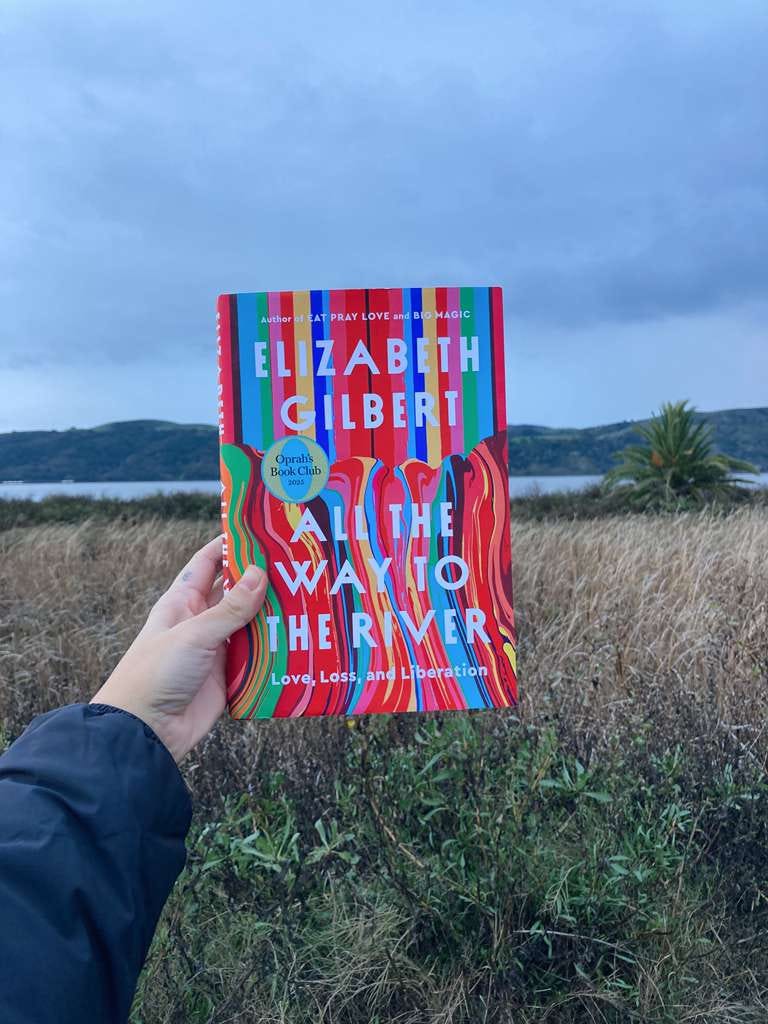
I flew through Elizabeth Gilbert’s All the Way to the River (Riverhead Books, September 2025) in just a few days. As a fellow in recovery for love addiction/romantic obsession, I felt empathy and identification with many of her thought-patterns and behaviors, and no part of her story truly felt “shocking,” even at her lowest. Her writing about her late-beloved and best friend, Rayya, is enough to make the world love her too, in all her fire and shortcomings. Part-memoir, part-memorial, this rigorously honest book captures the raw intensity and humanness of codependency and addiction in all its appeals and ugliness. Elizabeth Gilbert is an inspiration for laying her story all out on the table, for stepping into the rooms of recovery, and for demanding (without ever saying it) that we all take a hard look at ourselves in the mirror, too. Most inspiring of all is her relationship with her higher power, whose voice is shared with us in shimmering glimpses. This book belongs on the essential reading lists of anyone struggling with codependency, relationship issues, or addiction.
In the last years of my grandmother’s life, my mom took on more and more caregiving responsibilities, sacrificing much of her time, energy, finances, and social life. As my grandmother’s dementia progressed, her ability to live independently continued to shrink, and my mom ultimately sold her condo and moved in with her to help with care. When an opportunity presented itself, my mom retired early from a 35-year-long career at Pepsi, attempting to help with caregiving full-time.
Caregiving took an extreme physical and emotional toll on my mom, and I saw the strain it put on the mother-daughter relationship as the “parenting” roles switched, and that cost alone became too high. A team of caregivers needed to be hired, and my mom and my stepdad built an in-law unit in the backyard just so the rental income could supplement the high cost of caregiving. My mom started working remotely again. Caregivers were in the house at all hours of the day, with my mom still taking on a huge load of the work at night. My stepdad, or the fire department (if he was working out of town), would have to be called in just to lift my grandmother off the floor if she fell (or somehow found her way there). Patience often felt thin and emotions could run high. As my grandmother was “losing her marbles,” as she would frequently tell me in her earlier stages of dementia, my mom’s “marbles,” understandably, underwent a great shaking, too.
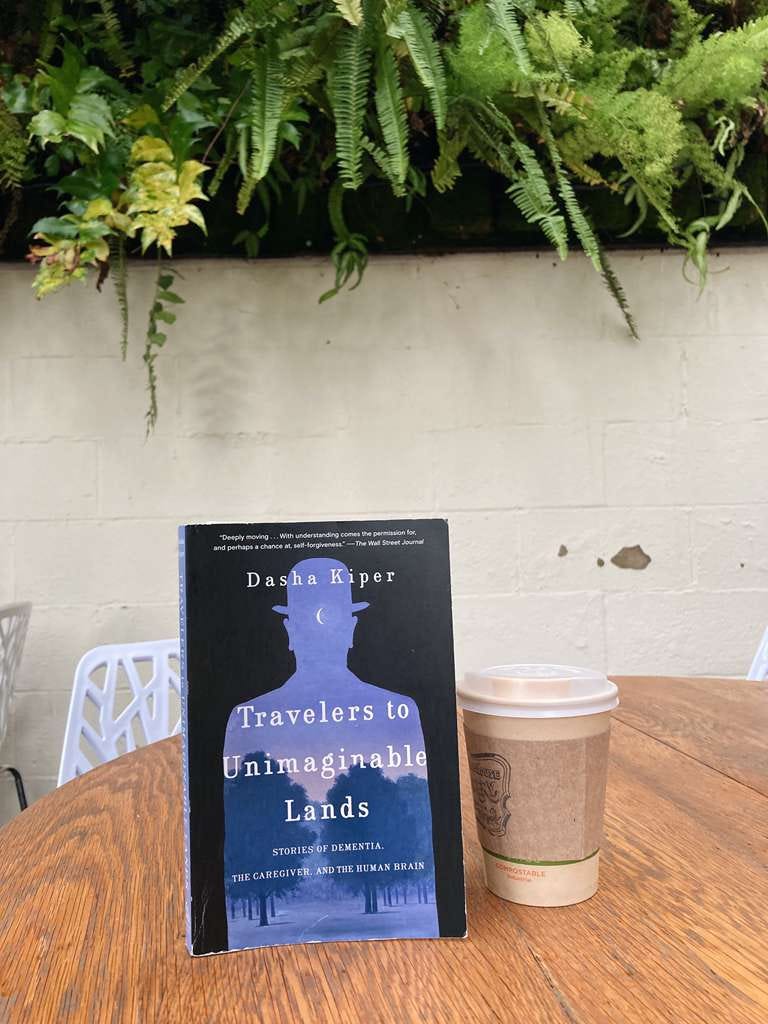
In Dasha Kiper’s Travelers to Unimaginable Lands: Stories of Dementia, the Caregiver, and the Human Brain, the most enlightening takeaway from this book is that it is extremely common for familial caregivers of dementia patients to respond irrationally to irrational behavior. Emotions take over reason, and dementia patient’s behaviors, words, and lack of cooperation sometimes feel personal—we respond to our overall history with the person, not only how they are presenting in the present moment. We react as if we are responding to a person who is more in control of their actions than they now are. If caregivers themselves think they are going crazy, or feel guilty for getting upset with their loved ones when they “know” their loved ones have dementia, they are not alone, and there are neurological explanations for why they are doing so. Travelers to Unimaginable Lands includes caregiver testimonies with a common thread—the utter helplessness, heartbreak, depletion, and frustration of seeing a loved one descend into dementia, and the confusion of witnessing parts of their personalities (including hurtful parts) remain apparently intact.
This book is a moving account of the dynamics between caregiver and dementia patient, at the same time as it is scientific and philosophical. My only preference is that the book could have been even more testimonial than explanatory in order to be more widely appealing to everyday caregivers—at some points it was difficult to understand who the author’s audience was. With that said, this book is worth the read for anyone who is or has been a caregiver for dementia patients—you will feel so much more understood, understanding, and less alone.
No posts
Comments
Nothing yet. Say the first thing.
Sign in to join the conversation.