
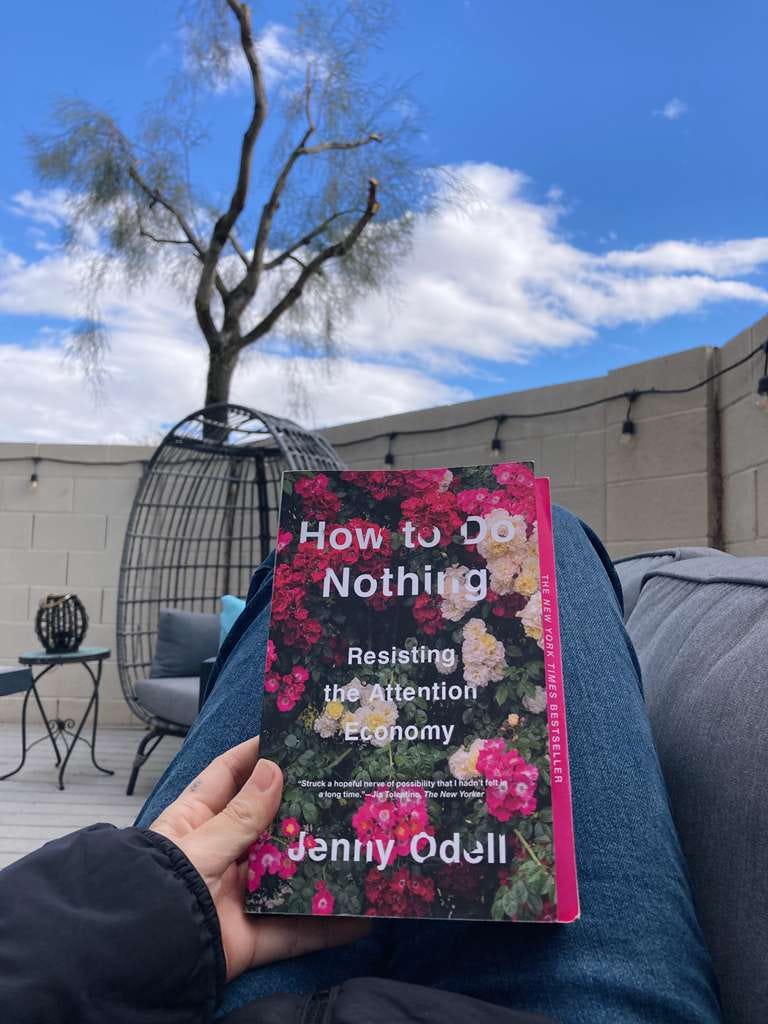
When I first (superficially) encountered this book, I scoffed. A book about doing nothing when so much actually needs to be changed and done? Hard pass. No thanks.
Apropos to the author’s most central suggestion, I had to look more closely. “Doing nothing” is not really what this book is about at all. Instead, Jenny Odell’s How to Do Nothing: Resisting the Attention Economy demands a withdrawal of our attention from profit-driven algorithms into the bioregions we inhabit, and she brilliantly makes the case for why our lives depend on it. This book is far from an apolitical self-help guide—ironically, it is a dutiful call-to-action.
Born, raised, and based in the Bay Area, Jenny Odell writes of resistance-in-place in which, while we may need to retreat at times, we must return with sharpened attention and care for our neighborhoods, communities, and local ecosystems. “For [Odell], doing nothing means disengaging from one framework (the attention economy) not only to give [herself] time to think, but to do something else in another framework.”
Odell references many historical examples of the discipline, experimentation, and vitality of this transformation of attention and individual/collective refusal. She does not simplistically advocate for an exodus from technology or social media, but a discipline and redirection of our attention in a way where we are not so easily manipulated. “To pay attention to one thing is to resist paying attention to other things; it means constantly denying and thwarting provocations outside the sphere of one’s attention.”
The “not doing anything” that is being advocated for is a place of stillness, observation, conversation, and cooperation; a self/world-restoration that is essential to ethical world-building. Such as today, when many thousands of people across the U.S. are planning to walk out of their jobs and classrooms against I.C.E.’s violent tactics. Read this book then put it down and look around you. Then keep looking.
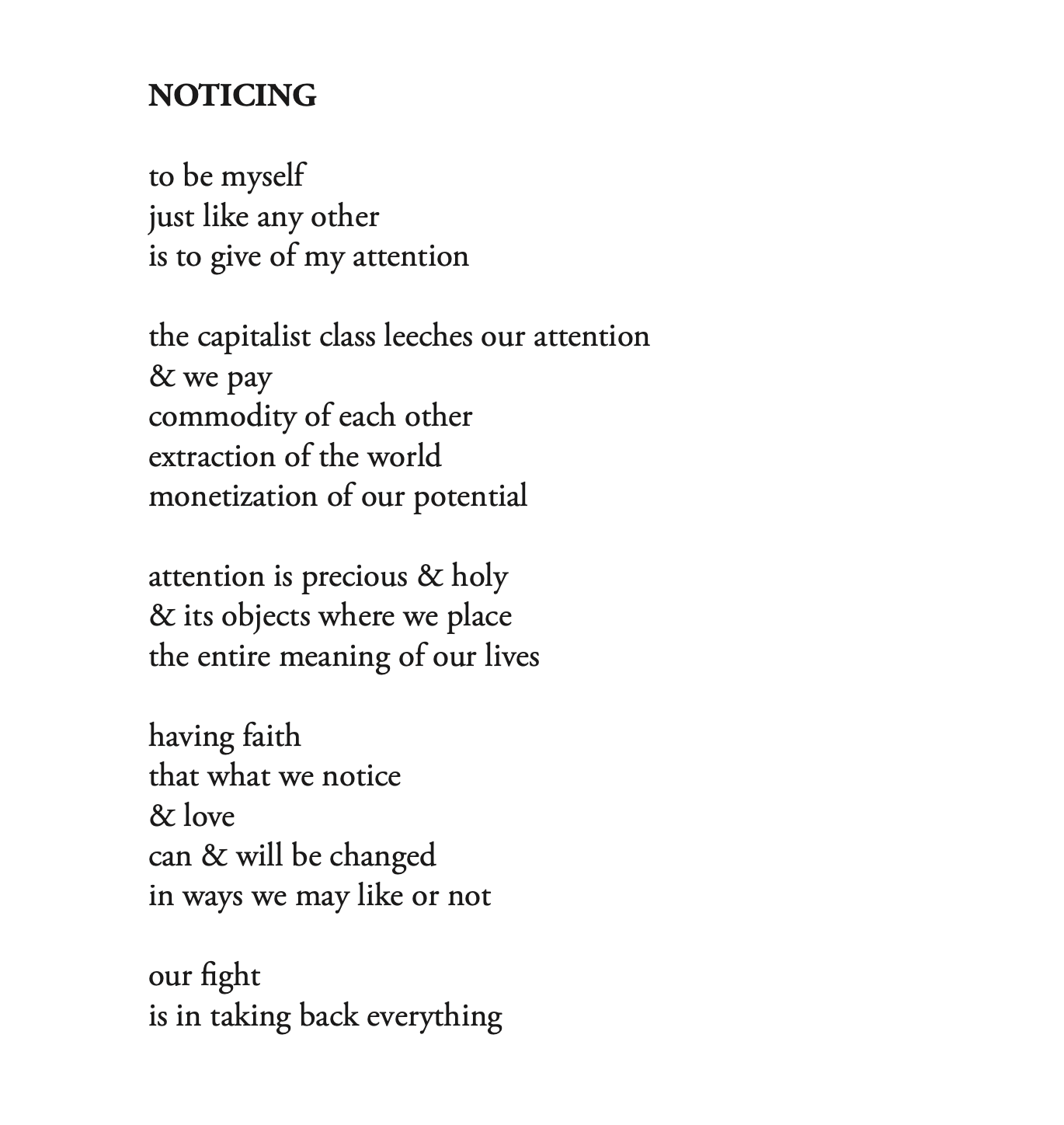
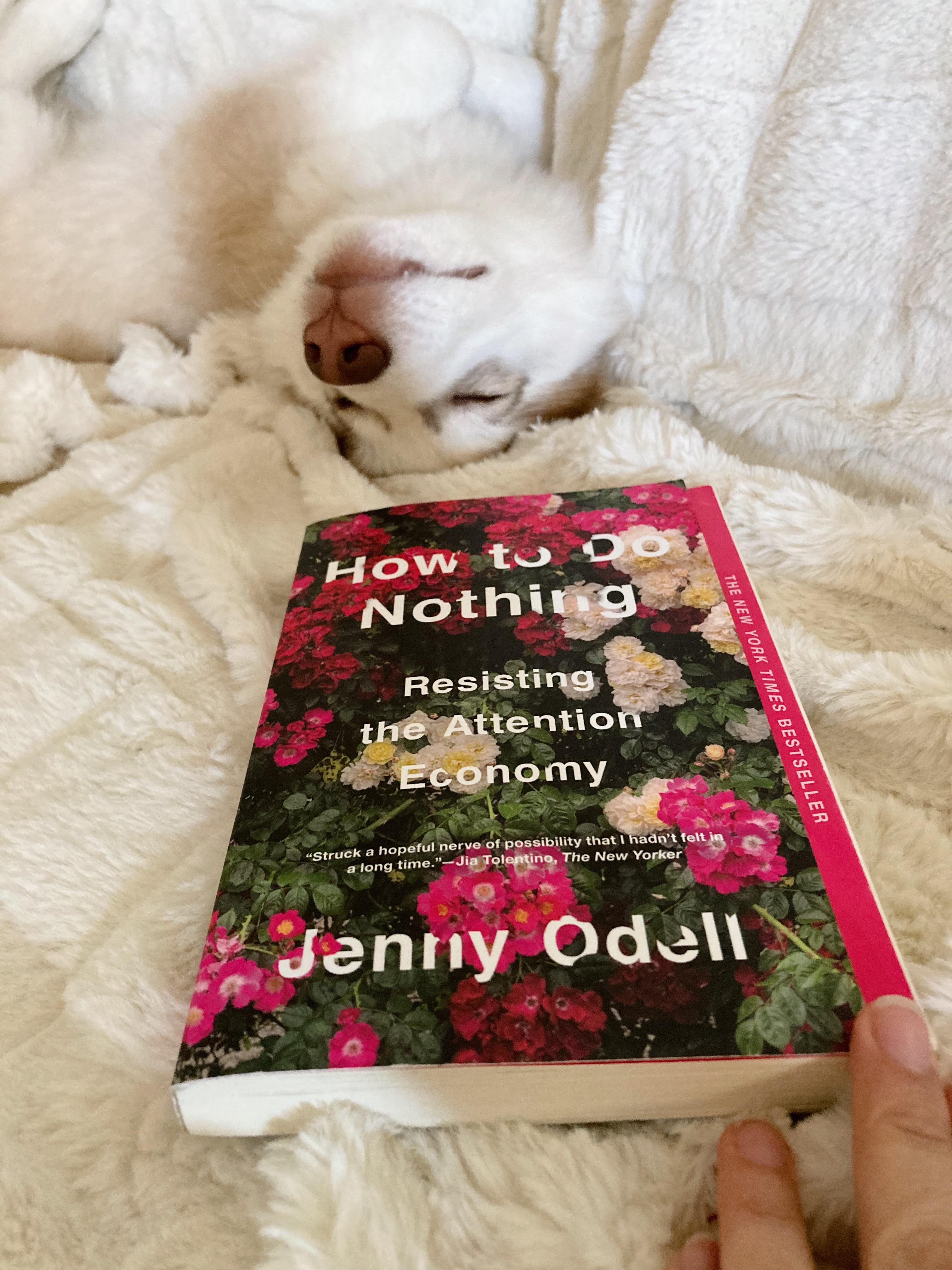


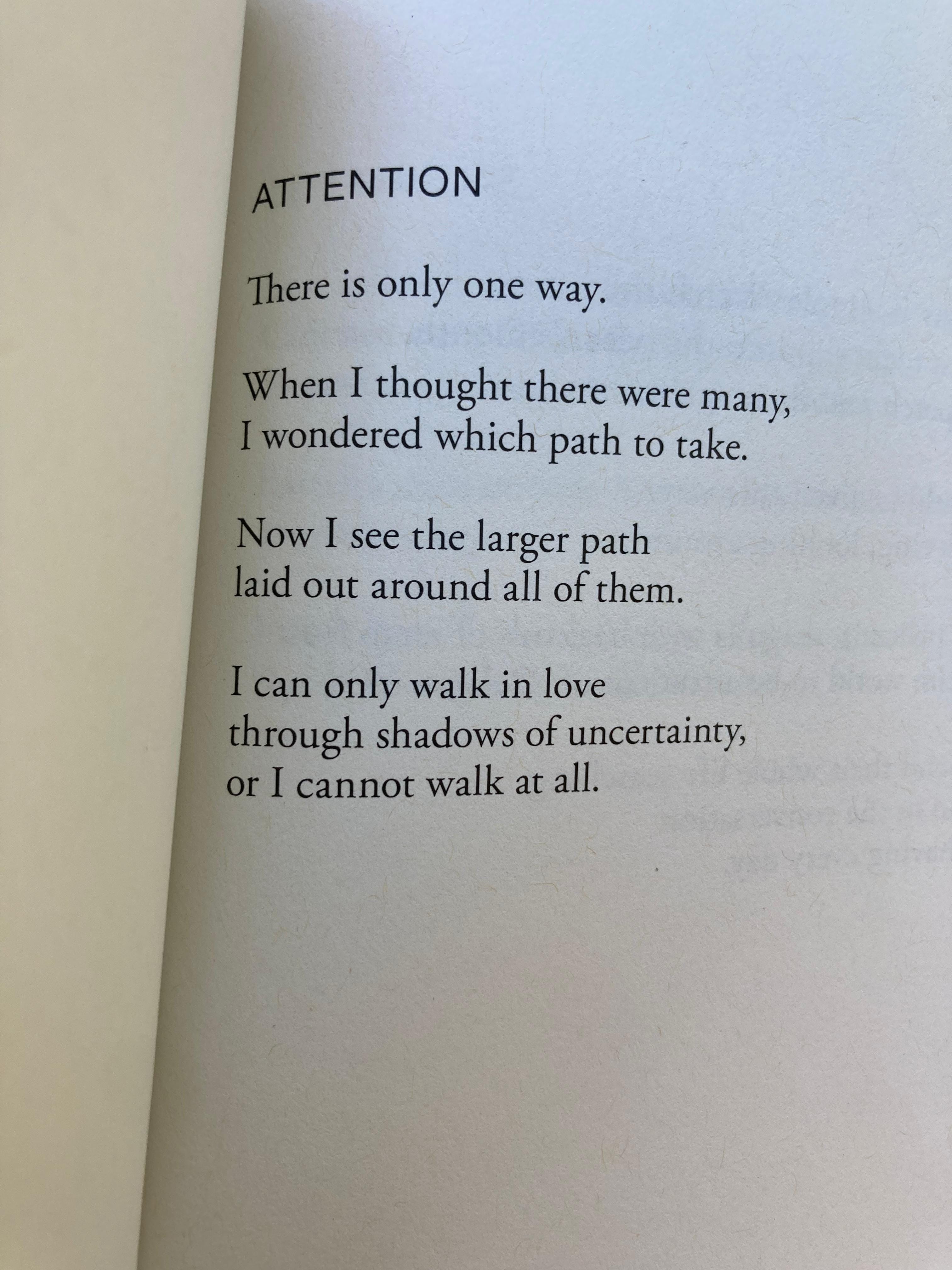
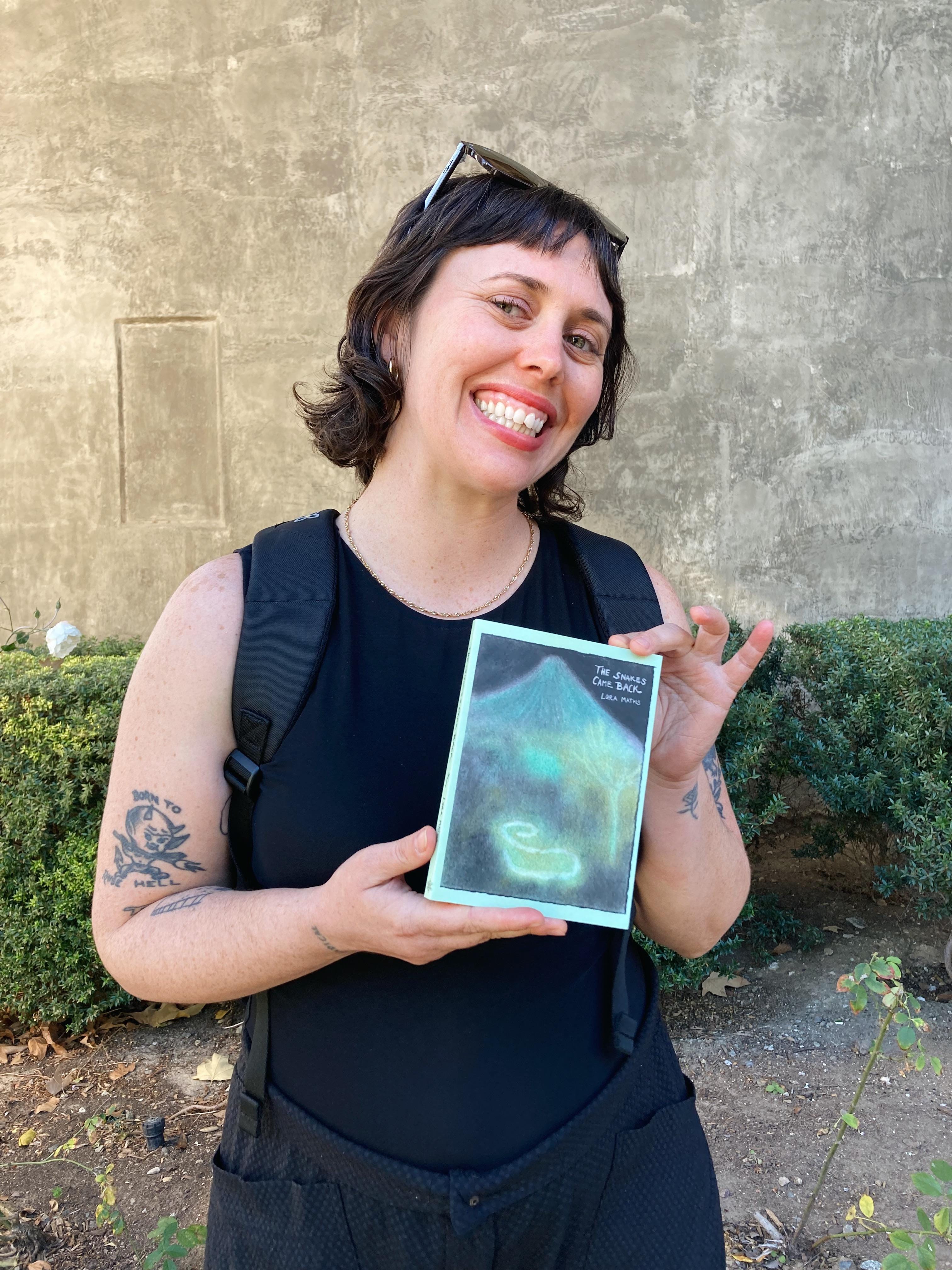
Lora Mathis’ poems are Mary Oliver but cheekier. Her latest book, The Snakes Came Back (Metatron Press, 2023) is a collection full of friendship, wisdom, landscape, and self-nurturance. A trusted companion for the roads ahead.

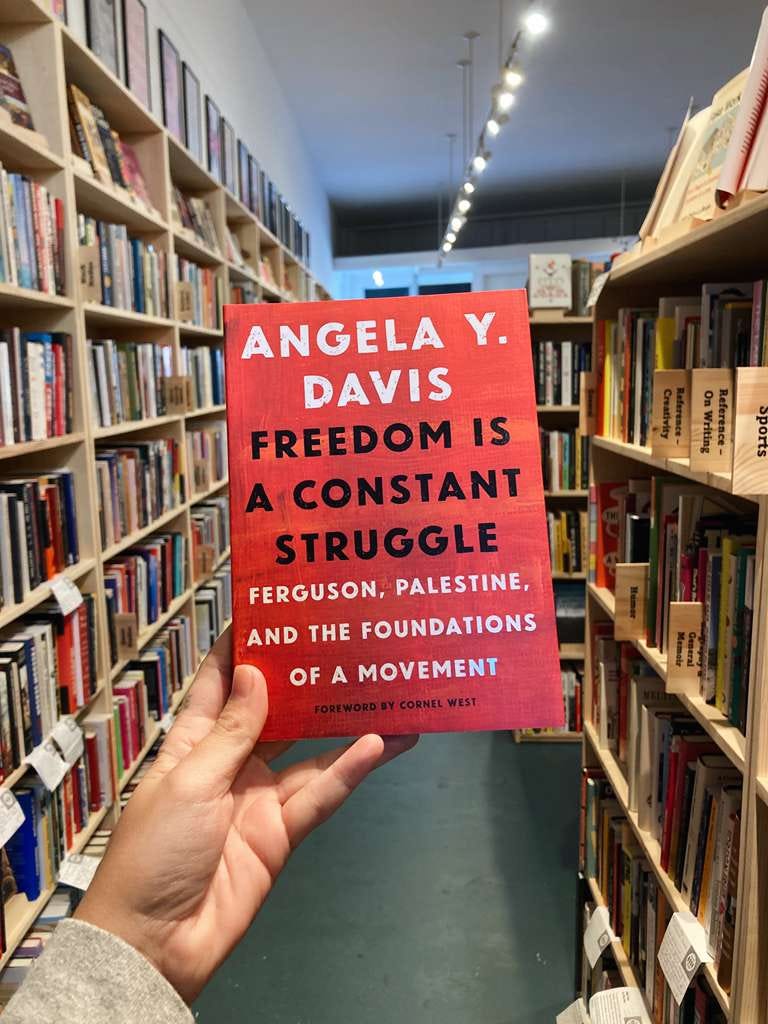
Freedom is a Constant Struggle highlights the necessity of a working class internationalist lens in movement work, in the need to treat domestic freedom struggles and struggles abroad as inextricably intertwined. Written during the Obama-era and in the aftermath of the Ferguson uprising, Angela Davis' essays, speeches, and interviews at the time are still relevant as ever. The movement for Black Liberation has seen new iterations, and the movement for Palestinian sovereignty has only grown, while repressive forces and U.S. financial and military support for Israeli apartheid have multiplied. While some of the points and speeches in this book were repetitive, and more broad and sweeping than in-depth, Angela Davis' perspective as a life-long freedom fighter is essential to understand for those who are invested in the progressive, anti-racist, anti-war movements of past and present.
No posts
Comments
Nothing yet. Say the first thing.
Sign in to join the conversation.