
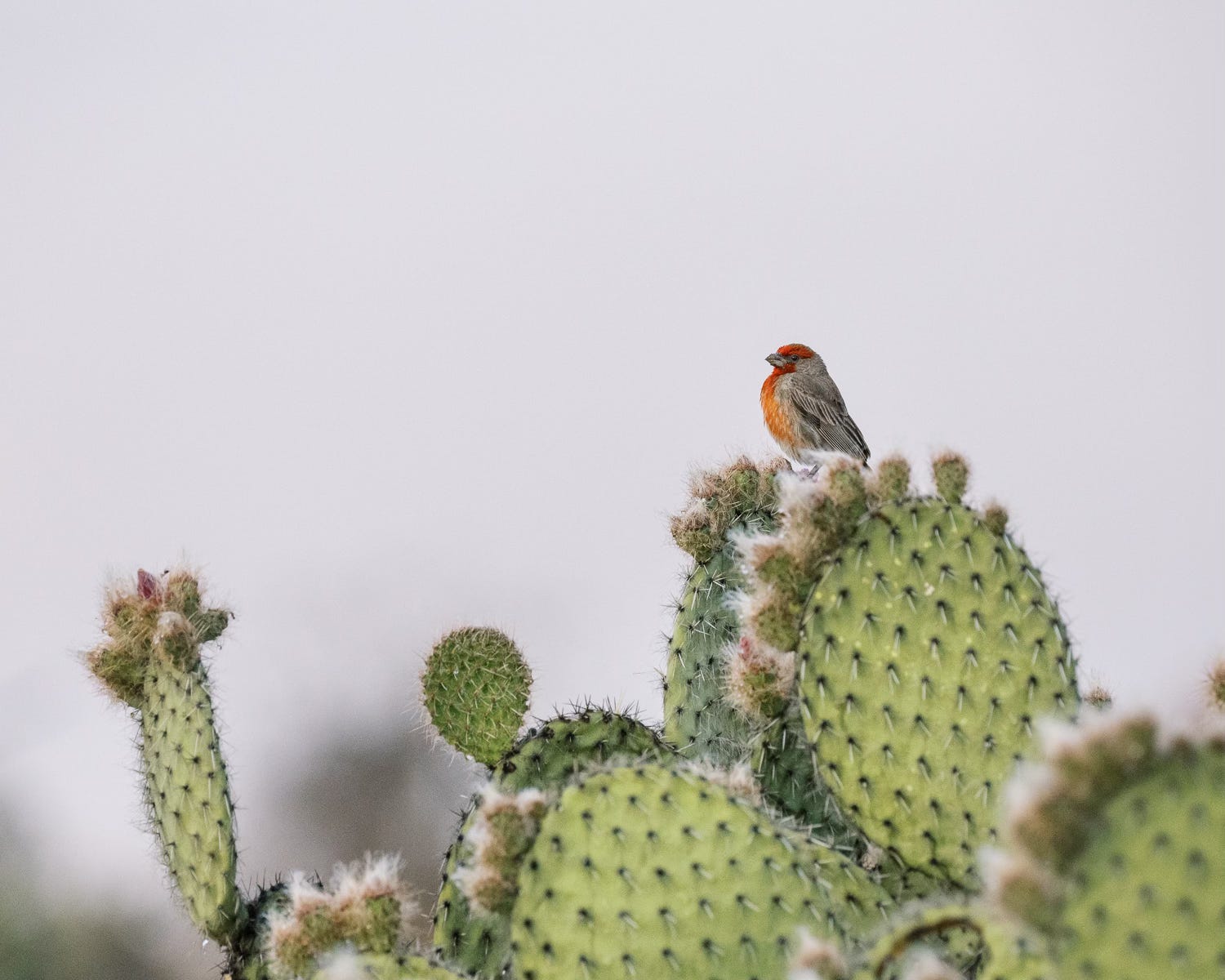
Note: this essay is a collaboration with my husband Jorge, who contributed the photos. If you enjoy it, subscribe!
I am tired of opinions.
I am tired of spacing essays like this, the bravado of all that white space: hear thee, hear thee, for I have opined something profound.
[realization]
I am tired of LinkedIn. All the creative writing job ads are for training AI. Like gazing into an infinity mirror, endless echoes of one thin human image, diluted and repeated, diluted and repeated.
I am tired of takes. I am tired of the cliché “I am tired, We are so tired,” often a kind of liberal humblebrag.
I am tired of judging the humblebrag or presuming to know what would be better. I am tired of codes, colors, flags, signifiers. I am tired of statistics, experts, research studies, debunking, data, videos of people talking authoritatively into tiny microphones while videos of other people play in the background, they don’t want you to know.
I am tired of the news, tired of the Internet, tired of how the personal essay has been stolen from the province of greasy-haired semi-feral teenage girls telling it bloody and raw and turned into the most hideous Tech Bro LinkedIn Supplement, all white space and canned duh realizations. “When I returned from the corporate retreat in Hawaii I realized it doesn’t have to be this way: Time is a construct.”
No! No thank you! I made my students watch this Ross Gay/Bon Iver collaboration and then I made them write a thank you poem. On a whim, unplanned, I conducted them like an orchestra. The lights were out and it was the second-to-last class of the semester and I went for it.
“Choose a line,” I said, “and when I point to you, read it.” I pointed, one by one, and each read a single thank you. They were thankful for chocolate milk and their dads, for the opportunity to go to college, for ultimate frisbee, for a fat cat named Sancho.
On the very last day of the semester, my Egyptian student gave me a hug. She radiated loneliness. She was getting married and showed me photos of her soon-to-be husband. She bought me a brownie in spite of my insisting no. I think she really needed to be taken care of. I hugged her as tightly as I could and said Take care, the first time I’ve ever hugged a student. Her hijab was silky and fragrant and she hugged me tightly, too.
My students with their cut-off jean shorts and Converse. My students with their Rage Against the Machine beanies. My students with their perpetual lateness, sorry, so sorry! My students with their glazed looks. My students with their glossy, shiny hair. My students reading their final work, their hands trembling. I like them. They are all sharing opinions I have taught them to form because what else can we quantify, what else would we be doing in academic writing, even though I sneak them off to Schenley Park and make them take deep listening workshops with my artist friend, lying on the grass in the dark on the Cathedral lawn, after which they all write not their opinions but their memory of the insistent sibilance of the crickets. I wonder – here it is my friends here we go we are ramping up for the white space get ready set go
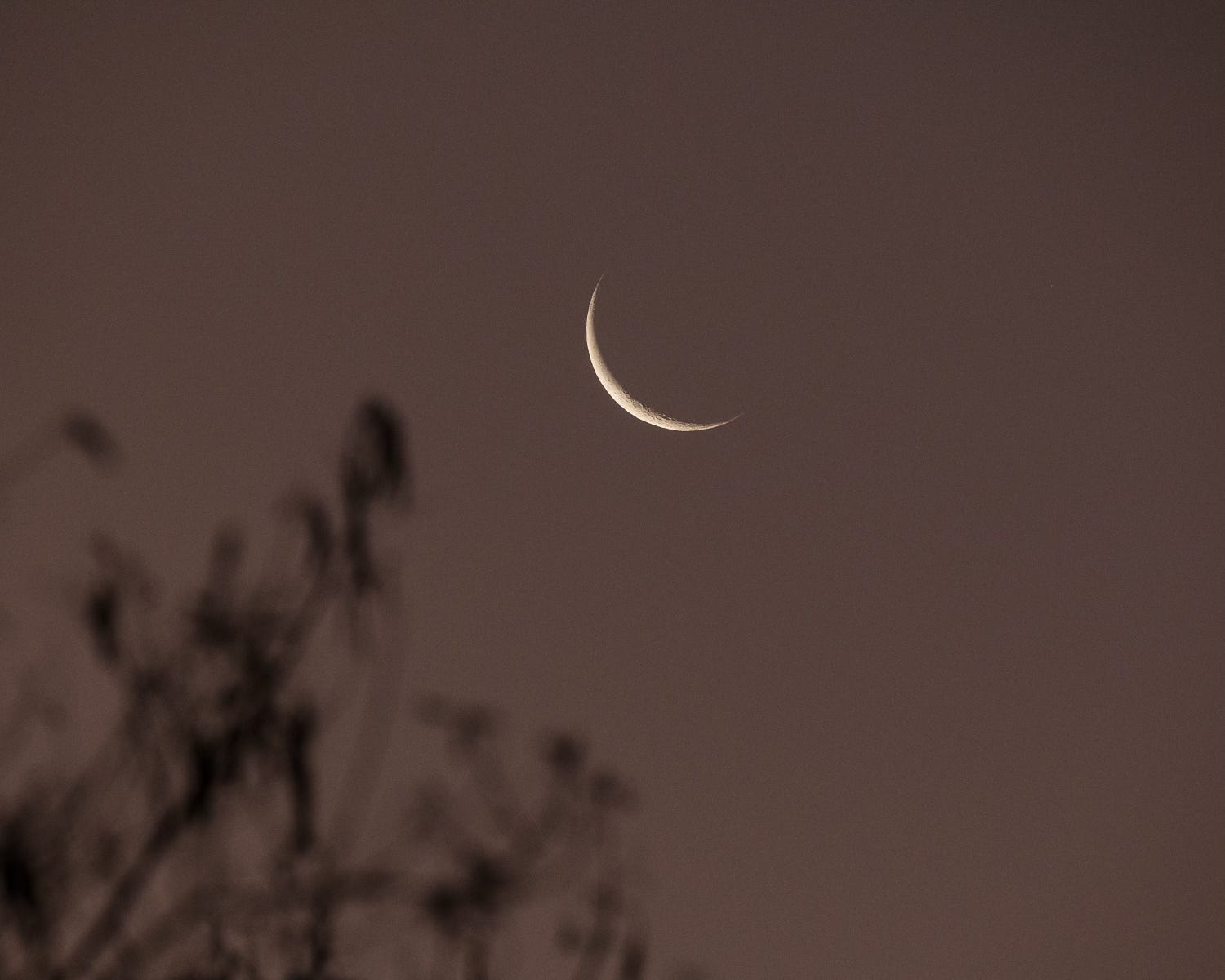
If the most advanced, sophisticated thinking has no opinion at all, a candle on a rainy morning on the front porch, a puppy riding on the back of a bike, air swooning with honeysuckle scent, a morning crescent moon. Crunch of red pepper. Birds. I’m sorry. Poetry we almost kind of but don’t quite understand, that oh god deep satisfying itch of mystery. Rain, trees, postcards, bare feet on warm concrete, loving anyway, weariness giving way to calm, the way every time we text Elena’s bus driver he replies okay alright.
I want to talk to you, dear reader, want to ask you how many moments of delight and awe and connection in your last few months came from opinions, but maybe this is having an opinion too, damn it, and I’m so tired of all the old writing, so tired of points, arguments, theses, look at me how smart I am but have you thought of this and then I realized –
It takes a lot of time to care for plants. And if they have opinions, they express them either seemingly all at once (I’m dead) or very, very slowly (this soil, it’s alright). When I care for them I am quiet and I get my hands dirty and time moves differently.
The neighbor down the street passes with her black lab. They shuffle, left right left right, in unison, four paws to two feet. All winter I saw this neighbor struggle with her puppy. He yanked on the leash, lunged, jumped, and she yelled at him. She was so frustrated. I could not blame her because I have been that frustrated, yelling person, on my own street and elsewhere. It was painful to witness. And then on a spring morning they strutted by, in rhythm. Peace. He’s all grown up now, a huge, broad-shouldered, easy-lumbering guy, sniffing the spring air, and she’s in shorts, relaxed. Heartache.
At my desk, my grandma stares out at me from a giant California redwood. She is dressed in nicely ironed slacks and a blazer and she is carrying a white purse the size of a toddler, in which are likely crackers/rolls/perhaps an entire appetizer from wherever tourist attraction she had lunch. She is not smiling, but I sense she is fulfilled. When I asked her about her travels, about taking a bus with the Sycamore Seniors to Kalamazoo to see the autumn leaves, I was expecting profundity, discoursing, opinions. Instead she laughed, shrugged, found all of it ridiculous.
“I don’t know,” she said. “It was pretty?”
I am tired of all the writing. I am tired of everything having a point. Of the end result of our STEM-mad society being the reduction of words to bits, words to realizations that are meant for us to click and follow, click and buy. Everything an arrow pointing to another arrow, and we are all mixed up and empty.
You can’t sum it up. A life. This is Ada Limón in “The Hurting Kind,” the titular poem of the book I asked for last Christmas. In this same book, in the poem “The End of Poetry,” she writes,
Text within this block will maintain its original spacing when published
Enough of the pointing to the world, weary
Text within this block will maintain its original spacing when published
and desperate, enough of the brutal and the border
Text within this block will maintain its original spacing when published
enough of can you see me, can you hear me, enough
I want to tell you to beat AI we have to go beyond opinions, to save the world we have to go beyond opinions. Can’t you feel it there at the edge of your consciousness? Can’t you feel what it might be like if we didn’t always lead with our intelligence? What other parts of us are limping along, neglected? What are they, where are they?
In The Burning Earth, Sunil Amrith writes about how for most of human history, we had to live within the constraints of nature, deeply aware of our own fragility and mortality. Now, for a wealthy, mostly Western minority of the world, we live with the illusion of mastery. Amrith is using his intellect to describe the problem, of course. But the answer won’t and can’t come only from there. Our intelligence and the premium we place on it, our great superiority – pigs in cages worldwide biting off their own tails, rivers whitened with mercury, trees gone orange from war – has gotten us into this pickle.
In a powerful and precise indictment of our contemporary education system, Santiago Schnell explains that student use of AI is “less a crisis than a clarification.” AI, he writes, “has not created new educational problems; it has made old ones impossible to ignore.”
These include the separation of language from substance; the separation of academic and cognitive “learning” from lived reality and relationship; the replacement of genuine, meaningful inquiry with received knowledge and ideas. In other words, the divorce of school from life. From self. From wonder.
“AI magnifies an older weakness,” Schnell explains. “It tempts us to mistake verbal fluency for understanding itself. A student can submit polished prose without having really grappled with the question. A researcher can produce a competent summary without having seen the problem clearly. A professional can sound informed without having formed a judgment. The danger is not only dishonesty — it is substitution.”
We substitute opinions for meaning. My students, with the best of intentions, want only to know what words they can use to get the A. My students write work that they cannot explain when I sit down with them on a bench beside the library, in the spring sunshine, my puppy dozing at our feet. It means nothing to them. It is just work. It is a performance, a cloak. What do you care about, I ask them, and they stare at me as if I’m speaking Russian. What does that have to do with anything?
Jorge asked me during a conversation late at night this week why I do this. Why I write. So much struggle lately and so little money and “reward.” I said to see and feel and make sense of things, obviously, and also for ambition and meaning and purpose. But I sense something else there, contained in the words but not the words. Because the way I relate to a plant, to my daughter, to a stranger, is different after writing than before. Because like meditation, it shifts the energy in a way I cannot explain or systematize. Like the feel of my Egyptian student’s hijab pressed to my cheek. Like the vertiginous spring scent of the linden. Like wonder loosening a tightly coiled thread of anxiety. Like wonder, maybe. More wonder, fewer opinions. Less certainty, more rivers. Less measuring, more being. Less white space and bold macho declarations and more humble paragraphs seeking and connecting hello reader! This big jumble of messy text full of silk strips and leaf bits, ribbons and petals, you can lie down in it, you can make a nest in it, you can curl up and let go of making sense and dream and dream.
If this essay brought you joy, or provided a bit of pleasant refuge from your day, consider becoming a paid subscriber. For $5/month or $30/year, support writing you value, and the time and work that goes into that writing. This writer thanks you!
I finished a 600-page biography of Peter Matthiessen that I am recommending here only for the true fanatics, those of you who can still remember exactly where you were when you first encountered The Snow Leopard (cabin on my family’s farm, early summer, scent of grass and woods).
Another insane story on the global fertility industry! 🤯
I was thrilled to discover Kaira Jewel Lingo on here. I first found her meditations on the 10% Happier app and I loved them. This is a wonderful and helpful guide to focusing, preserving, and healing attention when so much time and money is being spent to “frack” it.
More on attention and how it’s being hijacked much to the detriment of our children and reason number 98,754 for why I will never buy my child a smart phone.
Comments
Nothing yet. Say the first thing.
Sign in to join the conversation.