
This is Part 2 of a three-part travelogue on birding in Costa Rica with my family. Read Part 1 and Part 3.
If you enjoy this series, become a paid subscriber to Terms of Endearment. $30 gets you a year’s worth of essays and funds the time, care, and energy that goes into this newsletter. Each essay requires thoughtful drafting, writing, editing, copy-editing, proofreading, and design, all of which is done by…me! Thank you!
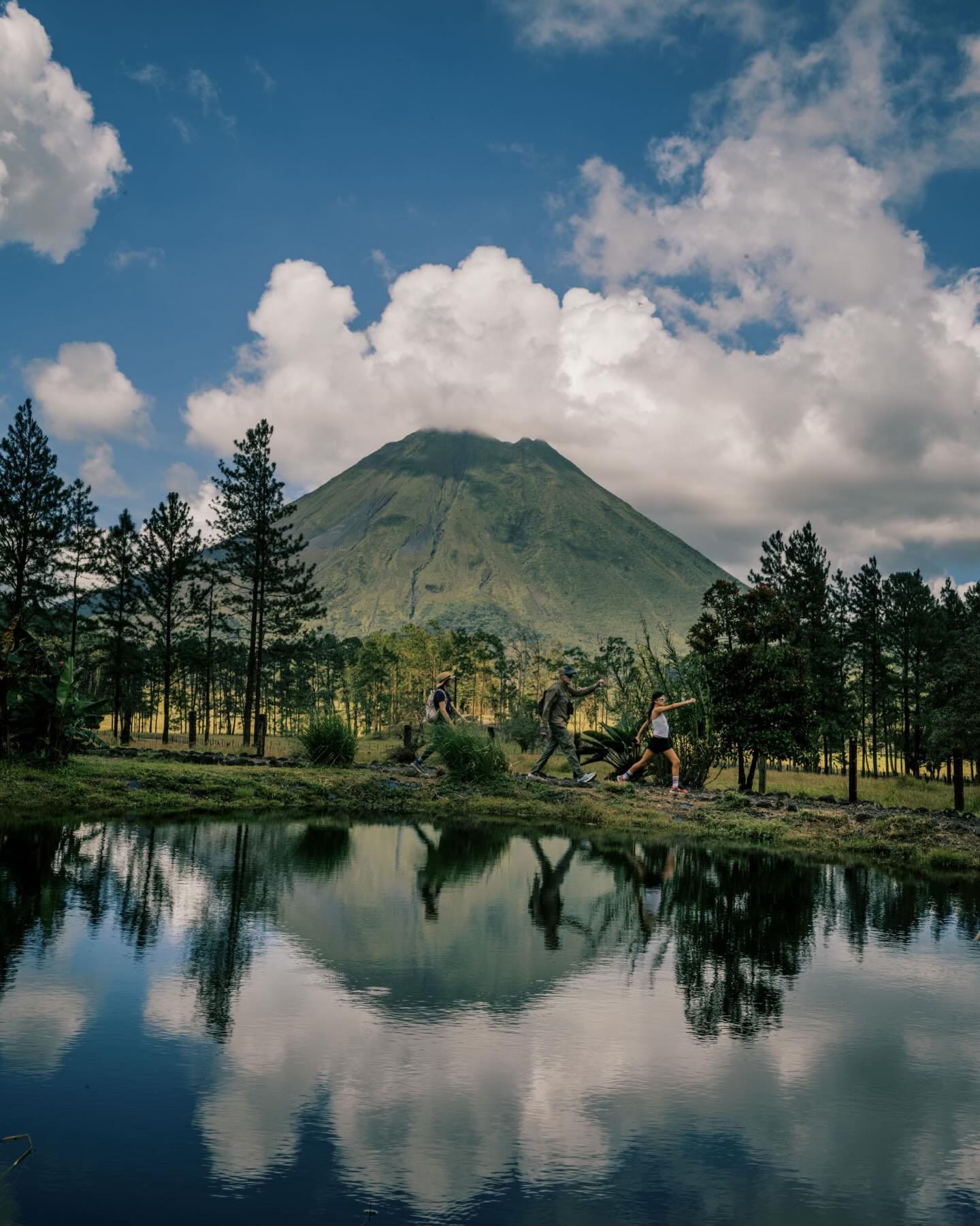
On our way from La Selva, in the tropical lowlands, to Monteverde, in the mountain highlands, we passed by the Arenal Volcano. The volcano is dense green all the way to its tippy-top, and looms silent and imperial over the undulating land beneath.
On the highway we saw a bunch of people gathered and accurately deduced that the source of spectacle was a sloth. We risked our lives crossing the two lanes of traffic in order to stand in the weeds with a motley international crew and watch this half-obscured creature nap a hundred feet in the air.
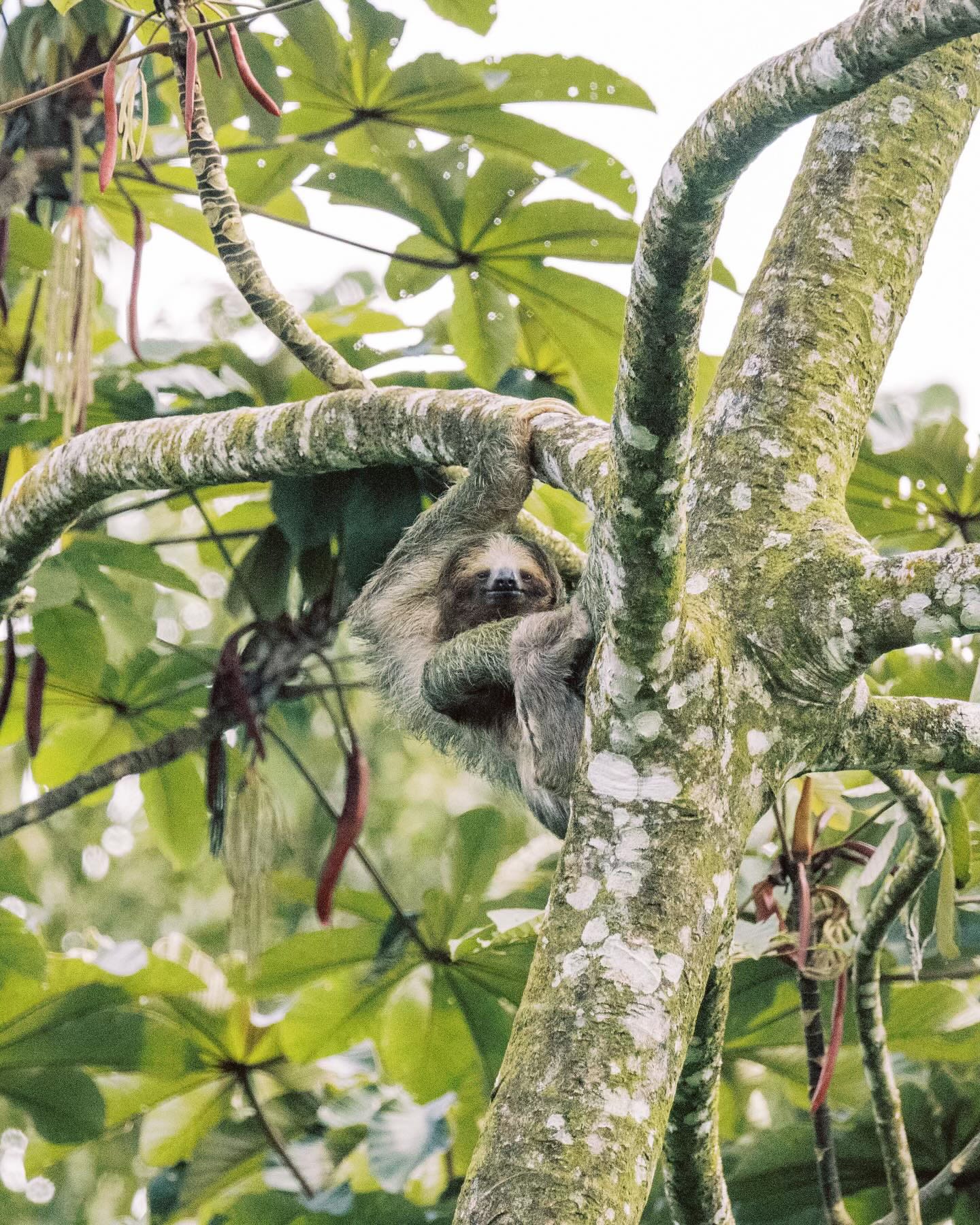
At one point, the sloth stretched, and it was cinematic, it was unreal, how slow the motion was: a motion I couldn’t make that slowly if I tried, lowering an arm millimeter by millimeter, as if the sloth were performing its sloth-ness for this enraptured band of onlookers desperately zooming as far as their iPhones would go.
A group of French people arrived and a woman asked me in English, “What is it?” and I said, “A sloth,” and she reported back to her compatriots in French, “Un pareceux!”
We were almost as proud of ourselves for learning the French word for sloth as we were for glimpsing the mythical creature. I told Dad, Jorge, and Elena, who don’t speak French, that now they had a beautiful bridge with which to connect to the French people.
Un pareceux! Of course it sounded infinitely more romantic in French than the flat, lispy American sloth.
We stopped briefly at the Arenal Observatory Lodge for a hike, which like all hikes in Costa Rica was a sensory overload of old growth primary forest, waterfalls, suspension bridges, and remote pasturelands, topped off with a volcano.
We decided to brave a 100-foot observatory tower, which shook at least several inches each time someone took a step or there was a strong wind. About ten feet up I was already overwhelmed by regret and the urge to throw up, but prevailed in order to model cheery, fearless adventure for my child.
It was worth it at the top: panoramic view of forest as far as we could see in any direction, and Lake Arenal gleaming blue far below, and the Arenal Volcano soaring right up beside us as if we could almost reach out and touch it.
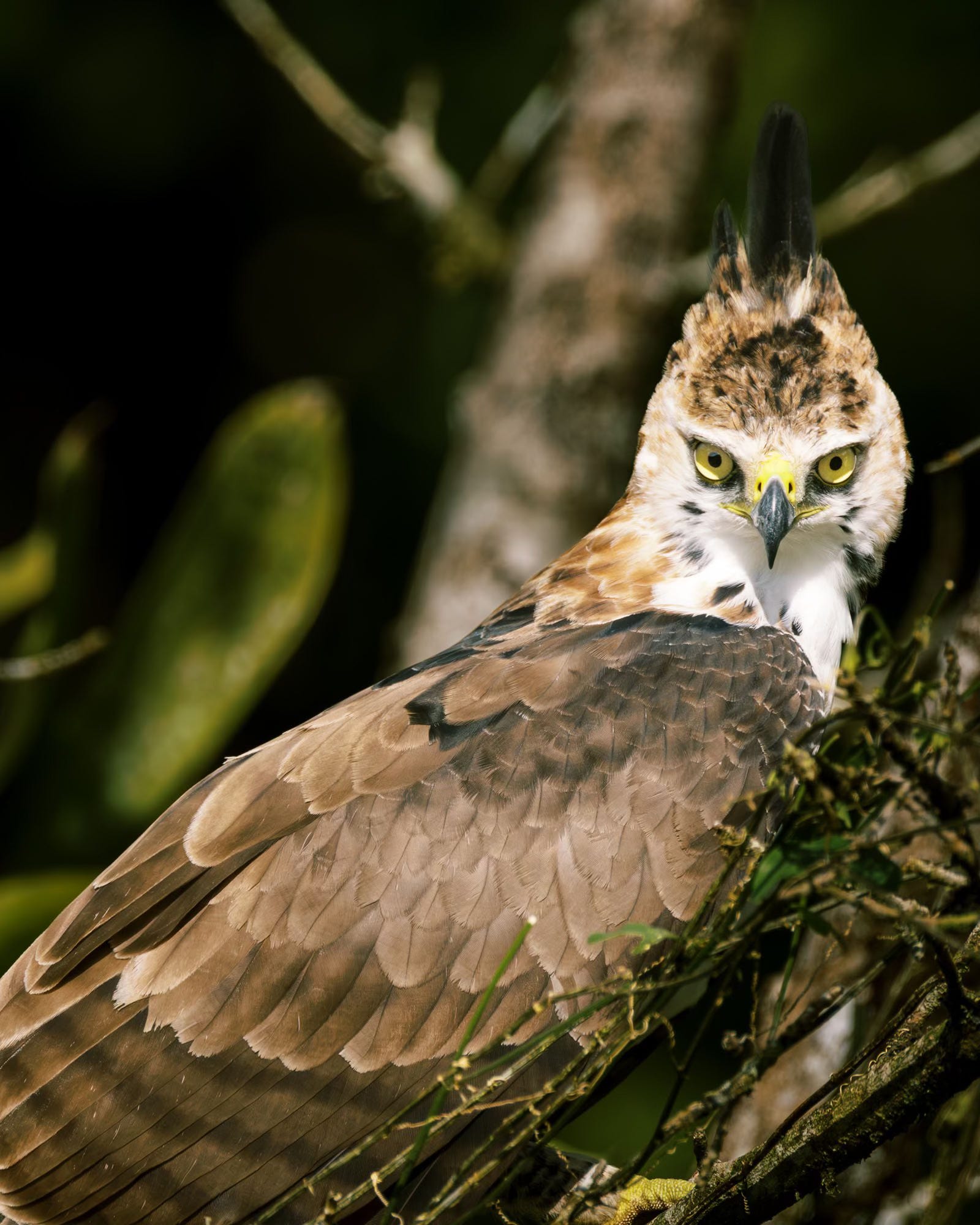
Just before we were about to leave Arenal we passed the Observatory Hotel deck, on which a bunch of people were staring at something. Knowing that the #1 rule of Costa Rica travel is to always ask what people are staring at, I sent Jorge and Dad to go check it out and nobly surrendered myself to get the once-again-starving Elena a smoothie.
It turns out that I can now add the ornate harpy eagle to the list of things I have sacrificed at the altar of motherhood. Happy for Dad and Jorge, though.
Thanks for reading Terms of Endearment! Share this post with a friend.
We got into Monteverde at night and the first thing we found was a scorpion trying to sneak into the AirBnB. Good times! I was stung on the face by a scorpion in the middle of the night in Mexico and my face ballooned to double its size, so I was a wee bit nervous about this development.
It was quite dark and late so we went to the closest soda, and our waiter was about Elena’s age. He was cute and extremely efficient, and Elena blushed to her hairline each time he came around and asked if she needed anything. I gently pointed out that Elena still asks me to tie her shoes and this child was capable of running a small business by himself, to which she shrugged, completely nonplussed like a true American child (what is wrong with our culture?!)
The next morning, we went to the Curi Cancha reserve and saw centuries-old, twenty-foot-wide ceiba trees, and at least five varieties of hummingbird, and a pack of coatimundis – small mammals with long snouts and ringed tails that look like a cross between a racoon and an anteater. They also look uncannily like our dog Pinto. Judge for yourself.
Pinto:

Coatimundi:
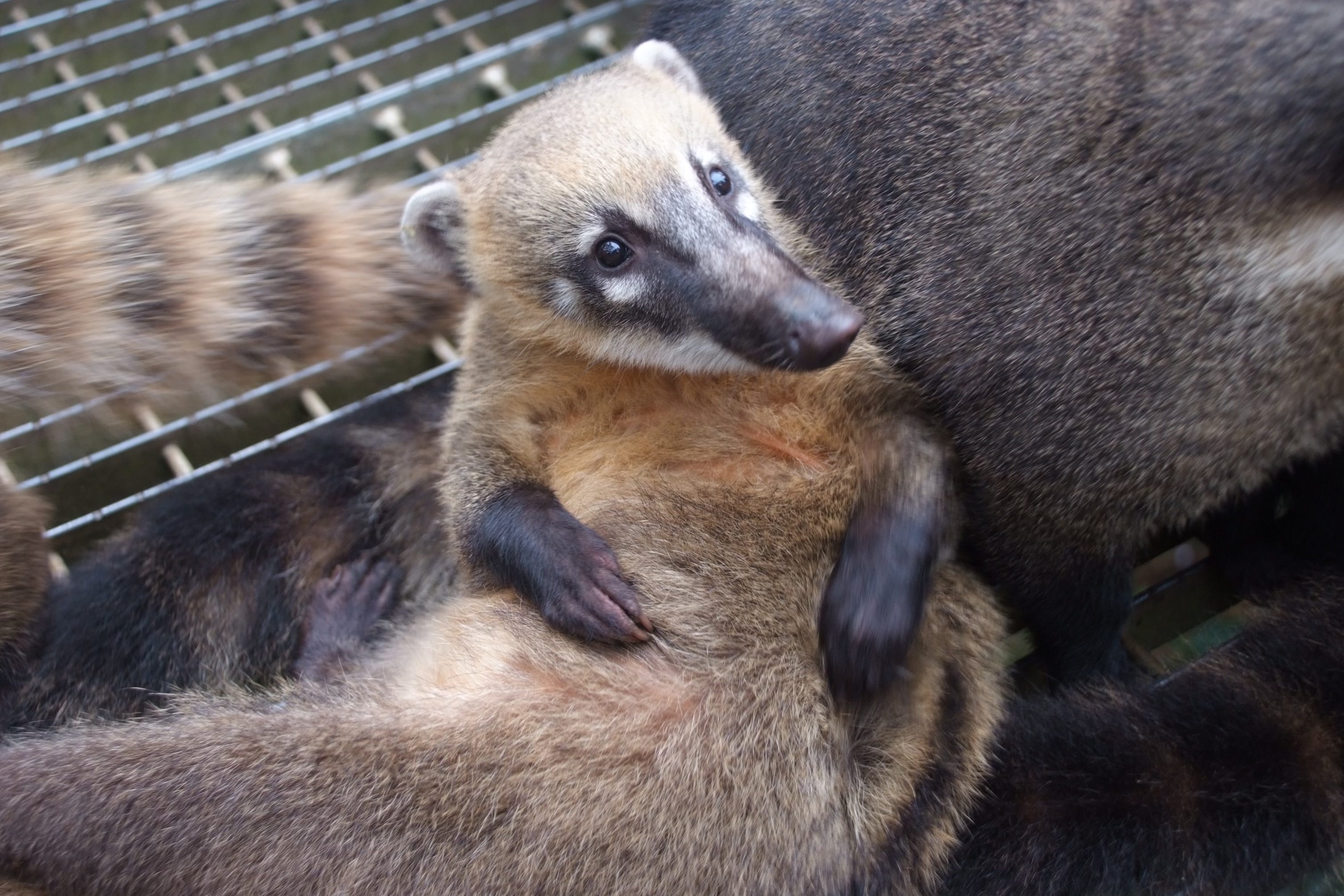
Even though I felt I should be a more sophisticated birder, discerning between varieties of hummingbird, I let myself slum it and enjoyed watching some furry mammals scratch their tummies with their little paws.
One coatimundi climbed a giant tree and was dangling by his tail shoving fruits into his mouth with delight, terrifying Elena and me. He did not seem to care at all that he was 75 feet in the air and the only thing between him and death was a single little furry appendage.
Afterwards, ravenous from a long day of hiking, we went to a soda that we knew was authentic because a) it was packed and b) it was playing la nota roja on a giant TV in the corner in true Latin American style. Basically, it had a constant stream of the goriest, most horrific news stories running nonstop: motorcycle crashes, stabbings, you name it!
Elena could not tear her eyeballs away and we had to switch sides of the table to prevent her from staying up all night asking me about human frailty. Food was delicious, though, and after 4+ hours of hiking and staring up into the canopy for birds, two guanabana smoothies and a platter of plantains, plantain fritters, beans, rice, salad, vegetables, and half a jerk chicken was just about right.
The following morning, we woke up to the rainbow to end all rainbows, which apparently is just routine for this particular micro-climate of highland dairy farms, started in the 1940s by pacifist Quakers fleeing the U.S. The Quakers had some kind of magic, because the rainbow spanned the entire valley, and was so shiny and transparent it was like actual fairy dust sprinkled over the landscape.
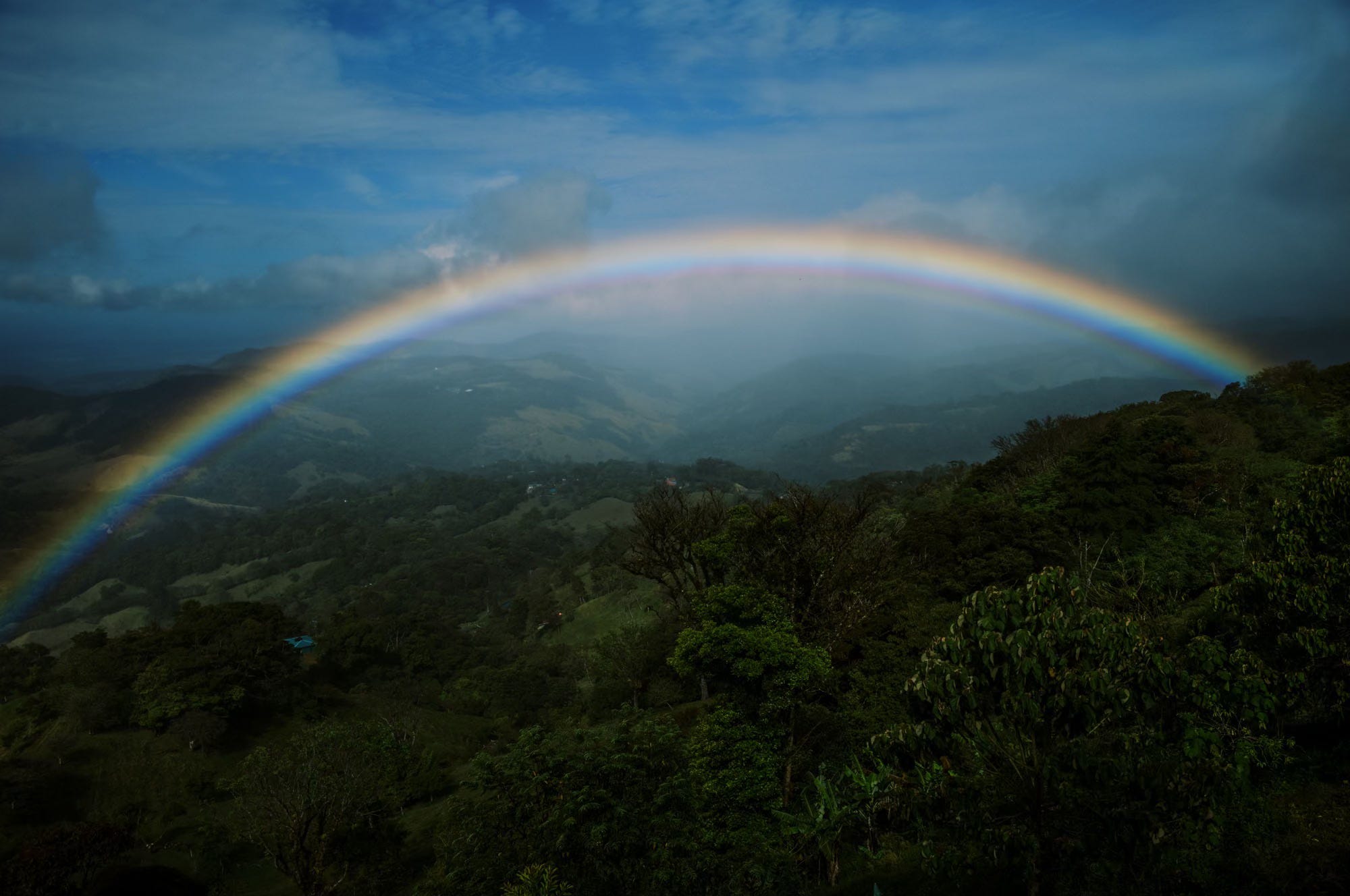
I’m serious: the earth glimmered through it, and I sort of believed that if I walked down the hill far enough into that luster I might be transported to a land of elves and gold.
That day, we went to the Monteverde Cloud Forest Reserve, where we saw the resplendent quetzal, which deserves its own essay. This reserve was entirely old growth rainforest, and the vibe was dark, quiet, and awesome. Imagine a jungle growing into a pine forest and then the two mating and comingling for a couple thousand years deep in the clouds. That’s the level of green and wet and formidable we’re talking here.
The ferns alone were the size of full-grown American trees. Entire ecosystems, like thriving cities, grew on a single tree. The growth was so abundant that trees reached out to one another across streams and intertwined their branches to form natural bridges, like the foliage couldn’t bear to be separated for just a few feet.
We saw the continental divide, which, although it looked like a big bowl of green forest beneath a turbulent gray sky, still felt significant. On one side, all rivers ran to the Atlantic; on the other, the Pacific. It made you want to fling out your arms and shout to the wind. And from this point on, all the rivers will run this way! How humans love a good marker.
That night, we went on a night hike, which everyone in Costa Rica told us was a must. Our guide was a garrulous twenty-four-year old who Jorge, Dad, and I found grating but Elena adored because he asked her, “What are you, fourteen?”
We saw a tarantula and a toucan, but most memorably, we got to run the park’s labyrinth at night. Elena had been obsessed with the labyrinth during the day and memorized it, and she tore through it, shrieking with delight and finishing in 2.5 minutes, while I hit a dead end and then got to experience a thrilling moment of terror about being abandoned in a maze in the jungle at night. Don’t worry, I figured it out.
When Jorge and I came out, Elena said that beloved phrase of all parents: again. We had time because some of our group were in the bathroom, so in we went.
The night, especially the deep, clear forest night like this one, made the labyrinth feel like disappearing into myth, like we were little creatures in a fairy tale. I raced through the narrow passageways, chasing my own breath, my own fear, until I was released back into the wider field, both relieved and a little sad to be free.
We sang Happy Birthday in Spanish to one of our fellow hikers, a twenty-nine-year-old from Florida who blew out the “candle” of her flashlight, and then continued on.
At one point we were walking downhill and Elena and I were arm and arm under the stars, and she whispered to me, “I really like this.”
This declaration made me so happy, and gave me hope that someday she would find, or return, to herself in a space just like this one.
In the cloud forest, earlier that day, I’d escaped from our little group for a bit to hike back to a trailside bathroom. On that hike, alone in deep forest, I remembered what really made me the person and the writer I am today: hiking alone across Patagonia at 22.
I cannot believe, now, that I did this. I was by myself for months on rugged trails in one of the earth’s wildest and most remote places. That experience of solitude and communion forged me. I remember standing on the summit of a peak in Los Alerces National Park in Argentina and singing. Singing, just for the joy of myself and the earth.
That kind of solitude, outside, in wilderness, just my own footsteps and breath on the trail, wrested me briefly free of my ego. It connected me to a part of myself that was less person, more presence.
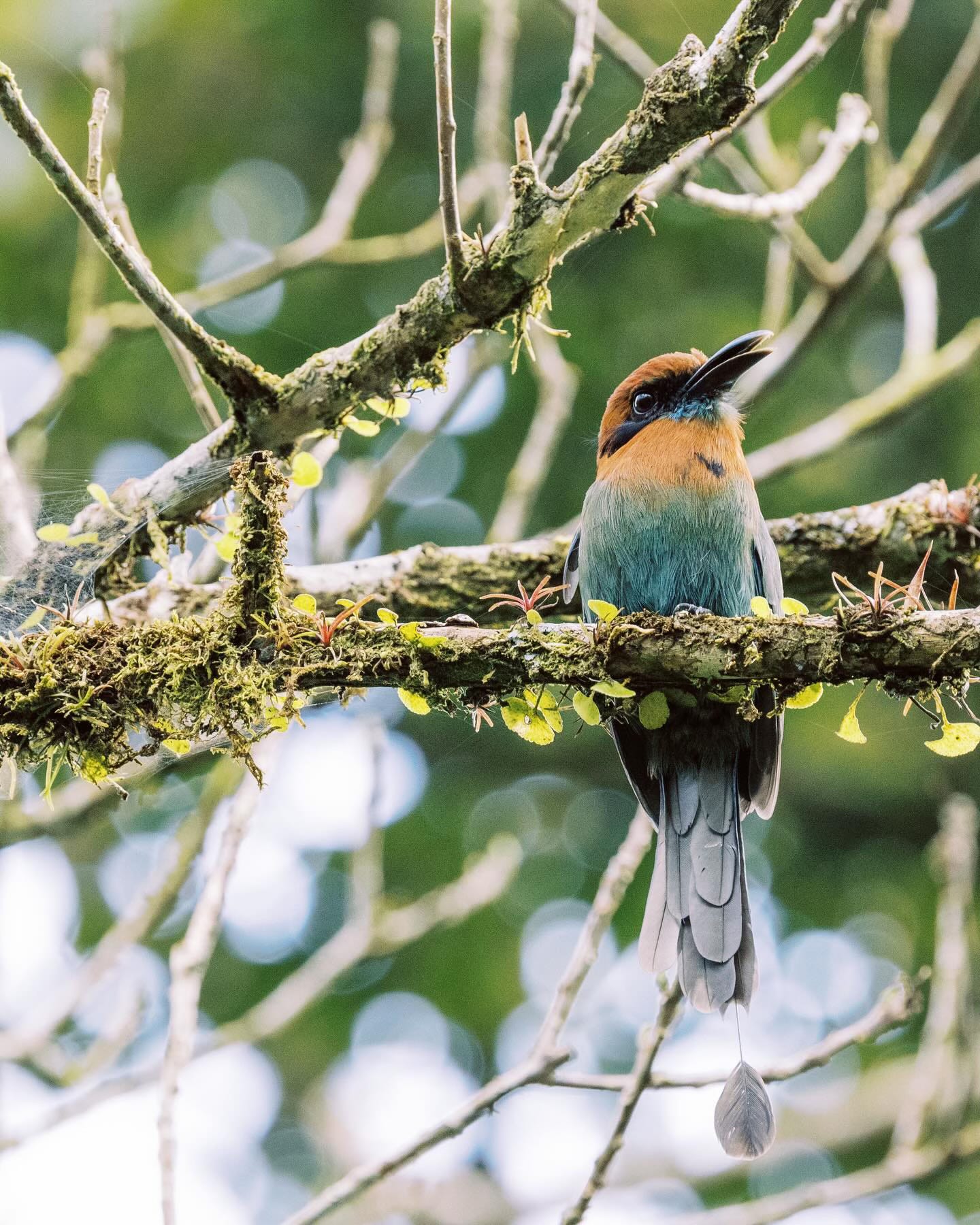
It’s also increasingly rare now: I can barely imagine going anywhere, especially the wilderness, without my phone. At that time, in 2006, I had to wait days, sometimes weeks, before encountering an Internet café to write family and friends. In those intervals I was fully in the world and strangely, free of myself.
Advertising ourselves, being connected always to our networks, may be comforting and sometimes necessary, but it tethers us to the smaller and more known parts of who we are.
I hope Elena carries the memory of those stars with her. The crunch of the gravel, the huge sky, the close trees, the edges of herself dissolving in this wild place.
Next, we head from the mountains to the coast, where we encounter mythical creatures who will not yet be named and who attempt to steal our pancakes. Read Part 1 and Part 3.
If you enjoy Terms of Endearment, become a paid subscriber. Paid subscriptions allow me to devote time and energy to this work, to grow Terms of Endearment, and to continue writing. Thank you!
Comments
Nothing yet. Say the first thing.
Sign in to join the conversation.