
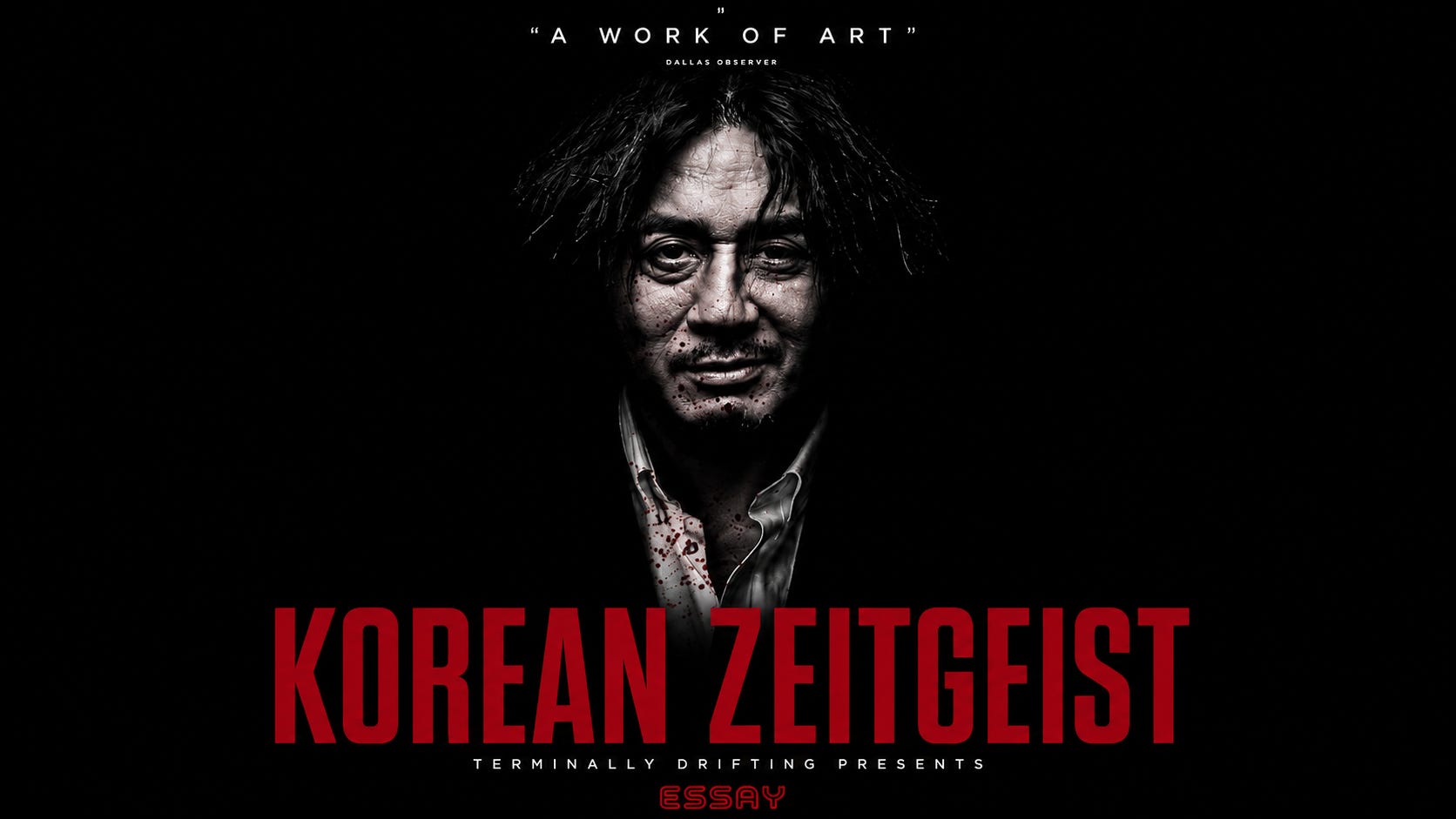
Quick spoiler warning: to properly expand on the thesis, I’ll be discussing the endings and major reveals of some of the greatest Korean films ever made, and in my opinion some of the greatest films full stop. If you haven’t seen Oldboy, Mother, Parasite, or Memories of Murder, and you still plan to, which you absolutely should, consider this fair warning.
A man eats a live octopus. The arms are still moving when they go in, suckers grabbing at his lip while the camera holds close enough to watch Choi Min-sik’s eyes flood. He chews. It fights. He wins, barely, and pitches face-first onto the bar.
It is the first thing Oh Dae-su does as a free man in Oldboy. He has spent fifteen years locked in a room the size of a cheap motel, fed the same fried dumplings every day, never told why, watching the outside world go by on the one television that is his window and his only company and his torturer at once. When the door finally opens he wants two things: meat that is still alive, and the name of the man who did this. Later he goes down a corridor of waiting thugs with a claw hammer, side-on, in one unbroken take, catches a knife in the back and keeps swinging. Stopping is the one move he has lost.
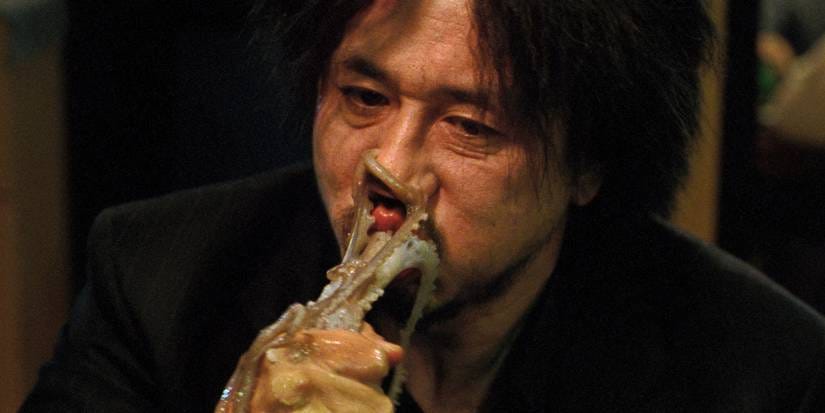
The mystery has an answer. It is so monstrous, and so patiently engineered, that the moment Dae-su finally holds it the only thing left to want is to never have learned it. That is the rule of this cinema, set in its first masterpiece and obeyed ever since: the hero reaches the truth, and the truth is the sentence. There is no clean door at the end of the hall. There was never going to be one.
Park Chan-wook did not invent this man. He filmed him. The films the world means when it says “Korean cinema,” the ones festival juries garland and your most insufferable friend insists you watch with subtitles, the Parasites and Oldboys and Burnings, are documentaries with the serial numbers filed off. The country supplies the conditions; the director points the camera; the only thing left to decide is how beautifully to frame the part where the system wins and the person loses. The system always wins. The person always loses. A happy ending is impossible the way it is impossible for a man falling off a building to enjoy the view.
The claim worth making is narrower and stranger than “Koreans are doomed.” South Korea got rich and glamorous before it got comfortable, shoved through five centuries of European-style development in roughly forty years, and the whiplash is everywhere: in the suicide numbers, in the surgery clinics stacked twelve floors deep in Gangnam, in the men paying cryptocurrency to watch teenage girls tortured on Telegram, in the heiress who turned a commercial plane around over a bag of nuts, in the president who tried to seize his own country at 10:27 on a December night. The films are the most honest witness the place has made of itself. They are how the country says out loud the thing it cannot fix.
Start with the body of a murdered girl.
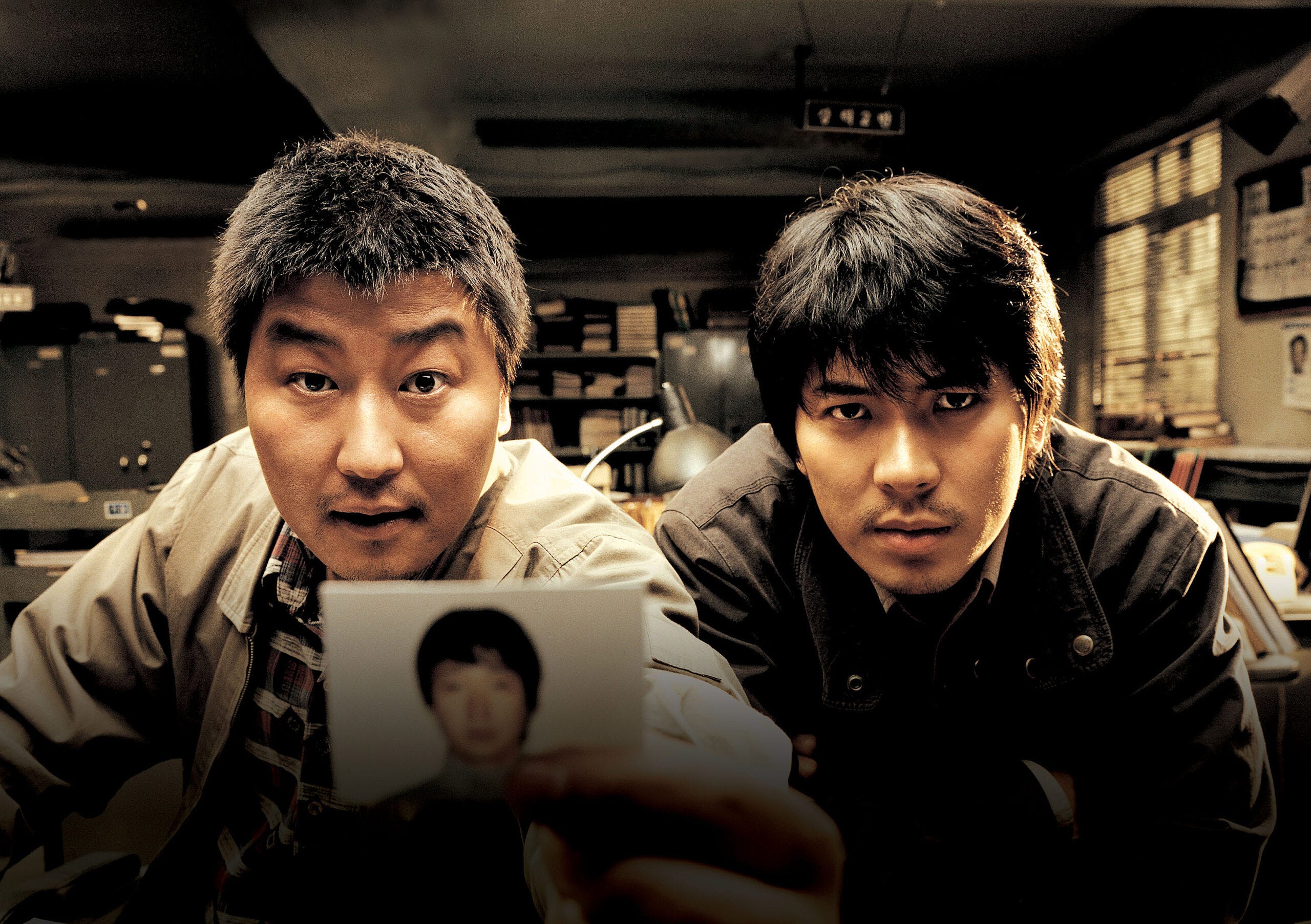
In 2003 Bong Joon-ho made Memories of Murder, about a run of killings in rural Gyeonggi province in the late 1980s: ten women, the youngest fourteen and the oldest seventy-one, raped and strangled with their own clothing across five years. It became the largest criminal investigation in Korean history, two million man-days, forty thousand people fingerprinted. A rumor said the killer chose rainy nights and women in red, so detectives took to wearing red themselves on rainy days, walking the fields as decoys, hoping to be picked.
The cops in the film are not heroes. One fabricates confessions and kicks suspects down hillsides; the other arrives with clean methods that produce nothing. They beat the wrong men. They torture a gentle, slow factory worker into a confession he didn’t earn. The killer keeps killing. And the film ends on the shot everyone remembers: years later, the lead detective, now an ordinary salesman, crouches at the drainage ditch where the first body was found, and a little girl tells him a man was just here, looking at the same spot, and when she’s asked what he looked like she says, ordinary, plain, you wouldn’t notice him.
![SPOILER] The final shot of "Memories of Murder" (2003) is more than it first appears [more detail in comments]. : r/truefilmdetails](https://substackcdn.com/image/fetch/$s_!CeWQ!,f_auto,q_auto:good,fl_progressive:steep/https%3A%2F%2Fsubstack-post-media.s3.amazonaws.com%2Fpublic%2Fimages%2F4a4f6a25-ff9a-4528-9e61-de0ac043cd75_1280x696.png "SPOILER] The final shot of "Memories of Murder" (2003) is more than it first appears [more detail in comments]. : r/truefilmdetails")
Song Kang-ho turns and stares down the lens and holds it, far too long, because the film came out while the case was open and the man was still out there, and the chill is that he is looking past the audience at the one person the movie assumed was watching: the killer, in the dark, getting away with it in real time.
Then, in 2019, they found him. DNA on the victims’ clothing matched Lee Choon-jae, who had been in prison since 1994 serving a life sentence for raping and murdering his sister-in-law. He confessed to fourteen murders. And nothing happened to him for the ten women in Gyeonggi, because the fifteen-year statute of limitations had run out. They couldn’t charge him. Korea abolished that limit for murder in 2015, too late and not retroactive, which is its own very Bong Joon-ho joke. Meanwhile a man named Yoon Sung-yeo had served about twenty years for one of those murders. He hadn’t done it. He was cleared in December 2020, the judge apologizing from the bench, which I’m sure was a great comfort.
So the state could torture an innocent factory worker and cage an innocent young man for two decades, and could not catch the guilty one, and when it stumbled on him by accident the clock had already run out. That is the plot of Memories of Murder. Reality outran the film and finished its screenplay. People call Korean directors pessimists with good cheekbones. They are realists who happen to live somewhere that keeps proving them right.
Korea is a language isolate, a polite way of saying it has no living relatives and never did. It looted vocabulary from Chinese the way English looted French. The blood is its own thing too, a mix of northern hunter-gatherers and southern farmers that settled into place a very long time ago and barely moved since. The Yayoi who became the backbone of modern Japan around three thousand years ago appear to have shipped out from the southern Korean coast. In the blood, Koreans and Japanese are close cousins. They then spent the twentieth century as colony and colonizer, and the wound is so unhealed that when a Japanese prime minister was gunned down in the street in 2022, a meaningful slice of the Korean internet quietly poured itself a drink. Two of the most genetically similar peoples on earth, glad to attend each other’s funerals.
Japan took Korea in 1910 and kept it until 1945, and “kept” is doing a lot of work: Korean names replaced with Japanese ones, the language strangled in schools, women trafficked into military brothels under the euphemism “comfort women.” Then the empire fell, two foreign powers sliced the peninsula in half, and in 1950 it caught fire. The Korean War ended in 1953 with an armistice rather than a peace, a paused fistfight, no treaty, the thing technically still on. The country grew up under permanent emergency.
And it was poor. Not struggling-region poor. Bottom-of-the-world poor: per-capita income around 1960 was roughly eighty dollars a year, lower than much of sub-Saharan Africa, the industrial base bombed to gravel. Within living memory this was one of the poorest places on the planet.
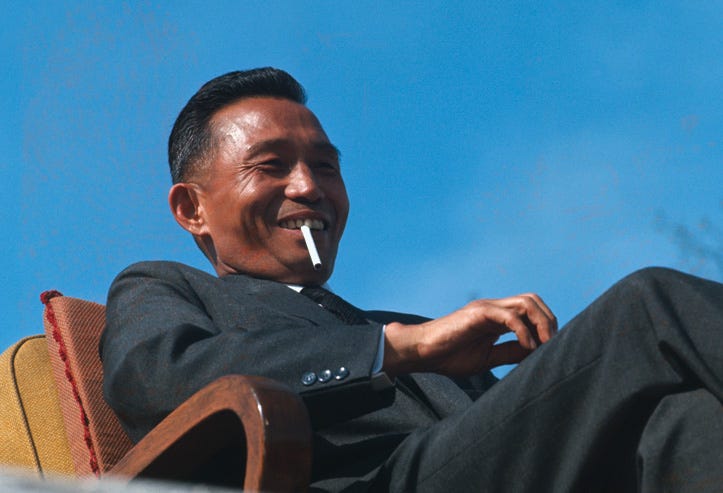
Then a general named Park Chung-hee took it in a 1961 coup and decided it would be rich, and ran it like a labor camp with an export quota until it was. He fed cheap state credit into a handful of family firms, told them what to build and how much to sell abroad, and jailed whoever objected. Hyundai laid the Seoul-to-Busan expressway in about two and a half years. The country built a steel industry over the World Bank’s objections and used it to build everything else. Extreme poverty fell from two-thirds of the population to a tenth in two decades. They call it the Miracle on the Han River, and it was a miracle in the older sense too, the one that involves a great deal of suffering and someone getting nailed to something.
Out of it came the word the place still lives by: palli-palli. Hurry-hurry. Compress two centuries of industrialization into forty years and speed stops being a strategy and becomes a temperament. The grandparents starved, the parents worked themselves grey, and the children inherited the speed without the famine that once justified it, handed instead a bill payable in anxiety, sleeplessness, infertility, and the worst suicide rate in the developed world. The general was shot at a dinner by his own intelligence chief in 1979. First, though, the country he built.
The most advanced memory chips on the planet. The phones in half the world’s pockets. The largest shipbuilders on earth, a car industry that started out copying Fords and now sells them back to Detroit’s customers, the music a generation of foreign teenagers learned the choreography to, the films that take the gold statues home (and on a personal note, Korean cinema up until recently has been the most underrated cinema of all). One country did all of that inside the lifespan of people who can still remember eating tree bark.
It came off one line. The wealth and the wound were milled by the same process, and the process does not sort its output by whether the world will admire it. The grandparents who starved and the parents who went grey at fifty built something that turns a human being into world-class product, and it cannot tell the difference between the kind of product that wins at Cannes and the kind that turns up face-down in a drainage ditch. It runs the same shift for both. The chip and the corpse share a supplier.
And the last thing the line learned to make, the export with the fattest margin, is the story of what the line costs. The country films its own grinding in clean 4K, sells the footage to people who will never once be fed into the gears, and the money comes home and oils the gears, which produces more footage to sell. Squid Game made Netflix richer, and Korea’s debt problem did not move an inch.
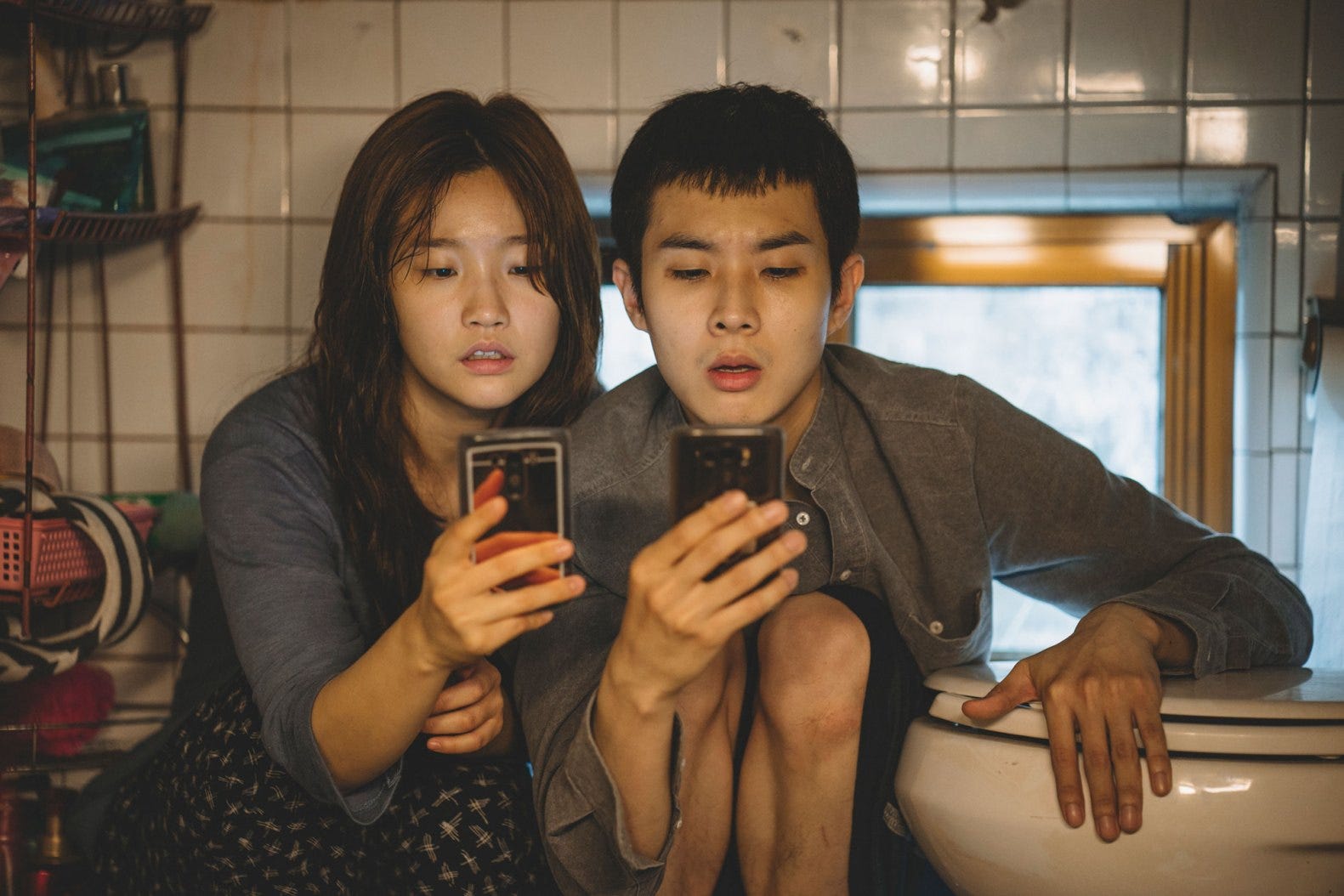
Young Koreans named their home “Hell Joseon”, after the old feudal dynasty of kings and bloodline castes. The place dressed up as a hypermodern democracy and underneath never stopped being a caste system. They have a word for the castes too, spoon theory. You are born a gold spoon or a dirt spoon, and the spoon decides almost everything. In the 1980s a worker could save a decade and buy a Seoul apartment. By the 2020s that apartment cost past eighteen times the average annual salary. They call themselves the N-po generation, the N standing for however many things you’ve given up: dating, marriage, children, a home. The fertility rate did what you’d expect when a cohort decides the deal isn’t worth it. It fell to 0.72 in 2023, the lowest figure ever recorded for any country in the history of the records, against a replacement rate of 2.1. The population is projected to fall from 52 million to 36 million by 2072. A country is choosing, with full awareness, not to make the next one.
Spend a day inside the pressure and you stop asking why.
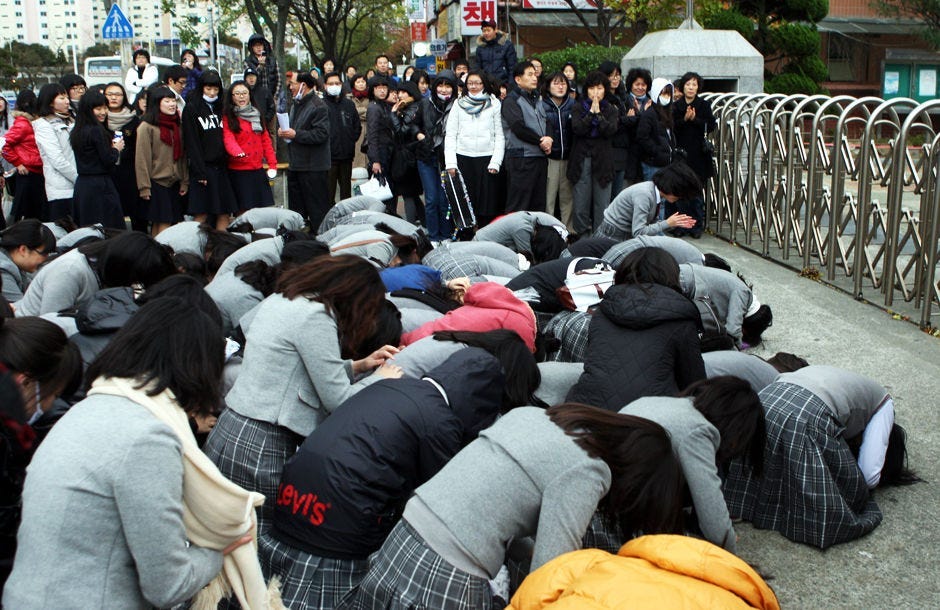
It starts with the exam. The suneung is an eight-hour national gauntlet held one Thursday every November, and the whole country reorganizes around half a million teenagers sitting it. Planes are grounded during the English-listening section so no engine noise disturbs the silence. The markets open late to clear the roads. Police run sirens to escort latecomers. Mothers pray in temple rows all day. Because the result genuinely does set the rest of a life: which university, which first job, which marriage, which caste your own children get born into. To get there, four in five kids spend their adolescence in hagwons, cram schools, often past midnight, the academy lights the last thing burning on the street.
And it works. The classic oriental centric assumption is that rote Asian education only makes obedient drones (China often used as a prime example), and Korea snaps that in half: the same grinder yields the most advanced chips on earth, a video-game industry that prints money, and a culture machine that out-exports countries ten times its size. Nobody quite knows why. But the cost shows up in the public-health data.
South Korea has had the rich world’s highest suicide rate for most of two decades, near 29 per 100,000, roughly forty deaths a day. In 2024 suicide became the leading cause of death for Koreans in their forties, overtaking cancer; it leads for every age group from ten to forty-nine; in 2022 it sat behind more than half of all deaths among people in their twenties. The despair is communicable, too. After the actress Choi Jin-sil died in 2008, the country logged about a thousand excess suicides the following month, and the bright glittering entertainment industry is one of its most efficient carriers. Sulli died in 2019 at twenty-five, after years of being shredded online for being outspoken, and the detail that ends any argument about whether this culture knows what it does to people is that she had been hosting a television show whose premise was celebrities reading their cruelest comments aloud, for entertainment. Six weeks later her friend Goo Hara died too, twenty-eight, harassed by the internet after an ex beat her and threatened to leak a sex tape, punished in the usual configuration for the crime done to her.

The body has to shine as much as the résumé. Korea is the plastic-surgery capital of the planet, the highest per-capita rate anywhere, a third of women aged 19 to 29 with work done. In Gangnam three of every four Seoul clinics cluster into a few blocks, a surgeon on every floor, the subway papered with the same wide-eyed, V-jawed, glass-skinned face advertising the chance to become it. Double-eyelid surgery is the most common procedure, and its modern technique was pioneered here during the war by an American military surgeon whose first volunteer was a Korean translator who believed looking less Korean would help him earn his American colleagues’ trust. The country’s signature operation was born from a man’s correct read that the new masters preferred a different face. It is now a graduation gift, handed to roughly one in seven graduates: welcome to adulthood, here is a better version of your head.
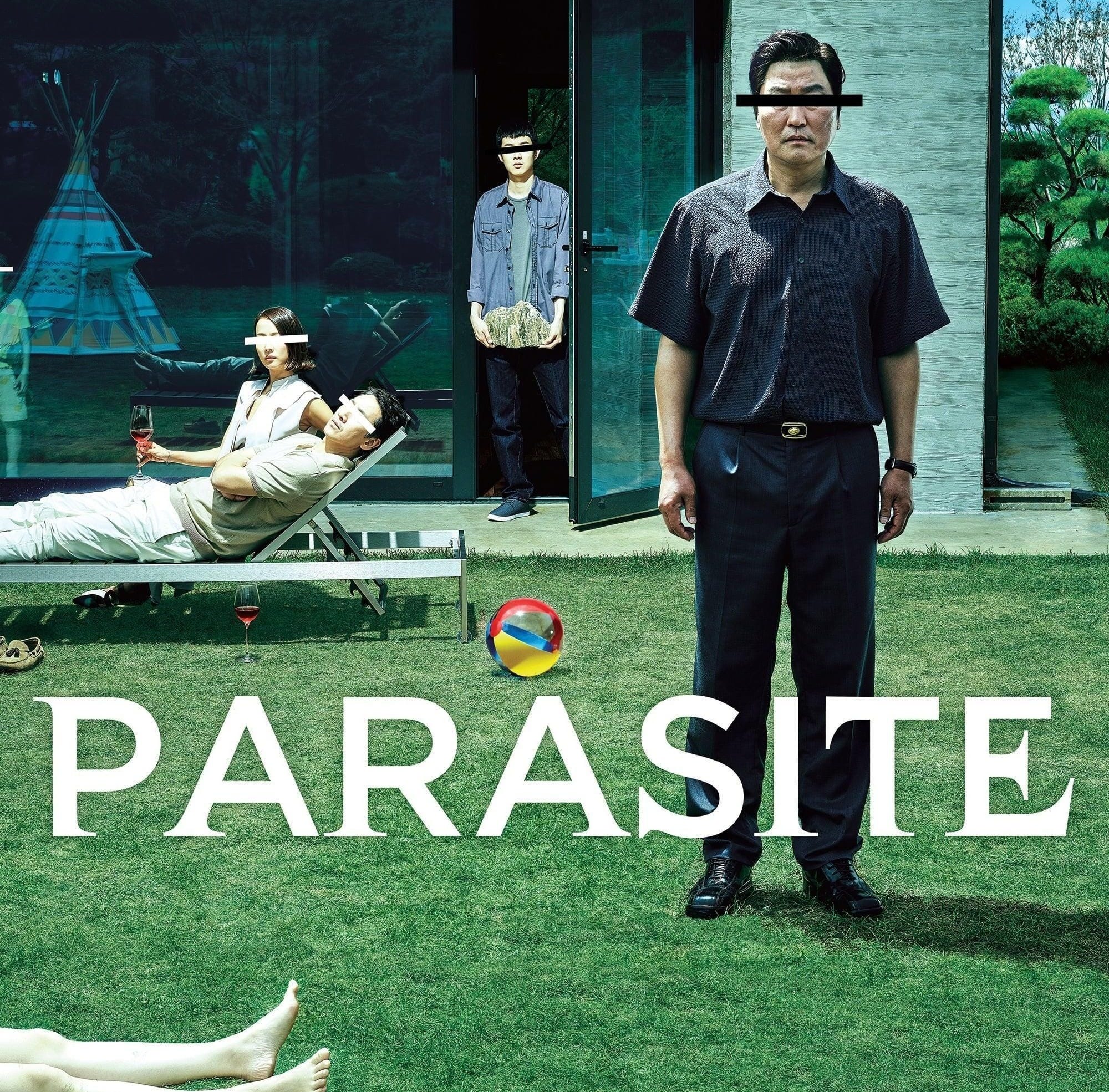
This is the texture the films are built from. The Kims in Parasite live in a banjiha, a half-underground semi-basement where you look up at the legs of passersby and a drunk relieves himself against your window. Their unwashable sin is a smell, old radish, boiled rags, the subway, and the daughter’s quietest line is that it will never come off, because it isn’t dirt, it’s class, worn in the pores. They can climb the stairs into the rich house and fake every credential and still not cross the one line that matters, the line the rich man’s nose finds without meaning to. He scrunches at the smell of a dying man, and the scrunch is what sets off the killing. In a coda too on-the-nose to invent, real Seoul floods drowned real banjiha residents in 2022, after the film had already shown exactly that.

In 2009 a college student went on a KBS talk show and said, on national television, that a man under a hundred and eighty centimeters is a loser. She used the English word, luser, and the country lost its mind for weeks. There were lawsuits. There were men of a hundred and seventy-nine being interviewed in the street about their feelings. The phrase entered the language. What is striking, looking back, is not that she said it but that nobody could quite pretend it was untrue, because Korean dating had already become a spec audit and everyone already knew the numbers.
Spec is the word, borrowed from hardware. A person arrives with specifications. Height, salary, the rank of the university, the size of the company and whether it is one of the chaebol or merely good, the parents’ assets, the apartment or the lack of one, and the face.
Frequent readers will see the parallels with my China essay here:
Dating apps and matchmaking agencies score these openly; the premium agencies assign literal grades and match within tier, gold to gold, and a man who wants to date above his grade had better carry a number somewhere that makes up the difference. It is the spreadsheet the marriage runs on, and nobody is embarrassed to read it aloud.
The face is a line item you can buy.
The apartment is the other line item, and it is the one that broke the whole arrangement. A Seoul flat now runs past eighteen times the average annual salary; in the eighties a worker could save for a decade and buy one. The man is expected to bring the home to the marriage and the woman the furnishings, roughly, and when the home costs eighteen years of a life nobody has, the math that used to end in a wedding just sits there refusing to resolve. So a generation read the spreadsheet, saw it no longer balanced, and walked.
The walking went in two directions, and they hate each other. The women organized first and hardest, into a movement called 4B, the four nos: no dating, no sex, no marriage, no children, with men, a sex strike dressed up as a life plan. The men went the other way, into a grievance that found its natural home in politics. In the 2022 presidential race the winning candidate, Yoon, the one who would later send helicopters at the parliament, courted young men directly by promising to abolish the Ministry of Gender Equality, telling them that structural sexism was over and that they, the twenty-something men who had to do the military service and could not afford the apartment, were the ones actually getting crushed. They voted for him in a bloc. Young women broke the opposite way by almost the same margin. The country had found its sharpest political line and drawn it straight down the middle of the bedroom.

A note on how deranged the front gets. In 2021 a convenience-store chain ran a promotional poster with a cartoon hand reaching for a sausage, thumb and forefinger pinched, and a section of the male internet decided the pinch was a coded insult about the size of Korean men, a hand sign supposedly used on a radical feminist forum, and the boycott that followed was large enough that the company pulled the art, apologized, and audited its design team for the women who must have done it. A hand. On a poster. For a sausage. This is a country that turned a finger-pinch into a national security incident while the real war was being fought somewhere much worse.
Because the women had a real grievance too, and in 2018 they put tens of thousands of bodies in the street over it. The protests were called, in plain English on the placards, My Life Is Not Your Porn, and they were among the largest demonstrations by women in the country’s history, and they were about cameras. Hidden cameras. The kind that live in a motel television, a public toilet, the frame of a pair of glasses, filming women who never agreed to be filmed, and the footage that gets sold afterward. They were marching because the surveillance had already won and the state had spent years treating it as a misdemeanour. They were right to march. It was about to get a great deal worse than anyone holding a sign that day understood.

On the third of August 2005 a twenty-eight-year-old man named Lee Seung-seop walked into an internet café in Daegu and sat down to play StarCraft. He was a boiler repairman, recently fired for showing up late too many times because he kept playing StarCraft, recently dumped by a girlfriend who also played. He got up only to use the toilet and to take short naps on a cot in the corner. Around the fifty-hour mark, on the fifth, he collapsed at the keyboard and died of heart failure, his body finally objecting to two days with almost no water and no sleep. He was not even the first. In 2002 a twenty-four-year-old in Gwangju had gone eighty-six hours and become, as far as anyone can tell, the first human being on record to die of playing a video game. Lee just had the better-known game.
To understand why a country produces men who will sit at a screen until their heart stops, you have to know what the screen was for. The financial crisis of 1997 gutted the place; the lifetime jobs evaporated, fathers got laid off in their fifties, the old contract where you handed a chaebol your whole adult life and it kept you to the grave quietly died. Into the wreckage came cheap broadband and a strange refuge: the PC bang, a pay-by-the-hour gaming café with snacks and cigarettes, where for under a dollar an hour a teenager crushed by the exam, or an adult crushed by the absence of work, could disappear into a science-fiction war game that Blizzard had not even bothered to translate into Korean. They bought it anyway, four and a half million copies in a country of fifty million. There were a hundred PC bangs in 1998 and twenty-three thousand by 2001.
Then the country did the thing it does to everything, which is professionalize the suffering. In 1999 a producer filmed a StarCraft match on borrowed ping-pong tables in an unused studio for three hundred dollars and put it on a cable channel, the first televised e-sports event anywhere on earth. Pro gaming became a real career with real salaries and real fame, and the pros trained the way the students study, twelve and fourteen hours a day in team houses, the same monastic grind that fills the cram schools, pointed now at a video game. It worked, the way the exam works. Korea simply became the best place in the world at this and stayed there for twenty years, and nobody is entirely sure why beyond the obvious, that a culture which can make children practice anything until they break can also make them practice until they are the best alive.
The grind does what the grind does. There were enough deaths in the PC bangs that the government eventually passed a law, nicknamed the Cinderella law, banning children under sixteen from online games between midnight and six, which is the kind of thing you legislate only after the bodies. The all-in instinct from the gambling tables leaked in too: the greatest StarCraft player of his era, who went by sAviOr, was banned for life in 2010 for fixing his own matches for gambling money, and a teenage world champion in the sequel, who played as Life, was arrested and convicted of the same thing in 2016 before he was twenty. The clean miracle and the rigged board, in the same boy.

At the very top sits the apex predator, and his story is the cleanest version of everything this country believes about itself. Lee Sang-hyeok, who plays League of Legends under the name Faker, is to that game what no single athlete is to any major sport: the consensus greatest ever, a player so valuable that when his team underperforms its share price moves. He dropped out of high school to go pro. And in 2023, at the Asian Games in Hangzhou, where e-sports was a medal event for the first time and gold came with the prize every Korean man actually dreams about, exemption from the eighteen months of military service every able-bodied man owes the state, Faker and his five teammates beat China and then Taipei and won it. Faker had the flu and watched the deciding match from the bench. He got the exemption anyway. A twenty-seven-year-old was excused from the army that every other man his age must serve, for being the best in the world at a video game, while sitting out the final with a runny nose. The state took one look and decided he was worth more to the country at a keyboard than in a barracks, which, on the numbers, he was.
Korean men do roughly eighteen months in uniform, and the service carries its own quiet body count, its own hazing deaths, its own conscripts who came home in a box or did not come home right, periodically a soldier bullied past breaking who takes others with him. It is the rite that turns a boy into a man and a man into someone with the standing to complain that the women never had to do it, which, as we have just seen, is now most of the politics. And it is only the first grind of the adult life. After it comes the job, in a country that spent years near the top of the rich world’s working-hours tables, where death from overwork has its own word, and where the truly brutal ritual is not the office but the dinner after it.
They call it hoesik, the company meal, and it is mandatory in the way that nothing is officially mandatory and everything is. The boss decides you are going. The soju goes around in rounds, the senior pours for the junior and the junior accepts with two hands and drinks, and the round goes again, and your willingness to be hungover and useless tomorrow in service of tonight’s bonding is read, correctly, as your loyalty. People have wrecked their livers and their marriages on hoesik. When the government finally capped the legal working week at fifty-two hours in 2018 it was treated as a radical labour reform, fifty-two, and when a later government floated pushing the cap toward sixty-nine the young workers it would have crushed revolted so hard it was shelved within days. The argument was only ever about the number: how many hours past fifty-two the company could take before the law would step in.

Korea runs on the chaebol, the family conglomerates that do not so much operate inside the economy as constitute it. Samsung, Hyundai, LG, SK, Lotte. People have called them octopuses since the sixties, a tentacle in every sector, and the word is exact. You can be born in a Samsung hospital, raised in a Samsung apartment, insured by Samsung life, schooled on a Samsung scholarship, employed by a Samsung affiliate, married in a Samsung hotel, entertained at a Samsung amusement park, and buried with Samsung money, without once leaving the reach of a single family’s holdings. Samsung Electronics alone is worth more than five times the next-largest company in the country, and Samsung affiliates together throw off something like a fifth of the nation’s exports. The chairman of Samsung has, for decades, been more powerful than the president, and ordinary Koreans long ago stopped pretending the company answers to the same laws they do. A president serves five years. The family is forever.
To see what the family’s product costs, look at the chips, the thing the world actually buys, the most advanced memory on earth, and then look at the people who made the early ones. In 2003 a high-school senior named Hwang Yu-mi took a job on a Samsung semiconductor line, bathing silicon wafers in chemical baths, dipping the components and breathing what came off them, benzene among it. In 2005 she started getting dizzy. The factory infirmary sent her to a hospital and the hospital found acute leukemia. She died on the sixth of March 2007, twenty-two years old, in the passenger seat of her father’s taxi on the way to the hospital.
Her father, Hwang Sang-gi, did not let it go. Samsung offered him around a billion won, close to nine hundred thousand dollars, to drop it, and he said no, which is not a thing most people in that country in that position say to that company. He found that a thirty-year-old worker on the same line had also died of leukemia. He went looking for the list of chemicals his daughter had handled, and the government form that should have carried it came back blank, because Samsung had withheld the list as a trade secret, which is the sort of detail a screenwriter would cut for being too on the nose. He spent eleven years on it. He founded a workers’ group that documented hundreds of cases of serious illness among semiconductor workers and dozens of deaths, most of them people in their twenties and thirties. A court finally ruled, in 2011, that the chemicals had caused or hastened the cancer, the first time an individual had won that kind of fight against a Korean conglomerate, and Samsung issued, years later, the apology you issue when you have already won everything except the story. Somebody made a film about Hwang Yu-mi. It had to change its title off a Samsung advertising slogan, and it opened on about a third of the screens it should have. The country that sells the world its cinema could not get a small movie about a dead factory girl into the theatres, because of whose factory it was.
That is the chaebol with the lights on. The version the world sees is glossier and somehow worse, because it does not even bother to hide.
In December 2014 a daughter of the Korean Air chairman, a vice-president of the airline, was served macadamia nuts in the bag rather than on a plate in first class, and it enraged her. She made the chief flight attendant kneel in the aisle and beg, struck his hands, and ordered the taxiing plane back to the gate to throw him off, delaying a full international flight because a snack had arrived in the wrong container. The judge who jailed her said she had treated the aircraft as her own private property and trampled human dignity. Her younger sister later produced a sequel, accused of flinging water in an advertising executive’s face during a meeting, so the family now owns both nut rage and water rage, a complete set. There is a Korean word for this, gapjil, the casual abuse of the person below you by someone who can switch your dignity off whenever it suits them, and the airline daughters are only its most famous practitioners. When the nut story broke, macadamia sales on a Korean shopping site jumped twelvefold inside a week. People bought the nut to mock her, and also, you suspect, because some part of the country wanted to hold in its own hand the actual object that had ruined a man’s evening for being on the wrong plate.
The families did not come from nowhere. Hyundai’s founder, Chung Ju-yung, started with a rice shop and an auto-repair garage and built a company that paved the country’s expressways and welded its ships, and in 1998, an old man by then, he loaded a thousand and one head of cattle onto trucks and drove them north across the DMZ into North Korea, a debt he said he owed for a single calf he had sold off his father’s farm as a boy to fund his escape to the city. A thousand cattle across the most militarized border on earth, to settle a sixty-year-old guilt about one. Lotte’s founding family spent the last decade tearing itself apart in a succession war fought across two countries at once, because Lotte is somehow both Korean and Japanese and the old patriarch could never quite decide which son or which nation got the throne. Daewoo, once the second-biggest of all of them, simply fell over in 1999 in one of the largest corporate collapses the world had yet seen, its founder fleeing the country for years before he came home to a fraud conviction and, in time, the pardon, because the pardon is the last chapter of every one of these stories.
Which brings it back to the throne and the prince. Lee Jae-yong, the heir to Samsung, the third generation of the bloodline, was convicted of bribing a president and her shaman’s daughter to smooth the corporate merger that locked in his control of the empire. He got thirty months. He served about eighteen. He was pardoned in August 2022 by President Yoon, who had once worked the very scandal as a prosecutor, on the stated grounds that the country could not afford to keep Samsung’s prince away from his desk.
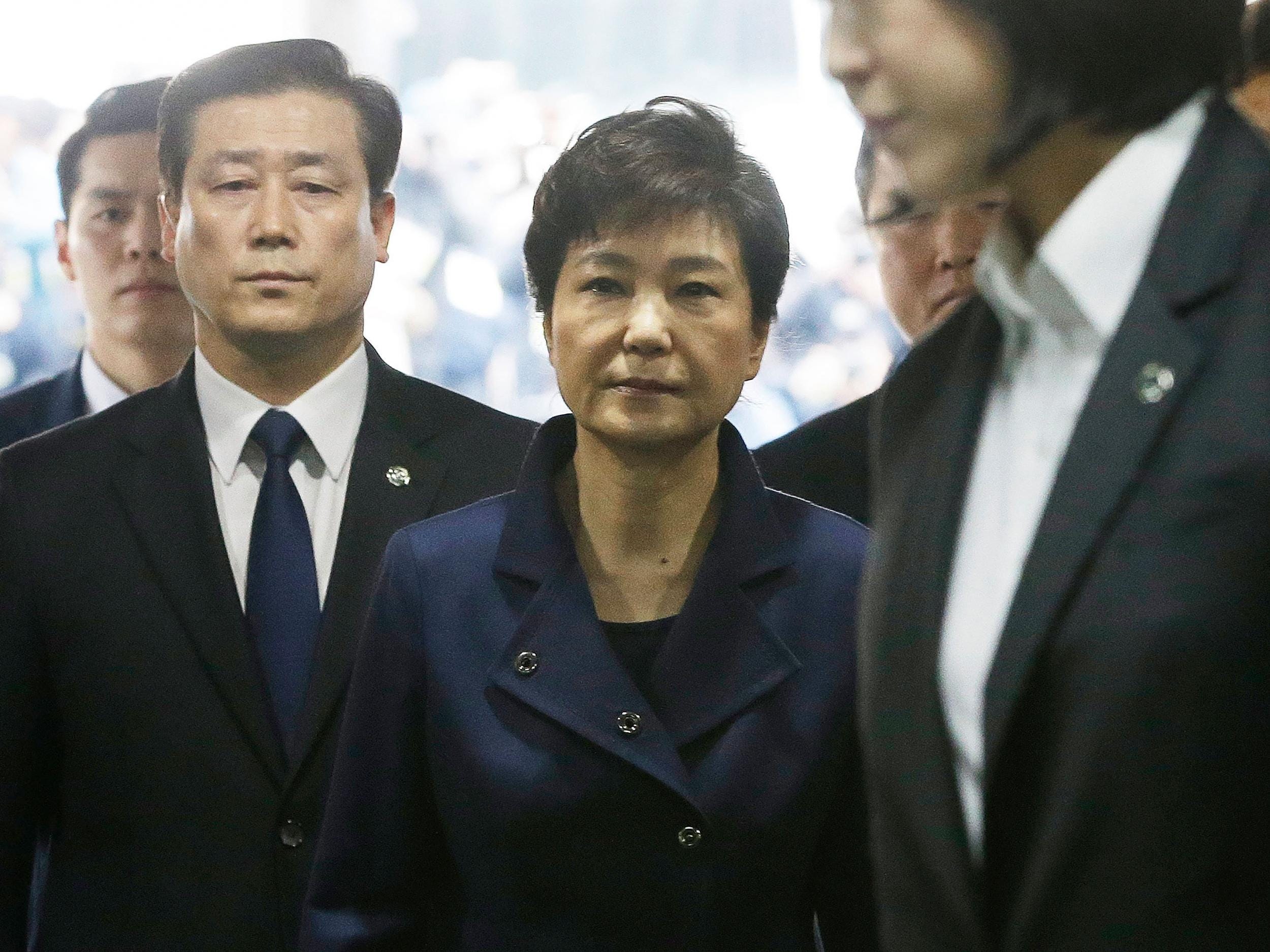
Make a list of the men (and women) who have run this country and what became of them. One was shot dead at a dinner by his own intelligence chief. One threw himself off a cliff behind his house during a bribery investigation, leaving a note saying he was sorry before his people. Two were convicted of treason, for a coup and a massacre. Two more went to prison for corruption. The most recent was sentenced, in February of this year, to life, for trying to seize the country live on television. A nation does not build a presidential graveyard like that out of bad luck. It builds it by being a place where power has always been something you either hold completely or answer for completely, and where the distance between the palace and the prison cell is about one election long.
Two of those stories are worth telling in full, because they are really one story.
The first is the shaman. Park Geun-hye was the daughter of the dictator who built the country and was shot at his own dinner table; her mother, the first lady, had already been assassinated in 1974, killed by a bullet meant for the father. Into the grief of the orphaned young woman stepped a man named Choi Tae-min, a self-styled spiritual guide with a church of his own invention, who told her that her dead mother was speaking to him in his dreams and that he could carry the messages. A leaked American diplomatic cable would later call him a Korean Rasputin who had achieved, in the cable’s words, “complete control over Park’s body and soul,” and noted that his family had grown rich in her orbit. He attached himself to her for the rest of his life.
So when Park finally became president of a nuclear-armed democracy, decades later, the person closest to her on earth was Choi Tae-min’s daughter, Choi Soon-sil, who held no government post and no security clearance and who, prosecutors established, edited the president’s speeches, read classified documents, and leaned on the chaebol to pour tens of millions into foundations she controlled. She used the access to bully a top university into admitting her own daughter through fraud, a scheme built partly around the daughter’s competitive horse. The whole thing finally unravelled over, among other threads, the wounded feelings of a man Choi had screamed at for failing to take proper care of her dog. Hundreds of thousands of people filled the freezing streets with candles, week after week. Park’s approval fell to five percent, the worst any president had ever managed. The legislature impeached her, the Constitutional Court upheld it eight votes to nothing, and she was sentenced to twenty-four years. She was pardoned in 2021, because why not?
In Philippines she would have been up for re-election, read about the absurd circus that Filipinos get to call their government here:
The second story happened while the candles were barely cold. On the third of December 2024, at twenty-seven minutes past ten at night, President Yoon Suk Yeol went on live television and declared martial law, calling the opposition-controlled National Assembly a den of anti-state criminals in league with North Korean communists. It was the first martial law the country had seen since 1980, declared in a democracy that had spent forty years building itself precisely so that sentence could never be said again. He sent soldiers to the parliament. They came by helicopter and tried to force their way into the chamber; the plan, the courts later found, was to physically stop the lawmakers from voting and to arrest the leaders of the opposition and of Yoon’s own party. And the country, watching it live on their phones, simply refused. People ran toward the building in the dark instead of away from it. Staffers stacked furniture against the doors. Lawmakers climbed the fences to get inside and vote. One woman was filmed grabbing the barrel of a soldier’s rifle with her bare hand and refusing to let go. Inside, a hundred and ninety legislators, some of them from Yoon’s own party, voted a hundred and ninety to zero to lift the order. The coup lasted about six hours and was beaten by a few hundred unarmed people who would not go home and a quorum that would not be frightened. No tanks were necessary, which is its own kind of national achievement.
He was impeached eleven days later, removed by the Constitutional Court eight to nothing in April 2025, and became the first sitting president in the country’s history to be placed under arrest. On the nineteenth of February 2026 a three-judge panel convicted him of insurrection and handed him a life sentence; the prosecutors had asked for death, and his own defense minister got thirty years for going along with it.
Set the two beside each other. A shaman’s daughter ran the speeches of a nuclear state from the shadows, channeling a murdered first lady, financed by the great family firms, and the loose thread that unspooled it was a neglected dog. A president tried to take his own country at gunpoint on a Tuesday night and was stopped by sunrise by citizens using their hands. The graveyard fills, the candles come out, the court votes eight to nothing, and a few years later the pardon gets signed and the meter resets. The directors who keep filming doomed, operatic, cult-tinged grabs for power have a problem the rest of us do not: reality keeps getting there first.
As I have already alluded to in multiple essays, for a long time, I played poker for a living.
If you are interested in some of my essays about it, you can find it here:
The first thing the job teaches you is that when a stranger sits down and you know nothing else about him, where he is from is the read you start with, a prior you lean on for the opening hands and throw away the second he shows you who he is. In my experience the Chinese money in Macau plays tight (this is a population sample in Macau specifically) and patient, grinding, risk-averse, waiting until a hand is basically already won before it commits a chip. The Americans play their egos, loud and aggressive, the bravado worn like cologne, every bet engineered to make you feel small. The Koreans I have sat across from are their own creature entirely. They gamble, and they gamble big. They will splash enormous pots and run the most baroque, deranged, gorgeous bluffs you have ever been on the wrong end of, and when it gets there they pick up the cards and slam them down like they’re driving a nail, because the slam is what they live for. The money is almost incidental. What they’re buying is the performance of nerve, the loud theatrical proof that they had the stomach to do it. The bluff is a hero shot. Losing the pot is the small part; the real message is that the man across the felt was willing to go down in flames, and you, with your sensible fold, were not.
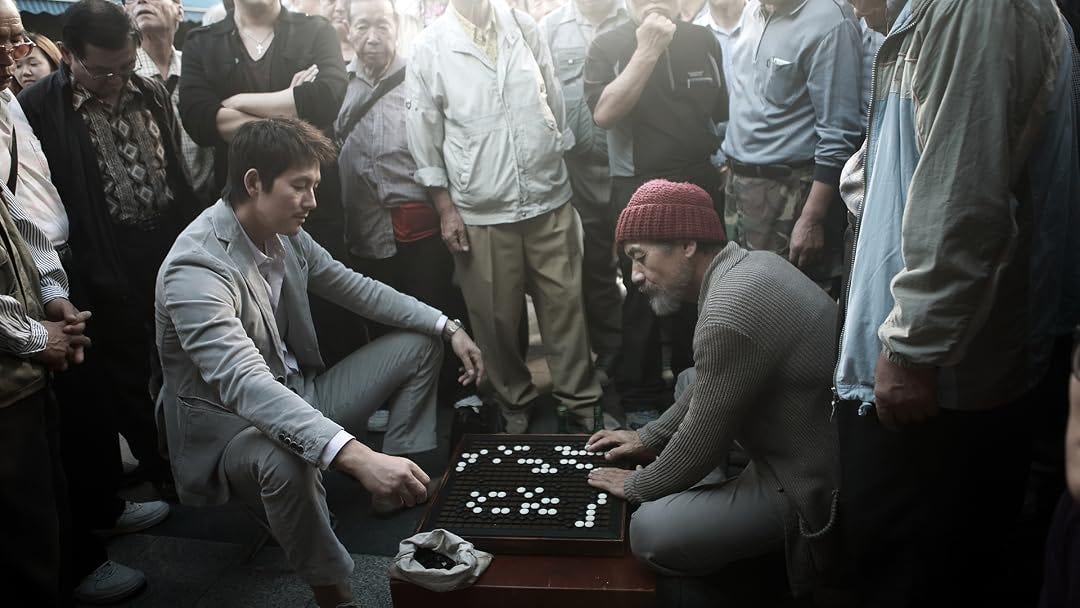
That player walks straight off the felt and into the movies. He is the lead in every great Korean gambling film ever shot, where the audacious, doomed, all-or-nothing bluff is the whole event, the verve and the drama and the story, and a man earns the title of man by the size of the bet he’s willing to lose everything on. Tazza: The High Rollers runs on hwatu, the flower-card game of thumbnail cards you can palm, and the stakes aren’t chips: the villain chops the right hands off cheaters, and the hero’s mentor turns up dead with his wrist sliced through. The Divine Move does the same to baduk, the board game the West calls Go, where the whole point is encirclement and patience and there’s a proverb that no stone on the board is meaningless, and then it drowns the quiet ancient game in underworld blood, because the game is also a thing men get killed over.
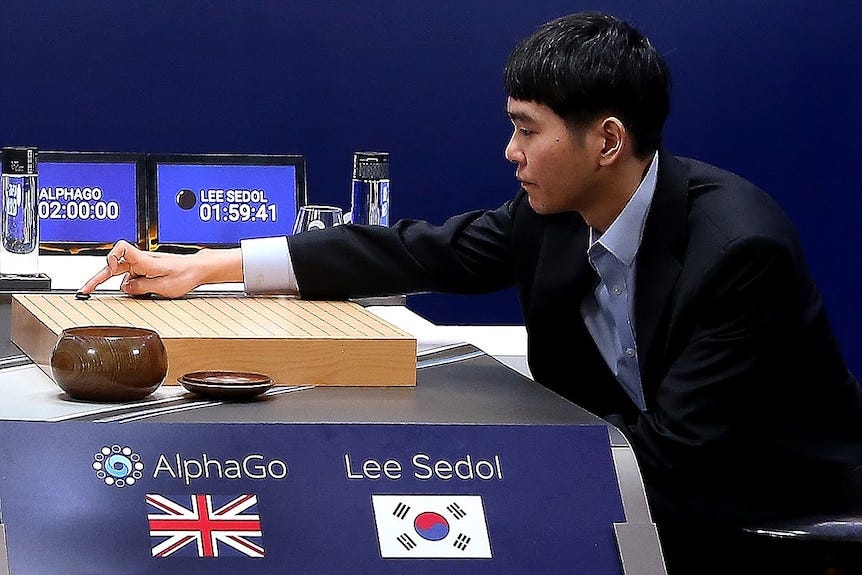
And then reality, which always finishes the screenplay, handed Korea its real divine move, and it is almost unbearably beautiful. In March 2016 the Go master Lee Sedol sat down across a board from AlphaGo, Google DeepMind’s machine, in a five-game match watched by two hundred million people. The machine destroyed him; it would end its public career at 74 wins and a single loss. That one loss is Game Four, where Lee, already beaten in the match, found Move 78, the wedge, the hand of God, a move the machine’s own systems had rated at something like a one-in-ten-thousand chance of a human playing it. It sat so far outside the model of how people think that the machine came apart trying to answer. A man losing to the cold thing that had eaten his life’s discipline in an afternoon reached past calculation and found the one transcendent, irrational move it could not have predicted, and won. Once. The only human victory in seventy-five games.
You could not design a cleaner parable. The machine, call it the system or the chaebol or the exam or the caste, wins 74 to 1. It is going to win. And the whole culture is organized around the dream of Move 78: the one impossible gesture that beats the rigged board. Give that dream a casino it can reach from a phone, and watch what happens.
The country knows exactly what this instinct does to people, which is why it forbids them from indulging it. Koreans are banned by law from their own casinos. There are more than a dozen on Korean soil and every one of them is foreigners-only, passports checked at the door, a Korean turned away from a roulette wheel in his own country. Every one but a single exception, and the exception tells you everything.
It is called Kangwon Land, and it sits up in the mountains in Jeongseon, in a dying coal town the government chose precisely because it was dying and needed something to put where the mines had been. It is the only casino in South Korea a Korean is allowed to enter, so it has become a place of pilgrimage for exactly the people who should never go near one. The town around it has rearranged itself to serve them. Pawn shops ring the place, windows full of watches and rings and car keys. There are loan offices, and motels that rent by the situation rather than the night. People sleep in their cars in the lot. There is a local mythology of the last stop, the gambler who arrives with a house behind him and leaves with a bus ticket, and the bus does run, back to Seoul, for the ones who still have the fare. The state built one room in the entire country where its citizens could ruin themselves at a table, put it in a depressed mountain county
Interestingly, there was a casino in Salzburg, Austria built on a clifftop overlooking the Town. The casino had to be moved down from the hill top after some time, for obvious reasons.
where the damage would be out of sight of the city, and watched the pawn shops bloom around it like fungus on a log. That is the official position on the dream of the impossible bet: legal in exactly one building, in the mountains, where you cannot see it from anywhere that matters.
Then the dream went digital and the building was everywhere.

Crypto hit Korea like a revival. At the peak Bitcoin traded so much higher on Korean exchanges that the gap got a name, the kimchi premium, over 50 percent in early 2018, held open by capital controls that made the difference impossible to arbitrage away. By the 2020s roughly 7.8 million Koreans, about fifteen percent of the population, were on the exchanges, and in early 2024 the won passed the dollar in global crypto volume, in a market that was overwhelmingly small retail money trying to win a way out that work could no longer buy. It produced its avatars. Do Kwon built an algorithmic stablecoin and a sister token called Luna, named his newborn daughter after it, and when the thing imploded in 2022 it vaporized some forty billion dollars and sent him running; he was caught at the Montenegro airport on a forged Costa Rican passport and got fifteen years in a New York court in December 2025, more than prosecutors had asked for.

And at the very top, the same instinct in its purest form: Bill Hwang, Korean-born, American, son of a pastor and a devout evangelical, who ran a family office called Archegos with maybe thirty-six billion in assets and a hundred and sixty billion in real exposure, the gap conjured from swaps that hid his leverage from the banks lending it. He bet enormous and unhedged, and when it cracked in March 2021 it came down in about ten days, one of the biggest single-investor losses in history, blowing a multibillion-dollar hole in Credit Suisse on the way to that bank’s grave. He got eighteen years. And the detail that ties it in a bow: his lawyers begged mercy on his faith and pointed to his foundation, which had given away north of six hundred million dollars to fight homelessness and trafficking. The leveraged bet and the religious tithe in one body. The all-in and the offering plate, both, he seems to have understood, expressions of the same faith: that if you believe hard enough and bet big enough, you transcend the board.
The worst of it is one body and one room. In 2022, after Luna went to zero, a family in Korea, a mother and a father and a ten-year-old daughter, went missing. Their car came out of the water off Wando Island. The parents’ search histories in the days after the crash were full of sleeping pills, tidal charts, and Luna. The gamble had failed, and in a culture that runs on shame and debt and lost face, the family did the thing the films keep showing. They took the child with them. That is where the dream of Move 78 actually ends: in a car going into the sea with a kid in the back seat and Luna in the browser history. The country knows what it is. It bars its own citizens from every domestic casino. Interestingly, it isn’t only Korea that bans its own citizens from their own casinos, Vietnam, Thailand, Japan (pachinko will need its own essay), China (with the exception of Macau, but even that has yearly visit limits) and other Asian nations go out of their way to prohibit or make it exceptionally difficult for their populations to gamble.
I have a really interesting essay that goes into a lot of detail about the psychology of all facets of gambling:
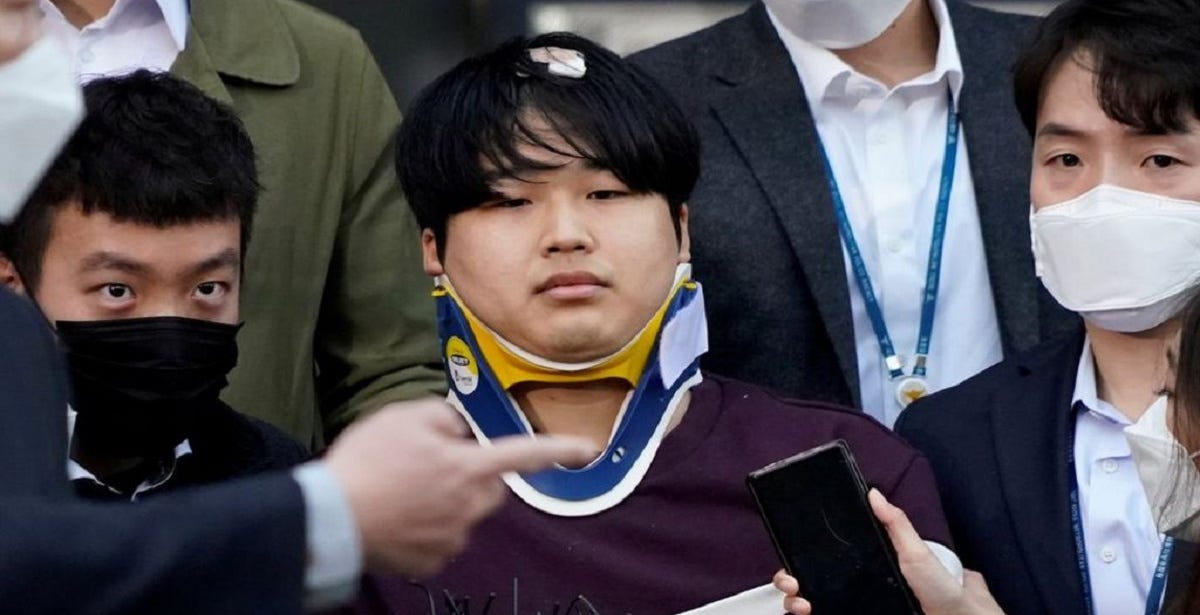
Between 2018 and 2020 a thing ran on Telegram that the country came to call the Nth Room, because the rooms were numbered, and the numbers were how you knew where in the catalogue of horror you had arrived. A university student who went by GodGod built the first ones. His method was patient and technical: he posted fake modelling and part-time job ads, harvested the personal data of the women and girls who answered, their real names and home addresses and families, and then used the data as the lever. Send me this, or your father sees what you have already sent. Send me worse, or your neighbours get your address. The data was the gun. The women were made to film their own degradation on command because the alternative he had engineered for them was the destruction of their entire lives.
A copycat who called himself the Doctor, Baksa, took the format and pushed it past where GodGod had stopped. He coerced victims into cutting words into their own skin. He posted their home addresses inside the paid rooms, so the men watching would understand that these were real girls, findable girls, and that the threat was not theatre. He called them his slaves and ran them in tiers, the price of entry rising with the severity of what you would be shown. The confirmed count came to at least a hundred and three victims. At least twenty-six of them were minors. The youngest were in middle school.
The men who built the rooms were two, and the rooms were never really the point. The point was the demand. The material was sold to as many as two hundred and sixty thousand Telegram accounts, narrowed by investigators to perhaps sixty thousand unique paying users, who paid in cryptocurrency, the same untraceable rails as the Luna mania running at the same time in the same country, the technology that was going to liberate everyone repurposed to meter out access to a child by the tier. Sixty thousand men, at the floor of the estimate, in a nation of fifty million, logging in and paying to be in the room. Call it what the numbers make it: a market with sixty thousand customers, and somebody had read the demand correctly.
The men who ran the supply were buried. The Doctor got forty-seven years, GodGod got thirty-four, nearly four thousand people were arrested across the investigation, average age twenty-one. The market mostly walked. When the broadcaster MBC went through the cases of three hundred and forty buyers, not a single one had gone to prison on a first trial. Every one drew probation or a fine, the judges citing first offences, college freshmen who had only just turned twenty, young men from good families with strong family ties and bright futures ahead of them. The same protective magic that floats the chaebol heir off his bribery conviction, working one rung down the ladder, on the boys who paid to watch. The country found its bottomless appetite for the footage, and then it found its reasons to forgive the appetite.
The rooms were the bright spike on a line that had been climbing for a decade, the spy-cam plague the women had already marched against. Molka, hidden-camera pornography of women filmed without their knowledge, ran from a few hundred reported cases in 2008 to well past six thousand by 2017, the perpetrators almost entirely men, and the courts treated it as barely a crime: a human-rights review found that around four in five people convicted of filming intimate images without consent walked away with a suspended sentence or a fine. The cameras lived in the hairdryer holder in the motel, in the screw-head on the public-toilet wall, in the lens disguised as a coat button. One ring broken up in 2019 had been livestreaming guests across some thirty motels. Then the technology improved again and the deepfakes arrived, hundreds of police cases by 2024, most involving teenagers, schoolboys generating fake pornography of their actual female classmates out of yearbook photos, and in 2025 a court handed down a life sentence to the man running the largest such operation yet, two hundred and sixty-one victims.
This is the war the women were marching about in 2018, before most of the country was willing to call it a war. The films understood it before the courts did. Korean cinema is full of sealed rooms and hidden basements and women turned into evidence: the cell where Oh Dae-su rots for fifteen years, the basement beneath the basement in Parasite where a man lives in the dark and the family upstairs never knows, the locked estate where the heiress is kept and watched in The Handmaiden. Nobody predicted the Nth Room. The point is that the rooms and the movies are drawn from the same water, the surveillance and the contempt for women and the way shame is the strongest currency in the country and can be loaded into a gun. The directors built the sealed room as a nightmare and won prizes for it. Sixty thousand men paid a subscription for the real one and went home to their strong family ties.
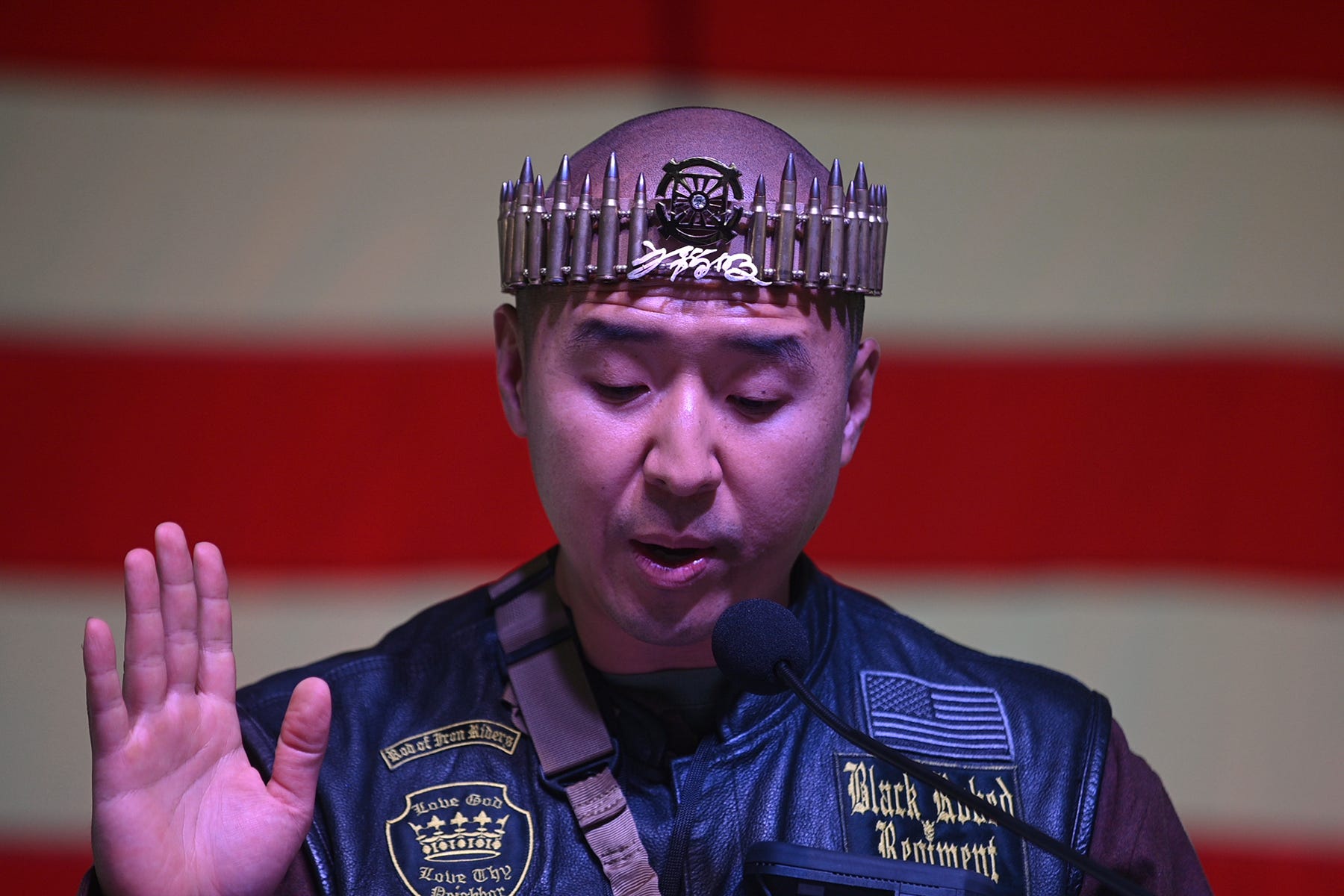
Korea is one of the most Christian countries in Asia, a quarter to a third of the population, and one of the world’s great exporters of missionaries, more than twenty thousand of them in nearly two hundred countries, a place missionized within living memory now doing the missionizing. Its largest church, founded in 1958 by a man who started with five people in a tent, grew into the biggest single congregation on earth; its founder was convicted of embezzlement in 2014 and never spent a night in prison. The pattern reaches even the pulpit.
The operatic part is where the cults touch power. The Unification Church, the Moonies, was founded in Korea in 1954, famous for stadium weddings of strangers, and burrowed deep into Japanese and American conservative politics for decades, and in July 2022 that obscure entanglement reached out and killed a Japanese prime minister. The man who shot Shinzo Abe did it because his mother had bankrupted the family donating to the Church, and Abe, in his understanding, was one of its most influential friends; his grandfather had helped plant it in Japan. A Korean cult founded in 1954 produced, seventy years later, the bullet that killed Japan’s longest-serving leader. And Shincheonji, whose founder claims to be the second coming of Christ, became the epicenter of Korea’s first COVID wave when a symptomatic member sat through packed services in Daegu in February 2020 and national cases jumped from around thirty to nine thousand inside a month. The pre-modern irrational doesn’t sit quietly under the hypermodern surface. It runs the speeches, picks the candidates, fills the chamber, spreads the plague.
There is a kinder version of all this borrowed influence, because the picture isn’t uniform. After the war, starving Koreans scavenged surplus American rations off the bases, Spam and hot dogs and canned beans, smuggled them past a government that treated it as a crime, and threw the salty processed meat into a pot with kimchi and gochujang to make budae jjigae, army base stew, now a beloved comfort food with its origin in hunger forgotten. That is the other Korean move, the one that doesn’t end in the sea: take what the masters left lying around, the eyelid surgery, the Spam, the Pentecostal church, the StarCraft cartridge, and make it so completely yours that within a generation you sell it back to the world. The same compression that produces the suicide rate produces the soft power. The furnace doesn’t only make corpses. The country that can’t stop killing itself is also the one that made everyone else fall in love with it.

Watch any of it with the sound up. Nine girls or seven boys in perfect synchronization, every hair in place, every smile timed to the half-beat, a flawless, frictionless three minutes of joy beamed to a hundred countries at once. It is the happiest-looking product the country makes, and the country makes it the way it makes everything, by feeding human beings in at one end and seeing what comes out the other.
The human being goes in at about twelve. The agencies, the big ones being SM and YG and JYP and the company that built BTS, scout children, some of them barely out of primary school, and sign them as trainees: years of singing and dancing and language lessons, twelve and fourteen hours a day in a company dormitory, evaluated on a schedule, cut without ceremony if the numbers do not move, with no promise of ever debuting at the end of it. A trainee can grind for ten years and never get a stage. The ones who do debut step out owing the company for all of it, the lessons and the wardrobe and the surgery and the rent, under a revenue split that hands most of the money to the agency until the debt clears, which for a lot of groups is never. The polished joy you are watching is being performed by someone who is, in the literal accounting sense, in the hole to the people who own them.

They signed it because they had no power to refuse, and the contract was built around exactly that. The Korean term for the thing is noye gyeyak, slave contract, a phrase that lives in actual court filings. The case that exposed it came in 2009, when three members of the boy band TVXQ took their agency to court over a thirteen-year deal that gave them almost none of what they earned and booked their lives without asking; the mere news of the suit knocked more than a tenth off the agency’s share price. After it, the regulator capped the contracts at seven years, which tells you what the ceiling had been before. The control the contracts bought was total in the way that only control over the young is total. Diet, monitored. Phones, taken. Dating, forbidden, sometimes for the whole first stretch of a career, because the product is a fantasy of availability and a girlfriend ruins the fantasy (and its even worse for the girl bands). One member of EXO, suing to get out, said the company had treated him “like a machine part,” an object of control. He was describing the job accurately.
The body is the part that gets managed hardest, because the body is the product. There are public weigh-ins. There are diets that amount to supervised starvation: one member of the girl group Twice has said an agency’s weight demand for a single photoshoot drove her to eat nothing but ice for close to a week. The look the world fell in love with, the glass skin and the impossible jaw and the waist, is a body kept at the edge of what a body will tolerate, by people who are paid to keep it there. Some of them are still teenagers while it happens.
In December 2017 a twenty-seven-year-old named Kim Jong-hyun, who performed as Jonghyun, one of the finest vocalists his generation produced, killed himself, and left behind a note about a depression that had been eating him for a long time while he kept smiling on schedule. In October 2019 Sulli, twenty-five, killed herself after years of being torn apart online for the crime of having opinions and not wearing a bra.
Manufactured by the same handful of buildings and consumed by the same audience that then turned on them. The industry holds a candlelight memorial, releases a tribute single, and signs the next twelve-year-old.
You may notice a lot of similarity to the Japanese Idol industry. I cover Japan In great depth in this essay:
The fans are part of how it works, and a fraction of them are a horror of their own. There is a Korean word, sasaeng, for the obsessives who tap idols’ phones, break into their homes, track their flights, sit outside their dormitories around the clock, and send gifts that range from disturbing to outright threats. To be an idol is to be owned at the top by a corporation and surveilled at the bottom by strangers who believe a contract entitles them to you, and to have, in between, almost no hour of any day that is actually yours.
The most honest thing the country ever made about this was a show it actually aired, a competition called Produce 101, where a hundred trainees performed and the public voted for which of them got to debut, the audience invited to literally produce the group. Then it came out that the producers had rigged the votes, faked the tallies, decided in advance who would win and sold the audience the feeling of choosing, and a producer went to prison for it. The most successful cultural form the country has ever exported is a thing called Produce, and even the producing was fixed.
BTS got so big that the National Assembly sat and debated whether the country could afford to lose them to the army for two years, which is a strange sentence to be able to write about a boy band, and a true one. They are worth billions to the place. And that is the whole trick in a single group: the country found a way to turn its own children into the most beloved product on the planet, the love comes back as money and softens the world toward Korea, and almost nobody buying the record ever has to think about the dormitory, or the weigh-in, or the note.
The single most successful thing this country exports is the footage of its own suffering, and the world cannot get enough of it.
The cultural exports run to around fourteen billion dollars a year. Netflix has committed billions to Korean series and films. For most of a decade now, the first thing a foreigner thinks of when they hear the word Korea is a pop song. And the most globally successful Korean object ever made is Squid Game, a show about people so crushed by debt, the same debt running under the apartment and the failed business and the bet that did not come in, that they agree to play children’s games to the death for a cash prize, because by their own desperate arithmetic the death game carries the better odds. The world watched a documentary about Korean economic despair with the gore turned up, called it the most fun it had had all year, and demanded a second season. The despair is the content. The unhappier the source material, the harder it sells.
Parasite took the Palme d’Or and became the first film in a language other than English to win Best Picture, and the West canonized it without quite hearing it. It is a film about a family that lives below the street and cannot scrub off the smell of being poor and ends the story worse than it began it. We gave the most furious possible account of why life at the bottom there is unlivable a gold statue, and went back to thinking of the place as good skincare and catchy songs. That is the trick the country has pulled, possibly without ever deciding to: it has learned to sell the beauty of its own despair to people who will never have to feel a gram of it. The glass towers are real and the half-basements that flood are real and the camera in the motel is real, and the towers are paid for, in part, by the global appetite for gorgeous stories about the basement. The grief at the centre of these films has a Korean name, han, that the scholars like to call untranslatable, and the country took the untranslatable grief and translated it into a product after all, and shipped it, at a markup.

Go back to the man with the octopus (Oldboy). His mystery has an answer, and what waits at the end of it is so much worse than the not-knowing that he pays to have it cut out of his own skull, choosing to live next to the horror as a man who no longer has to hold it. Bong’s Mother lands in the same place: a woman who has done something unspeakable to protect her son pushes an acupuncture needle into the spot in her own thigh that is supposed to dissolve a memory, and dances it out of her body on a bus full of strangers. These films barely care who killed the girl. They are about the cost of knowing, and the things a person will do to stop.
That is the deepest thing the cinema understands about the place that made it. A society shoved through five centuries in forty years, the colony and the war and the eighty dollars, the apartment that costs eighteen lives, the exam and the bought face, the forty suicides a day, the soldier who did not come home right and the girl in the numbered room, the shaman in the palace and the helicopters over the parliament, has an enormous amount it would be easier never to look at directly. The films are the one place it lets itself look. Two hours in the dark, watching the people lose to the thing that was built to beat them, watching the truth show up too late to help anyone, watching somebody reach for the one impossible move and miss.
The board wins seventy-four to one. Lee Sedol found Move 78 a single time, in a single game, as one man at one board, and even then he lost the match. There is no Move 78 for fifty million people at once, no single beautiful gesture that beats the rigged board for a whole country, no coin and no church and no all-in that does it. So the country keeps making the films, because the films are the closest thing to a winning move it has: it takes the thing that is eating it and sells the right to watch, and the watching pays for more of the thing. Somewhere a director with a camera and no use for happy endings has decided, like a man with a live octopus, that he can hold the writhing thing in his mouth and chew. The rest of the place sits in the dark and watches him do it, and for two hours it remembers exactly what it is, and then the lights come up and everyone files back out into the most beautiful, most terrible country anyone ever built, and buys a ticket for the next one.
No posts
Comments
Nothing yet. Say the first thing.
Sign in to join the conversation.