
It’s mid-march, which means it’s time to start some seeds!
We spent the depths of winter planning and dreaming in broad strokes. Reflecting on how the season went, what we want to do differently, from growing practices and lessons learned to marketing and distribution strategies.
As the days got longer, so too did our capacity for detailed planning. We began to guide our vague intentions into being through crop planning spreadsheets, seed orders, market applications, and grant writing.
And now we’re turning those plans into reality (and finally getting to play in the soil again).
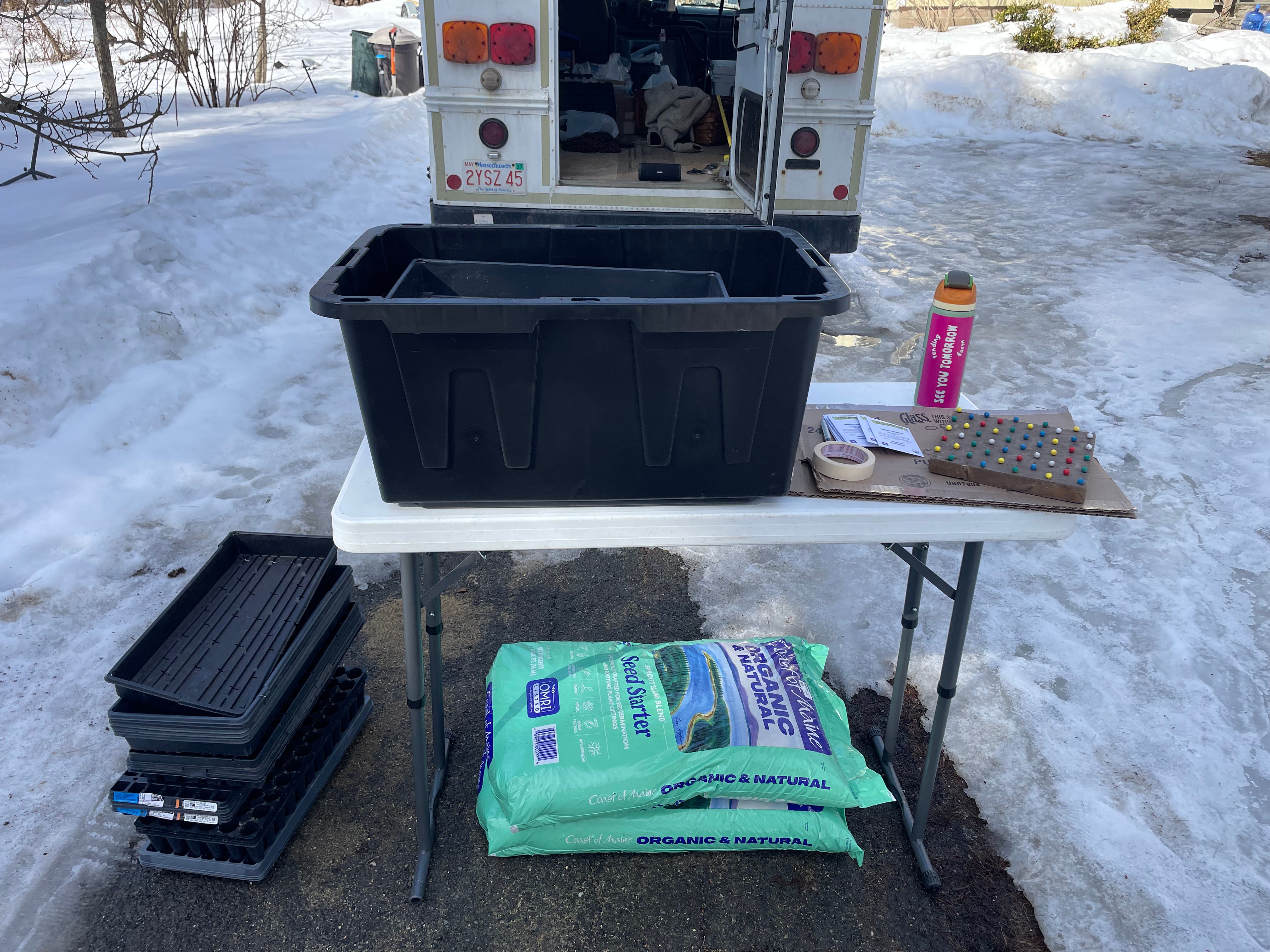
Last week was our first round of seeding. We planted leeks, onions, celery, and celeriac. The ground was still covered in ice and snow, though the temperatures were warm enough to warrant doing our work outside. We don’t have a fancy propagation house so it was easy enough to move our little makeshift seeding table outdoors.
As I plant these tiny leek seeds, about the size of a sesame seed but wrinkled like a walnut, I can’t help but marvel at what they will grow into in just a few short months.
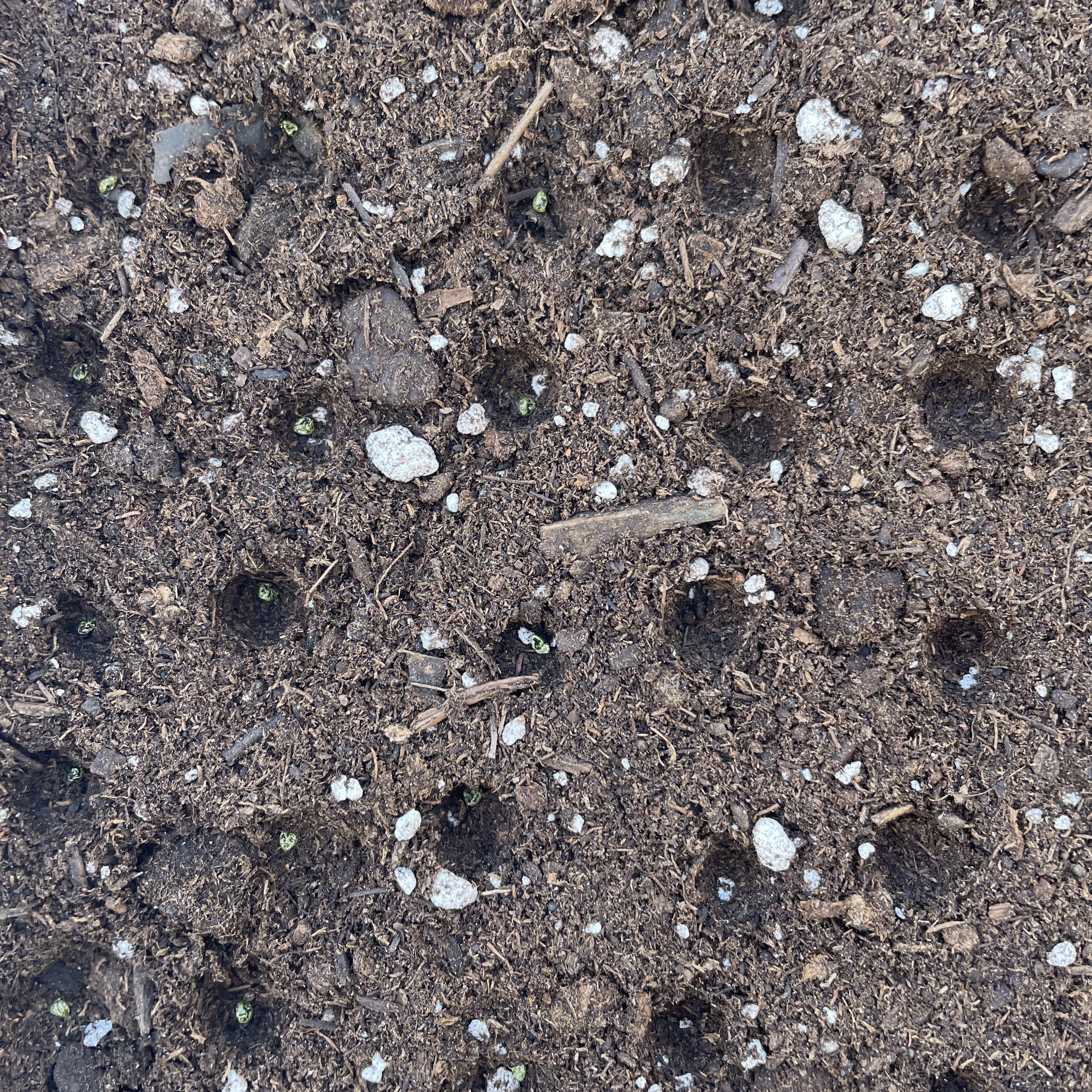
We primarily use trays called open flats to start our alliums. These trays are a standard size, and work well to hold twenty rows of ten seeds each. In the past, I’ve used a ruler to create straight channels that I then drop the seeds into. Because allium seeds are irregularly shaped, unlike brassicas which are beautiful little orbs, it’s tricky to keep consistent spacing within the rows. I don’t think it has had too much of an impact on our germination rates, but it has made separating the transplants when we bring them to the field a delicate and tricky operation.
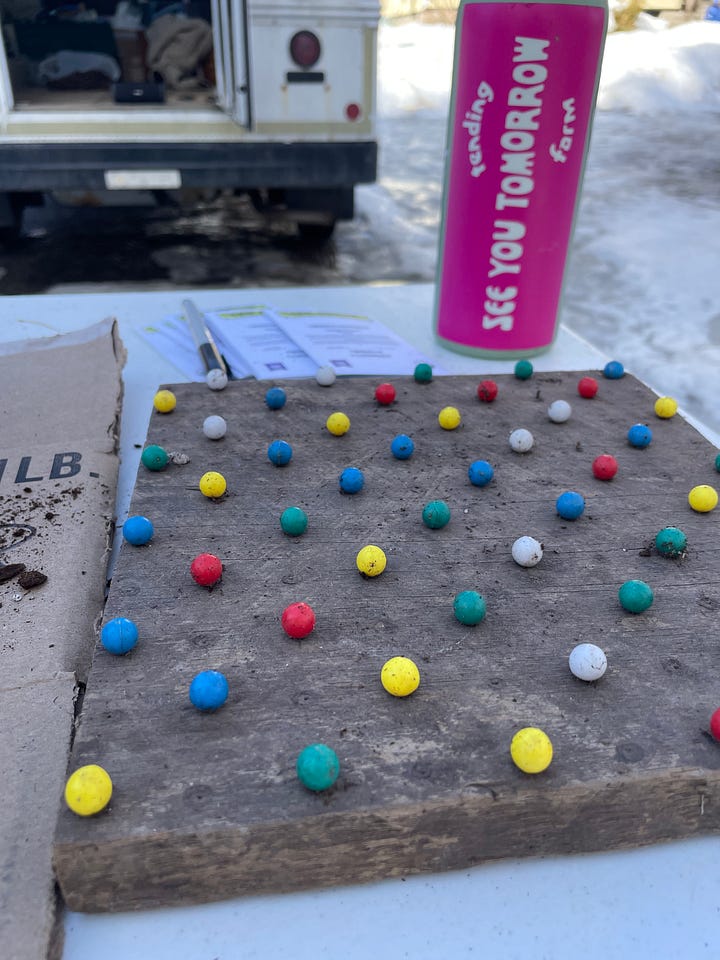
This year we were gifted this hand-me-down dibbler tool (dibbling is just a fun word for ‘making a hole for a seedling/seed’) and I am so in love with it. The rounded heads of the pushpins make perfect little nests for the seeds to drop into, and the regular spacing will give us more consistently sized transplants. I’ve seen the fancier plastic tools around, and used a different homemade one crafted from a hundred short dowels glued onto a board, but this design is so simple and easy to replicate with low material cost.
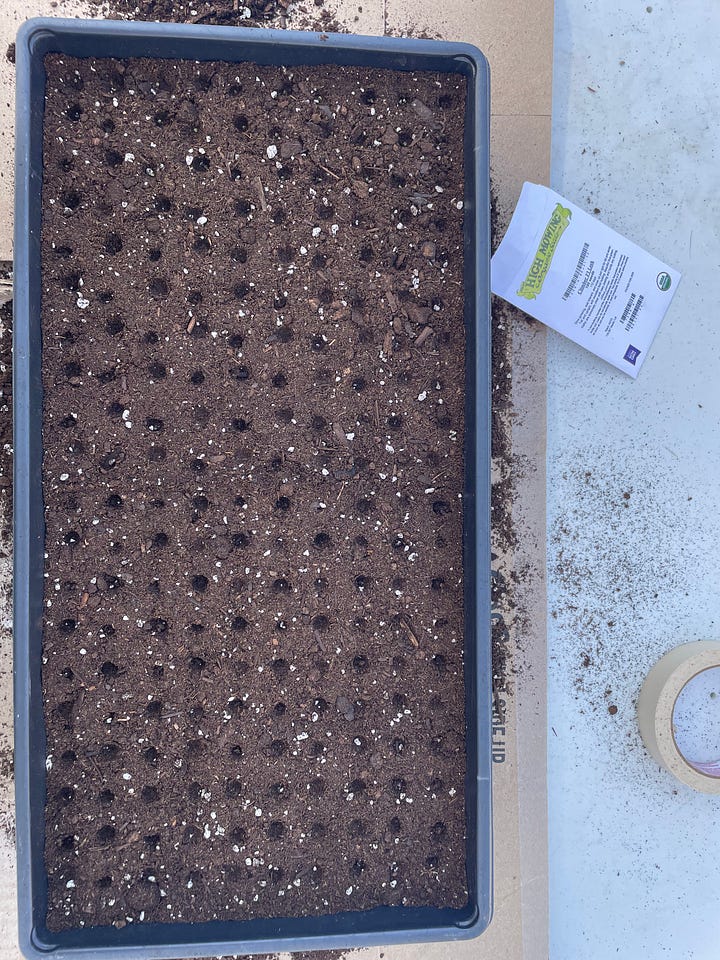
Space is always at a premium for indoor seed starting areas, and open trays allow us to minimize the total number of trays. This gives our seedlings a healthy growing habit despite the tight spacing, and leads to better overall seedling health and root development than in small cell trays (which generally contain from 50 to 128 individual cells). The downside, of course, is having to gently separate by hand when we take them to the field. Some crops, such as cucurbits, are more sensitive to this root disturbance, so for those we use cell trays, of varying cell size depending on the expected size of the seedling at transplant.
We also use cell trays for our bunching onions. For these little bunches we seed 3-5 seeds per cell. This makes it really easy when it comes time to plant a bed, as we’re able to plant one cell as a bunch. When you consider that we’re planting 400 bunches, for a total of roughly 1,600 scallions, per 50 foot bed, that makes a huge difference in efficiency!
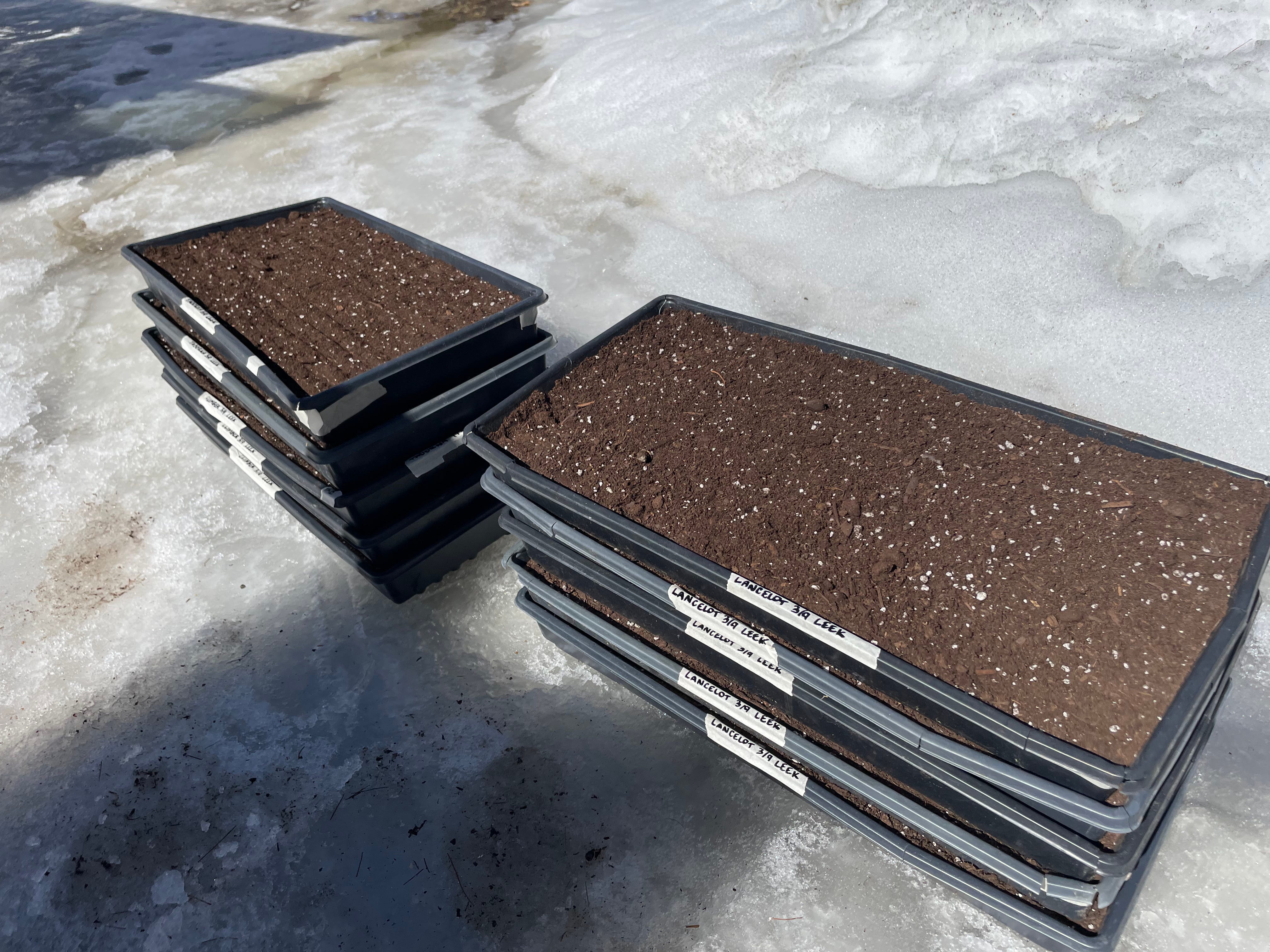
Ultimately though, we are working towards getting away from plastic as much as possible. To that end, I’m really interested in pursuing more soil blocking techniques. Soil blocking is essentially shaping our soil into cells using a tool (kind of like a cookie cutter) at the time of seeding. This way we get some of the benefits of cell trays - faster transplanting times - along with the benefits of less plastic and the healthier growing habits of open trays.
One of the challenges of soil blocking is getting the soil composition and moisture levels just right so that the blocks hold together. Currently, we mostly use Coast of Maine Organic Seed Starter, which is a fine soil for the way we’re currently working. But I do find a good amount of larger pieces (not fully broken down sticks and twigs mostly) which would make soil blocking with this material a challenge. Eventually, when we have a dedicated propagation space and can keep a closer eye on our seedlings, I’d love to start developing our own potting soil to meet our specific needs for the kind of low plastic and low input farming we are moving towards.
For now our system is working well enough, and I can’t wait for the next round (chard, kale, collard, second succession of scallions, and bedding down ginger)!
Leave a comment or send us an email with any questions about our process, your process, or anything else related to getting started growing!
No posts
Comments
Nothing yet. Say the first thing.
Sign in to join the conversation.