
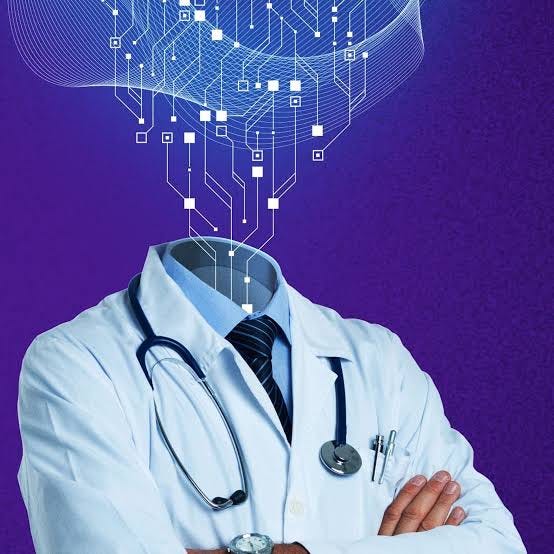
Earlier this week, Marc Andreessen, co-founder of Andreessen Horowitz, made a bold declaration:
“'Doctor ChatGPT is better than 99% of doctors.”
He went a step further, arguing that patients should welcome this development. In his words,
“Patients should really want this, if only so that their doctors can have all the information at their fingertips. No human doctor can read all the medical literature and keep up with it every year. Another issue is drug interactions. When people get older, they don’t tend to get sick with just one thing. They tend to have multiple different things going on, and then they get multiple kinds of medications, which lead to drug interactions that get complicated.”
I suspect Andreessen is largely right.
If AI can synthesize millions of medical papers, identify obscure diseases, and detect dangerous drug interactions more accurately than almost any physician, that’s a remarkable development — not only for patients, but for doctors as well. The physicians who embrace AI will likely become even better doctors. Those who resist it may find themselves at an increasing disadvantage.
But medicine is just the beginning.
The same dynamic is likely to play out across investing, law, engineering, accounting, education, software development, and countless other professions.
Which raises a much broader question:
If AI becomes materially better than humans at processing information, how do humans differentiate themselves?
Three things immediately come to mind. Ironically, none come from competing with AI. Instead, they come from complementing it.
A few years ago I wrote about a man who may have saved the world in a post titled “A Centaur Future”.
His name was Stanislav Petrov.
One night in September 1983, while serving as the duty officer for the Soviet Union’s nuclear early-warning system, Petrov received an alarming alert: the United States had launched five nuclear missiles toward the Soviet Union.
Protocol required that he report the attack immediately. Instead, Petrov hesitated.
His decision wasn't based on better data. It was based on better judgment. Five missiles didn’t make strategic sense. The warning system was relatively new. Ground radar wasn’t confirming the launch. So, instead of following orders, he trusted his intuition over the machine.
He was right. The alert was a false alarm.

Computer scientists have a name for this dynamic: Moravec’s Paradox. Humans and machines excel at different things. Machines excel at processing enormous amounts of information. Humans excel at applying judgment, intuition, and context.
If so, this means that the future likely isn’t humans competing against AI. It’s humans working alongside it. The best decisions will likely come from both.
If machines increasingly handle analysis, human relationships become even more valuable.
The best doctors won’t simply diagnose disease. They’ll explain frightening news with compassion.
The best lawyers won’t merely cite precedent. They’ll persuade juries and counsel anxious clients.
The best consultants and bankers won't differentiate themselves simply because they can build better spreadsheets. They’ll do so by building trust.
And the best financial advisors, as Ben Carlson recently wrote, will separate themselves through empathy, creativity, and meaningful communication.
Ironically, the more intelligent machines become, the more valuable distinctly human qualities may become.
One argument about AI has always struck me as incomplete. A bit lazy, in fact. Namely, the claim that AI will eliminate white-collar jobs.
Will it eliminate some?
Of course, but it will also eliminate countless hours of repetitive work.
I’ve been experimenting with AI for quite some time now. Tasks that once took me an hour often take just ten minutes.
The pessimist looks at that equation and sees fifty minutes of lost employment.
The optimist sees fifty minutes that have just been given back.
Fifty minutes to learn.
To create.
To build.
To meet with clients.
To think.
To solve bigger problems.
AI doesn’t automatically make us more productive; it simply gives us the opportunity to be.
What we choose to do with that opportunity is entirely up to us.
Every major technological revolution has changed what society rewards.
The Industrial Revolution rewarded physical labor.
The Information Age rewarded knowledge.
The AI Age may reward something different: judgment, empathy, curiosity, and the discipline to make better use of the time we’ve been given.
That sounds like an optimistic future to me.
Not because AI will replace us, but because it may remind us what makes us uniquely human.
Comments
Nothing yet. Say the first thing.
Sign in to join the conversation.