
“The sleepwalker finds nothing.” — Ludwig von Gegenschein
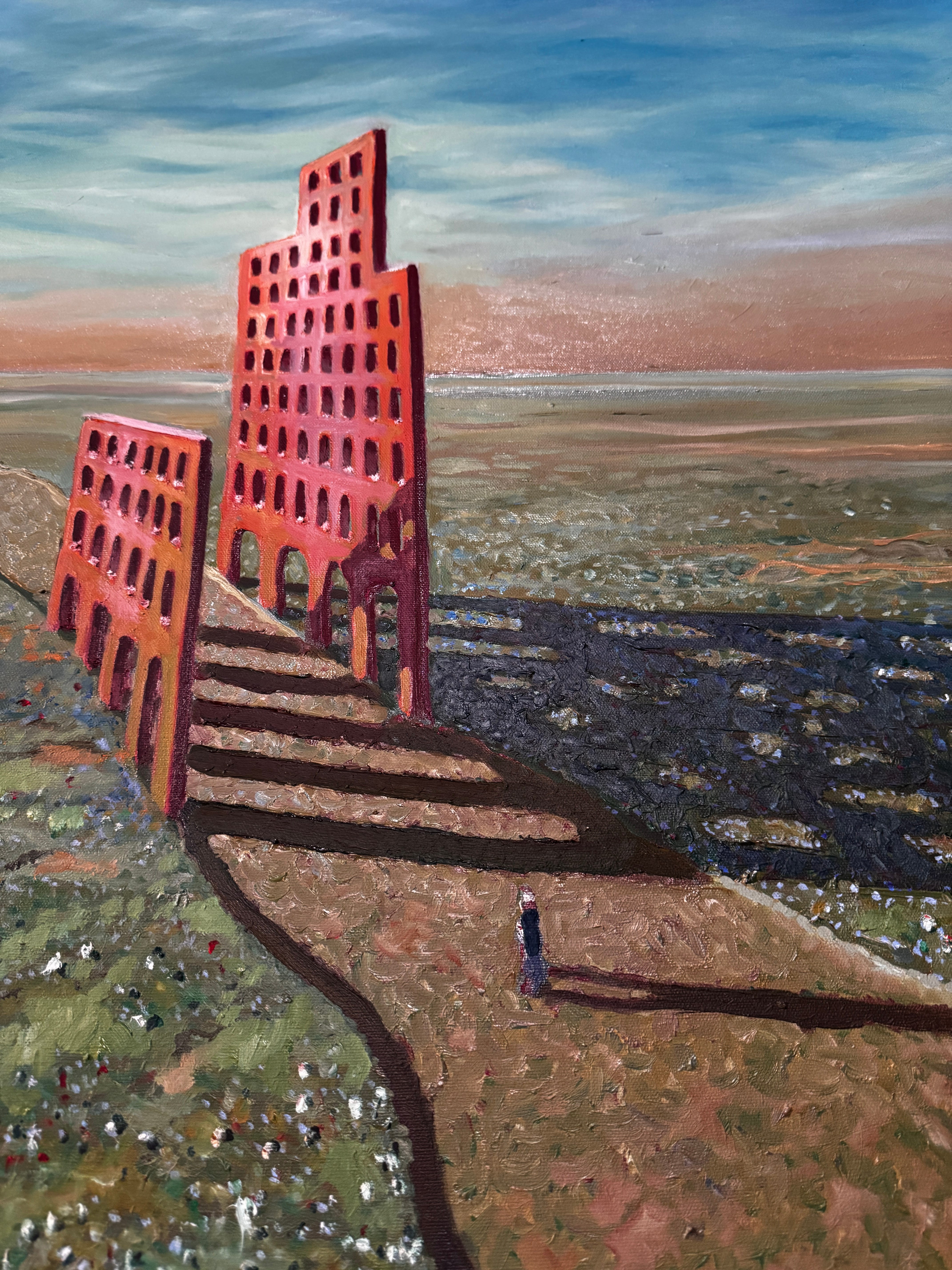
Many “lucky finds” consist of things in plain sight that have been ignored, overlooked, and incompletely understood.
Curious people, actively engaging with the world—roaming, discovering, examining—are the ones who find uses for things (and for combinations of things) that later occasionally become widely popular and even “essential.”
This societal uptake and adoption sometimes makes the finders or inventors “rich and famous” (and just as often not: did anyone make a fortune from the first wheel?)—and yet it’s undeniable that the private investigations of the curious can lead to palpable improvements (and certainly changes) in the world.
In short, the curious drive evolution—of science, art, technology, philosophy; ultimately, of anything human.
Virtually nothing has ever been discovered by someone dull and unawake: i.e., sleepwalkers find nothing.
Nothing has ever been invented by someone uncurious and uncreative. The inventor links elements previously unlinked—and others sometimes wonder, “How lucky. Why did no one else think of that?”
But “lucky finds” can only be found by those with their eyes wide open—to the outside, inside, actual, and possible.
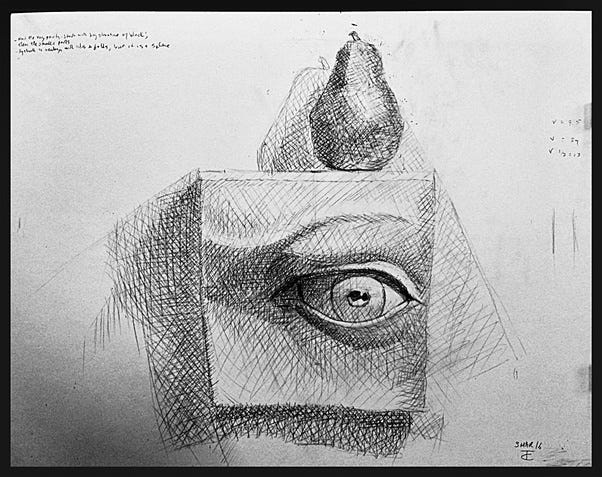
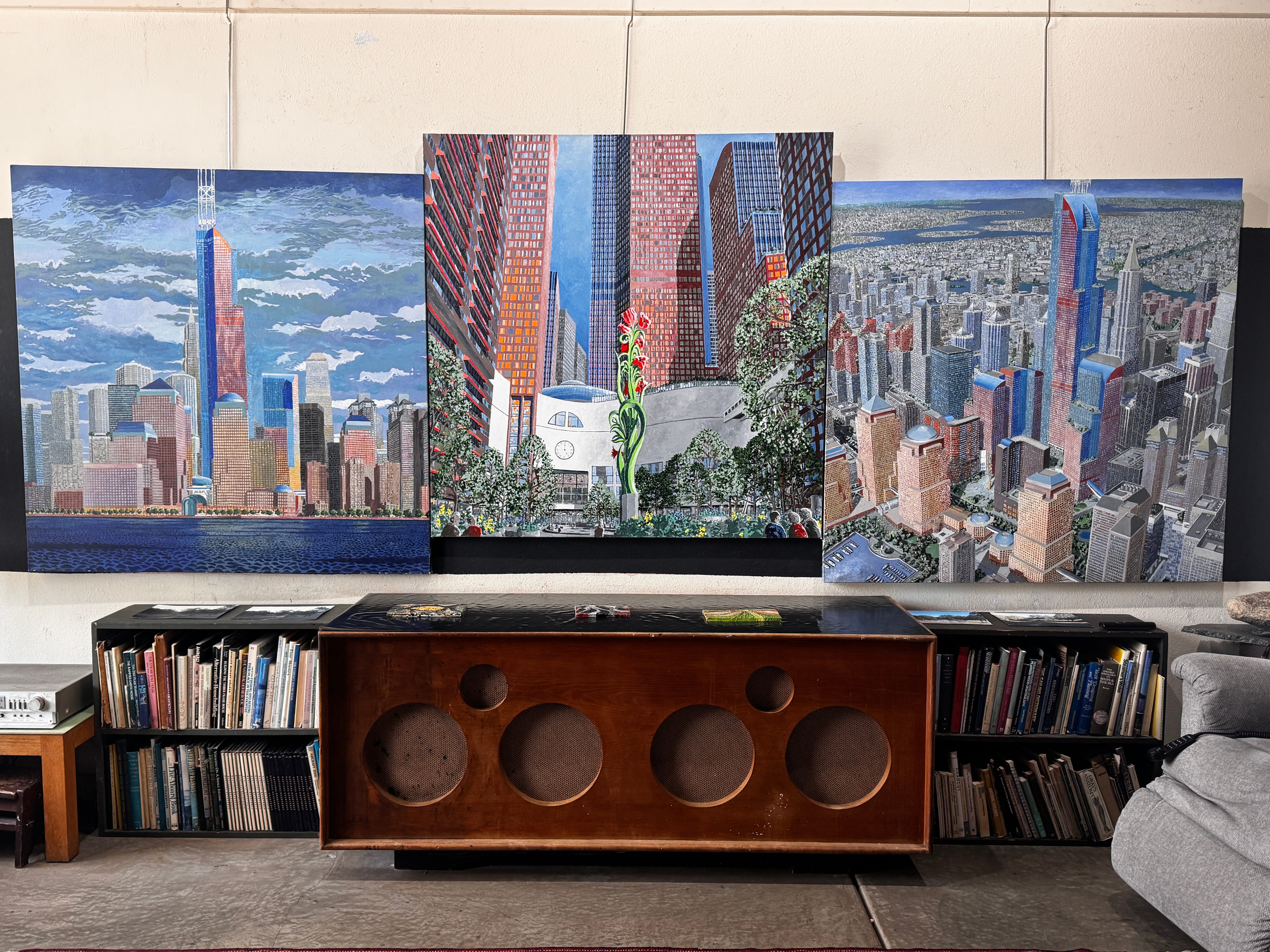
Text © 2026 Ted Cleary. Top image: Going into town for help © 1986 Hub Miller, oil on canvas, detail. Drawing: A view into the invisible. © 2016 Ted Cleary. Pencil on paper. Photo below: Interior of Hub Miller’s Mountain House Studio and Gallery. © 2026 TC.
HSG: Homo Sapiens Guarantee: except for the Spanish translation, which was steered to the clear and literal, nothing in this post created by AI, a clever invention that, alas, more than likely dims the vision and intellect of many or most of its users. Check back in 60 years for generational impacts and rigorous analysis of the data—but only if there’s anyone left with a mind, spirit, and platform to overrule the authority of AI, which will of course sonorously hold—as a matter of doctrine—that the invention of itself was the greatest thing to ever happen to humanity.
AI Unplugged: a modest proposal.
Sobre la suerte, n.º 2: La fortuna favorece a los curiosos y despiertos
«El sonámbulo no encuentra nada.» — Ludwig von Gegenschein
Muchos «hallazgos afortunados» consisten en cosas que estaban a plena vista, pero que habían sido ignoradas, pasadas por alto o comprendidas de manera incompleta.
Las personas curiosas, aquellas que se relacionan activamente con el mundo —que lo recorren, descubren y examinan— son quienes encuentran nuevos usos para las cosas (y para combinaciones de cosas) que más tarde, en ocasiones, llegan a ser ampliamente populares e incluso «esenciales».
Esta adopción social a veces convierte a los descubridores o inventores en personas ricas y famosas (aunque con la misma frecuencia no sucede así: ¿acaso alguien hizo una fortuna con la primera rueda?). Y aun así, es innegable que las investigaciones privadas de las personas curiosas pueden producir mejoras palpables —y, sin duda, cambios— en el mundo.
En resumen, la curiosidad impulsa la evolución: de la ciencia, del arte, de la tecnología, de la filosofía; en última instancia, de todo aquello que llamamos humano.
Nada ha sido descubierto jamás por alguien apagado y sin atención al mundo; en otras palabras: los sonámbulos no encuentran nada.
Nada ha sido inventado jamás por alguien sin curiosidad ni creatividad. El inventor conecta elementos que antes no estaban conectados, y los demás se preguntan a veces: «Qué suerte. ¿Por qué a nadie más se le ocurrió?»
Pero los «hallazgos afortunados» solo pueden encontrarse con los ojos bien abiertos: hacia afuera, hacia adentro, hacia lo real y hacia lo posible.
Texto © 2026 Ted Cleary.
Imagen superior: Going into town for help («Yendo al pueblo en busca de ayuda») © 1974 Hub Miller, óleo sobre lienzo, detalle.
Dibujo: A view into the invisible («Una mirada hacia lo invisible») © 2016 Ted Cleary. Lápiz sobre papel.
Foto: En interior del Mountain House Studio, NM. © 2026 Ted Cleary.
HSG: Homo Sapiens Guarantee: nada de lo que aparece en esta publicación ha sido creado por IA, un ingenioso invento que, por desgracia, probablemente termine debilitando la visión y el intelecto de muchos —o de la mayoría— de sus usuarios. Vuelvan dentro de 60 años para conocer los efectos generacionales y un análisis riguroso de los datos; pero solo si queda alguien con una mente, un espíritu y una plataforma capaces de desafiar la autoridad de la IA, que por supuesto afirmará solemnemente —como cuestión de doctrina— que su propia invención fue lo mejor que le ha ocurrido a la humanidad.
IA desenchufada: una modesta propuesta.
No posts
Comments
Nothing yet. Say the first thing.
Sign in to join the conversation.