
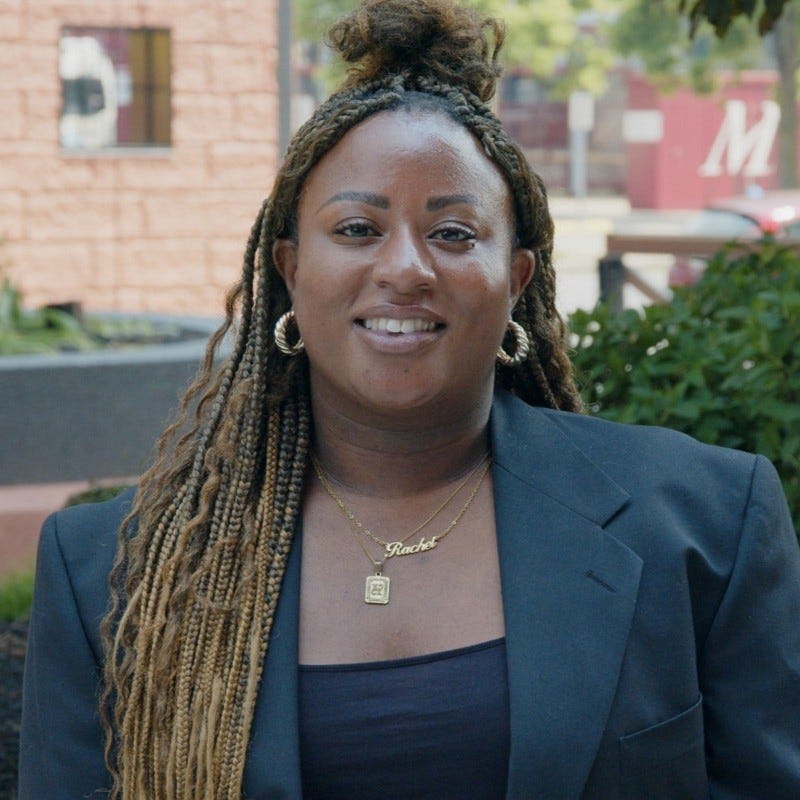
Rachel Eastlack has spent her career at the intersection of education, community, and opportunity — first as a social worker, and now as a program leader at TechBuffalo, where she builds pathways for students, families, and others who haven't always seen themselves as "tech people." Through initiatives like Family Code Night, youth navigator programs, and a K-to-Gray continuum of workforce development, she is helping reshape the Buffalo tech ecosystem and who gets to be part of it.
This episode also marks a milestone for TechXY Turbo — our first episode entirely guest hosted. The conversation was led by Juweria Dahir, whose warmth, curiosity, and deep community ties made for an extraordinary debut in the host seat. We hope this is just the beginning of her presence on the podcast, and we look forward to having her voice as a regular part of TechXY Turbo.
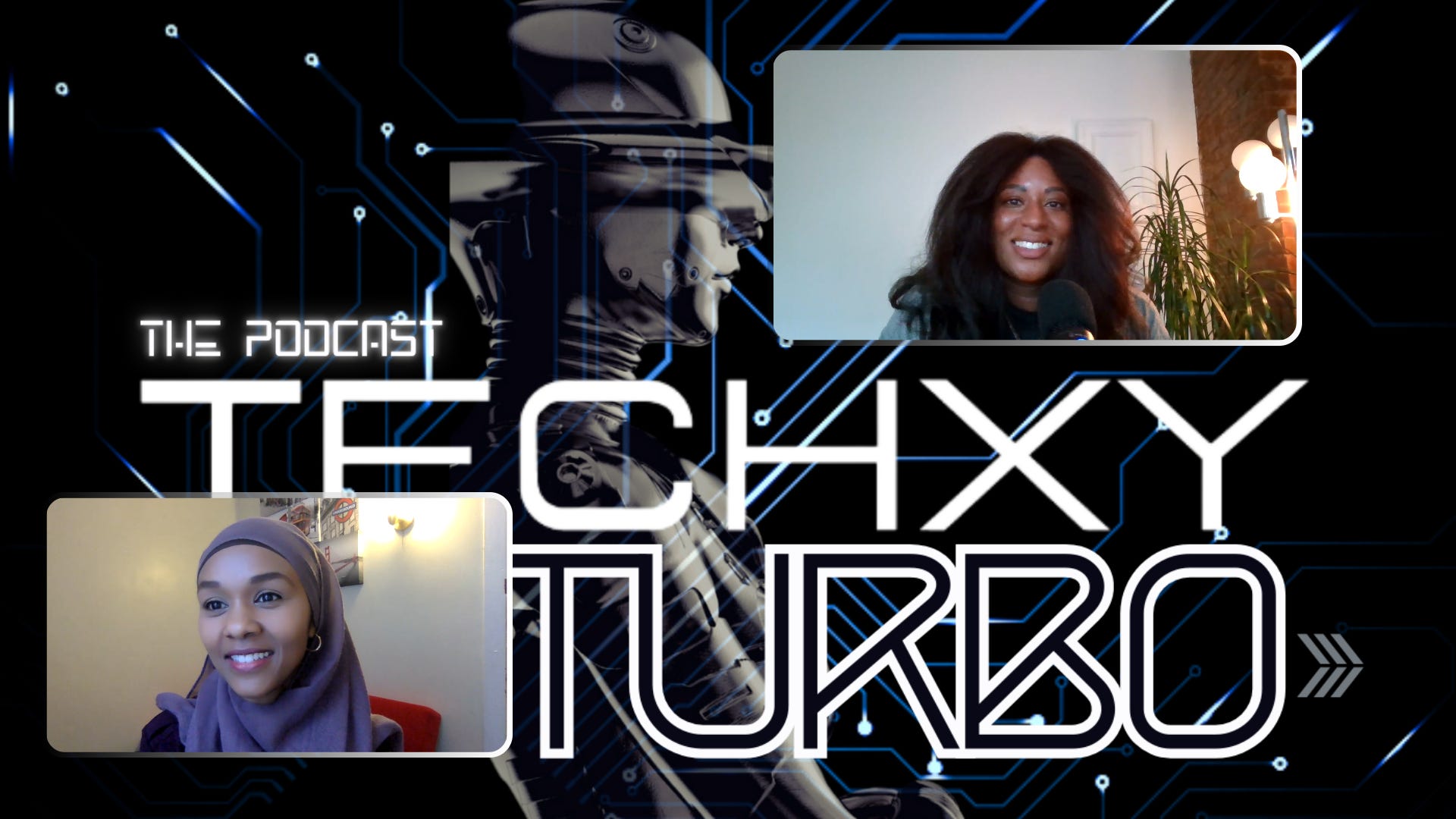
Listen to “Access Granted: A Conversation with Rachel Eastlack” below, or on Apple Podcasts, Spotify, YouTube, Amazon, Pandora, or wherever you get your podcasts. The episode transcript is shared below the embed.
Juweria: Good evening everyone, and welcome to another episode of TechXY Turbo. My name is Juweria Dahir and I’ll be your host for tonight’s conversation. For those of you who may be new to TechXY — TechXY is a platform dedicated to highlighting innovation and entrepreneurship, technology, and the people building meaningful impact across our communities.
Through these conversations, we aim to spotlight leaders, creators, and changemakers who are helping shape a more connected and inclusive future. Tonight’s conversation is one I’m especially excited about because it centers around community, family engagement, technology access, and creating opportunities for young people to grow into leadership.
I’m joined by someone whose work has deeply impacted families across Western New York through programming that makes technology feel accessible, welcoming, and incredibly empowering. Please join me in welcoming Rachel Eastlack from TechBuffalo. Rachel, thank you so much for being here tonight.
Rachel: Hi. Thank you so much for having me.
Juweria: Well, before we dive into the work itself, I always love just starting out with the person behind the mission. So Rachel, can you share a little bit about your personal journey and what led you into this incredible work?
Rachel: Yes, absolutely. My journey really started as a child — wanting to work within community, be in community, constantly talking and trying to connect with individuals. And really where that started career-wise was as a social worker. That is traditionally my background.
A big part of my journey has really been shaped by the belief that access changes everything. I’ve really been drawn to work that sits at that intersection of education, community, and opportunity — especially when it comes to helping young people and people of color really see what’s possible for themselves.
The work that I do now at TechBuffalo, I really get to work on programs that connect students and families and educators and employers in really tangible ways. A lot of that focuses on making tech accessible for families and communities, and really helping youth who don’t necessarily see themselves as that “tech kid” have an invite to that conversation and feel that they belong in that space.
Juweria: Wow. I really didn’t know that. I thought I knew you, Rachel. I’m learning a lot more.
Rachel: Well, yeah.
Juweria: You know, I think it’s always so powerful for people to understand not just what someone does, but why they do it. So I’m wondering, Rachel, if you can touch a little bit more on your identity and your lived experience — how has that influenced the way that you approach your work and the communities that you serve?
Rachel: Yes, absolutely. And I really love this question because you’re right — I think identity really shapes how we listen, the way that we build trust, and the way that we understand access. I definitely try to approach this work with a deep awareness that communities and identities have already been created, and that there’s a lot of brilliance and creativity within the communities that we create for ourselves.
My identity as a Black woman means that doors have not always been open for me and spaces haven’t always felt the most welcoming. So what are ways that the role I have can change that for somebody else? And what are ways to continue to help remove barriers and really build alongside people?
A lot of that comes down to people feeling like they belong and feeling like they have a space. So when I create programs, I want them to first be led with the fact that everyone is welcome and everyone belongs in this space — and that we will really try to make people feel invited and supported and know that they are very capable of succeeding.
Juweria: That’s amazing. I’m hearing so much intentionality behind all the work that you’re doing around access. But I want to touch a bit more on the family engagement piece. One of the things I’ve really appreciated about programs like Family Code Night is seeing entire families engage in learning together. What have you seen really happen when parents, caregivers, children, and siblings are all participating in tech learning as a unit?
Rachel: I think first and foremost, we see a barrier taken down. Childcare is one of the largest barriers that we have in our community. So when we started Family Code Nights, the intentionality behind it was: what is a way that we can bring digital literacy to the community while also removing some of those barriers? And of course, that meant providing an event where a family could come together.
We see students really engage. We see youth coming and really loving the programs and really being able to have the opportunity to show their parents or guardians what they’re interested in. And then we kind of see that parent light up when they see their youth doing well, or working through challenges and feeling supported in the room.
And then when they can see that this could be a potential pathway — that’s really what ends up being so exciting. Parents can see that not only for their children, but sometimes even for themselves. We’ve had adults who have joined different tech programs or pivoted in their careers, as well as students who have really been able to engage and find something that not only interests them but something they could potentially build a career from.
Juweria: Yeah, and it starts early on. You’re absolutely right — if they get the right exposure, it might just spark that interest. I’ve seen this personally because my sons have been part of your program, and I’ve seen firsthand the confidence they’ve gained through these experiences. We’re so grateful to you.
But I want to dig a little deeper. Is there maybe a particular story or an aha moment that really captures some of the impact of the work that you’re doing?
Rachel: Yes. And I want to say there are so many.
Honestly, one of them might be your sons coming as youth navigators. That’s been a really cool highlight. We did not start Family Code Nights with youth navigators — for a while it was just me and other adult volunteers. And as I started to see youth getting more interested, getting more familiar, really being able to fly through the content, I thought: why are we not having them lead? Why are we not asking them to take part in this?
And then being able to watch our youth navigators blossom — I remember the first session your sons came to. It was incredible to watch not only them, but the way they were received. Students were a lot more open to having them come over and help. And especially at the end, when your sons were reading off the names of the certificates after people completed it and saying encouraging words like “you did it, way to go” — that really stands out to me. Watching youth lead youth is something we don’t always give them enough credit for. Sometimes our youth can be our biggest teachers.
And then of course, just those parent interactions at the end of the night — when a parent comes up to me and says, “Oh my goodness, thank you. I didn’t know what my child was interested in. Thank you for giving me this time to connect with them on something they love doing. Now I know we can do this together.” Those moments really stand out.
Juweria: Yeah, you’re truly building trust. That’s incredible. And I didn’t know the youth navigators were something new — I thought you always had them.
Rachel: No, not the entire time. Your sons were the first, which is exciting.
Juweria: Well, it just goes to show that you’re evolving and letting the program organically grow in different directions, incorporating new elements, testing things out. That’s part of innovation. Kudos to you.
Rachel: Thank you.
Juweria: And reflecting on the confidence building and technical skills that developed through the work you were leading — my sons are now part of Buffalo Prep this summer, partnering with the UB School of Education, doing hands-on AI learning. And it was really because of the early exposure and experience with TechBuffalo. So thank you for cultivating that interest in them.
So going right into this next question — from your perspective, why is it so important to create opportunities for youth to not only learn but also lead?
Rachel: Because leadership changes the way that you think of yourself. It changes the way you see yourself. It gives you so much encouragement to know that you can communicate with others in really effective ways, and it allows you to take that opportunity from being the learner — to be able to shape what worked for you and turn that and give it back to somebody else.
There’s so much power in that, and in understanding that we don’t have to be older to be a leader. Children and youth are great leaders, and we can absolutely learn from them even in small ways. Giving youth opportunities while we’re still able to guide them — we’re still learning from them, and also helping them understand that the knowledge and skills they have right now have value and they are able to share that.
Youth leadership creates a different kind of learning environment. We’ve really seen a ton of success in it. Having students take what they’re learning and teach other people will ultimately only serve them even more as they get into the workforce.
Juweria: Yeah, thanks for sharing that. And I think the key word there is intentionality and inclusivity — not just across age brackets, but skill level, where people are coming from. You’re setting a stage where everyone can be successful and thrive.
You touched on this earlier — breaking barriers to tech. A lot of people still see technology as intimidating, or as something that’s just not for them. How do you personally and professionally challenge that narrative? And what are some of the biggest barriers you see when it comes to tech access and inclusion here in Western New York?
Rachel: I first like to say that I think I was one of those people at one point. Even now, working so close to tech, I always tell people I’m not a technologist — I am very tech adjacent. I use tech in my everyday life and I love what tech has given us in the community and the skills we’re able to build. But I absolutely understand that apprehension, that feeling of it being intimidating, because for so long we were taught that tech was one thing — that it was coding, and that it was something that was like, “oh, I can’t do that.”
So just even right away, breaking it down to something like a Family Code Night that’s gamified instantly removes that fear. Once you add in that it’s Minecraft, you have all these ages that are really excited about participating. So right away changing that narrative and making it feel human and fun and creative and connected — the first half hour of Family Code Night is eating pizza, some type of dinner, and taking the time to say hi to the people around you, and get familiar with what we’re going to be working on before we dive into the what the session will hold. Right then and there people start to feel more comfortable, like “Ok, I can do this.”
I think a lot of programs in Western New York can be successful doing that — incorporating creativity and connectedness. But there are still a lot of barriers. Unfortunately, there are still things around degrees and in the workforce what jobs require to get hired that we’re now realizing with tech might not really be necessary. It’s more about experience and exposure.
A big part of Family Code Night was even having devices — we didn’t want the organizations or communities inviting us in to have to worry about access to devices or inconsistent technology. So that was something we wanted to be able to provide. There are still so many places in Western New York that don’t have consistent access or infrastructure. And then lack of exposure — people don’t necessarily have anyone who looks like them coming in and talking about tech. That lack of feeling welcome in the space is still very real.
So what our programs really try to hit on is letting people see themselves in tech. Letting them understand that this is something they can do, that we can help them get access to, and that they’ll be good at it. Really lowering that barrier to entry is important. And our goal at TechBuffalo — and my personal goal — is to help provide people with the tools, the skills, and ultimately the support they may need to overcome some of those barriers.
Juweria: That’s amazing. And you’re absolutely right — there’s sometimes this stigma around what a tech person should look like, and automatically we make that assumption, and it’s usually male to begin with.
Rachel: Oh, absolutely.
Juweria: And then you break it down to female. And then you’re a Black woman. There are all of these other connotations. But really breaking through that and saying: tech is a tool. There isn’t a profile that fits into any of this. Very much similar to me — I don’t necessarily come across as a tech person, but I use technology in my day-to-day life personally and professionally.
By 2030, I think being tech savvy is going to be such a strong requirement in any field, regardless of industry. But touching a little more on that — when it comes to community and ecosystem building, the work you’re doing extends beyond the individual programs. It really is about ecosystem building. So how do you think about building a more inclusive and equitable tech ecosystem here in Western New York, and what are some things other leaders can learn from the work that you’re leading at TechBuffalo?
Rachel: Anything that is inclusive — especially something within a large ecosystem — has to be built intentionally. That’s something that I know can feel frustrating. Like, why aren’t we just doing this because it’s the right thing to do? I ask that all the time. And unfortunately, it doesn’t always work that way. There are so many layers. So first, having that intentionality has to be very present. And it can’t just be about creating more and more programs — it has to be about how you’re connecting those programs to people in ways that will ultimately change their lives, whether that’s providing a family-sustaining wage, a pivot in a career path, or access to education.
Here in Western New York, we have all of that. We have really great schools, training providers, employers, colleges, nonprofits — we have it all here. And we really do have that community piece. It just needs to be more of a thread, and more opportunities need to be given to people who don’t necessarily fit that traditional mold.
That also goes back to working younger. TechBuffalo for a while only worked within adult programming, starting at 16 plus. And now we’re realizing: no, this starts way earlier. Now we consider ourselves K-to-gray — we will work with you at a young age, we’ll work with you at an older age, because that thread is the most important part.
And really helping employers see that talent doesn’t always look like that traditional packaging. What are ways that as an employer you can expand — being more intentional about the individuals you hire and the work you’re doing in the community?
Our programs don’t exist without employers. So going to those employers and saying: what do you need people to have when they come work with you? And then building that into our Power Up College program, and building that into our K through 12 programming. That way we know those jobs will be available to people and they’ll be ready for them.
Juweria: That’s awesome. Rachel, for any of our listeners that have family members or friends in that K-to-gray range you mentioned — I love that term.
Rachel: K-to-gray.
Juweria: I’ve only heard “8 to 80,” so I love it.
Rachel: Oh, I like that too.
Juweria: There was another program that said: if you can inspire an eight-year-old and an eighty-year-old, it’s going to be successful. So K-to-gray is just as awesome. For any of our listeners who aren’t too familiar with TechBuffalo — or even listeners outside of Western New York — can you tell us a little bit more about TechBuffalo and the great programs they’re doing?
Rachel: Sure. TechBuffalo is a nonprofit organization working on building an inclusive, sustainable, and accessible tech workforce here in Western New York. Really, what we’ve been talking about this entire time is that we want to be that connector — for somebody in elementary school, somebody in college, somebody entering the workforce. We have programs at each of those points, really making sure that we are able to tie everything to the innovation economy and recognizing that Buffalo is a booming tech hub and tech city. We have the capabilities here. We want to keep the talent here, and recognizing that that growth and development starts at a young age. Really making sure that we’re able to help people connect all the dots at any point in their career or their journey into tech.
Juweria: Yeah, thanks for giving us that high level. So looking ahead — what are some of the things that really excite you most about the future of your work and the direction these programs are heading? And for a young person or even a parent listening tonight who may be curious about technology but not sure where to begin, what advice would you give them?
Rachel: I think I’m most excited to see the connections that are happening in schools translating to families and to industry — that all is starting to really become part of the same conversation, which I think is really important.
We’ve really been able to expand. Thinking about where Family Code Night started — I saw around 500 people in the first year. Now that we’ve expanded to our innovation fellowships and are able to actually support teachers who are running tech clubs and Family Code Nights in their own communities, we’ve already seen over 3,500 people move through programming.
I’m really excited to see people seeing themselves in tech here in Buffalo and really feeling like they don’t have to leave in order to achieve that. And I’m also just really excited to see this next wave of students — the creativity that comes when they have the tools and the invitations. This is the first generation being raised with AI and with so much accessibility. While that requires a lot of responsibility, I’m really excited to see what they do with it and how they continue to shape our community.
A future that matches the community we know Western New York has — it feels like we’re due. It’s bubbling up, it’s here. And what are ways that we can continue to propel it forward? That’s what people need to be asking themselves at every point.
Juweria: It’s possible. And it’s going to happen because you’re part of that work. Rachel, for anyone that wants to get in touch with you and learn a little bit more — how do they get hold of you?
Rachel: I would love that. Very open to coffee conversations and people staying curious. Definitely feel free to check out our website at techbuffalo.org and connect with me via email. Or invite us to come connect with your students — if you’re a teacher or administrator, we’d love that. And if you’re an employer, we can talk to you about Power Up Tech. There are so many ways we can connect and figure out what potentially would work best. I’m definitely available if people want to continue the conversation.
Juweria: Absolutely. And if you can’t get hold of her, get hold of me and I will get hold of her for you.
Rachel is in very high demand. But in all honesty, Rachel, thank you so much for taking the time to join us tonight and for sharing both your personal story and your professional story, and just the incredible work that’s happening here in Buffalo. I truly appreciate not only what you do, but the way that you create spaces where families, young people, and communities feel seen, welcomed, and empowered within technology.
And on a personal note, thank you for the impact these programs have had on my own children. We’re definitely going to keep you in the loop to see how they progress.
To everyone tuning in tonight — thank you for joining us for another episode of TechXY Turbo. We hope tonight’s conversation inspired you to think differently about technology, about leadership, about community, and about the power of creating access for everyone. My name is Juweria Dahir, and we’ll see you next time. Take care, everyone.

No posts
Comments
Nothing yet. Say the first thing.
Sign in to join the conversation.