
Welcome to Techno Sapiens! I’m Jacqueline Nesi, a psychologist, professor, and mom of three who, thanks to our sponsors at Light, is embracing a dumbphone summer! [But also, keeping my smartphone for emergencies 🙃].
6 min read
For most of high school, I had a flip phone. Its benefits were numerous: I could absentmindedly open and close it while waiting for the bus, I could use its tiny keyboard to send T9 texts1 to my friends and crushes, and, most importantly, I could dramatically snap it shut after an angsty phone call with my mom.
Those were the days!
In recent years, I’ve found myself getting curious about returning to that time. Not for the arguments about whether a mini jean skirt and baby polo tee2 were appropriate attire for winter—sorry, Mom—but for the experience of a more “minimalist” phone. What would it be like to go back to the days of dumbphones?
Sapiens, I decided to find out.
For the past month, I teamed up with Light, makers of the popular, intentionally minimal Light Phone. The Light Phone III has the following: calls, texts, maps, podcasts, music, camera, alarm, calendar, timer, notes, and hotspot. More important, though, is what it does not have: a web browser, email, social media, and all the other apps that tend to distract us.
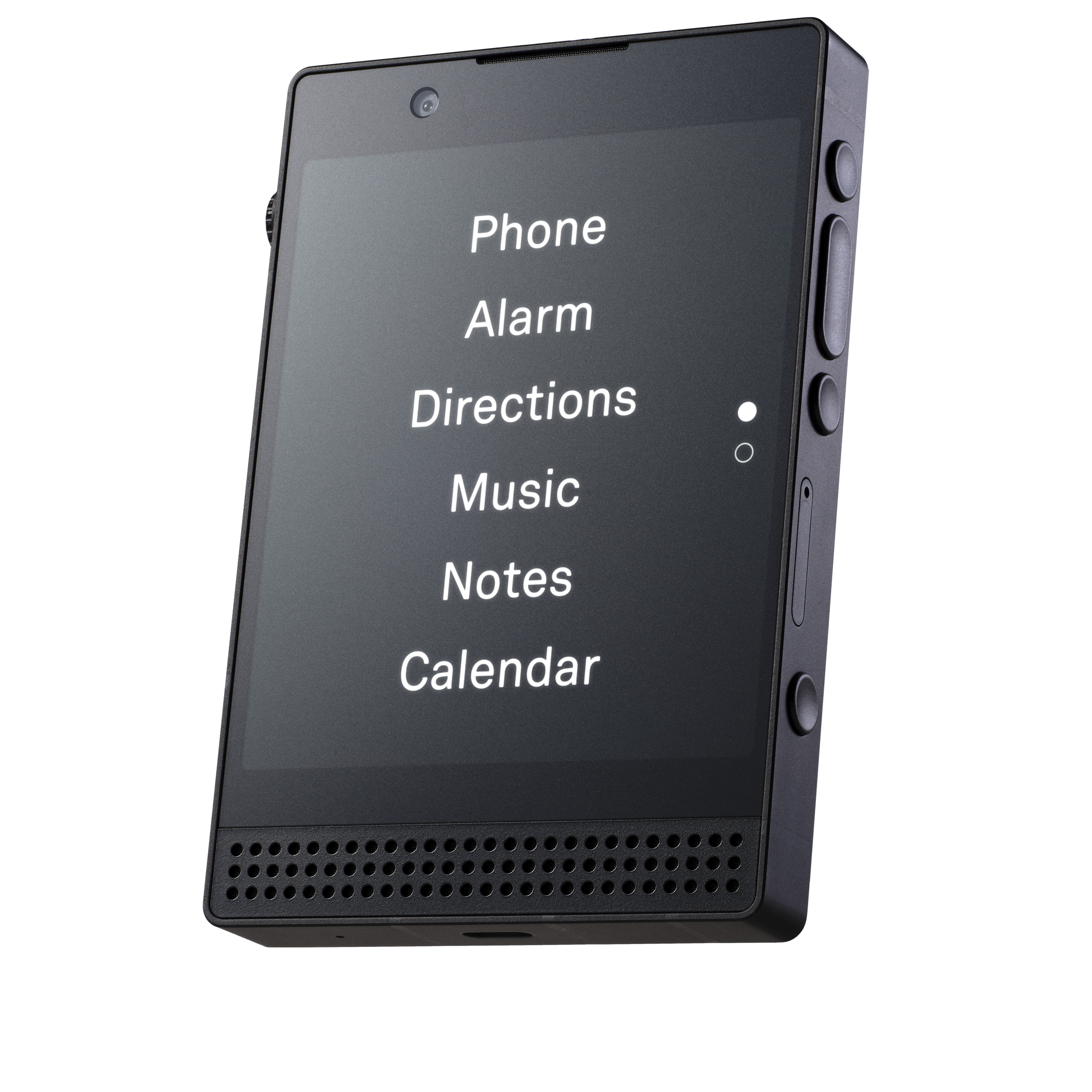
I tested it out, a few of our fellow sapiens tested it out, and we all came together to talk about it last week. So, how’d it go?
It wouldn’t be Techno Sapiens without a little research, so let’s start there. What does the evidence say about “dumbphones” or “minimalist phones” like the Light Phone?
To understand this, we need to look at the larger research literature on “digital disconnection,” or reducing some aspect of our technology use to improve well-being. You may remember that earlier this year, we discussed a helpful framework for digital disconnection.
The takeaway? There is a spectrum of potential disconnection strategies—from brief screen time limits to full-scale digital detoxes—and what works depends on who’s doing it, when, and maybe most importantly, why.
Earlier this year, researchers at Stanford published the results of a study specifically examining Light Phone use among college students. As with any traditional randomized trial, they randomly assigned some students to use a Light Phone and others to use their smartphones as usual. But they did something a little different, too: they also recruited a group of students who opted-in to using a Light Phone. These “high-interest” users saw flyers advertising free Light Phones and jumped on the opportunity.3
Participants used their Light Phone (or smartphone as usual) for one week, filling out four surveys during that time.
Here’s what they found:
All Light Phone users spent less time on their phone and social media
All Light Phone users also reported lower feelings of dependency on their phones, and greater agency or control over their use
There was no effect on positive emotions, feelings of productivity, social connection, or depressive symptoms
Only “high-interest” Light Phone users reported lower stress and higher life satisfaction
Here’s the takeaway: switching to a Light Phone had positive effects for all users, but it was most effective for those who wanted to do it.
It sounds obvious, but this is an important and consistent finding across the digital disconnection literature: we need to find strategies that work for us, personally. When we’re motivated to make a change—whether due to our preferences, values, or simply our capacity to try something new at the moment—it’s likely to be more effective.4
Maybe this research has you feeling motivated to make the switch to a dumbphone. If so, you might be wondering: is it actually possible? How do people survive in today’s world without a smartphone?
Well, thanks to our fearless fellow sapiens, who have tested it out and lived to tell the tale, we have some answers.
There were three basic approaches to using the Light Phone:
Some users (like me!) opted to keep their smartphone with the same number, and to get a different phone number for their Light Phone. They could then pick and choose: (1) who to give their Light Phone number to, and (2) when to use which phone (e.g., Light Phone for nature walks and quality time with family; smartphone for workday).5
Some users switched their number (and cell service) over entirely to the Light Phone. They kept their smartphone for emergencies—using Wi-Fi or the Light Phone’s hotspot when needed.
Other users fully took the plunge: switching entirely to the Light Phone and forging bravely ahead into a smartphone-free existence.
As we’d expect from the research, this varied a bit by person. A few users were too daunted by the set-up (and, in one case, the unfortunate co-occurrence of a baby’s sleep regression) to successfully make the switch. Others felt they’d need longer than a few weeks to notice the true impact.
For many, though, it was powerful.
Here are some of the experiences they described after making the switch:
Some felt freer, finally having the opportunity to separate themselves from their phones.
They talked about feeling more “connected to reality” or “present in the world.”
A few users described feeling good about the example they were setting for their children.
Some felt they had a new opportunity to think about how they actually spend their time.
One felt that, finally, they were “more present and engaged in real life as opposed to a screen.”
Another discovery from the experiment of “going light”? According to one tester, “it made me realize how the world wants you to have a smartphone.”
Smartphones are so embedded in our everyday experiences that living without one can take some creative problem solving.
I, for example, forgot that I rely almost entirely on Apple Pay, and a few times arrived at a coffee counter empty-handed.6 Luckily, this was easily solved by carrying a credit card or cash.
Here are a few other challenges and how users solved them:
Electronic boarding passes and tickets. Print in advance.
Live traffic updates while driving. According to one user, “I used my ears and eyes…and it worked.” Genius!
Public transit passes. Ask for a physical pass.
QR code menus. Ask for a physical menu, or ask a friend/family/stranger to look at the menu on their phone.
Uber. Third-party services allow you to text or call for an Uber. Or get a taxi.
Two-factor authentication. Use text authentication when possible. Ask your workplace if there are alternatives.
Daycare check-in/check-out. Make alternative arrangements with the school.
Other parent-school communication apps. Most can be accessed via web.
Ultimately, users were clear: not having a smartphone did create friction. They did not expect the transition to be seamless, and of course, it was not. For many, though, the inconvenience was worth it for the feelings of presence, connection, and having more time.
Many of us have gotten used to a near-frictionless world: where everything we want and need is available with the click of a button.
And in that world, sometimes creating friction—and the delightfully messy, real-world experiences it can bring—is, actually, the whole point.
Thank you again to Light for your support, to all the sapiens who experimented with “going light,” and to all of *you* for being here. Here’s to continuously trying to find the right balance of digital and real life, together.
If you’re interested in exploring the switch to a Light Phone, visit their website here.
What did you think of this week’s Techno Sapiens? Your feedback helps me make this better. Thank you!
The Best | Great | Good | Meh | The Worst
For those of you who have blacked this out, “T9” was the method of texting where each number corresponded to 3 or 4 letters, and you, for example, had to press various keys 13 times to say “hello”.
It’s been a while since we’ve talked about the early 2000s teen drama The O.C. in this newsletter, so feels worth mentioning that both of these impulses—to dramatically slam the phone shut, and to wear baby polo tees—were almost certainly inspired by the show. I regret nothing.
To be fair, when I was in college I remember people absolutely stampeding events that offered a free slice of pizza—so I’d imagine giving away entire phones was probably not a tough sell?
This “motivation” effect also comes through strongly in the study drop-out rates: for “high-interest” Light Phone users, 102 signed up and 97 finished the Time 4 follow-up (i.e., the fourth and final survey). For those assigned to use their regular smartphone, 55 started and 42 of those finished. But for those assigned to the Light Phone, 52 started and only 15 finished. This is a common pattern in “digital disconnection” studies: it’s (unsurprisingly) very hard to get people to give up their smartphones when they don’t want to!
One interesting side effect of this experiment for me was that I found myself going without a phone altogether more often. I’d spend a minute debating—should I bring my smartphone or my Light Phone on this walk with my kids?—and then would realize that, actually, neither was necessary.
And by “a few times arrived at a coffee counter empty-handed,” I mean one—and only one—time because this was an absolute crisis.
No posts
Comments
Nothing yet. Say the first thing.
Sign in to join the conversation.