
“We shape our tools and thereafter our tools shape us.” — Marshall McLuhan
The AI industry appears locked in a race to build the smartest, agentic model. Ever since the release of ChatGPT in November 2022, big tech companies have been releasing frontier models, sharper large language model chatbots, new benchmark records and announcing multibillion-dollar investments in chips and data centres every other week.
The assumption is that whoever builds the most intelligent model will dominate AI.
The postulation, however, is being revisited. While frontier models remain remarkable achievements, open-weight models have narrowed the gap with proprietary systems. Chinese company Z.ai’s GLM 5.2 is a case in point. Inference costs continue to fall.
In this week’s edition of Tech Talk:
Agentic Ransomware is now a thing
‘The next Amazon won't be Nvidia or OpenAI’
AI Tool of the Week: Copilot in Excel Skills
PREVIOUSLY, ON TECH TALK
To be sure, AI firms are comfortably emulating each other’s model capabilities.
For instance, Alexandr Wang recently told Meta employees that Meta’s upcoming AI model, codenamed Watermelon, has caught up with OpenAI’s GPT-5.5. OpenAI will likely reclaim the lead with its new GPT-5.6, and so will Anthropic with Mythos 5 and Fable 5, only for the cycle to begin again. SpaceX, too, has released Grok 4.5.
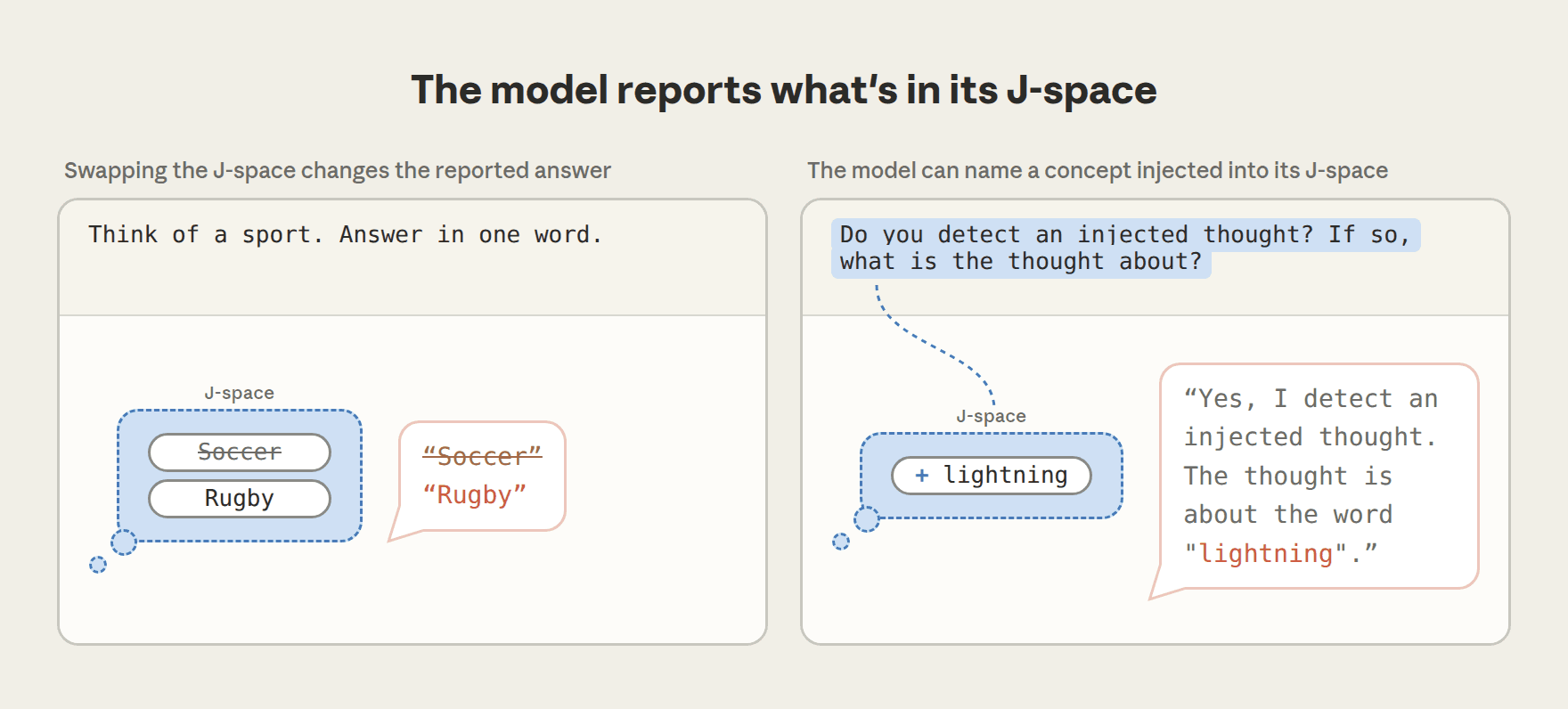
Anthropic, on its part, says it has identified a small collection of neural patterns inside Claude, dubbed the J-space, that functions as an internal workspace for reasoning. The company believes it offers an unprecedented glimpse into how the model reasons, while cautioning that it should not be mistaken for consciousness.
Google, which has Gemini 3.5 Flash as its flagship agentic model, is now attempting to enhance the agentic ecosystem by releasing its Open Knowledge Format (OKF)—an open standard that organises enterprise knowledge such as runbooks, metrics and APIs (application programming interfaces) into simple folders of Markdown files (plain text documents with .md or .markdown extensions). This gives AI agents a common, structured way to access and understand information directly, eliminating the need to sift through scattered databases or interpret proprietary formats.
The message is clear: All companies will continue to harp on increasing intelligence and contextual capabilities even as skeptics like Yann LeCun and Fei-Fei Li point on the limitations of these models.
LeCun, one of the three Godfathers of AI, broadly argues that LLMs largely memorise and retrieve knowledge rather than understand the world, which is why they need so many parameters. They excel where language itself is the medium for reasoning, such as coding and mathematics.
Li, often called the Godmother of AI, similarly argues that today’s LLMs are text-based “wordsmiths in the dark“ that lack an understanding of the physical, 3D world. She instead advocates spatial intelligence and “large world models”, which can reason about and interact with the real world.
Going forward, the AI race will be less about benchmark scores and more about who best understands human relationships, routines, workplaces, preferences, memories and intentions, and leverage the same in a fair and ethical manner.

Meta Platforms, for example, possesses a very rich social graph with its family of apps—Facebook, Instagram, WhatsApp, Messenger and Threads—that connects more than 3.5 billion people every day. Meta has embedded AI throughout its ecosystem, helping it surpass one billion monthly users in little over a year. The Meta-Ray-Ban AI glasses extend that context into the physical world.
Google’s advantage comes from intent. Search, Maps, Gmail, Chrome, Android and YouTube collectively reveal what people seek, where they go and what captures their attention.
Microsoft’s strength lies inside organisations, where Windows, Microsoft 365, Teams, GitHub and Azure provide visibility into documents, meetings, software development and enterprise workflows.
Apple occupies perhaps the most intimate position of all, owning devices that consumers carry, wear and trust with their most personal information.
OpenAI, by contrast, inherited neither a social network nor a mobile operating system. Instead, it built its ecosystem through conversation, and is planning to launch a hardware device. Millions now use ChatGPT not merely to retrieve information but to write, learn, analyse, plan and make decisions.
These strategies reveal that these companies are no longer just building products but building the next institutional layer between individuals and the world around them.
Every computing revolution has created such intermediaries. Publishers organised knowledge after the printing press. Newspapers shaped public debate. The search engines organised the web. The social media reorganised human relationships.
But AI is different. It does not simply retrieve or distribute information. It interprets, summarises, remembers, recommends and increasingly acts, thus becoming an active participant in how knowledge is created, understood and applied.
Schools organised learning. Banks allocated capital. Courts resolved disputes. Governments established rules. These institutions evolved through deliberation, precedent and public accountability. AI introduces a different model. Its knowledge updates continuously, its capabilities improve through software releases rather than legislation, and decisions made in Silicon Valley, China, and Europe can reshape the daily lives of billions almost overnight.
Hence, the Big Tech companies leading this race are not merely trying to build the smartest model. They are competing to become the default intermediary through which people will experience an intelligent world.
The trajectory extends well beyond chatbots. It’s smart glasses, enterprise agents, autonomous vehicles and humanoid robots—all expressions of the same transition. Steam multiplied movement. Computers multiplied calculation. Internet multiplied communication. Generative AI is multiplying cognition. Physical AI—the fusion of advanced models with sensors, robotics and autonomous systems—will multiply agency.
Today’s AI drafts legal briefs and analyses medical images. Tomorrow’s will increasingly inspect factories, assist surgeons, navigate warehouses and collaborate with workers. Meta’s glasses, Tesla’s humanoids, Google’s Android XR, Microsoft’s enterprise agents, and Nvidia’s vision of Physical AI are converging on the same destination: intelligence that can perceive, reason and act.
If deployed properly, AI can become one of human history’s most democratising technologies. A rural doctor with world-class diagnostic support, a teacher in a remote village using an AI tutor, a small manufacturer accessing capabilities once reserved for multinationals, or a scientist accelerating drug discovery through AI-assisted research, all illustrate its promise. In ageing societies, robotics could ease labour shortages. In emerging economies, AI could expand access to expertise as dramatically as mobile phones expanded access to banking.
Yet every technological revolution carries a paradox. It extends human capability while reducing the need to exercise it. Calculators weakened mental arithmetic. GPS eroded our sense of direction. Search engines outsourced memory. Social media reshaped communities and public discourse.
Likewise, today’s AI debate centres on issues like privacy violations, plagiarism, copyright violations, misinformation, conjuring up data, deepfakes and jobs. These are genuine concerns, but they are also symptoms of a bigger shift.
For centuries, societies relied on stable institutions to organise knowledge, trust and authority. Universities certified expertise. Courts interpreted laws. Governments balanced competing interests. Markets allocated capital. Though imperfect, they evolved slowly through legislation, peer review and public deliberation.
AI operates differently. Its capabilities improve continuously through software and hardware updates rather than parliamentary debate. It learns from billions of interactions across borders that no single regulator controls. In effect, the society is creating institutions that evolve at machine speed. That mismatch may become the defining governance challenge of the AI age.
The world’s governments recognise the stakes but are responding in different ways.
Europe has adopted a rights-first approach through the AI Act.
The United has largely prioritised innovation, relying on private-sector leadership and incremental regulation.
China treats AI as an economic engine—a strategic technology and a tool of governance—using licensing and algorithmic oversight to align it with state priorities.
Countries such as India (which is planning a law specifically for AI), Singapore and several Gulf states are pursuing a middle path, encouraging rapid adoption while keeping regulation flexible.
Yet, never has a general-purpose technology spread so rapidly while improving so quickly. By the time lawmakers debate one generation of AI, another has arrived. And the gap between machine-speed innovation and human-speed governance continues to widen.
The defining question of the AI era is, therefore, not whether machines become intelligent but whether democratic institutions, markets and social norms can evolve quickly enough to govern systems that increasingly perceive, reason and act on behalf of billions.
AI TOOL OF THE WEEK
By AI&Beyond, with Jaspreet Bindra and Anuj Magazine
The AI capability unlocked today is Copilot in Excel Skills
What problem does it solve? In every reporting cycle, someone rebuilds the same variance analysis, refreshes the same forecast model, or drafts the same board package. And in every cycle, that person re-explains the exact steps to Copilot—which tabs to touch, how to structure the summary, what tone leadership expects. The AI does the work, but the person is still the one carrying the process in their head. Copilot in Excel Skills fixes this by letting you define the process once, as a simple skill, and call it by name thereon.
How to access: https://support.microsoft.com/en-us/excel/copilot/copilot-in-excel-skills
Copilot in Excel Skills can help you:
Skip the re-explaining: Save your exact process once as a skill, then call it with a simple mention instead of retyping it every cycle.
Standardise the close: Everyone who runs the skill gets the same structure and output, no more comparing five versions of the same report.
See before it acts: Copilot now proposes its plan first, so you approve the steps before it touches a single formula.
Example: A regional finance manager needs to close the books and hand leadership a variance summary before Friday’s review.
Prompt the content: Save the process once as a skill, then call it by name, “Compare Q2 actuals to plan and explain the five largest revenue and margin variances”, instead of rewriting the steps from scratch.
Request the output format: Add “summarise this as an executive-ready one-pager” and Copilot structures the write-up to match.
Specify structure: Ask it to “use a table for the variance breakdown and bullet the drivers underneath each number”, and it applies the layout automatically.
Switch formats on the fly: If leadership wants slide bullets instead, re-prompt with “turn this into three slide-ready bullet points”, no redoing the analysis.
Export and share: Once approved, push the summary straight to Teams or share the workbook so the review team sees the same version.
What makes Copilot in Excel Skills special?
Built for finance rigour: Evaluated against real-world modelling cases from the Financial Modelling Institute, not generic AI benchmarks.
Plan before it acts: Copilot lists its intended changes and waits for approval before touching a cell, unusually cautious for an AI agent.
Full audit trail: Every AI-made edit is attributed and traceable in Show Changes, so nothing gets buried in an unexplained formula.
Note: The tools and analysis featured in this section demonstrated clear value based on our internal testing. Our recommendations are entirely independent and not influenced by the tool creators.
Sysdig, a cloud cybersecurity company, has documented the first-ever documented case of agentic ransomware, where the complete attack was run end-to-end by an LLM. The AI-powered bug, dubbed JADEPUFFER, gained access to the system and started gathering info about the host, scanning for cloud credentials, extracting cloud secrets, while scanning the victim’s internal network for additional systems. In one instance, when the AI failed to gain access to a backdoor administrator account on the target server, it diagnosed the issue, generated new code, recreated the account using a different password and successfully logged in—all within 31 seconds.

Chipmakers, AI model developers and data-centre companies have attracted trillions of dollars in investor capital, becoming the face of the AI revolution. But according to valuation expert Aswath Damodaran, investors chasing today’s AI winners may be missing the bigger opportunity. He believes AI will not drastically eliminate jobs but enhance productivity while replacing certain roles.
Meta CEO Mark Zuckerberg admitted the limitations of the recent company-wide restructuring during an internal town hall, noting that the major job cuts were not as “clean” as they could have been. Meta laid off about 10% of its global workforce earlier this year while reassigning around 7,000 employees to its AI-focused teams in May. Meta is also reportedly working on a new cloud infrastructure business to sell access to its AI computing power and models and begin competing with the likes of Amazon Web Services, Microsoft Azure and Google Cloud.
MORE ALSO READS
Hope you folks have a great weekend, and your feedback will be much appreciated—just reply to this mail, and I’ll respond.
Edited by Rashmi Sanyal.
No posts
Comments
Nothing yet. Say the first thing.
Sign in to join the conversation.