
The country’s poster boy for Indic AI models, Sarvam AI, recently unveiled plans for a trillion-plus parameter model even as it launched an India-hosted inference platform, opened a San Francisco research office and has reportedly raised another $75 million in a funding round led by Nvidia Corp., just months after securing $234 million.
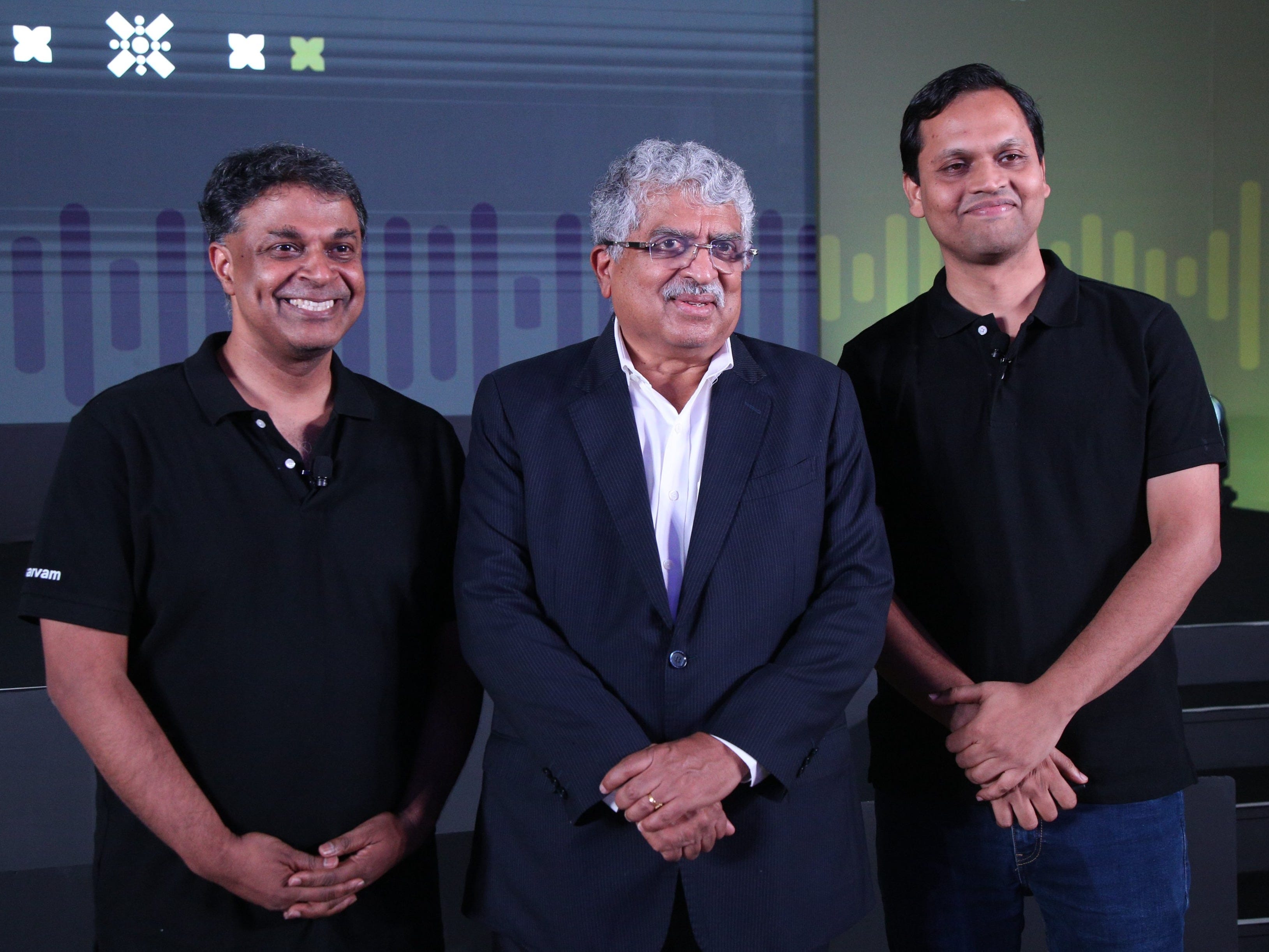
The Bengaluru-based AI startup plans to use the money to fund its next-generation AI models for applications such as AI agents, software development and cybersecurity, while expanding the computing capacity needed to deploy them across industries.
That suggests Sarvam AI is positioning itself as India’s answer to frontier models and China’s emerging crop of open-weight AI labs. It also signals the company’s ambition to build not just AI applications, but the foundations of India’s frontier AI infrastructure.
In this edition of Mint Tech Talk:
Google reshuffles AI leadership team
Why the fuss over Graph Engineering
AI Tool of the Week: Nano Banana in Search
PREVIOUSLY, ON TECH TALK
The global AI race has entered a new phase. The first was about building the smartest model. The next is about controlling the AI stack. As the powerful AI models become increasingly commoditised and can be downloaded, finetuned and deployed almost anywhere, the competitive advantage is shifting to the infrastructure around them—compute, inference, deployment, data, speech, localisation and enterprise integration.
For instance, Sarvam’s India-hosted inference platform, which serves not only its own models but also others such as GLM 5.2 and Gemma 4, signals a pragmatic strategy by becoming an AI platform. That is a potentially smarter business model than trying to outsmart OpenAI’s frontier models, even as the trillion-parameter ambition of Sarvam merits more attention.
Training an AI model from scratch remains one of the hardest engineering tasks in computing. It demands enormous datasets, sophisticated distributed training, months of uninterrupted GPU time and hundreds of millions of dollars. Sarvam says its models are built from scratch rather than distilled from existing open AI models. That is a significant technical achievement since building a foundation model from randomly initialised weights places it in a very small global club.
Sarvam 105B performs well on reasoning, programming, and agentic tasks across a wide range of benchmarks, while Sarvam 30B is optimised for real-time deployment, with strong performance on real-world conversational use cases. Both models score high on Indian language benchmarks, outperforming models significantly larger in size from companies including OpenAI, Anthropic, Google, Alibaba (Qwen), High-Flyer (Deepseek), Z.ai (GLM) and Moonshot AI (Kimi).
Sarvam’s AI models are built to balance capability with efficiency, allowing them to process long documents and complex tasks while keeping computing and inference costs under control.
India’s AI challenge is to build systems that understand dozens of languages, navigate code-mixed conversations, serve voice-first users and satisfy increasingly stringent data sovereignty requirements. A model that performs better than GPT-5 on Hindi-English customer support or government service delivery may be more valuable in India than one that scores marginally higher on abstract reasoning benchmarks.
This is where Sarvam has an opportunity to carve out a durable advantage. Success should not be measured solely by benchmark rankings but by whether Indian banks, hospitals, manufacturers and government departments choose its stack over foreign alternatives.
The decision to establish a San Francisco research office also helps since frontier AI research remains concentrated in the Bay Area. If Sarvam hopes to compete with global labs, it cannot recruit exclusively from Bengaluru—the hiring of former xAI researcher Devendra Chaplot being a case in point. The challenge will be to combine access to world-class research talent with a genuinely Indian research agenda, rather than becoming another globally distributed AI company with Indian headquarters.
OpenAI and Anthropic are widely expected to be among the world’s first AI companies to soon command trillion-dollar valuations. They can invest tens of billions of dollars in computing infrastructure, talent and research. Sarvam, by comparison, is valued at about $1.5 billion.
Hence, measuring Sarvam against the world’s frontier labs is to miss the point. The company’s significance lies in testing whether India can move beyond being a consumer of global AI to becoming a producer of foundational technology. Sarvam clearly has that ambition. Proper execution, though, holds the key to more success.
India should resist the temptation to crown a single national champion. China’s rise in AI was powered not by one company but by many—Qwen, GLM, Kimi, DeepSeek and others pushed each other forward. The US has OpenAI, Anthropic, Google, Meta and xAI. France has Mistral while Canada has Cohere.
India has to continue nurturing its similarly diverse ecosystem of commercial startups, academic initiatives such as BharatGen and AI4Bharat, dataset repositories like AI Kosh, public infrastructure like Bhashini and, crucially, sustained investment in wafer fabs and computing capacity, as it moves forward.
AI TOOL OF THE WEEK
By AI&Beyond, with Jaspreet Bindra and Anuj Magazine
The AI capability unlocked today is Nano Banana in Google Search
What problem does it solve? Here is a pain point most professionals run into while putting together a deck, a social post, or a client proposal: you need one visual, a simple diagram and getting it usually takes far longer than it should. You open Canva, hunt for a template, wrestle with layout, or worse, open Adobe Photoshop for something that does not deserve 20 minutes of your afternoon. Google has now folded image generation straight into Search. Instead of switching tools, you type what you need into the same search bar you already use 50 times a day.
How to access: Search on the Google app or google.com.
Nano Banana in AI Mode can help you:
Skip the app-switch: Generate a usable visual without ever leaving your search tab or opening a design app.
Get text that actually reads: Produce infographics, diagrams, and labeled visuals with legible, accurate text baked in.
Localise on the fly: Translate and adapt visuals, including the text inside them, for a different market or audience.
Example: A sales manager is finishing a client deck tonight and needs a clean visual to explain how their new customer onboarding works.
Prompt the content: Search “Create a flat infographic showing our customer onboarding journey in three steps: sign-up, account setup with a dedicated success manager, and first live training session.”
Request the format: Add “Make it an infographic-style image with numbered steps, not a photo.”
Specify structure: Refine with “Arrange it left to right, one icon per step, short labels only, no paragraphs.”
Add framing cues: Say “Use a clean, corporate blue and white color palette, no clutter, suitable for a client-facing slide.”
Export or share: Download the image directly from the search result to drop into the deck or post.
What makes Nano Banana in AI Mode special?
No new tool to learn: It lives inside the search bar you already use, not a separate app you have to remember to open.
World-knowledge grounding: Pulls from real-world search data to render specific subjects, diagrams, and text more accurately than typical image generators.
Free and built into Search: No extra subscription or design software required to get a usable visual.
Note: The tools and analysis featured in this section demonstrated clear value based on our internal testing. Our recommendations are entirely independent and not influenced by the tool creators.
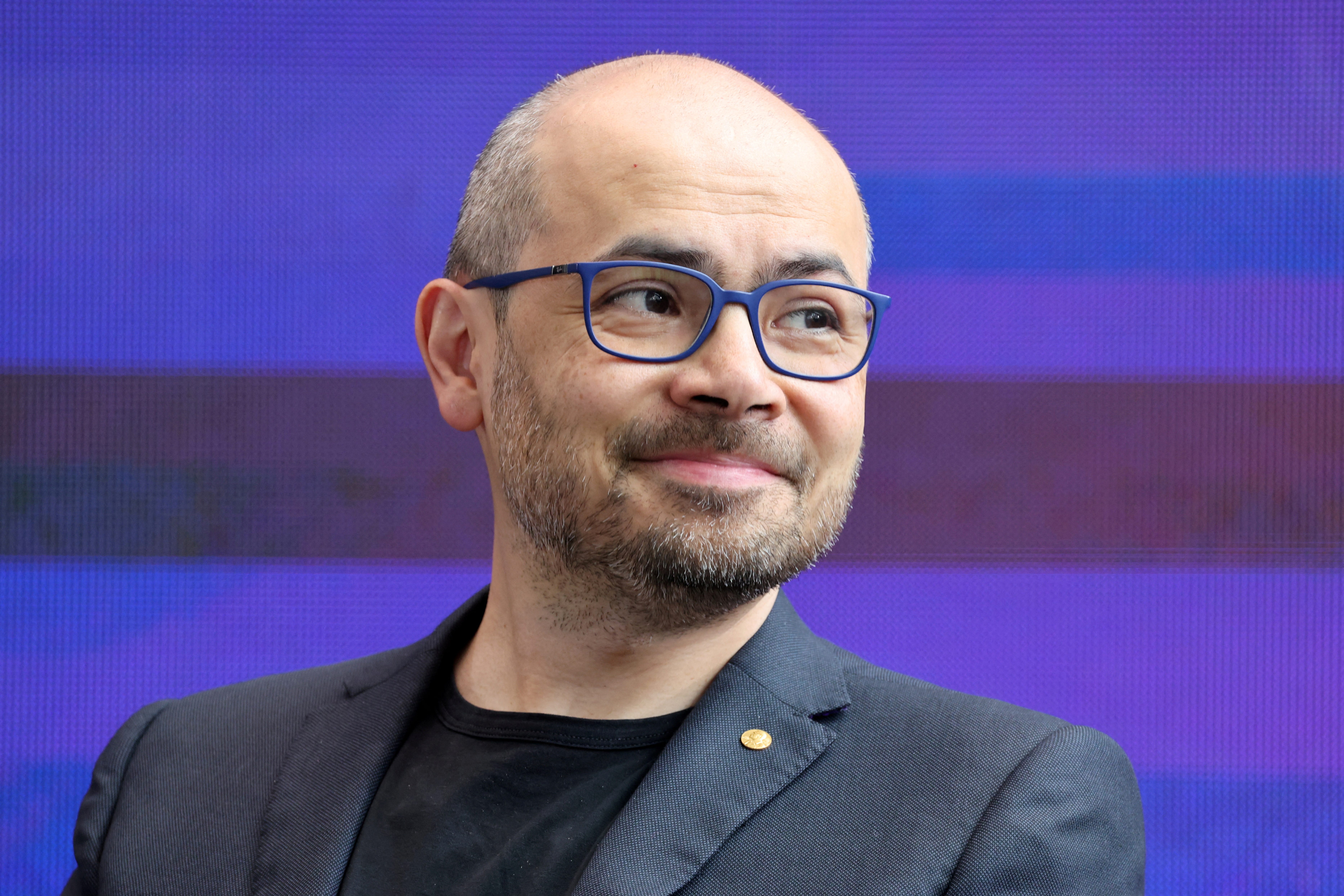
In a major leadership reshuffle, Google DeepMind CEO Demis Hassabis has been appointed Alphabet’s chief scientist and chair of Google DeepMind, while continuing to lead Isomorphic Labs. Koray Kavukcuoglu, currently Google DeepMind’s chief technology officer, has been promoted to senior vice president, reporting directly to Sundar Pichai. He will oversee Gemini model development, frontier AI research, and the Gemini app and developer ecosystem.
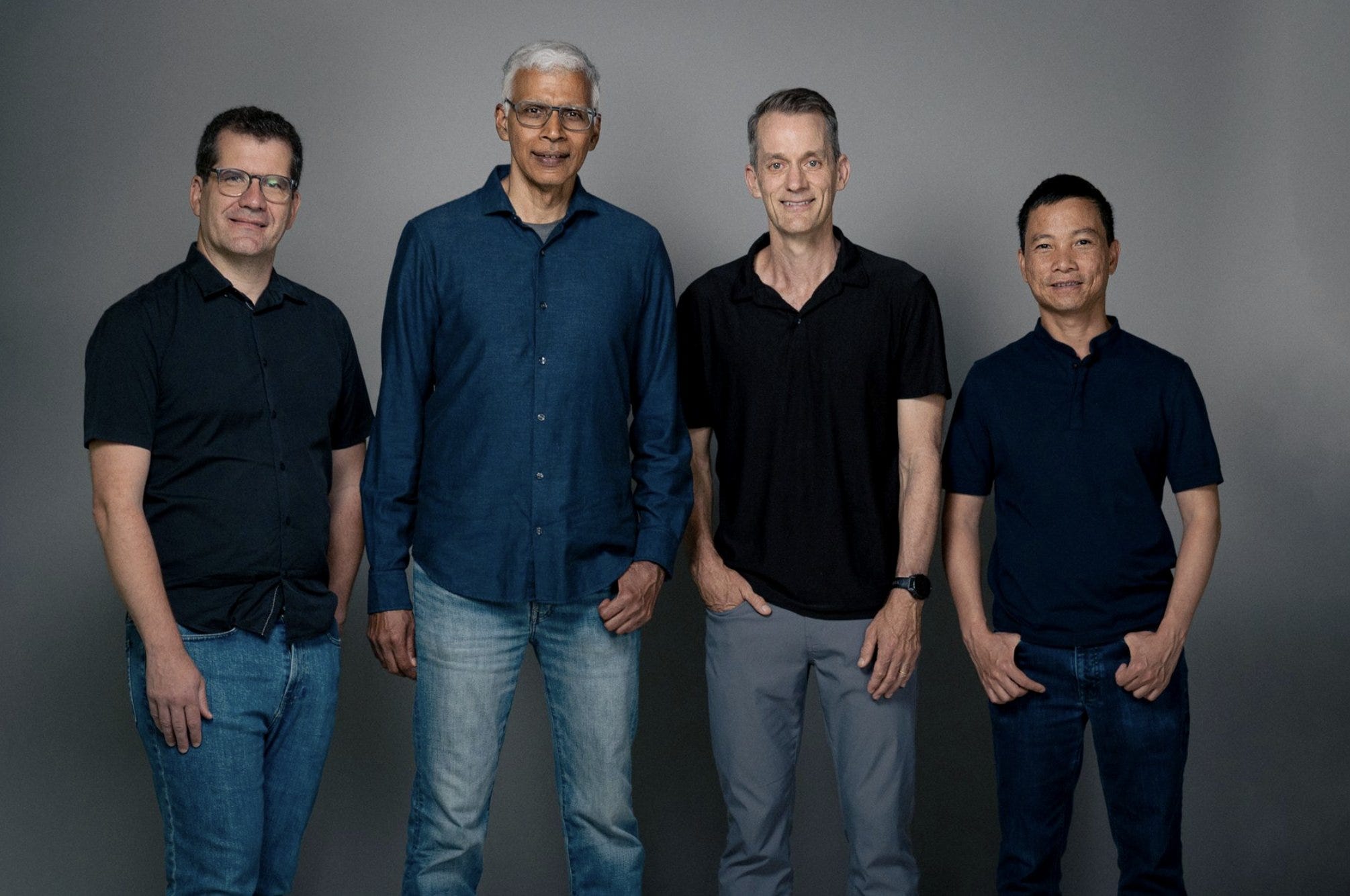
Meanwhile, Google veterans Jeff Dean and Senior Fellow Sanjay Ghemawat have left the company to launch Discovery Loop, an independent public benefit corporation focused on accelerating breakthroughs in machine learning, science and engineering.
The leadership changes at Google mark more than a routine succession. They reflect the AI industry’s transition from a research race to an execution race. For the past three years, success was measured by who unveiled the most capable LLM or topped the latest benchmark. Today, investors are asking a different question: Who can build a durable business around AI?
Dean and Ghemawat helped define Google’s engineering culture, building much of the distributed computing infrastructure that powers modern AI. Their departure, alongside Hassabis’s move into a broader chief scientist role while operational leadership shifts to others, suggests Google is separating long-term scientific ambition from the demands of commercial execution.
The timing is telling. The AI ecosystem is awash with soaring valuations, relentless model launches and escalating capital expenditure, yet sustainable business models remain elusive. Model performance is becoming table stakes. Competitive advantage is shifting to inference costs, proprietary chips, cloud, developer ecosystems and enterprise adoption. Google’s assets range from AI-powered Search and Android to YouTube, Cloud and TPUs.
Yet those advantages also create organisational complexity. The next chapter of AI will not be won solely by breakthrough research. It will be won by companies that can industrialise AI at scale, translating scientific advances into profitable products, resilient platforms and enduring ecosystems.
Just a couple of months back, we were talking about how AI coding was moving from ‘prompt engineering’ to ‘loop engineering’. Prompt engineering is about writing the right instructions to get the best response from an AI model. Loop engineering goes a step further. It designs workflows in which AI repeatedly reasons, writes code, tests it, fixes mistakes and keeps iterating until it reaches a satisfactory result.
Just as that idea was beginning to sink in, another term has arrived. Anatoli Kopadze, who heads Claude Code at Anthropic, recently remarked that “85% of our engineers are running dozens or hundreds of agents. The way you do it is graph engineering”.
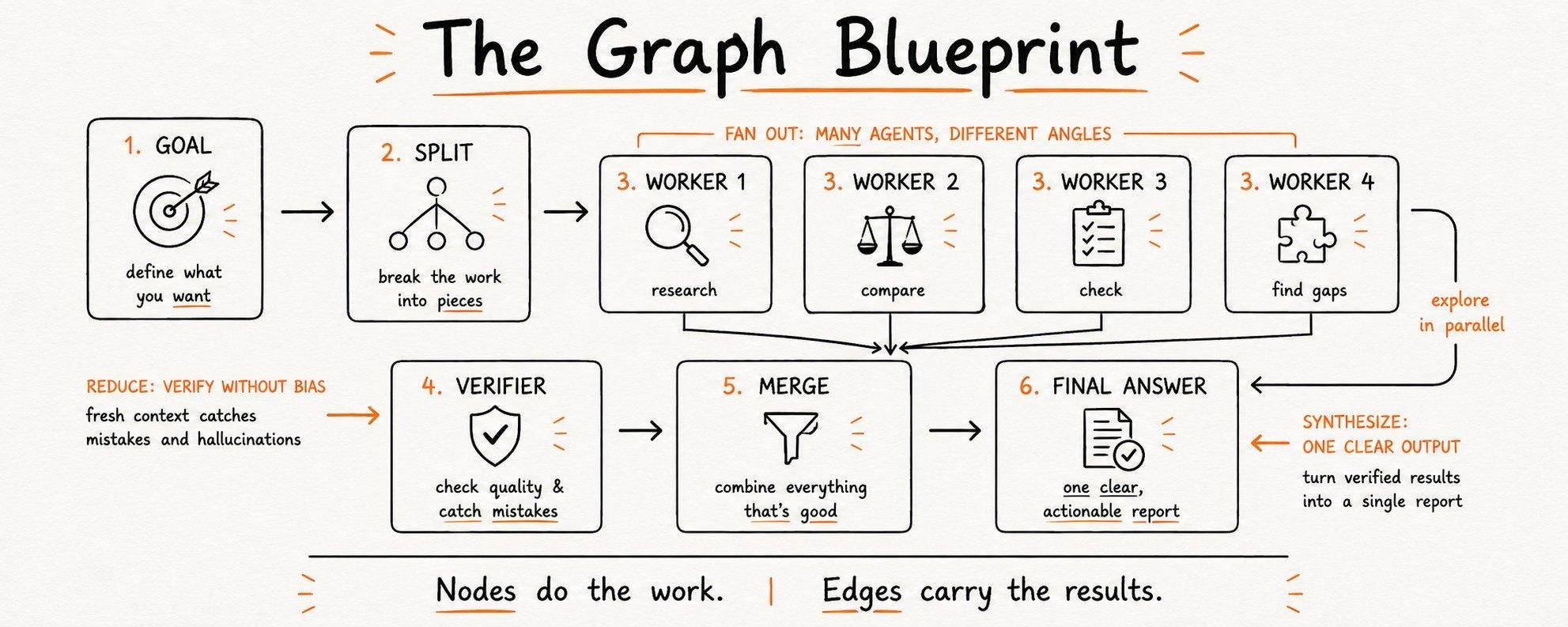
If prompt engineering is writing a single instruction, and loop engineering is creating a feedback cycle, graph engineering is orchestrating an entire network of AI agents. Instead of one model working through a task from start to finish, multiple specialised agents collaborate. One may plan the work, another writes code, a third runs tests, a fourth checks security, while yet another reviews documentation. Their outputs flow through a graph of interconnected tasks rather than a simple linear sequence, with agents branching, merging and sharing information until the objective is achieved.
Consider building a mobile banking app:
With prompt engineering, a developer asks one AI to generate the code.
With loop engineering, the same AI writes the code, tests it, spots bugs, revises it and repeats the cycle.
With graph engineering, AI agents simultaneously design the architecture, write different modules, generate test cases, scan for vulnerabilities, review one another’s work, and integrate the final application.
Human developers, thus, increasingly spend less time coding each function and more time designing, supervising and refining these AI workflows.
Indian roads are among the world’s most hazardous. An average of 502 people die on our roads every day. Against this backdrop, the government’s proposal to implement vehicle-to-vehicle communication in a phased manner from next October makes sense.
Until now, road safety has largely focused on protecting crash victims with airbags, anti-lock braking systems and vehicular design. V2V would mark a shift from collision survival to prevention. Under the proposed AIS-230 standard, suitably equipped vehicles will transmit their speed, position and direction to one another.
Since this system will not need mobile telecom towers, it should function even in tunnels, remote areas and during network outages. This would not only help motorists keep a safe distance from each other but also warn others about hazards they may be unable to spot, such as an oncoming car hidden behind a truck or around a blind turn.
Yet, the policy, which is an attempt to tame the country’s badly managed, chaotic roads, sets up a high-stakes collision among road safety, affordability, privacy and cybersecurity. Here’s why.
ESSENTIAL READING
Hope you folks have a great weekend, and your feedback will be much appreciated—just reply to this mail, and I’ll respond.
Edited by Madhumita Sen Choudhury.
No posts
Comments
Nothing yet. Say the first thing.
Sign in to join the conversation.