
Last week’s Tea Leaves included a wonderful quote from the late (and also wonderful) David Graeber:
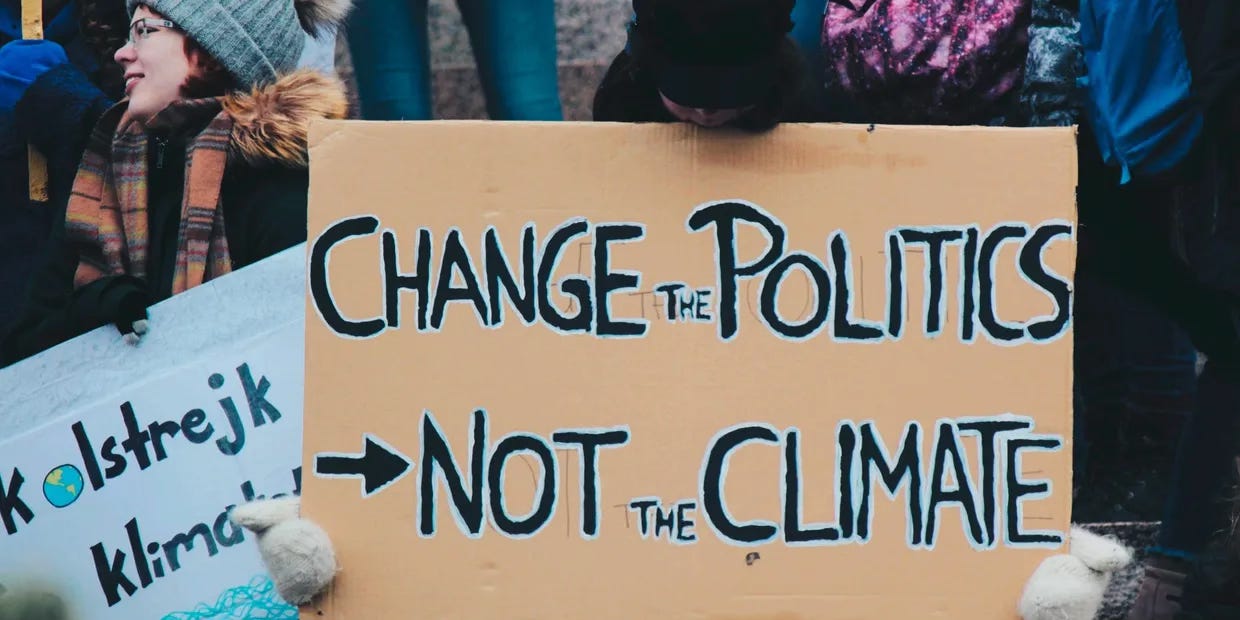
‘The ultimate hidden truth of the world is that it is something that we make, and could just as easily make differently’
In a time which has variously been referred to as one of omnicrisis, polycrisis and permacrisis (bloody boomers, eh?) it is quite useful to reflect on status quos, social norms and sacred cows. The problem comes about when the Voyage of the Norm Shredder is captained and crewed by an especially partisan group of individuals who aren’t especially interested in dialogue. When we created the Teapot Papers, it was partly a way of tossing around ideas which previously been contained by a WhatsApp chat. It was also partly born of a frustration with so many issues and how we collectively respond to them. Settling on our name, we were drawn to the simple but quite powerful metaphor of getting people sat talking over a brew. Reading about, listening to and watching events and issues around the world unfolding, whether it is international security, public finances, the climate crisis, or the development of AI, it seems like there has never been a greater need for teapot democracy.
Alastair Campbell, on The Rest Is Politics (a UK podcast), flagged some alarming Guardian polling from January 2025 which reported that 52% of Gen Z (aged 13-27) agreed that "the UK would be a better place if a strong leader who does not have to bother with parliament and elections" was in charge. Wow. Although similar studies offer more mix and nuance, this polling, which was not unique, suggests that democracies need to do a far better job of proving their value to their (for now at least) electorates. Part of this value-proving challenge must be showing that democracies can deliver just as well, if not better, for their electorates as authoritarian states deliver for their non-voting public.
A wave of recent books, including Marc J. Dunkelman’s Why Nothing Works and Ezra Klein and Derek Thompson’s Abundance, point to the increasing failure of progressive politics in really delivering positive change on issues from housing to infrastructure to clean energy. Slouching states and stagnant economies do nothing to convince voters that democracy is delivering for them, especially when they are encouraged to make comparisons with China and the like. Klein illustrates the issue through comparing California’s delivery of just 22 miles of high-speed rail line since 2008 against the 23,000 miles of high-speed rail which China has built in the same time. Now, neither Klein nor we are making a case for Chinese-style authoritarianism. We are suggesting that democracies need to get their act together and do a better job of serving voters.
We would argue that democracy - rule by the people - can only be as successful as the conversations being had within a country. It is the democratic need for conversation which encourages lovers of autocracy to sow division, promote fake news and do nothing to discourage the growing phenomenon of the low-information voter. It is difficult to have a conversation with somebody that you are told is your enemy but you don’t really know why.
The only way to counter division and democratic decline is to promote conversation. That is what politicians of all hues should be doing and, if we’re serious, we need to invite everyone and include anything on the agenda. It will probably get difficult, it will probably get messy, but democracy isn’t supposed to be clean and easy. How many politicians, especially progressives, have written off, both wittingly and not, huge swathes of the electorate, by speaking without listening. A conversation requires both, it requires free exchange. Just like the family who put the kettle on because a cup of tea is going to be what gets them through a thorny conversation, we need teapot democracy where we encourage conversation, or rather conversations, across our communities and across the country. We need to get back to speaking to each other and to listening to each other, which in turn can get us back to respecting each other and trusting each other.
We would argue that the key strength of any politician in a democracy is that they don’t and they shouldn’t need all the answers - they just need to have the skills to lead the conversation. And while we always need to include people in a conversation, we have to be realistic that not every conversation will end in consensus. Listening to the people is how you serve the people, and being honest with the people is how you make sure that stuff gets done, even when it might not be universally popular.
So here is a (very) rough pitch for teapot democracy: a reboot of the democratic project by committing to conversation where everyone is at the table - from a Manchester pub to a Seattle coffee shop - and nothing is off the table. We believe listening is the democratic superpower. For a start, feeling listened to releases the feel good chemicals in our brain. Conversations should be guided by honesty and striving for consensus, while recognising that we can’t always achieve this if we want to get things done. But if we’re going to shred some norms and slaughter a few sacred cows, then we all have to be part of those honest conversations. We make the world and in a democracy - the UK, USA or elsewhere - we the people can make it differently.
Thanks for reading The Teapot Papers! This post is public so feel free to share it.
Comments
Nothing yet. Say the first thing.
Sign in to join the conversation.