
I’ve never said this before, but I despise Mark Manson.
His obsessive use of the word fuck. His clever sense of humor. The way he simplifies complex philosophy into something even a teenager could love.
Yes, I despise this New York Times best-selling author because... He’s so damn brilliant. Actually, despise isn’t the right word. It’s more akin to professional envy.
You know the kind. That specific tightness in your chest when you read someone who’s so goddamn good at the thing you’re trying to master. And you can’t figure out how they’re doing it.
Mark’s style is one of my personal favorites, next to Harlan Ellison, a horror fiction author you’ve probably never heard of (I wipe tear from eye).
And maybe you feel the same about a writer you look up to. You read their work and think, “Why does theirs sound like them, and mine doesn’t sound like me?”
Or worse, you sit down to write and nothing comes out that sounds like it belongs to you. Just words on a screen that could’ve been written by anyone. Or worse, when people read your stuff, they catalog it as sounding like somebody else. Somebody they already prefer.
You’ve tried all the advice: write like you talk, tell personal stories, just have a unique perspective. But your writing still feels like it’s missing the IT factor. The YOU factor. The voice you’ve been laboring over like a medieval scribe hunched over candlelight... except your candle is a laptop screen and your quill is a fingerprint stained Apple keyboard.
You’re putting your heart into this work, and it’s not landing. You’re writing, publishing, and disappearing.

After five years of ghostwriting for over 50 people, I’ve learned how to help others finally discover their writing voice. The kind that gets your words living rent-free in people’s heads because they’re memorable and weird in just the right way.
But your writing voice isn’t one thing. It’s a unique combination of many different things. And I call them dimensions. Most writers have never seen them laid out clearly.
I’m going to move fast and give you all nine, with examples, and a bonus that will help you discover your unique combination.
Bookmark this. You’ll want to come back.
Quick side note - In September I’ll be launching The Weekly Writers Challenge. If you struggle to write consistently, want to hone your craft, or crave being part of a community of budding writers, this is where we’re going to gather. Click below to join the waitlist if you don’t want to miss the details & launch window:
Are you a writer who draws from lived experience, books, research, conversations, or things you overheard while walking down the street to get cookie dough ice cream?
Two writers can cover the same topic, draw from completely different inputs, and produce pieces that sound nothing alike.
Common raw inputs:
Books
History
Client work
Lived experience
Research and data
Podcasts and interviews
News & political discourse
Formal or informal education
Conversations with clients, friends, family
Other people’s content — comment sections, replies, what everyone’s getting wrong online
And of course... shower thoughts.
I write almost exclusively from lived experience and sometimes pull in concepts from books or podcasts. If I haven’t implemented the knowledge in the real world, I struggle to write about it. I used to see it as a weakness. Now I see it one of my differentiators.
Which inputs do you usually draw from? Become consciously aware, and go to them first for inspiration.
What you actually think.
Your strongly held opinions, your worldview, and the honest perspectives you’d share if there was no fear of punishment.
This is not your story. This is the filter of how you interpret experiences. Two people can see Lewis Capaldi live and walk away with completely different opinions on the concert. But I’ll tell you first-hand: he’s fucking amazing.
When you sit down to write next, write not what you think people want to hear, but what you actually think. You might be surprised.
People like the real you.
Why the idea you’re writing about matters right now.
This is basically answering: why should I care? You could have the same topic that 50 writers write about, but from different angles, and you’ll get 50 completely different pieces.
Let’s say you’re sitting down to write about how to write newsletters:
You could angle it as a way to make money
A path to clarity of thought
An act of creative expression
A tool for developing self-awareness
A way to attract a like-minded tribe
Same topic. Five completely different newsletters from five completely different writers.
When writing your next piece, answer one question: Why does this matter to me?
The heart of your writing lives there.
Your relationship to the idea you’re writing about.
Are you the teacher passing on wisdom?
The business owner systemizing an operation?
The explorer wrestling with ideas in real time?
The student sharing what you learn as you stumble through?
The builder creating something in public?
This position changes the authority, the energy, and how people relate to you.
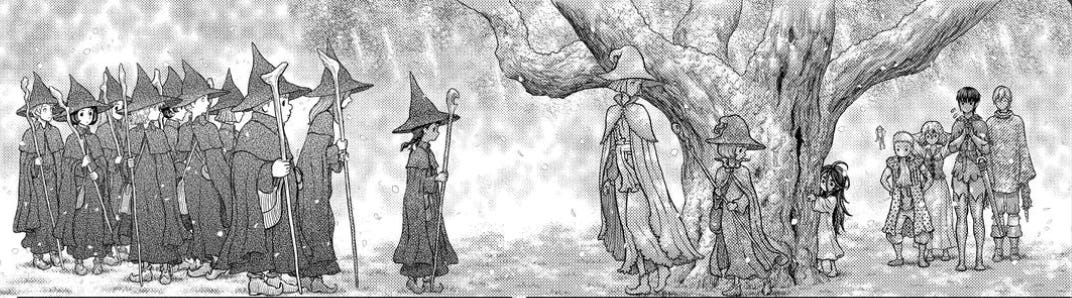
If you write exclusively about the same topics as other people in your niche, just lean into your vantage point.
Much less of a chance you sound like anyone else.
By the way, I’ve recently added a 20-minute Substack audit to the list of benefits you get as a paid subscriber. If you've been wanting a second pair of eyes on your publication, now's the time.
The packaging around the ideas you’re writing about.
Do you prefer to write with:
Stories
Guides
Analogies
Research
Direct arguments
Personal anecdotes
Look at what other people in your niche are doing for delivery, and play. Not many writers in my niche use personal anecdotes, so I’ve been leaning into them. In your next piece, try a new delivery method and see what happens. You might package the same ideas in a way no one’s seen before.
Your actual word choice and sentence structure.
What vocabulary do you use? How do you phrase sentences? What’s your particular sentence rhythm? The one you feel in your body or hear in the voice in your head when you’re writing? This is the texture of your writing.
I come from the world of business. But I’ve always been more of a creative at heart.
So more recently, I’ve been embracing the language of my more authentic creative identity:
Instead of “habits,” I’m using “rituals”
Instead of “commitments,” I’m using “devotion”
Instead of “work,” I’m using “craft”
Read those swaps out loud:
Habits
Rituals
Commitments
Devotion
Feel the difference? Habits are something you do over and over again. Rituals need intention. Commitments are something you must do. Devotion is something you get to do.
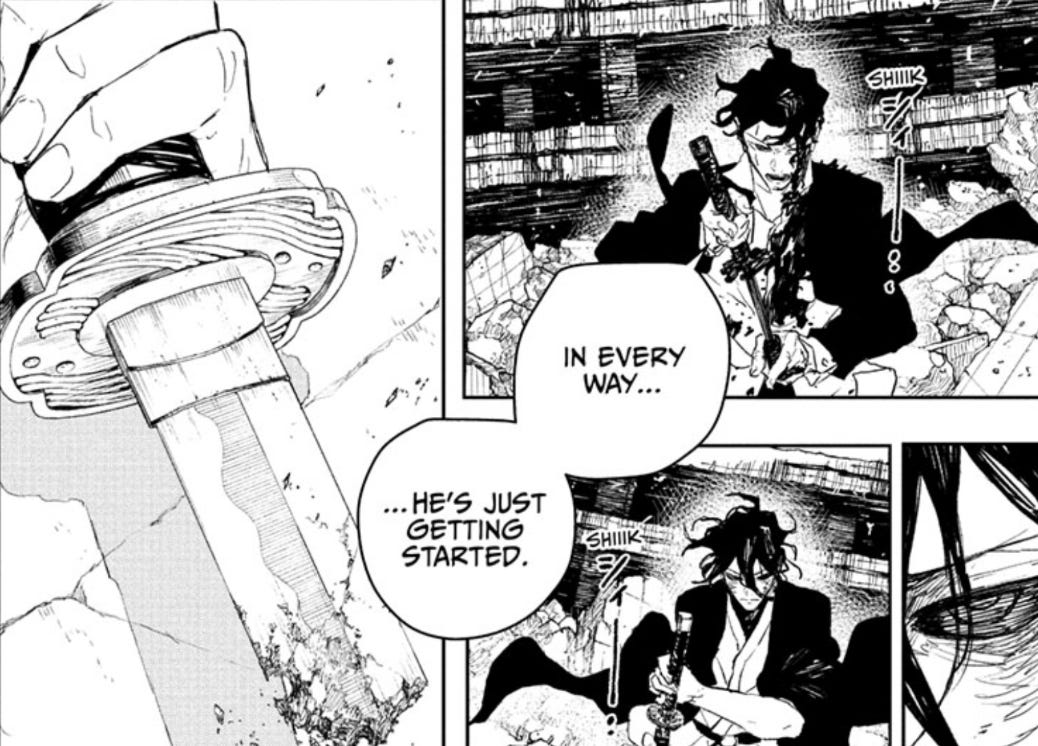
How much oomf you pack into each sentence.
James Clear writes tight. Every word earns its place. He’s a minimalist. Mark Manson takes a conversational, scenic route and lets you live inside the idea. He’s a maximalist. Both work.
I’ve shifted from Clear’s punch toward Manson (with inspiration from Ellison as well). More maximalist overall but when something needs to land, I go short.
Like that.
Are you a writing minimalist or maximalist?
How you architect the piece.
Where do you start? In the middle of the action, or with a big idea? How do you move between ideas? Do you build towards a climax and reveal, or drip-feed information as you go? This structure determines the reader’s journey.
I like to build towards a reveal at around the 80% mark to maximize stakes, problem depth, and tension. For more educational pieces, I drip-feed the information. Those are the two structures I lean towards, and they’re becoming signature choices.
Find your favorite writers. Study their structures. Borrow those, but make the other dimensions your own.
The ideas you draw from outside your domain.
Most writing I read has nothing unexpected about it. Same references. Same ideas. Same books everyone else is drawing from. Dan Koe talks about flow psychology, so everyone reads Flow and writes about it.
On the other hand, when you draw from ideas outside what your favorite writers reference, your writing immediately feels different. Surprising. Binge-worthy.
This is why I put manga panels inside my newsletters instead of diagrams.
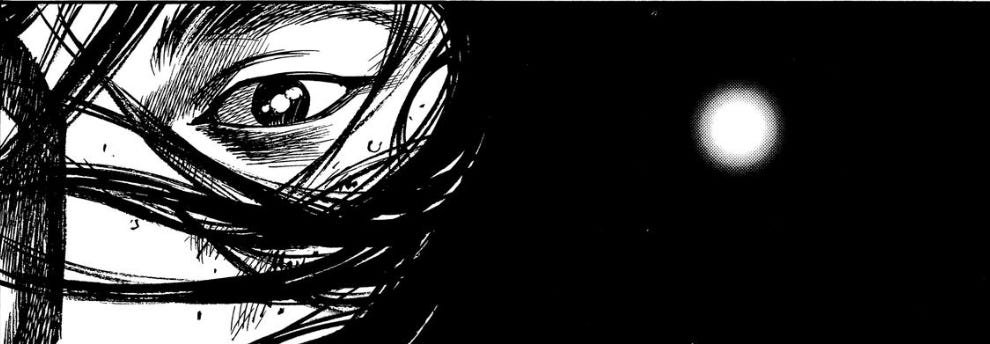
It’s why, when I sit down to write, I ask myself: What are different ideas from different books—popular or unpopular—that might relate to this? Like Taleb’s idea of antifragility applied to personal identity. Something I haven’t seen many people write about, if any at all.
An action item for you: when you sit down to write your next newsletter, ask yourself: “What is something unexpected I could say? An idea no one has seen paired with this topic?”
After going through these nine dimensions, it’s probably clear: no one else has your exact combination. You don’t need to be radically different in all of them. You don’t need to be different in just one, like everyone tells you. You need to think through each one clearly enough to know which ones you’re leaning on, which ones you’ve been ignoring, and which ones could bring your writing voice to life.
I’ve included an AI prompt that will interview you on your writing voice. It’s trained on these nine dimensions, will ask you everything, and then show you where your unique voice lies. This is your starting point.
The prompt is long and comprehensive, become a paid subscriber to access it:
In many ways, your voice isn’t something you find. It’s something you slowly begin to recognize.
Explore these nine dimensions (most of which you already have strong instincts on) and suddenly the writing you’ve been laboring over for months starts to feel like yours.
You stop being a writer who’s trying to sound different. You become a writer who couldn’t sound like anyone else if you tried.
—Taylin & Dale
No posts
Comments
Nothing yet. Say the first thing.
Sign in to join the conversation.