
We were eating sushi for breakfast in the crowded Tsukiji fish market in Tokyo when our son turned to me and said, “You look like you’re channeling your inner Anthony Bourdain Dad, untucked white shirt, sunglasses, slurping oysters and knocking back toro nigiri at 9:00 in the morning”.
We laughed and then I flashed back to my first date with Mary Anne. It was many years ago at Japonica, a small sushi restaurant in Greenwich Village, New York City. I had chosen this place hoping to impress her that I had spent time in Tokyo, and maybe sound cool tossing around a few words in Japanese with the waiters.
Something must have worked — we’re still together 43 years later. And Japanese culture has had a profound influence on us. Our first home in the Hudson Valley was a beat up old barn, turned into a house in an earlier decade. When we renovated the master bedroom, we chose a traditional Japanese tatami design, with a futon mattress, and shoji screens for the closet doors.
This trip to Japan felt like a return of sorts. I had never quite found the time to come back, and now we were meeting up with Chris and Sarah, our son and daughter-in-law, who live in Oregon. We had created our own itinerary — a long list of museums, gardens, tea rooms, coffee shops, flea markets. Many artists, architects and chefs have been inspired by this culture. And we were looking forward to having some more of that magic rub off on us.
And of course, we came to eat.
With sushi, our experiences ran the full spectrum — from high-end tasting menus to neighborhood spots and everything in between — and we never had a single bad bite. That morning at Tsukiji Market may have been a high point. We moved through crowded stalls sampling sushi, sashimi, and yakitori for breakfast, shoulder to shoulder with people from all over the world. It did feel, I have to admit, a bit like an episode of Parts Unknown.
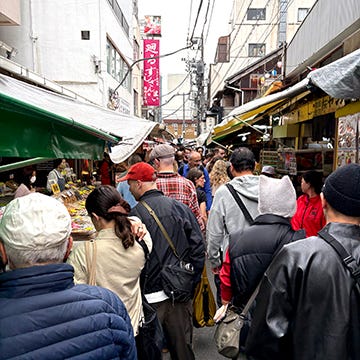
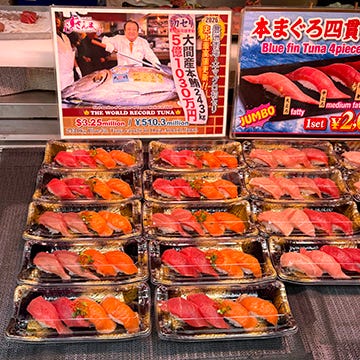
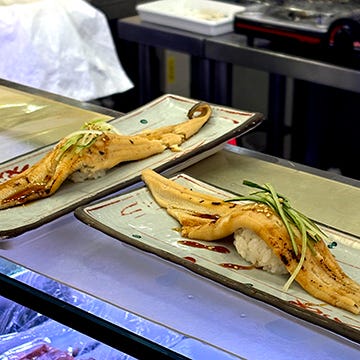
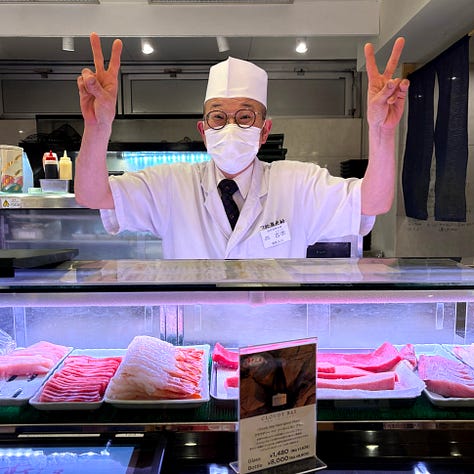
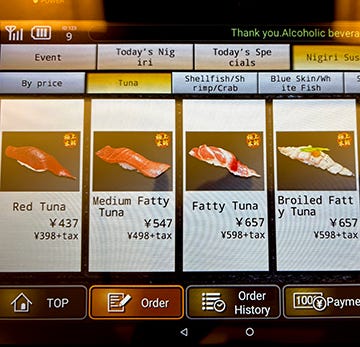
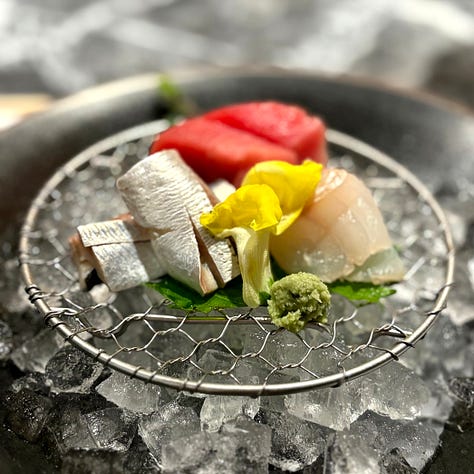
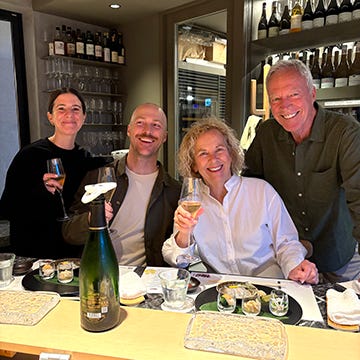
What stayed with me wasn’t just the quality — sushi wasn’t precious. It was everywhere — on conveyor belts, at stand-up counters, tucked into train stations, even in supermarket cases — and it was all good. For a brief time, it felt almost ordinary, just something people ate without thinking too much about it.
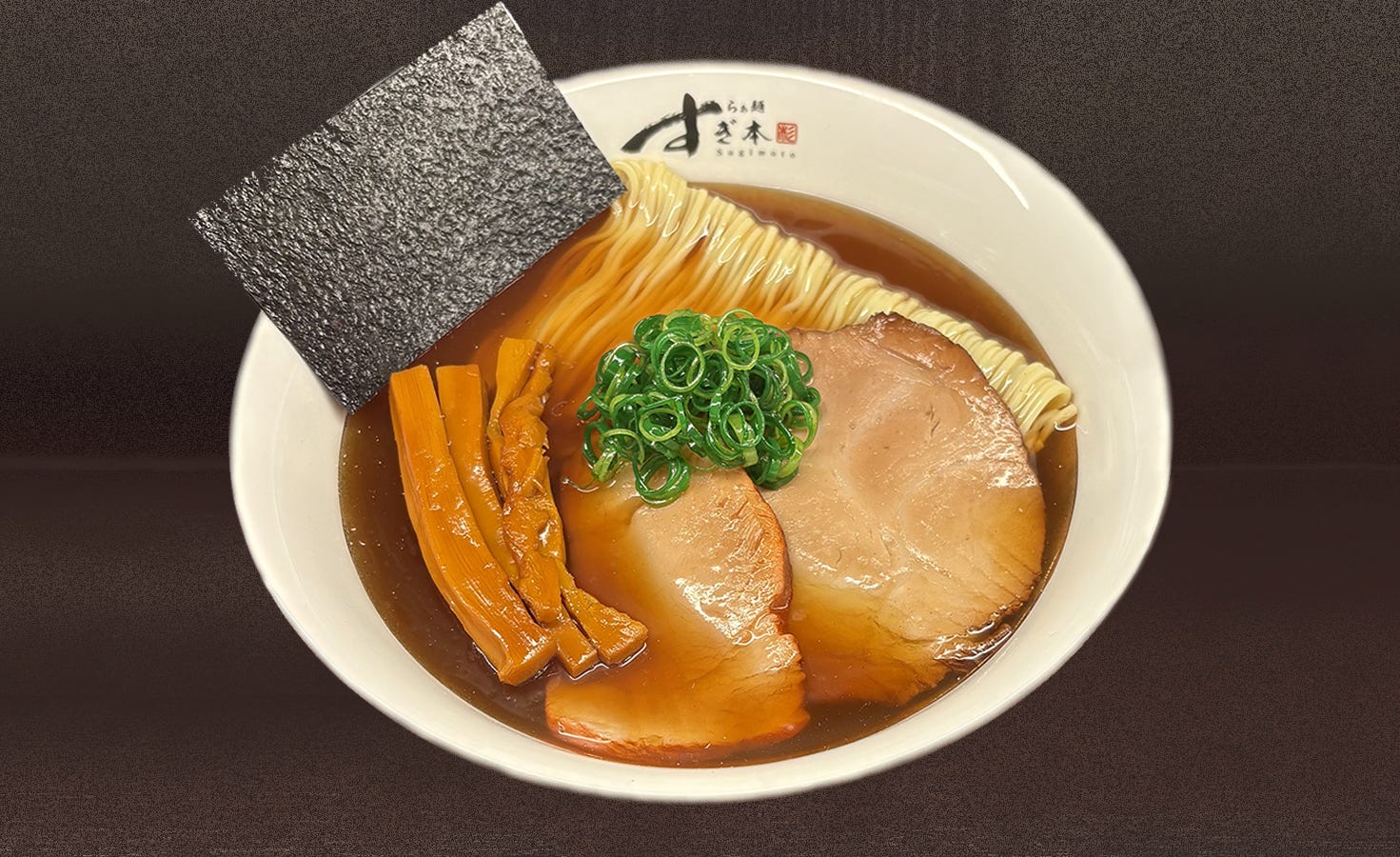
Ramen had been high on my list as well, lodged into my memories in a special way, as the ultimate comfort food. I had shared my love of ramen with Shin-san, my Japanese tutor, who lived just outside of Kyoto. I had shared with him how much I loved ramen and we laughed as I told him about learning, years ago, to loudly slurp the noodles. He had promised to take us to his favorite place in Kyoto when we came for a visit.
It was a small ramen shop, tucked between train tracks and a bridge. It was beyond plain, the kind of place you might walk right past if not for the line out the door. Following Shin-san and his wife, we squeezed inside and sat on chairs that felt more suited to a kindergarten classroom. In what seemed like nothing flat, bowls of steaming noodles were set down in front of us and we joined in the communal slurping, Shin-san was beaming as we picked the bowls up finishing the deeply satisfying broth. Ramen, and I’m not talking about the cheap packages popular in college dorms, has developed a kind of mystique, along with a cult following devoted to finding the “perfect bowl”. It’s even caught the attention of French chefs, like Jacques Pépin, and why not?
Another day, we ducked into a train station to get out of the rain and stumbled into a sleek, modern, architectural place specializing in ramen and gyoza. It turned out to have an honorable mention in the Michelin Guide. It couldn’t have been more different, yet the experience was just as satisfying, just as accessible, and surprisingly affordable.
As a chef, I found something reassuring in that — that something so seemingly simple could be executed at such a high level, across such a wide range of places, without losing its soul. Over nearly three weeks in Japan, the “perfect bowl” always seemed to be the one I had most recently eaten.
Back home in our own kitchen, I’ve been trying to capture that “perfect” bowl of ramen. They’re always delicious, but they never quite measure up. Even so, it reminds me of where we’ve just been. Sometimes that’s enough.
But it wasn’t all sushi and ramen.
We spent time admiring temple gardens and landscapes that were familiar from the iconic ukiyo-e woodblock prints — travelers crossing bridges, cherry blossoms at their peak, ordinary moments, captured and held in place and time.

Looking back at our own photographs, I had the same thought. What had been everyday scenes just days before were already beginning to slip away. Memories forming almost as quickly as we were making them.
One of my goals in revisiting Tokyo was to find the neighborhood where I once lived. It seemed important. So one afternoon we set out with the address in hand, written on the back of one of the letters that my mother had saved. I was sure I would remember what it looked like, that something would click, that I would be transported back in time.
It didn’t happen. “But Google Maps says it’s right here!”
We stood there looking around at an entire neighborhood full of newish five story buildings. Gone were the humble two story dwellings from my time there. We were tired, disappointed and lost — lost in time. Nothing looked familiar.
After a while, we moved on.
The last stop on our trip was further south, the island of Shikoku, the smallest of Japan’s major islands, and the least visited. Everything there moved at a different pace, slowed down, sort of like we felt, echoing the trip itself. It was as if we were delving deeper into Japan simply by relaxing more. We did some of the same things, walking through parks and smaller museums. And of course eating sushi, and ramen’s cousin “udon” — a specialty in Takematsu, the town where we were staying.
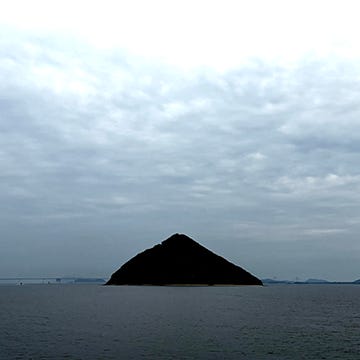
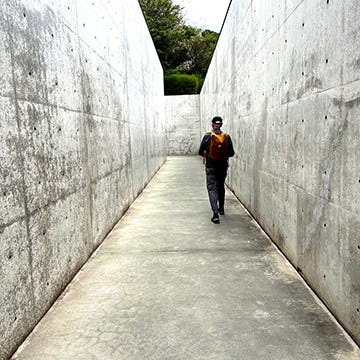
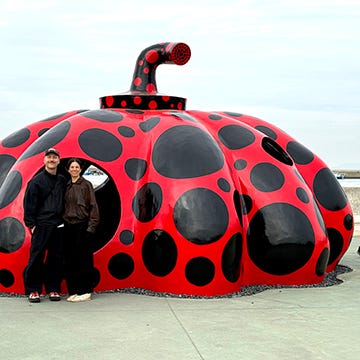
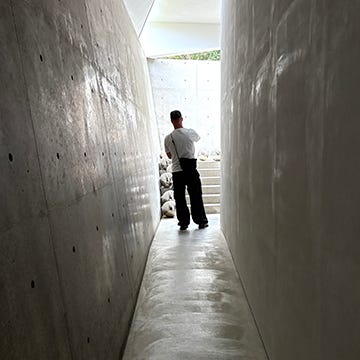
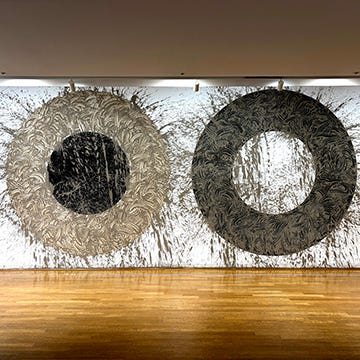
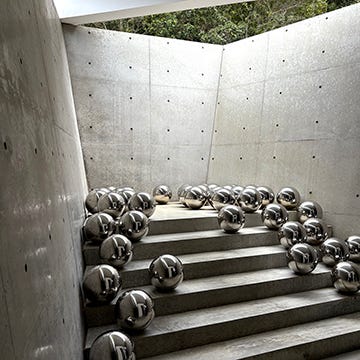
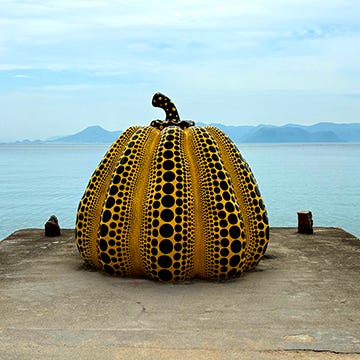
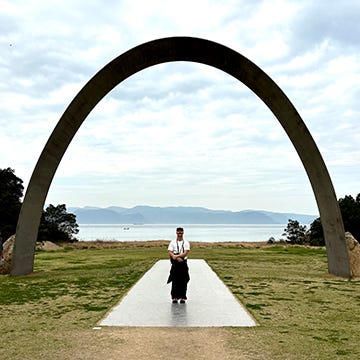
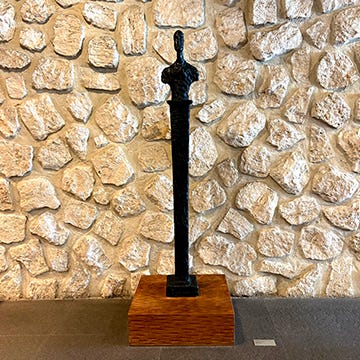
One of the highlights of our adventure was taking a ferry to Naoshima, a small island almost entirely given over to art, created by the Benesse Art Site. It was a warm, sunny day. We rented e-bikes (recommended), cruised all over the island and marveled at how a formerly polluted industrial wasteland has been transformed into a cultural center and art mecca.
In all our time in Japan we never had a bad meal, and that included the rainy night we stayed in at our Airbnb and had takeout from the local grocery store.
The selection was as amazing as the sushi was fresh. In fact, it was so good we went back the next day when we found ourselves too exhausted to venture back out after a long day.
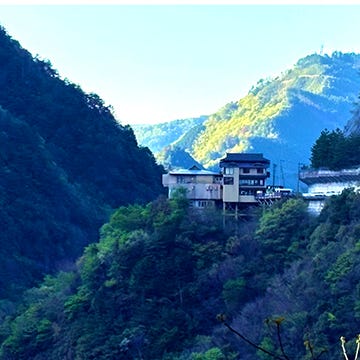
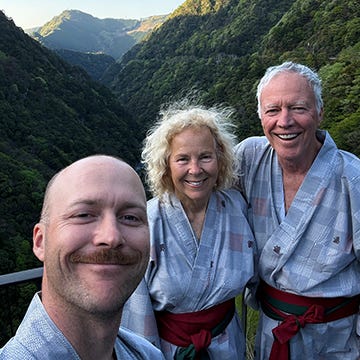
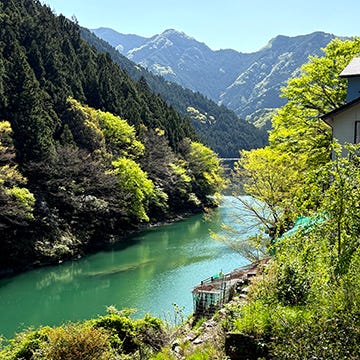
The last night of our trip was spent at a traditional ryokan, complete with an onsen streamside at the bottom of a steep canyon. It felt like the right way to end—soaking our tired legs in the mineral waters, letting everything settle.
Maybe we’re still letting it settle.
Back home, we’ve been looking through photos, trying to piece it all back together. We covered a lot of ground: the meals, the conversations, the small moments that didn’t seem important at the time.
We went to Japan for many reasons—for art, for food, for memory. For a while, it all felt almost ordinary, like it was just part of everyday life.
But it doesn’t stay that way.
The details begin to drift. What’s left is something harder to pin down.
Standing there at Tsukiji that morning, knocking back toro nigiri at nine o’clock, I wasn’t thinking about any of that.
It just felt like a good meal.
Like that first night, all those years ago.
Comments
Nothing yet. Say the first thing.
Sign in to join the conversation.