

Over the weekend, my son’s driving class deliberately spun out cars on slick pavement.
The instructors at B.R.A.K.E.S. didn’t run a calm, controlled ride. They tested every teen’s reflexes, ability to stay calm, and capacity to recover from chaos. One wheel off the road. Sudden skids. Loud distractions. No braking allowed.
If you asked me, “Would you prefer everything go according to plan?” Of course. But what stuck with me wasn’t the controlled parts. It was the moments when they let go of control and taught the students how to recover.
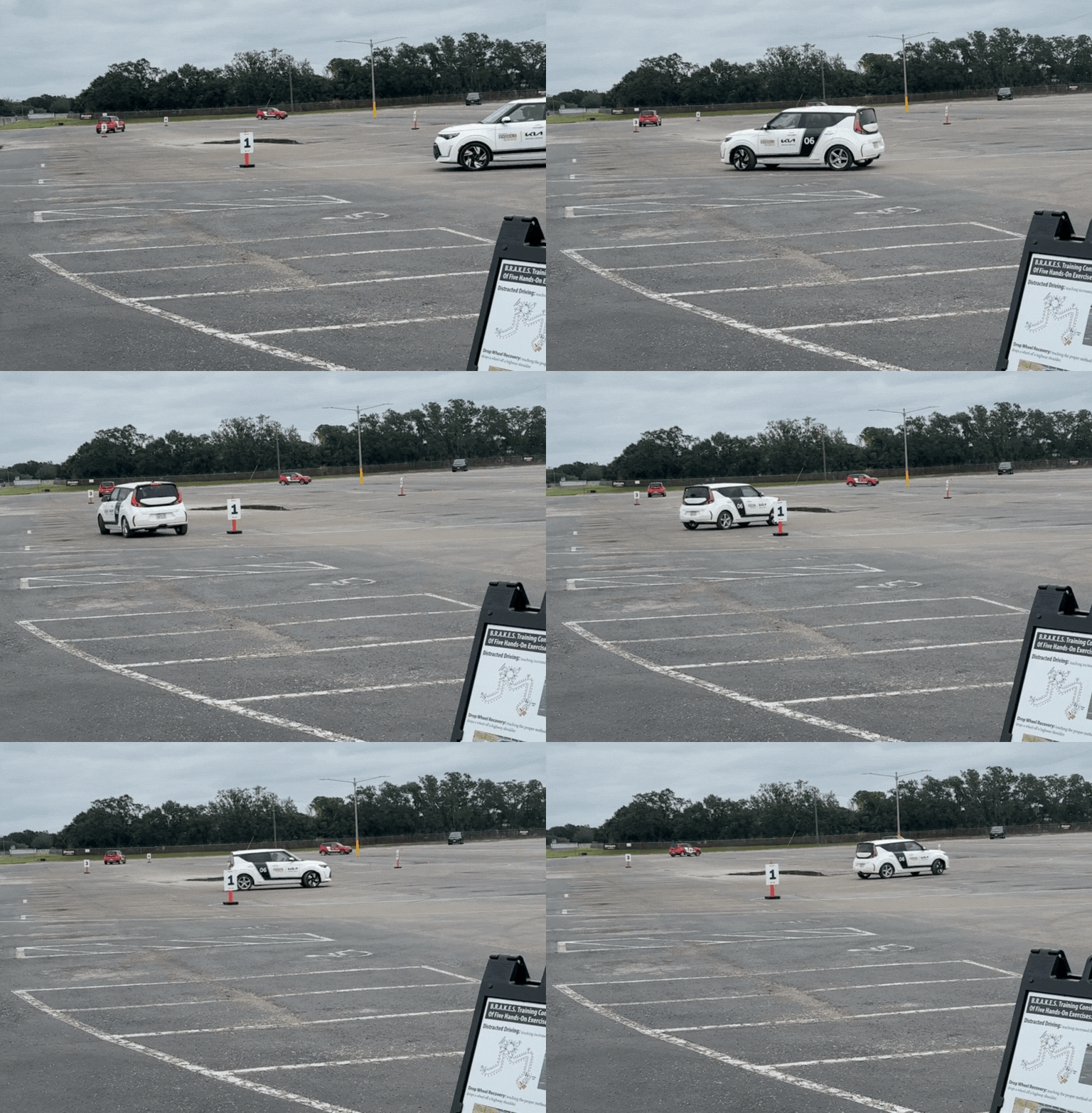
When they sent the students into a skid, the goal wasn’t to avoid it. It was to feel the slide, stay present, and bring the car back into alignment.
In parenting, business, and in life, we tend to treat a skid as failure. A sign we messed up, that we didn’t deserve our goals, that we’ve lost control. But in reality, skids are inevitable. Whether in work, relationships, or health, we will veer off track. The question isn’t whether we’ll slide. The question is how we’ll return.
And I’ve been there.
I’ve shared this story before. Me, crying into my soup at Panera.
Totally overwhelmed. Convinced I had ruined the relationships that mattered most. That I had nothing worth saying, no idea what I was doing, and that I couldn’t keep building my business this way.
That was my spinout. That was my one wheel off the road.
But that moment wasn’t the end. It was my cue to return.
The American Psychological Association defines resilience as:
“...the process and outcome of successfully adapting to difficult or challenging life experiences, especially through mental, emotional, and behavioral flexibility.” — APA
It’s not about staying composed all the time.
It’s about adapting, recalibrating, and coming back to center.
Researcher Peter Gollwitzer calls them implementation intentions. Simple if-then plans that help you automate your recovery.
“If situation X occurs, then I will do Y.”
These tiny plans reduce mental fatigue and decision paralysis by giving your brain a pre-decided cue and action.
Examples:
“If it’s Tuesday morning, I’ll block off time to write content.”
“If I find myself doomscrolling, I’ll set a 5-minute timer and reset.”
It’s not about discipline. It’s about giving yourself a prepared path back when things go sideways.
Researchers and productivity experts agree: habit is one of the most overlooked emotional anchors.
Good habits reduce the friction of restarting. They help you pick up the thread, even when you feel disoriented or low. They become emotional safety nets.
Here’s how I’ve learned to re-center, especially since the day I melted down at Panera.
These are the gentle prompts that help me realign:
Monday: Outreach
Tuesday: Content writing
Wednesday: Engagement hour
Thursday: Thank You Thursday
Friday: Follow-Up Friday
A Notes file called “Common Dinners” for brain-fried evenings (it started as “Monthly Dinner Automation” proof I was spending too much time talking to ChatGPT)
These aren’t rigid. They’re gentle nudges.
Not “You must do this or fail.” Just, “Here’s a place to begin again.”
I’ve learned to rely on little statements like:
If I feel scattered, then I write for 15 minutes before touching anything else
If I miss a task, then I review my return list instead of spiraling into a full re-plan
They keep me from falling into shame or avoidance.
I used to handwrite morning pages. Three full pages, Julia Cameron-style.
But eventually my hands started to cramp. And I realized I was using the ritual itself as a hiding place.
Now, I use the 750words app. I write digitally each morning, no filter. Just a quiet mental clearing.
Writing became the place I return to.
Not because I’m trying to create something, but because it helps me find the missing pieces.
It’s like trying to finish a puzzle when half the pieces are gone. And then, somehow, they start showing up. In your couch cushions. Under the table. Inside your sock drawer.
Writing doesn’t fix everything. But it helps you find what you thought you’d lost.
We don’t need more shame for getting off track.
We need more practice finding our way back.
Control isn’t the goal. Recovery is.
Old belief: If I derail, I’ve failed.
New belief: Derailments are inevitable. Recovery is the skill.
If you’re ready to create your own recovery ritual, here’s what to try:
Pick one habit that helps you feel like yourself again
Write an if-then statement that cues your return
Ask: What’s one small, doable task that brings me back to center?
Then hit reply, or comment, and share it with me. I always read your replies and comments.
You don’t have to drive perfectly. You just have to come home to yourself, again and again.
American Psychological Association: Building Your Resilience
Psychology Today: Implementation Intentions Facilitate Action Control
Gollwitzer, P. M. (1999). Implementation Intentions: Strong Effects of Simple Plans (PDF)
Research Masterminds: The Researcher’s Superpower: Habit Formation
B.R.A.K.E.S. Teen Driving Program: About the Program (highly recommend!)
If today’s post hit home, let’s keep the conversation going.
You can:
Complete my quick subscriber survey so I can shape future posts around what you (I’ll donate $100 to Kiva for every 100 responses)
Get ROLO, your free Digital Social Selling Advisor (a GPT to help you GTD)
Join the waitlist for my 1:1 advisory if you’re ready for a system that sticks
Comments
Nothing yet. Say the first thing.
Sign in to join the conversation.