
Let’s talk about AI.
I love it. I hate it. I have…thoughts. So do a lot of others. I ran across this in my feed recently and the timing was no accident.
Last week I was at a professional seminar on AI. A room full of creatives. Designers, photographers, writers.
The presenter looked at us and said: “AI has taste.”
Stop. Right there.
If you know about AI and, more specifically, how it actually works, you know that simply cannot be true. Taste is pattern recognition over time. Years of noticing what works, what doesn’t, and why. Eventually, those patterns begin to form judgment.
AI can be lovely, and helpful…it’s great at “nicing up” an email. But in our experience, it’s also the arrogant coworker who thinks their ideas are the only ones that matter and will happily die on a bad one.
AI doesn’t really know its place.
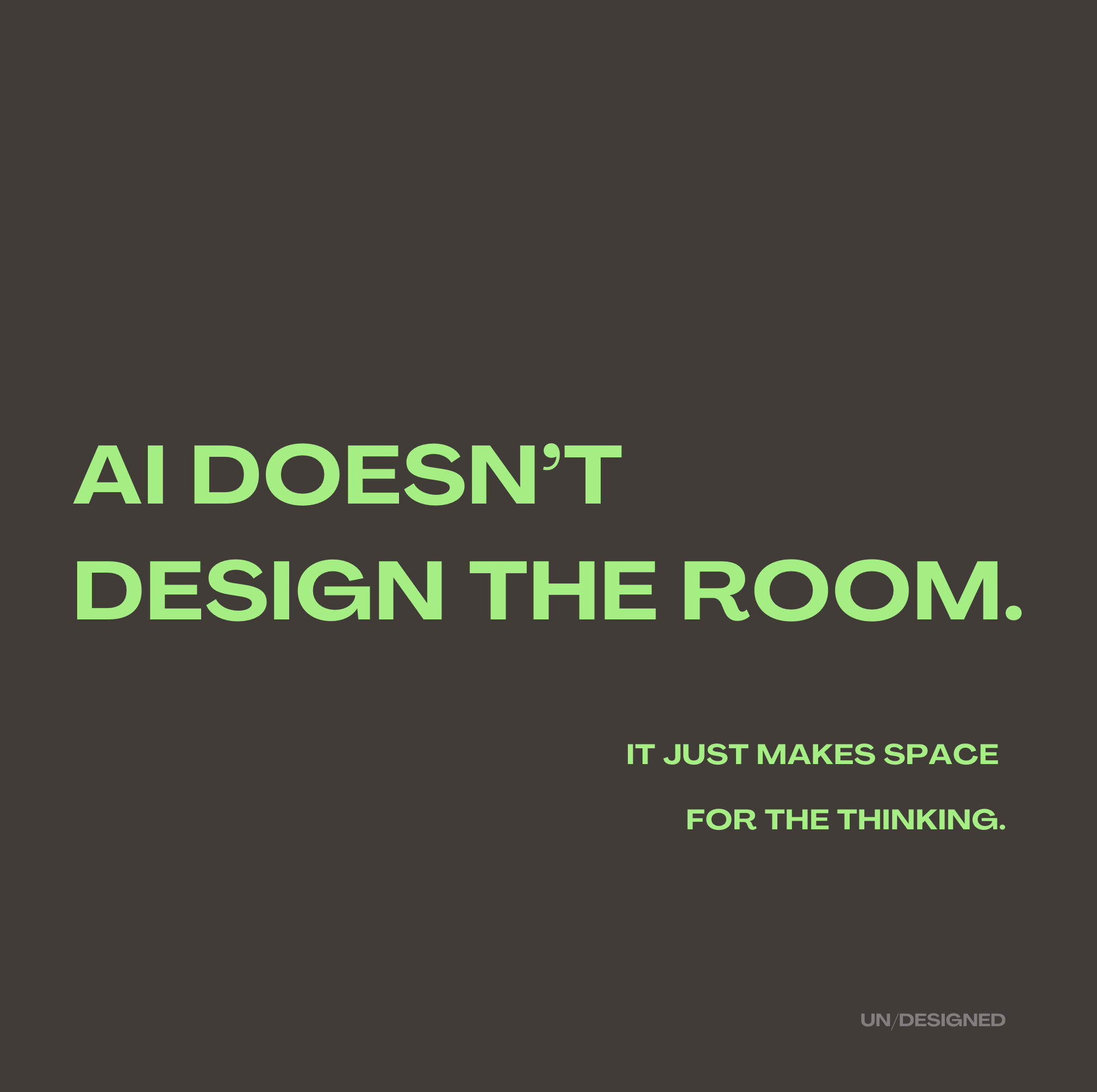
Overheard in the Studio the other day:
Me: “Wow. That is a terrible idea.”
AI: “You’re right, sorry.”
Me: “I’m out.”
AI: “I get it. Good luck with everything.”
Yes, prompts matter. Context matters. History matters. Yet nonsense still shows up often enough to make it annoying.
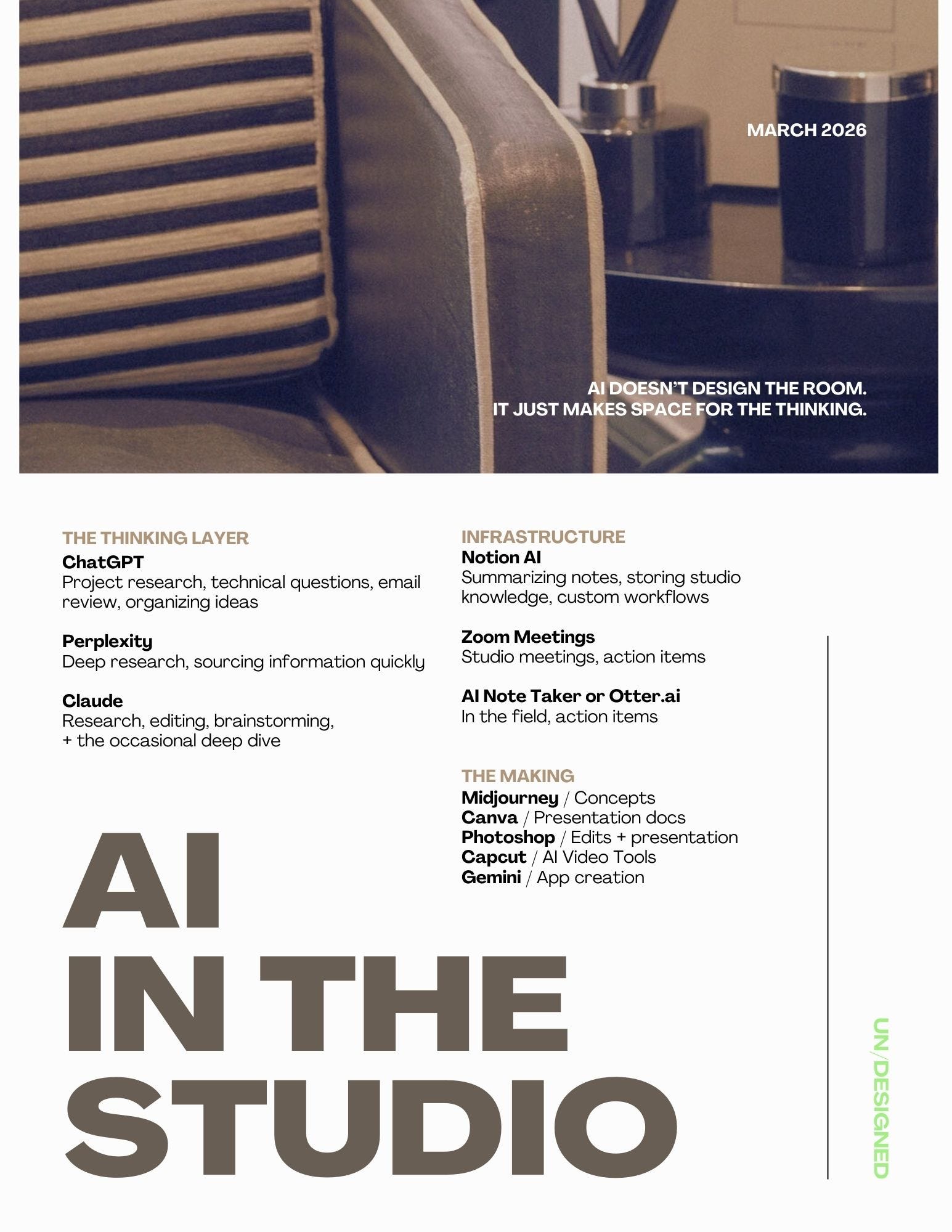
In our firm, we use AI many different ways to our benefit. We use it to distill meetings with clients into a quick recap with clear next steps, we use it to do quick renders of ideas that come up during the ideation process, and we use it to coordinate information across lengthy, detailed projects.
But here’s what AI can’t do— at least in the world of interior design.
It can pull together the contents of a room, but it can’t source the one off—the piece that makes the magic. That nineteenth-century Belgian bench that's been reupholstered a time or two— slightly too small for the entry but still somehow exactly right? That find doesn't come from a search. It comes from years of looking.
AI doesn’t have the contextual judgment to know how to curate a space or a home, instead of simply filling it. It can't sit with a client in the middle of a stressful renovation and help them navigate decisions that affect how they'll live for the next twenty years. It can't read the silence in the room when someone is about to say yes to something they'll regret.
That's not data. That's presence.
And, ultimately, AI doesn’t carry any responsibility. It can say what it wants, generate what it wants, and suggest whatever it wants. In the end, the product we put into the world reflects who we are as a creative firm, and that is what we, and our clients, live with in this real life.
These limitations of AI apply beyond design. While it can spark a thought, or move an idea forward, the human parts of being human— judgment, taste, empathy, instinct— are still what actually bring life to design, art, and craft.
At least today, anyway.

Comments
Nothing yet. Say the first thing.
Sign in to join the conversation.