
Many of you get these writings through your email.
Please take a second to give this writing a heart to show you liked this post. By doing this you help these words find their way to more people who need a little hope.
Once (or twice) a week I send out a poem, prayer, or story of hope for free.
All of my posts are free, but I’d love to have you support my work and ministry as a writer by becoming a paid subscriber.
Become a Paid Subscriber Today

And for the last few months I’ve been reading it slowly.
I don’t think it’s possible to read Psalm 23 quickly.
There are plenty of other places I could spend my time in the Bible, but lately I keep finding myself back with these familiar words. Maybe it’s because I’m getting older. Maybe it’s because life feels heavier than it used to. Or maybe it’s because some truths are so beautiful that we spend our entire lives relearning them.
At 25 years old, I was living alone in the woods of Northern Wisconsin while working at a camp. It was an incredible place. The kind of place people pay money to visit. Tall trees, quiet lakes, endless stars at night. On the surface, it seemed like the sort of setting where a person should feel close to God and grateful to be alive.
Instead, I was exhausted.
When I think back on that season now, more than a decade later, I can still feel the heaviness of it. I was physically worn out, spiritually depleted, and mentally running on fumes. It wasn’t one catastrophic event that led me to feeling this way, but a thousand smaller disappointments, losses, and struggles that compounded over time until I felt buried beneath them.
This is sometimes how life goes.
The years leading up to that season had not unfolded the way I imagined they would. I struggled through college, wrestling with depression and homesickness and endless waves of change while trying to figure out who I was becoming. After graduation I landed my first full-time job, only to be let go a few months after.
If you’re looking for a quick way to get your life uprooted, this is the way to go.
Being let go felt like confirmation of many of the fears I already carried about myself. Insecurity rose as sadness and self-doubt tightened their grip on me. I was unsure of my future, unsure of my gifts, and increasingly unsure of where God was in the middle of it all.
Naturally, after losing my job, I decided to pursue writing poetry. As everyone knows, poetry is a reliable path toward financial stability and emotional well-being.
I spent the long nights writing, trying to put into words what I was thinking and feeling. I had my questions. I had my doubts. I had my fears. But something about bringing them to the page made me feel less alone, less like I was drifting out in the middle of the sea and more like I was tied to the dock. Writing didn’t solve anything, but it gave me a way to sit with what I was carrying.
A short time later I received a call about working at camp, and I gladly accepted. In many ways it was exactly what I needed. The summers were full of energy, people, laughter, and purpose. But camp ministry has its own rhythms, and once the crowds left and winter settled in, the silence became difficult to ignore.
Northern Wisconsin winters are long. The days feel short. Darkness arrives early and lingers. The town empties to the handful of locals who love the silence and solitude. Most evenings I would read, write, spend time in Scripture, and do my best not to disappear into whatever show Netflix suggested next. Looking back, I wasn’t thriving, but simply trying to get through what I was growing through. Some days that felt noble. Most days it just felt hard.
One word kept surfacing in my prayers: disappointment.
Lately I’ve been thinking about that word a lot. Disappointment is such an ordinary part of being human that we rarely stop to examine it. Yet so much of our lives are shaped by it. We experience disappointment when our expectations collide with reality. We imagine one future and receive another. We pray for one outcome and find ourselves living inside a different story altogether.
I’ve come to think of disappointment as the place where the life we imagined meets the life we are given.
None of us escape that collision. Relationships fail. Careers stall. Dreams change. Plans unravel. People leave. Prayers seem unanswered. Health declines. Brokenness arrives. Sometimes the disappointments are dramatic and life-altering. Other times they are quiet and cumulative, arriving one small frustration at a time until we wake up one day wondering why we feel so weary.
The temptation is to avoid disappointment at all costs. We try to protect ourselves from it. We lower our expectations, keep people at arm’s length, and avoid risks that might lead to heartbreak. But a life without disappointment is also a life without vulnerability, hope, and love. If you want to live a full life, you’ll have to endure the wounds of this world.
Over the years I’ve discovered something surprising: hope grows best in the soil of disappointment.
Disappointment isn’t something we should seek out, it will find us. And when it does, it will invite us to confront what we’re placing our hope in. It strips away illusions. It reveals our limitations. It reminds us that control was never ours to begin with. Unexpectedly, disappointment can become the very thing that leads us to a deeper hope.
Eventually I left camp and got the help I needed. In the years that followed I began traveling, writing, speaking, and sharing stories about hope. What surprises me now is how often I hear echoes of my younger self in the people I meet. Whether I’m speaking at a church, a conference, or a college campus, the details of people’s stories differ, but the themes remain remarkably familiar. Depression. Failure. Exhaustion. Loneliness. Grief. And underneath all of them, disappointment.
Which is probably why I keep returning to Psalm 23.
There is a reason these words have endured for thousands of years. They speak honestly about valleys without allowing valleys to define the entire story. The writing doesn’t pretend darkness isn’t real. It doesn’t rush past suffering. Instead, it offers something deeper than escape.
At the center of Psalm 23 is a simple promise:
“For you are with me.”
Those five words meet disappointment with hope.
They remind me that God’s greatest gift is not a trouble-free life. It is His presence. The promise of Psalm 23 is not that we will avoid disappointment, grief, or uncertainty, but that none of those things will have to be faced alone.
When I was 25, I needed to hear that.
At 36, I still do. And I’m sure I’ll need to be reminded of this every step and season along the way.
Because disappointment still shows up.
Life still surprises me. Plans still change. There are still days when the future feels uncertain and prayers feel unanswered. But I’ve learned that God’s presence is not dependent on my circumstances. He remains with me in green pastures and dark valleys alike.
And that changes everything.
Disappointment does not get the final word.
Hope does.
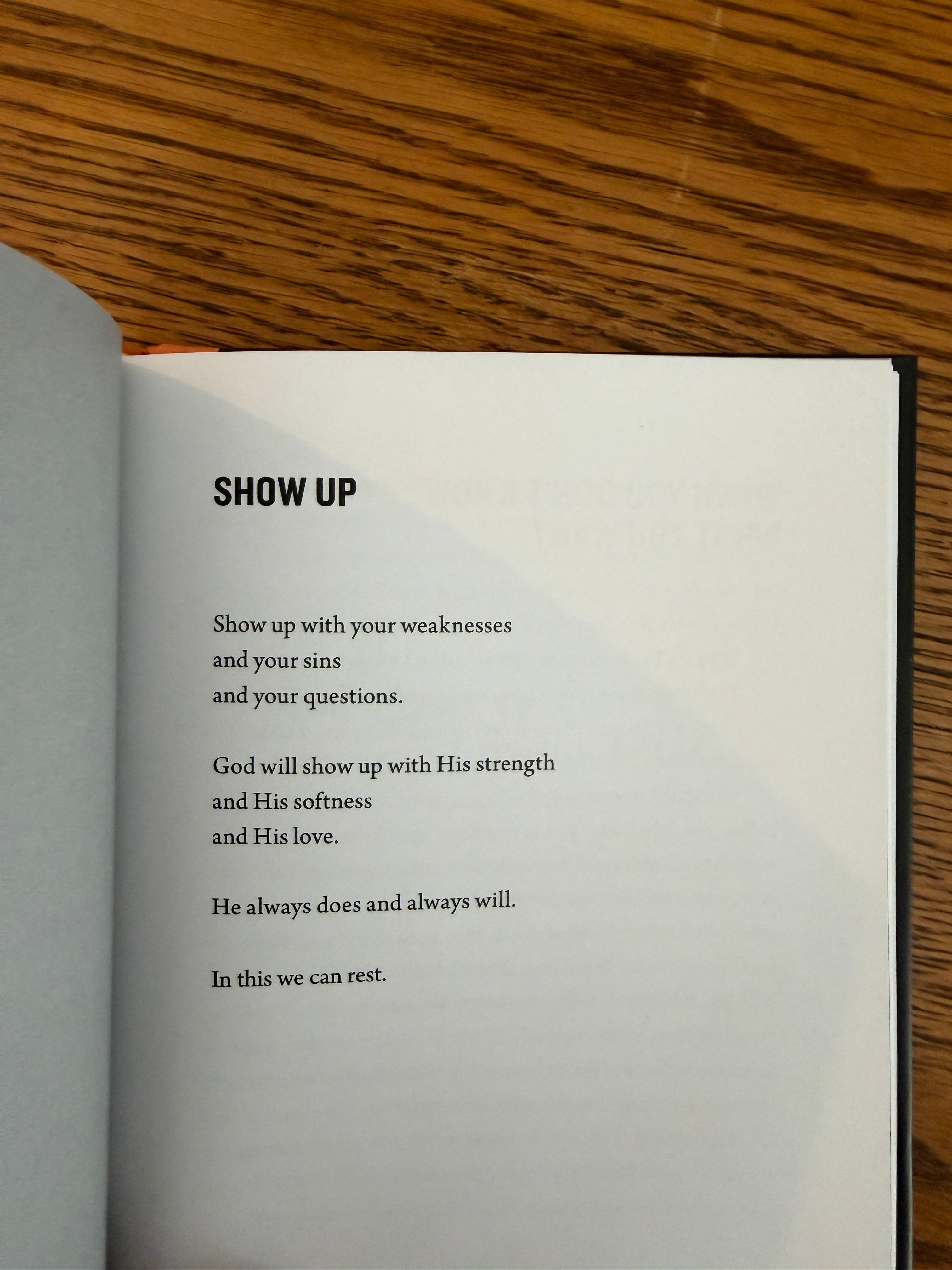
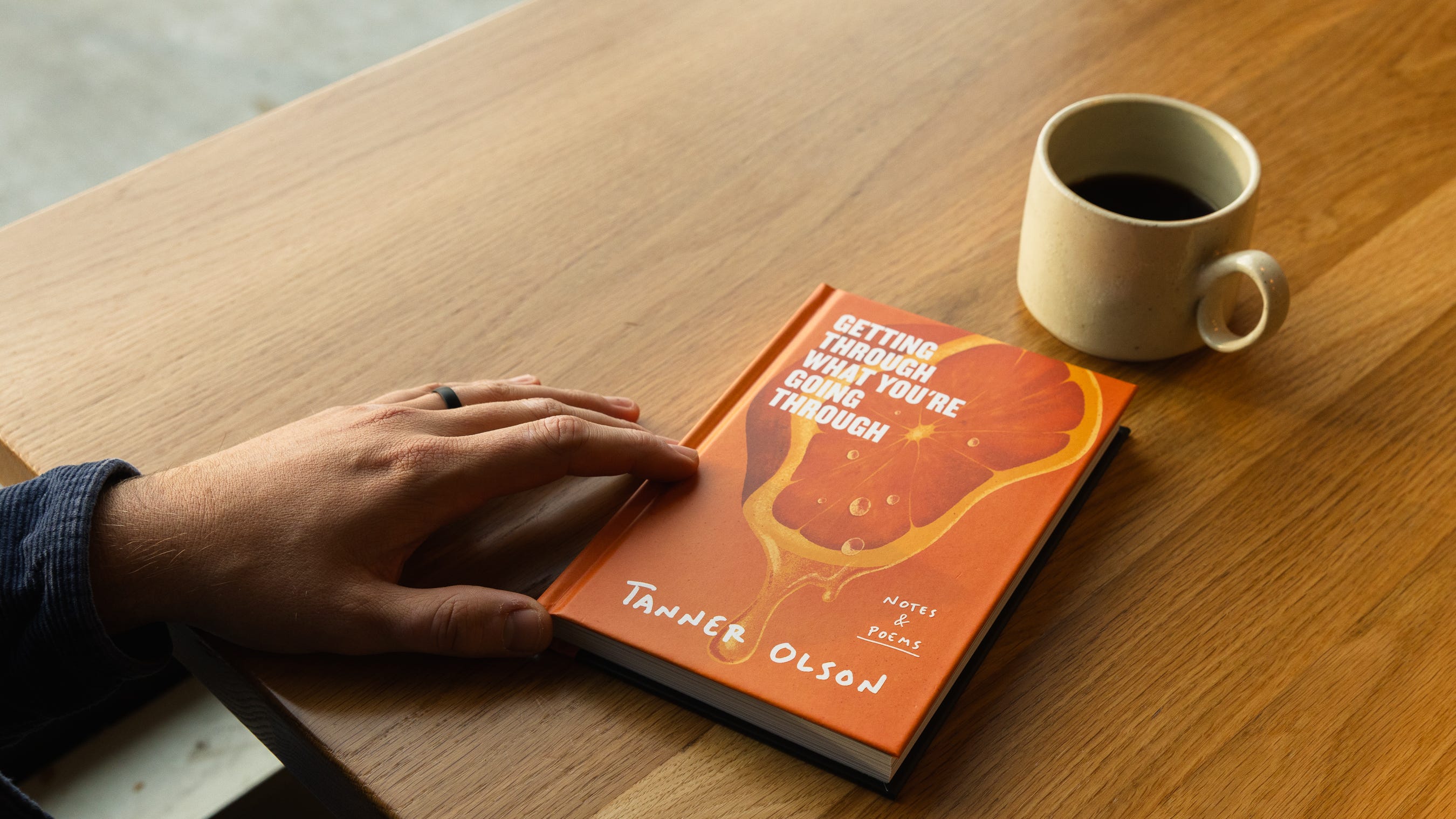
A page from my book, Getting Through What You’re Going Through.
Don’t have a copy? Now is a good day to get yours!

Website | 📚 Books | On Instagram | On Facebook | ⭐️ Online store
Comments
Nothing yet. Say the first thing.
Sign in to join the conversation.