
Ready to spend the next 15 minutes inside my brain as I think through whether or not I want to add this new fund to my portfolio?
That’s what we are doing today!
This will be the first instalment in a collection called The Fund Breakdown Series on The Freedom Diaries where I give you a behind-the-scenes look at how I think through a fund before I decide whether or not to invest in it.
In my previous article, I detailed the 19 Questions I Ask Before I Buy a Covered Call ETF. It contains the exact checklist I run through before a single dollar gets invested.
If you haven’t read that post yet, it’s the lens I’m using for everything below.
A quick note before we dive in: I’m not a financial advisor, and this isn’t financial advice. This is just our real, lived experience building this portfolio since 2020. The wins, the choices, and the reasoning behind them. Our fund selection was built carefully around our goals, our risk tolerance, and our timeline. Please don’t copy our portfolio. Do your own research, understand your own numbers, and build a strategy that actually fits your life. Our portfolio is also always evolving. What you see here today may look different six months from now.
The fund we are reviewing today is Hamilton’s Enhanced Technology DayMAX ETF, ticker symbol QDAY.NE.
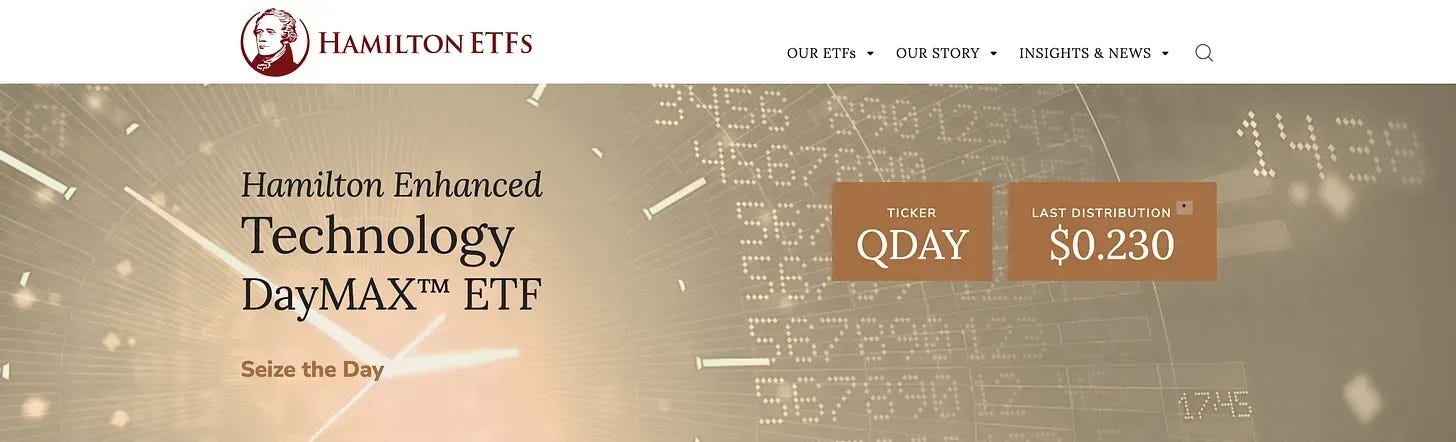
Resource: https://hamiltonetfs.com/etf/qday/
Fund: QDAY.NE, Hamilton Enhanced Technology DayMAX ETF
Category: Technology-focused covered call ETF, 25% leveraged
Current Yield: 18.8% (based on current distribution and price, net of fees)
Distribution frequency: Semi-monthly (twice a month)
Call structure: 25% of the portfolio covered, 0DTE (same-day expiration) at-the-money calls, written only on the leveraged NASDAQ 100 portion
Fees (MER / TER / Total): 1.10% / 0.75% / 1.85%
Verdict in one line: A high-conviction, leveraged, income-focussed tech play
We’re actively building the income side of our portfolio right now, so I was specifically looking for a covered call ETF, not a stock, bond, or REIT.
The goal with this fund is income first, but I don't want a fund whose high yield comes at the cost of eroding the underlying stock price. I want something with a steady or growing stock price that also pays me along the way, more of a growth and income mix, with income as the priority.
As for time horizon, we’re long-term, indefinite holders. We stay in and reassess periodically, or sooner if something actually changes about it, like the fund manager swapping out the underlying holdings, or changing how they write their calls. Barring that, this is a hold-forever position for us.
What does it hold?
QDAY is 100% invested in QMVP, the Hamilton Champions US Technology Index ETF. On top of that, the fund uses 25% leverage, and that leveraged portion is invested into QQQM, the Invesco NASDAQ 100 ETF. So the core of the fund is tech, with a leveraged NASDAQ 100 layer on top.
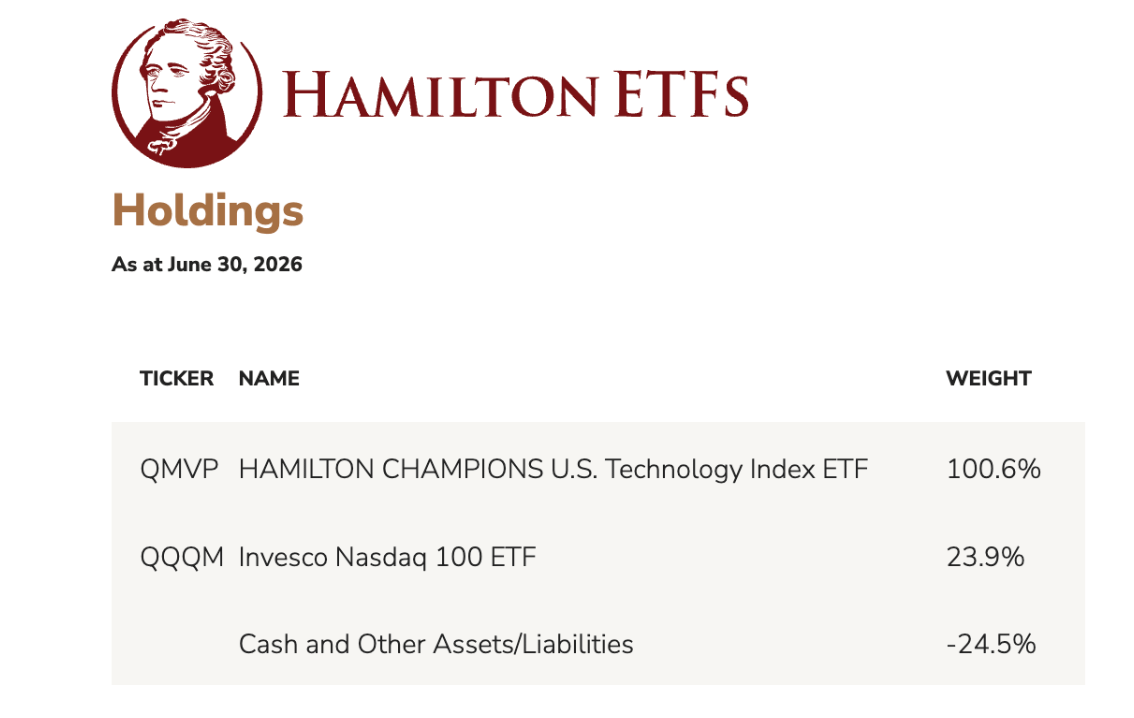
QMVP itself currently holds 25 technology stocks. These aren’t just “fast growing” tech names, they’re the most profitable ones. Names like Tesla, Apple, Nvidia, Broadcom, Micron, Meta, Google, and Microsoft. According to Hamilton’s own description, QMVP tracks an index designed to identify “tech champions,” defined as the most profitable companies whose businesses are fundamentally driven by technology. That’s a different filter than something like the Nasdaq 100, which is built around growth, not profitability.
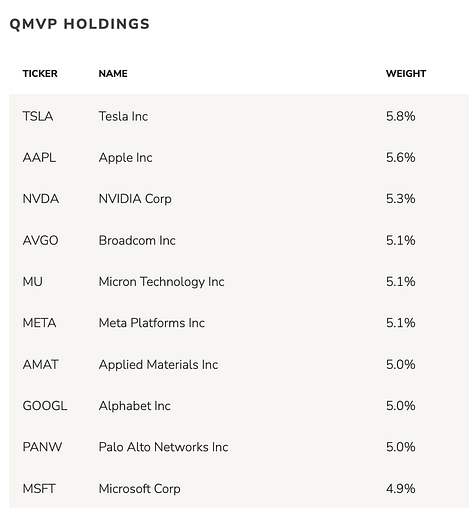
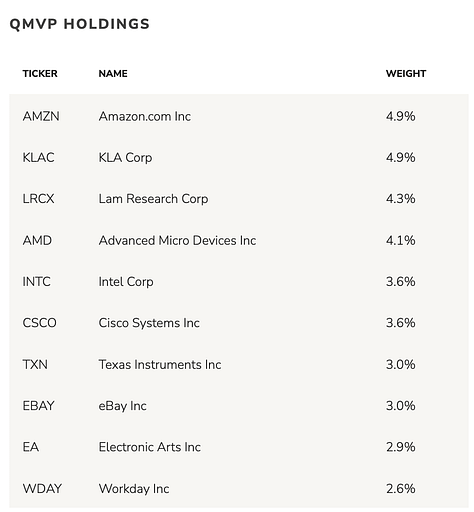

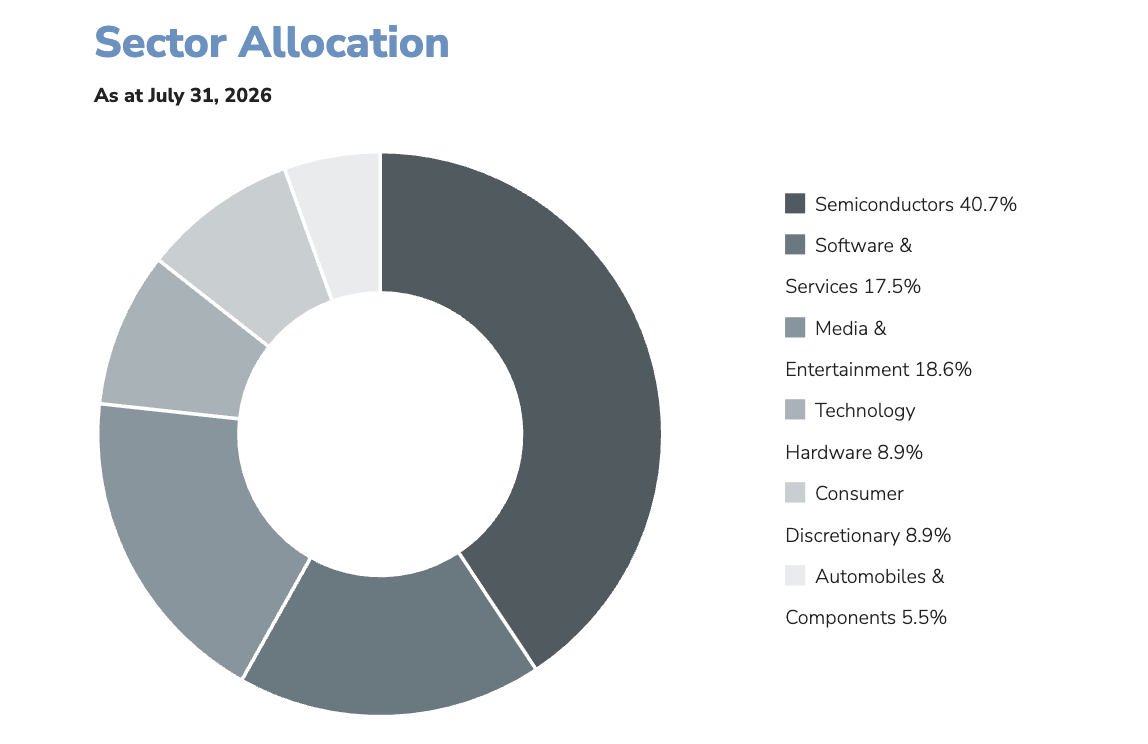
This is not a diversified fund. It is a leveraged, income-focussed technology investment. If you are new to investing, consider doing your own research on a few more diversified funds (e.g., HDIV.TO, HDIF.TO, HYLD.TO, BMAX.TO, USCL.TO) as well, so you can compare.
How long has it been around?
QDAY’s inception date (first date available to purchase shares) is July 14, 2025, so just over a year old as of writing this. If this were a single stock, a one-year track record would concern me. But what tips the scale for me here is what it actually holds.
Apple, Nvidia, Google, and Meta have decades of history behind them, even though the fund wrapper itself is new. I always ask whether limited history matters in a given case, and here, I’m comfortable because the underlying companies have plenty of their own track record.
How is the covered call strategy actually structured?
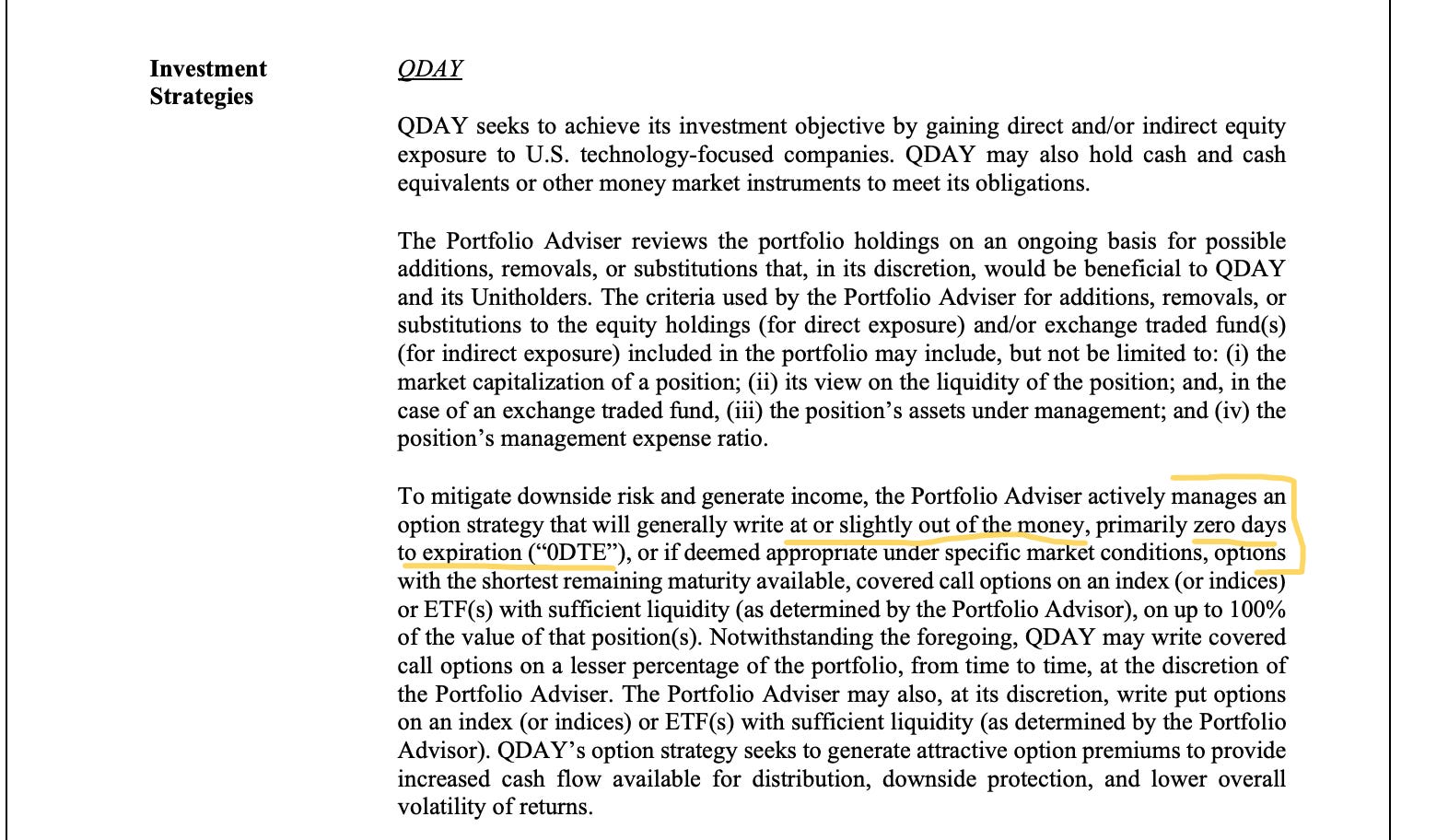
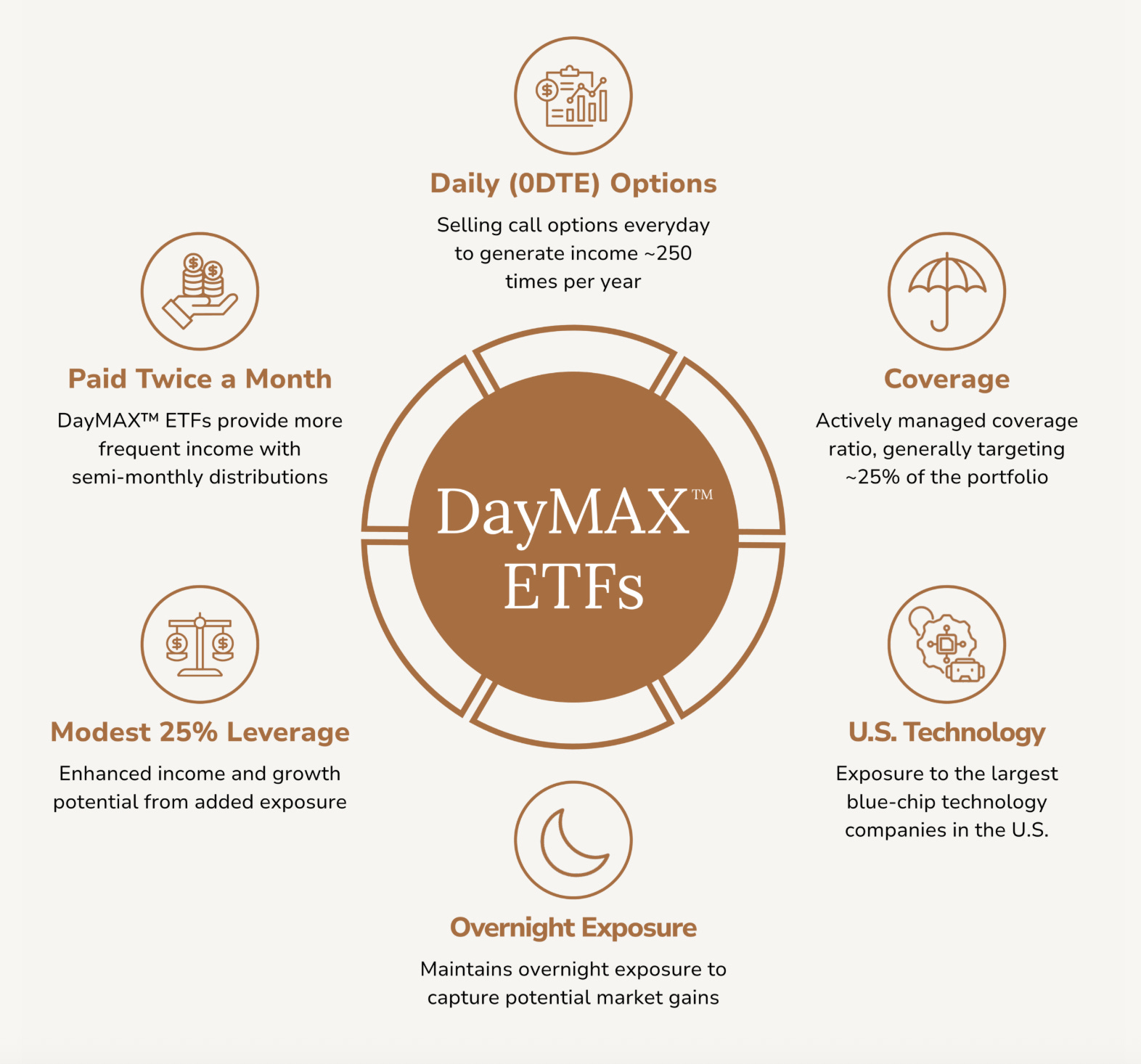
This is the part of QDAY that’s genuinely different from anything else we own. Most covered call funds, including most of the ones already in our portfolio, write calls that expire monthly, so they collect premium once a month. QDAY writes 0DTE calls instead, meaning zero days to expiration. Every single trading day, the fund writes a fresh call in the morning, and it expires by market close that same day. That works out to roughly 250 opportunities to collect premium per year, instead of just 12.
According to Hamilton, the benefit of this structure is full overnight exposure. Since the call always expires before the market closes, the fund isn’t giving up any of the price movement that happens overnight or on the next day’s open, which is something monthly covered call funds typically do sacrifice.
Only about 25% of the portfolio actually has calls written against it, and specifically, it’s only the leveraged QQQM (NASDAQ 100) portion that gets covered. The core QMVP tech holding, which is 100% of the fund before leverage, is left completely uncovered. That means we get full exposure to whatever those tech champions do, up or down, while still collecting daily premium income off the leveraged sleeve.
This is a meaningfully different design than something like QQCL (a similar-ish covered call ETF we own), which writes calls on up to 50% of its portfolio. Less coverage, as seen in QDAY, means more upside potential, but also more downside exposure during a pullback, since there’s less of a covered call cushion.
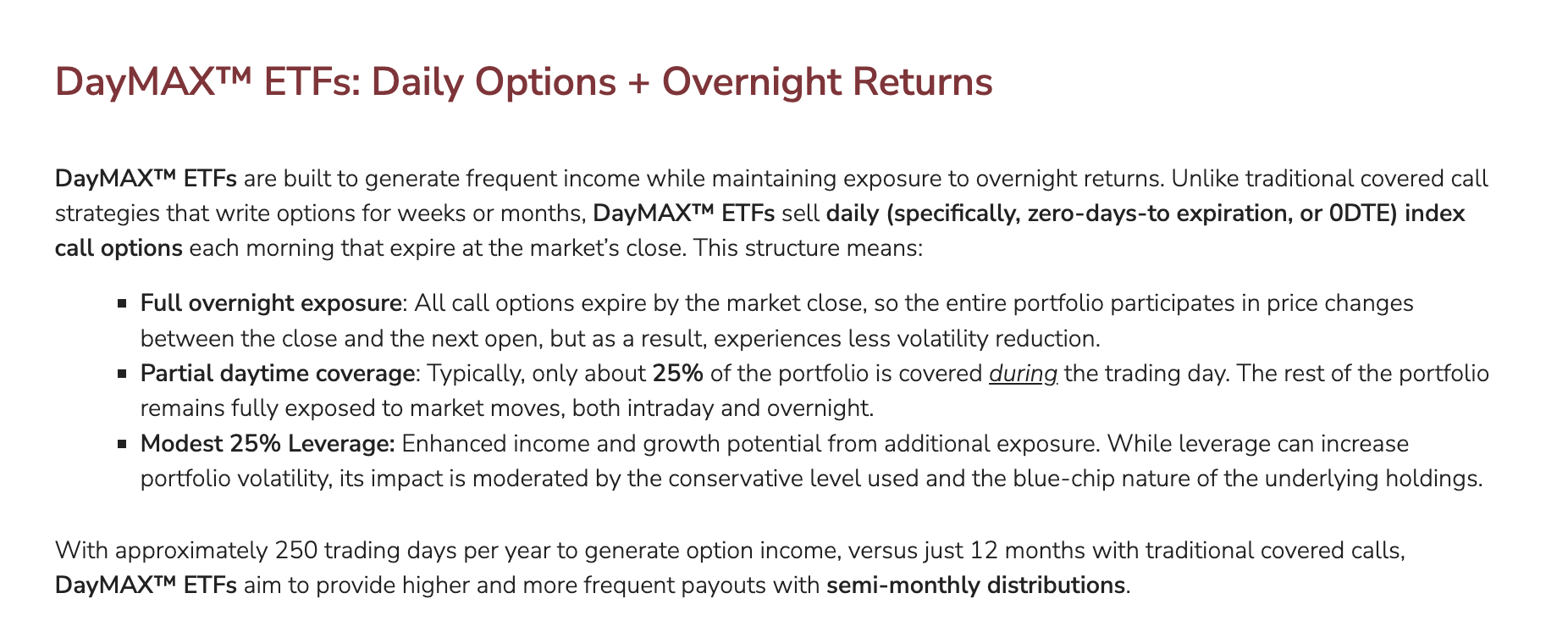
Because the 0DTE (zero days to expiration) calls are written at-the-money or just slightly out-of-the-money, the upside on that covered portion is capped close to where the price sits at market open, which is exactly why the premium (our income) is so rich. The part I like is that this only applies to 25% of the fund's 125% total exposure (the 100% core plus the 25% leverage), so in practice, only about 20% of the actual portfolio has its upside capped this way.
Does it use leverage, and how much?
Yes, up to 25%. In practice, that means the fund borrows an additional 25% against its holdings and invests that into QQQM. Leverage amplifies whatever the market is already doing, sharper moves up, sharper moves down. Most of the covered call funds we own do use leverage, and it’s a strategy we’re comfortable with, because it lets the fund effectively write covered calls against a larger portfolio than the cash we've actually invested.
We’re heavily tilted toward tech across our whole portfolio, and we’re bullish on the sector long term. We know pullbacks, corrections, and even bubbles are part of that ride, but our timeline is long enough that we’re okay holding through it.
What are the total fees?
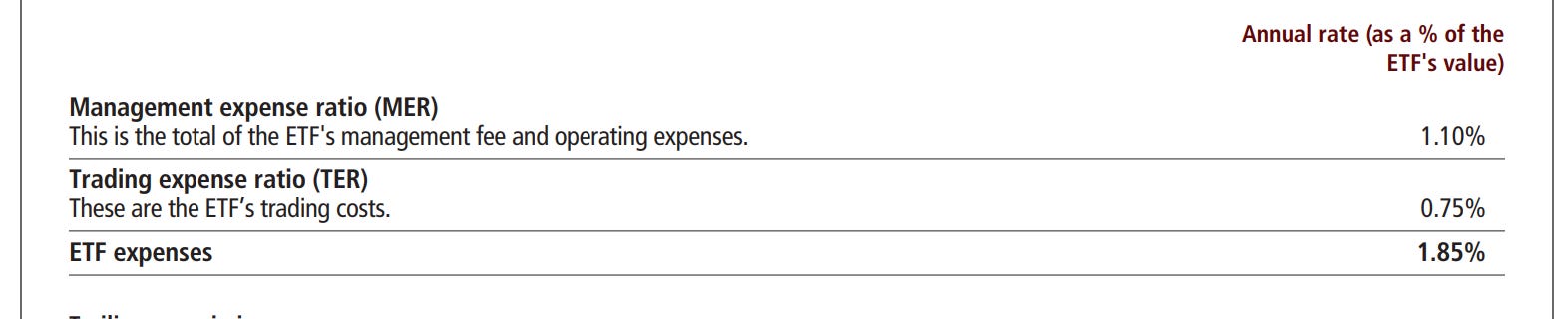
QDAY’s management expense ratio (MER) is 1.10%, the trading expense ratio (TER) is 0.75%, bringing total ETF expenses to 1.85%. That’s on the higher end compared to some of our other holdings, and there are two clear reasons why.
First, there’s a borrowing cost to running 25% leverage. Second, this fund is trading options every single trading day instead of once a month, and that level of active management costs more to run than a traditional monthly call writer.
The 18.8% yield we calculated for this fund is already net of these fees, so the income number you see is what actually lands in our account after costs, not before.
I'm aware that high fees aren't ideal, and I agree that's a fair criticism. We accept trade-offs because the strategy employed by these funds allows us to have a consistent income. With this income, we were able to reach financial independence in our early 30s.
Have I actually read the fund’s info page?
Always. It’s usually the first place I go, and for QDAY it’s where I found the holdings, the fact sheet, the prospectus, and recent press releases, all in one place. I just Google the ticker (QDAY) and “ETF,” and it takes me straight to the Hamilton page.
What’s the current trend?
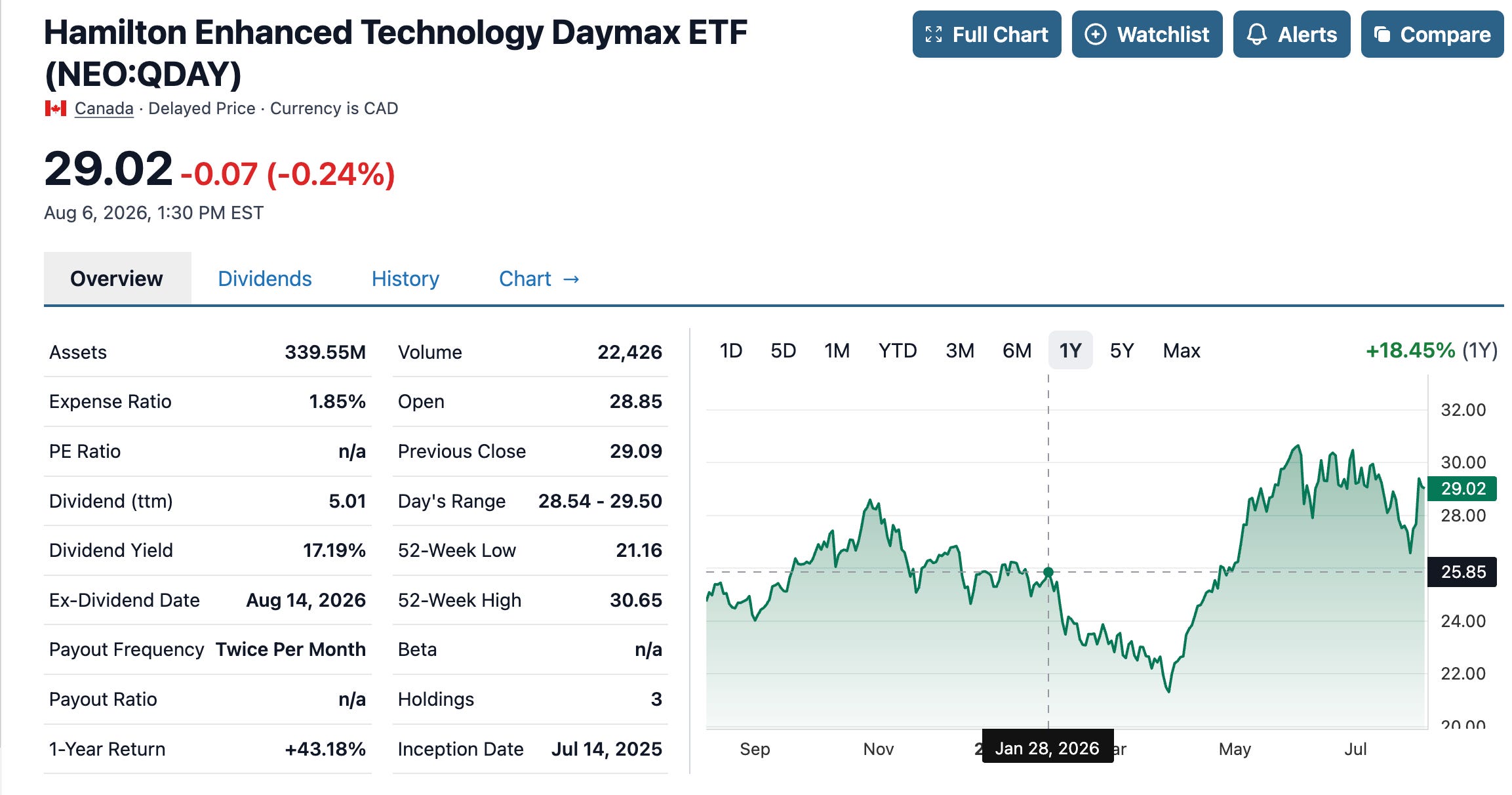
With only about a year of history, there isn’t a ton of data to work with yet, but here’s what we can see from the chart below. The fund trended upward from its July 2025 launch through roughly late October, moved sideways for a bit, then had a fairly sharp drop through the March to April 2026 correction. It rebounded quickly after that, and has been chopping sideways, or consolidating, since around May 2026.
How has it handled past downturns?
We’ve only seen one small downturn so far, and it was a sharp V-shape, a quick drop followed by a quick recovery that reached new all-time highs shortly after. One data point isn't a full track record. Because this is a leveraged fund, we know it will drop further than an unleveraged fund during a correction. Due to the limited history of this call writing style (0DTE), we are unable to predict how this fund will perform and recover during a larger pullback, such as in 2008 or 2020.
Is the fund manager reputable?
Hamilton has been around for a while, and we already hold other Hamilton funds that have performed well for us. They’ve earned our trust over time. One thing I specifically like about how they operate is that they’re cautious about raising monthly distributions, and they don’t often reduce them either, because protecting the underlying net asset value of the fund is part of their approach.
Has it ever missed a distribution?
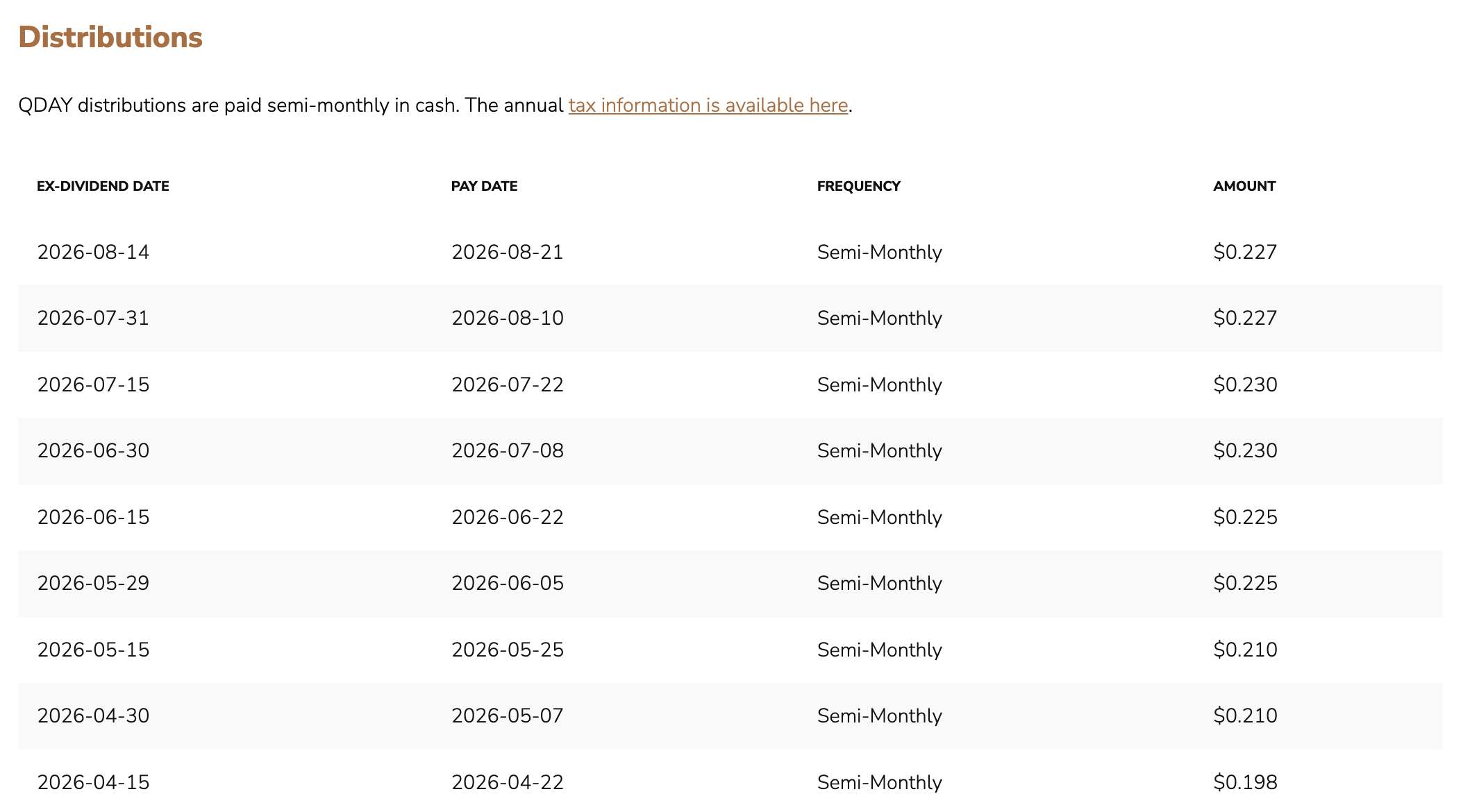
I checked the Distributions section directly on the fund’s page. QDAY pays semi-monthly, meaning twice a month, and going back through the payment history since inception, there haven’t been any gaps. It’s only a year of data, but so far, it’s a clean record.
Are the distributions consistent or variable?
Variable. QDAY launched in July 2025 at $0.20 per share per distribution. It was raised to $0.202, then $0.203, then reduced to $0.198 during the March to April correction, and has landed at $0.227 per share. So this isn’t a fund that pays the exact same amount every time. I’m comfortable with that variability here specifically because the rest of our portfolio already has a strong, stable base of monthly income underneath it.
How often does it pay?
Semi-monthly, twice a month. This is actually the first semi-monthly payer we’ve added to our portfolio, everything else we own pays monthly. In general, monthly or more frequent works for us. We used to hold a lot of quarterly payers and have phased all of them out over the years, because quarterly payouts make our monthly cash flow harder to plan around.
What’s the current yield, and is it sustainable?
Here’s the math. QDAY currently pays $0.227 per distribution, twice a month, which works out to 24 payments a year. For calculation purposes, we can estimate $5.45 annually. At the stock price of $29.02 at the time of writing, $5.45 divided by $29.02 works out to a 18.8% yield.
$0.227 x 24 payments per year = $5.45 annual distribution
$5.45 annual distribution / $29.02 share price = 18.8% yield on cost
That assumes the payout stays exactly where it is, which it won’t, it’ll move up or down, but it gives an estimate of where things stand today.
On sustainability, this depends on how you define the word. If sustainable means “the exact same dollar amount every time,” this fund doesn’t qualify, since we already saw the distribution dip during the March to April correction, but that’s actually exactly what I want to see.
I’d rather a fund reduce its payout when the market pulls back, because that tells me the income is coming from the actual covered call premium being generated, not from eating into the fund’s net asset value to keep paying the same distribution monthly. By that definition, this one checks the sustainable box for me.
When’s the ex-dividend date?
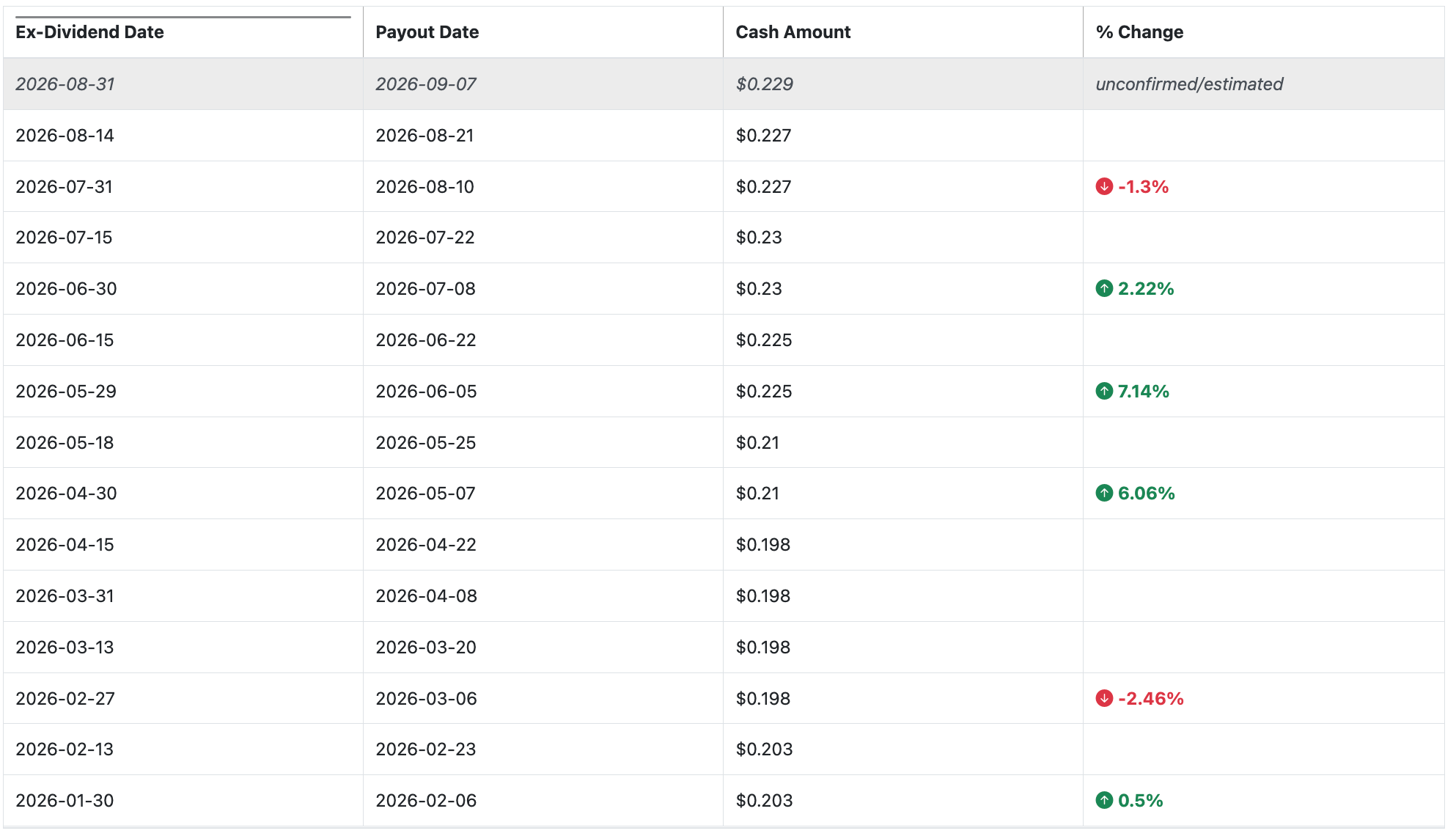
As of writing this, the next ex-dividend date is August 14, 2026. To actually receive the August 21st payout, shares need to be purchased at least one day before the ex-dividend date, so by August 13th in this case.
Is my portfolio actually diversified?
We’re spread across 5 to 6 fund managers we trust, and Hamilton makes up about a third of our overall income right now. On the sector side, diversification is something you have to define for yourself first. Do you want to be evenly split across finance, utilities, consumer goods, and tech, or are you comfortable being concentrated where you have conviction?
For us, we’re big believers in technology, so our portfolio leans heavily toward tech exposure, along with a strong base in Canadian finance. That’s a deliberate tilt, not an accident, so QDAY fits well within that existing goal.
This fund DOES carry a higher risk than some of our other tech-focussed funds, because it's concentrated in only 25 highly volatile stocks. I expect this fund to be highly volatile and have huge swings on a day-to-day and month-to-month basis.
How does this compare to similar funds?
There isn’t a perfect apples-to-apples comparison for QDAY right now. The closest fund we own is probably QQCL, a leveraged NASDAQ 100 covered call fund, but QQCL tracks the 100 fastest-growing companies broadly, not specifically the 25 most profitable tech names the way QDAY does, so it’s not a clean comparison.
That said, looking at the last year of performance for both: QDAY dropped roughly 7 to 8% further than QQCL during the March to April correction, because only 25% of QDAY’s portfolio is covered by calls versus 50% for QQCL, so QDAY had less of a cushion on the way down.
On the upside, though, QDAY has had a 45.82% total return over the past year, with distributions reinvested, compared to 34.3% for QQCL, because writing calls on less of the portfolio leaves more room to actually capture the rebound.
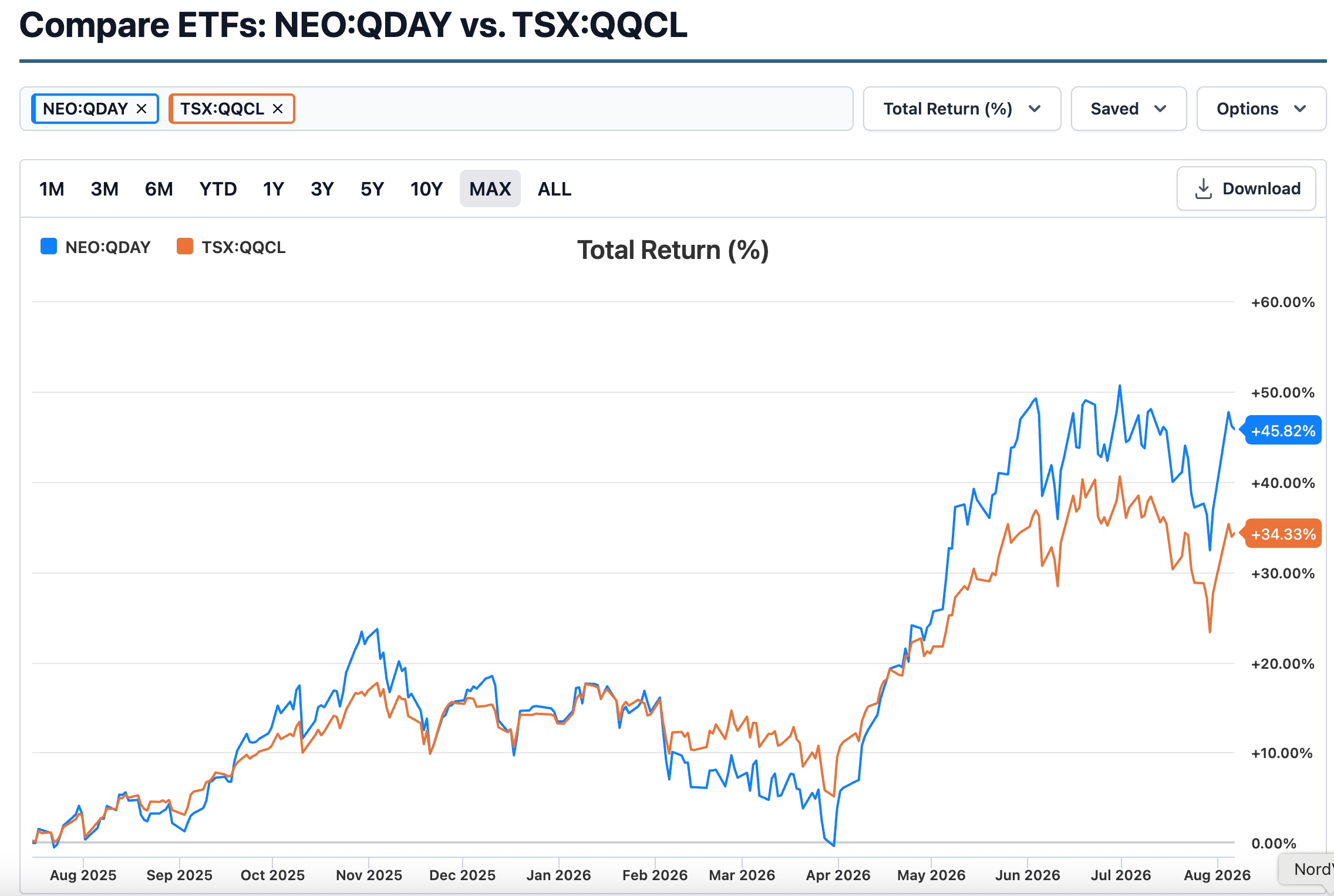
Right now, about 10.25% of our portfolio sits in QQCL. Adding QDAY is a deliberate move to capture more of the underlying tech growth while still generating strong income, rather than adding more to a strategy we’re already well-weighted in.
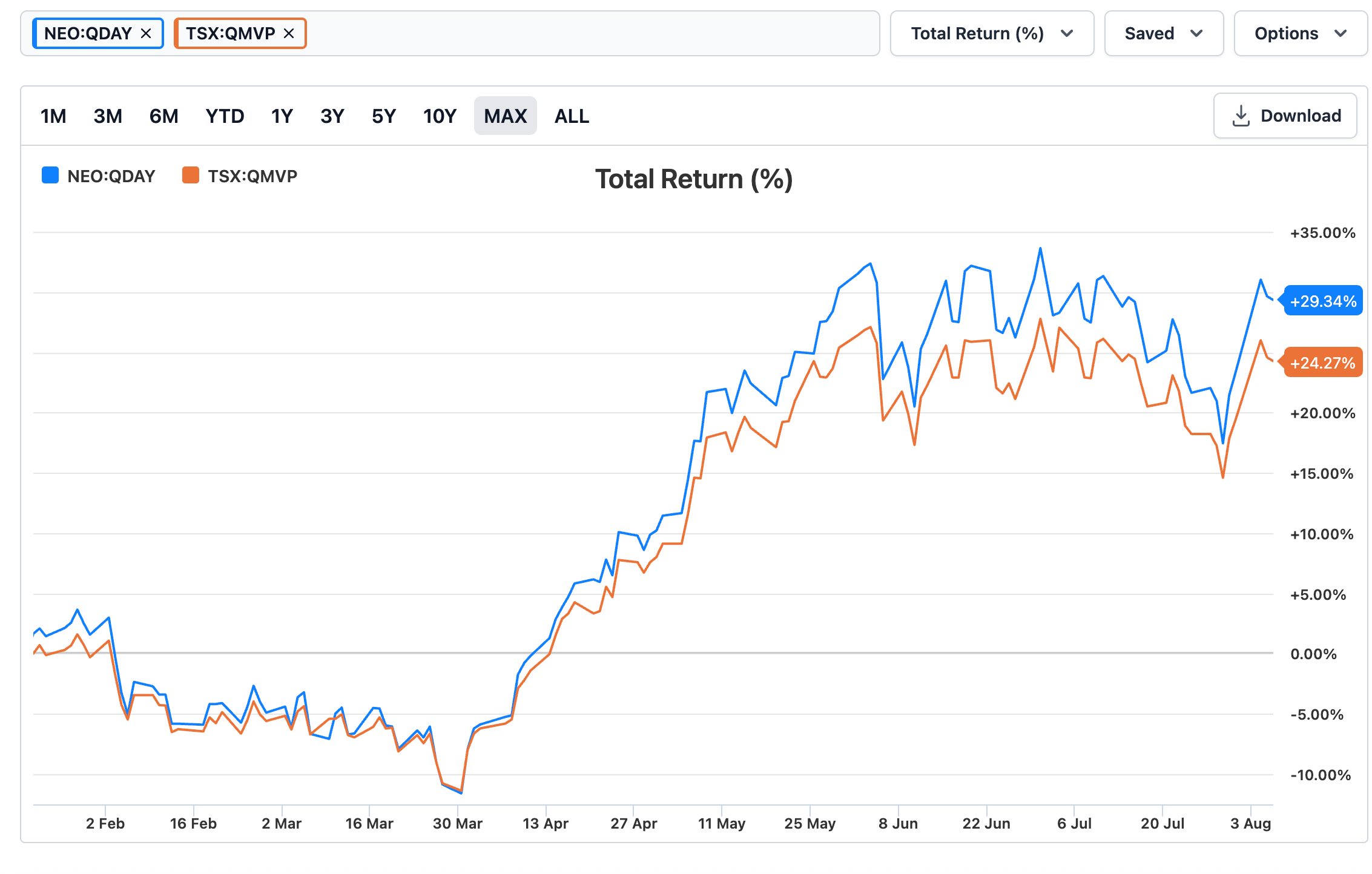
Perhaps even more interesting, I compared QDAY's total return (stock price change plus distributions reinvested) to its underlying holding, QMVP. Although QMVP has only been around since early 2026, it's interesting to see that the total return of QDAY has been outperforming QMVP so far. I'm curious to see if this trend will continue!
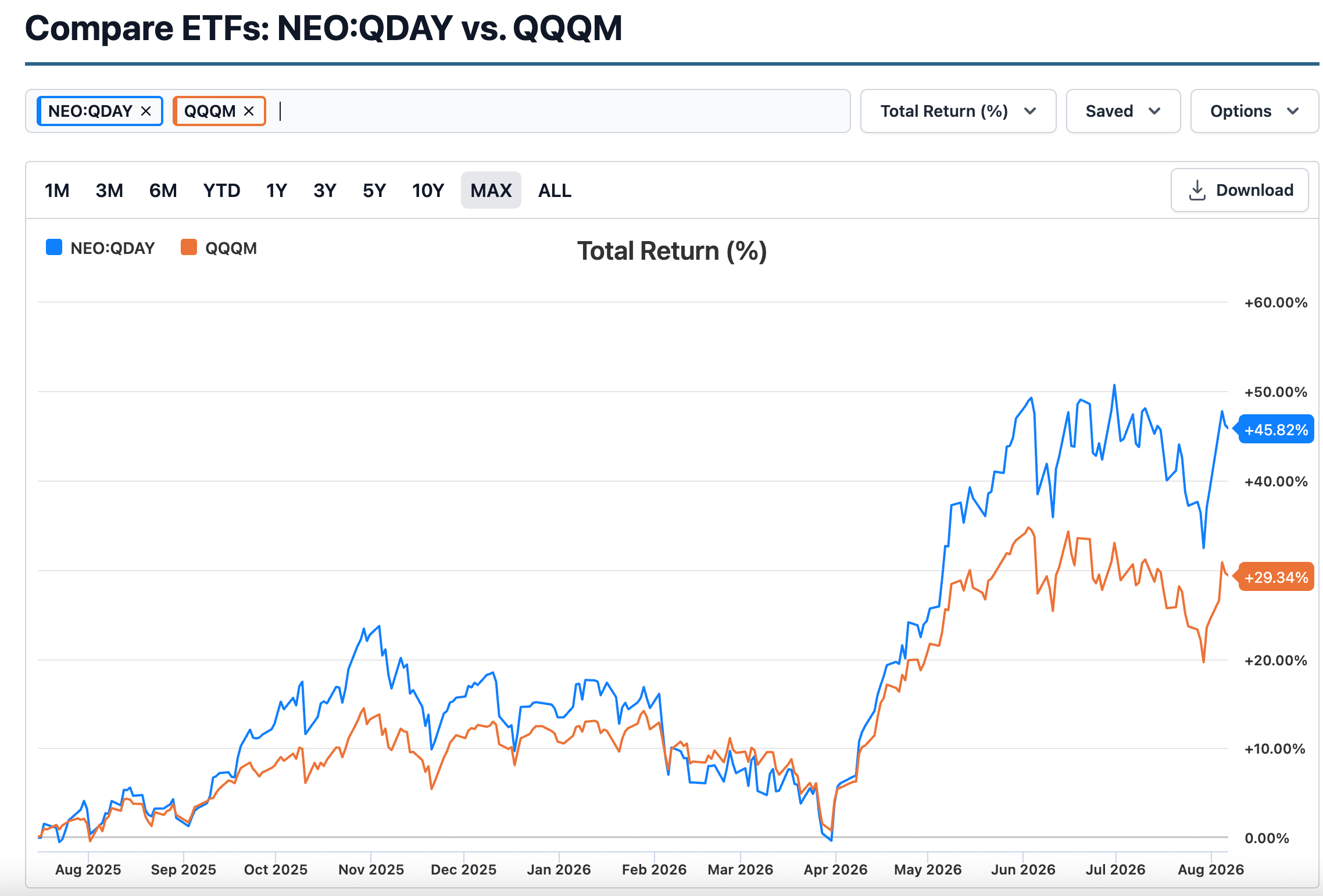
As a last comparison, QDAY has outperformed the NADAQ 100 index since inception, which makes sense given it’s concentration in profitable tech stocks. I’m very curious how this comparison holds up during a sideways or down trending market.
Beyond the fund’s own page, I also like to search YouTube for interviews with the actual people running the fund. For QDAY, I found an interview on the Passive Income Investing channel with Nick Piquard, the Hamilton fund manager behind QDAY, recorded right around the fund’s launch. Hearing him explain the mechanics directly filled in a few gaps my own research left open, especially around why the covered calls are only written on the leveraged NASDAQ portion instead of the whole fund.
Once a fund has checked all my boxes, I take everything I’ve gathered, screenshots of performance and comparisons, the fund manager’s page, press releases, and even the transcript of that YouTube interview, and load it all into a conversation with Claude (an AI like ChatGPT).
From there, I can ask direct questions about anything I still want to understand better. For QDAY, that meant digging deeper into how the 25%-covered structure actually works, how 0DTE calls compare to traditional monthly ones, why the income is as high as it is, and how the tax treatment works on distributions.
I still do my own research first and pull my facts straight from the fund manager’s own page, so I know they’re accurate before I ever bring them into a conversation with an LLM. But using Claude this way lets me stress-test my own understanding and catch anything I might have missed, rather than relying only on what I already know.
With everything I learned, here is the lens through which I’m looking at QDAY:
High risk, high concentration. Given that our portfolio is heavily tech-driven, we won't be adding too much to QDAY unless we reallocate from an alternate tech fund. In full transparency, we own a fund called HHIS (Harvest High Income Shares) that we haven’t been thrilled with the performance of. We may slowly shift a portion of our HHIS investment into QDAY over time.
QDAY’s ability to recover during a major drawdown is still unknown. It is not clear how the 0DTE call strategy performs long term and data is limited. This, in combination with the fund’s short one year history, is causing us to enter this fund slowly and with caution.
Given all of this, we’re starting small: about 1-1.5% of our portfolio into QDAY for now, with plans to build that position out over time as we watch the performance and see the payouts stay relatively stable given the fund’s early volatility.
We have currently invested $11,213.90 into the fund with an average buy price of $28.99 per share.
It currently holds a spot in our portfolio as a "test position," with intentions of moving it into a supporting role as we observe its performance over the next year.
I hope that has been helpful! This is the entire research process I went through in July before deciding to allocate a small percentage of our portfolio to QDAY.
Do you still have questions?
Want me to break one particular concept down in a detailed article?
Leave a comment and I’d be happy to give a deeper explanation.
Have an awesome week ahead.
Comments
Nothing yet. Say the first thing.
Sign in to join the conversation.