
It rained here at the farm this week… I didn’t record it, but I thought about recording it.
I shared a post last week about why I care about album art and packaging and also that I am taking on freelance graphic design, art direction, and album packaging layout projects. That is still true! Visit my site to reach out: www.matthewjsage.com
I teased last week that some of those ideas came from a lecture I used to give when I was a professor called “A Very Brief History of Recorded Sound.”
I gave this lecture in one form or another for about 8 of the 10 years I was teaching. It changed as time went by, but when you are a teacher you end up having favorite lectures and this is one of my all time favorite lectures to give.
I taught audio production classes — not music recording, but general sound recording techniques — and multimedia art and storytelling classes, and we often had an assignment that relied on using recorded sound to ends both journalistic and creative.
I liked to challenge the class to consider how weird recorded sound is, and how we just don’t really think about it enough.
There are a lot of little jokes I would make when I gave this lecture that aren’t here, but I think this sort of essayistic take at it works for substack.
Without further ado!
Music is older than Money.
After reading David George Haskell’s wonderful book Sounds Wild and Unbroken I have been obsessively telling my sound and music friends about this simple fact: music is older than money. Haskell’s research and expertise indicates that music most likely predates written language. As long as humans have been around, we have been singing, playing flutes, banging things together. More than 40,000 years of music are baked into our human experience.
Modern Capitalism only started around the 14th century. Music is more than 38,000 years older than Capitalism. Please hold this information dearly. Paying money for recorded music is a strange contemporary practice.
As I think it can be gainful to dig into something like this, a factoid that changes how you think about something you interact with every day, I want to share a super compressed history of recorded sound just so we can think about where we fit into this very short history we are part of.
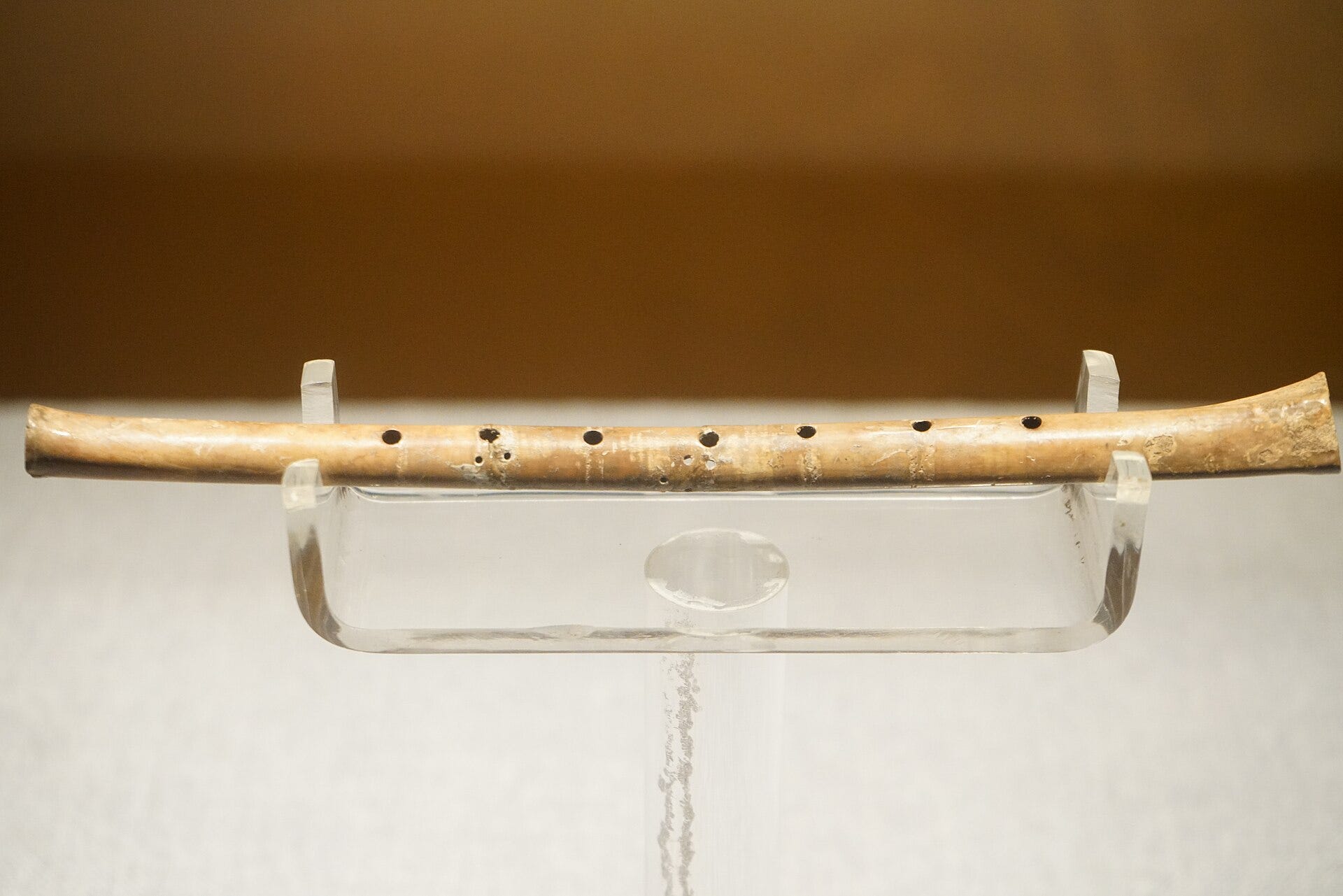
That is a bone flute from China, dated to about 8,000 BC. We are as close in time to that bone flute as that bone flute was from the first human music. Roughly. But still… gosh.
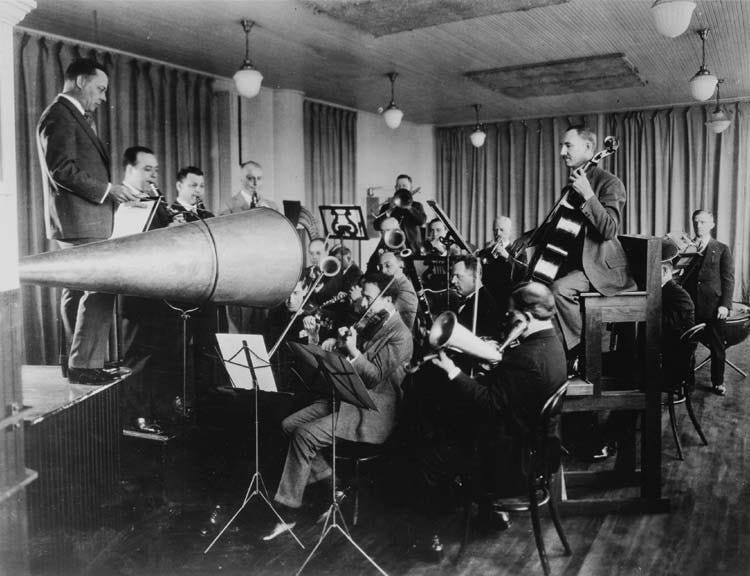
An early band recording live to an Edison cylinder. Notice that musicians are arranged into proximity to the cone to create a mix!
The first recorded sounds happened in the late 1870s. That isn’t that long ago, really! It seems super important to remember and remind people that music and sound existed as this fleeting thing for like… basically forever before this. Recorded sound is still SO BRAND NEW.
Record sound started in the 1870s, with Edison Cylinders. Sound was played (or voices spoken) at maximum volume into a cone that wiggled a needle that captured vibrations into a spinning wax cylinder. Things to consider: performers had one shot, one take, no overdubs, no editing. When we think of old music from these recordings we often picture someone belting out the vocal part; that is because they had to! The technology shaped the aesthetic!
The above compilation from Death is Not the End collects Edison reel home recordings by amateurs from this era… in that strange time before buying and selling recorded sounds would become a nearly global human practice.
This was pure analog sound, yes, and also recorded sound without electricity! Roughly 150 years ago. Seriously, that isn’t that long ago!!! It is a pretty rudimentary trick of physics, but from where I sit, it changed human history.
Before these early recordings, all sound ever was fleeting. It existed when a musician played, a speaker spoke, a choir sang, a drummer drummed, but that sound would vanish, never to exist again. What a paradigm shift! Suddenly, sound could, if recorded well, and archived carefully, last basically forever.
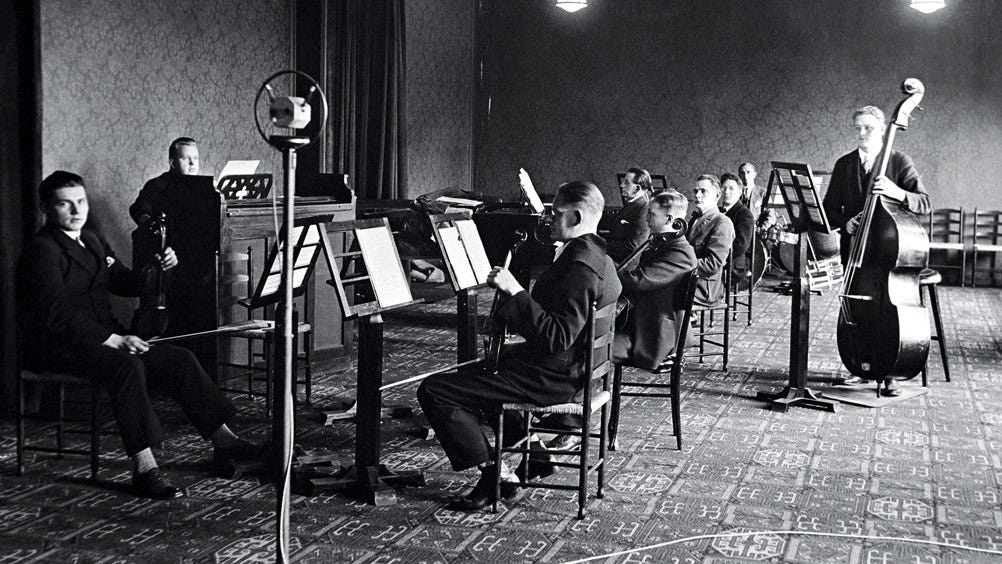
Electric analog sound changed this situation by creating gain and amplification. This was in the 1920s; only barely 100 years ago. Instead of having to play full volume, microphones could now electronically capture and amplify sound. Though still cutting vibrations to acetate or wax, performers no longer needed to yell or play loud. Suddenly, recorded sound became far more dynamic, more like human hearing. A whisper could be recorded, a murmur of strings, a soft harmonic.
This technological leap also changed aesthetics! A singer like João Gilberto, who is known for his soft and close vocal style, needed electric analog sound to achieve his recording style! Gilberto famously struggled with live amplification in venues and had harrowing sound checks because of how softly he sang and how much gain he wanted on his mics. A recording in a controlled studio environment made Gilberto feel close, present, intimate.
Also, electric analog sound meant recordings could be reproduced much easier. Still one take, one shot, no overdubs, but that master recording could be reproduced, redistributed, sold… technology also changed the value, the capital.
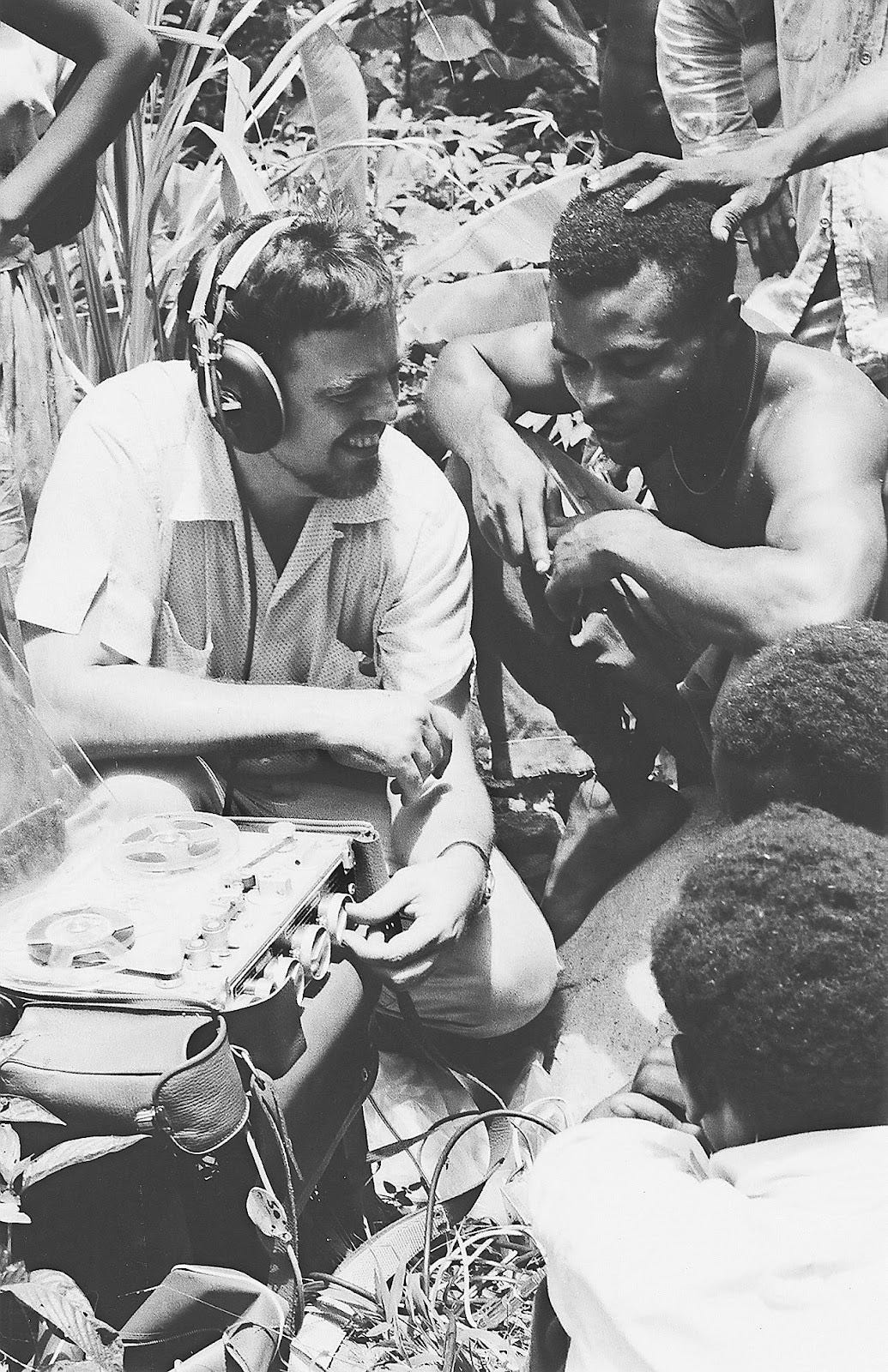
Alan Lomax and his trusty magnetic tape machine as seen in the field, recording integral human history by capturing music that would otherwise never end up in a studio. Lomax and field recordists like him are a huge case study for why recorded sound is important beyond commodity fetishism! They captured history! And they left the high towers of the recording studio and went out into the world, where music existed for millennia before recording studios.
In the 1940s, magnetic tape again reinvented sound recording technology. When this happened, suddenly sound could be edited, cut up, manipulated, dubbed. It was a monumental change in the technology of sound. Furthermore, the studio became portable! Huge acetate and tape machines dominated commercial recording facilities, but mobile field recorders meant people could make recordings on their porches, in their houses, at their churches, and those sounds could be shared, archived, and sold. The Edison Reel was a novelty that quickly became institutionalized, but tape recordings became an every day instance when this technology hit the consumer grade electronics market. This also meant recorded sound became a kind of household norm: the answering machine was a hub of interpersonal communication!
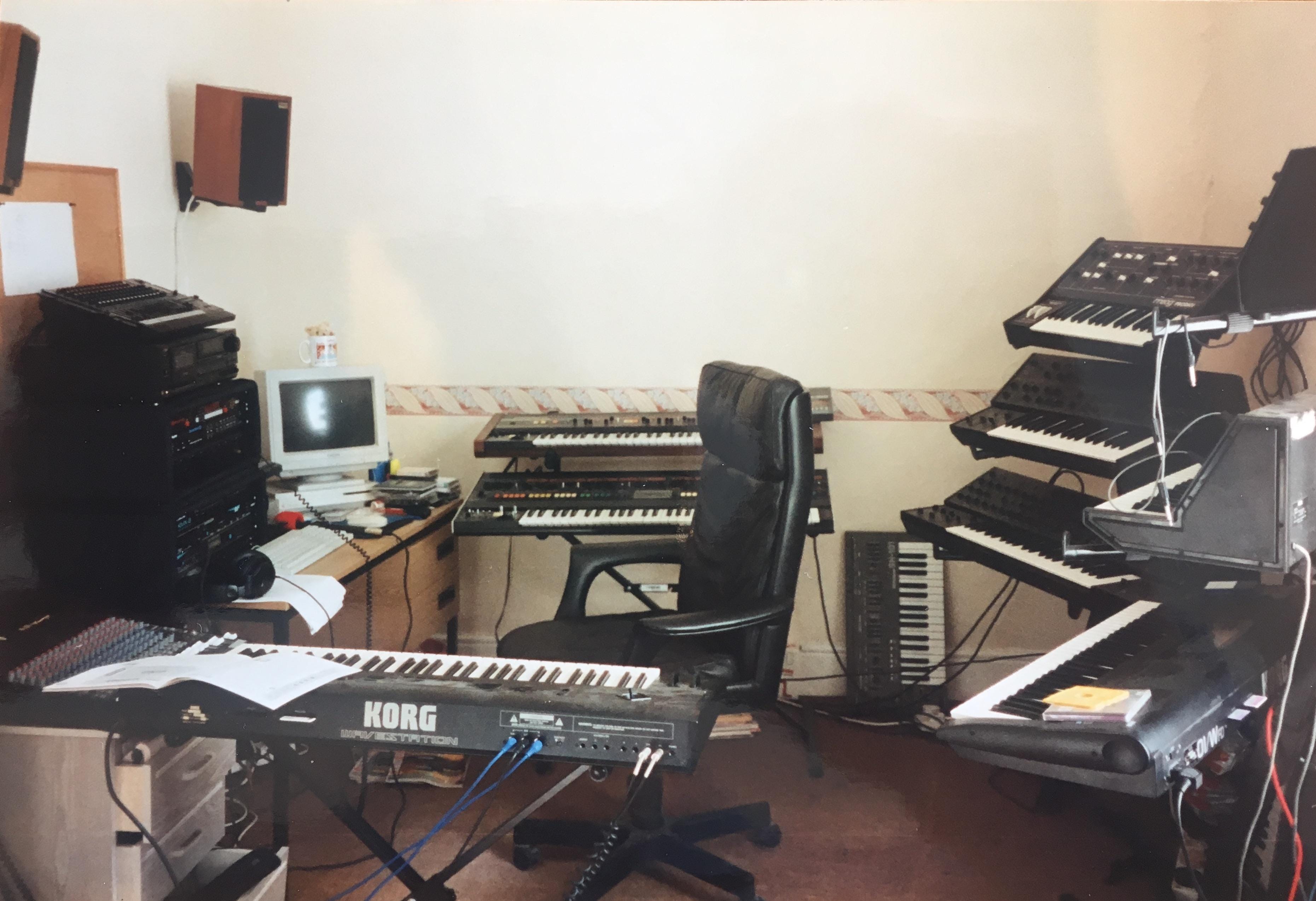
In the 1970s, digital sound was invented and was a technological triumph… and led to a commercial disaster. Instead of recording sound waves in a pure analog format, those sound waves were translated into data, binary code, 1s and 0s, and stored, not as actual sound, but as information on hard drives. A computer turns that data into electricity that is pumped into speaker cones and those 1s and 0s become wiggling air. Truly magical weird human shit. Data stored on a hard drive can become air moving in precise patterns that makes us feel feelings.
“What did you do this weekend?”
“Nothing much, just listened to some data and cried.”

The advent of digital recording also meant another evolution in accessibility; one could easily make digital recordings at home on consumer grade electronics now! The home computer suddenly became a global hub for recorded sound.
The large scale commercial buying and selling of recordings was still so nascent, only 50 years or so, before digital audio came along and broke that new and rickety (and exploitative) system into splinters.
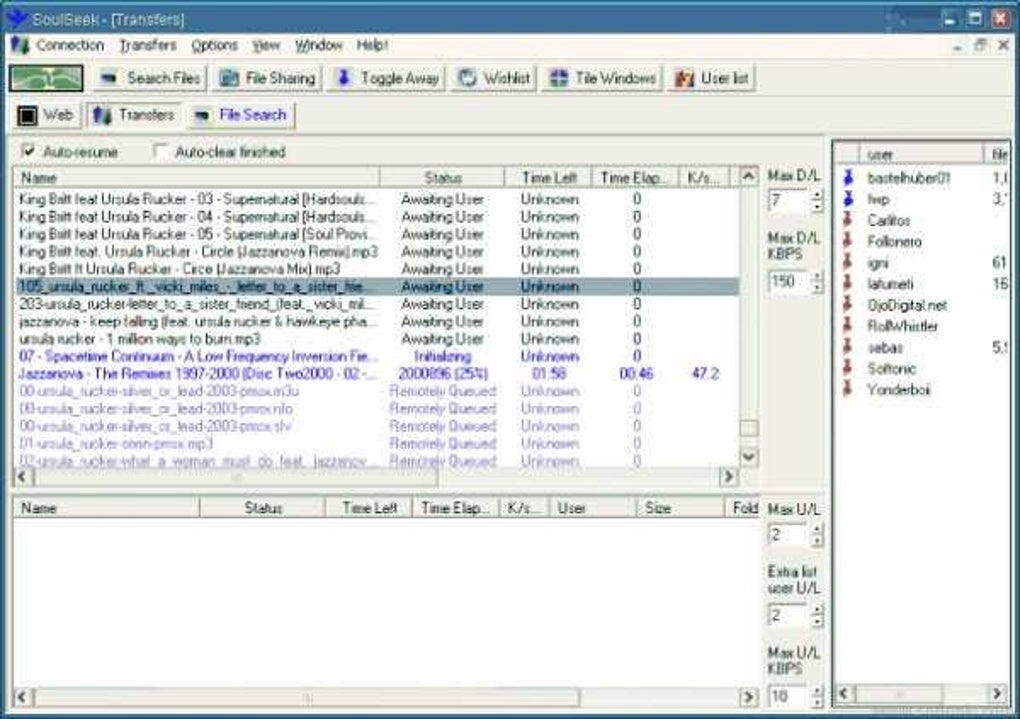
SoulSeek! One of the best/worst places to fileshare millions of gigabytes of music from peer to peer. Digital recorded sound led to a near-collapse of recorded music consumerism. We are still in the ripples of this wake.
With digital audio, suddenly recorded sound was massively shareable, portable, easy to record, easy to steal. Similarly and strangely, someone can now record a sound digitally and share it globally in minutes. This instantaneous media networking has taken something ancient and globalized it in a way that I think we still haven’t sat with long enough to truly wrap our heads around. You can finish an album today and put it online and sell a copy to a listener anywhere in the world with an open internet connection instantaneously. Truly weird.
Another thing to consider: so much of contemporary recordings of pop music is meta in that the canons of rap, techno, and pop are all intertwined with sampling, with playing back sound recordings. Recorded sound being played back in different ways has led to sprawling tributaries of genres, styles, subcultures. Loop pedals are recording devices too. Lots of “modeled” synthesizers are playing back samples too. Playback of sound is part of the musical writing process now. That is how intertwined recorded sound and our contemporary musical traditions have become. (Record scratches)
It can be hard to consider recorded soudn from an angle of deep time when we are living in a proverbial top soil miasma of contemporary recorded sound. Everything makes noise now. Our homes and the things in them, sure, our cars, sure, our phones/headphones, sure, but think about an average civic experience; crosswalks beeping, credit card boopers, grocery store produce department thunderstorm rainshowers and muzak, busses and trains calling out stops… we traverse public spaces and in doing so traverse across landscapes of digital sound being played back at us ALL THE TIME. We also carry most of the history of Western music on streaming apps in our pockets.
We are having a truly heroic and weird human experience in the consideration of music and deep time.
Humans have never been as submerged in recorded sound as much we are now… and that continues to be true every day, more and more, as more and more recorded sound is released and shared and played back.
The framework or concept of Pop and Rock music is so pervasive, so interwoven into our relationship with recorded sound, and yet, that means part of our human creative DNA has been claimed by the hegemony in the name of corporate capitalist models. Our engagement with recorded sound is beyond extrication from capitalism because our entire context for recorded sound as an arts culture is rooted in the commodifiction of recorded sound by corporations marketing consumer goods to teenagers!
When we think of a “song” we tend to think of something about three minutes long because that is how much music you can fit on a 45rpm 7” record, which is where pop music started. When we think of an “album” that is because we can fit about forty minutes of music on a single LP across two sides. Our total vocabulary for talking about “music” in a contemporary sense is wildly dependent on the models of replication, commodification, and so, capital that media culture has built an entire empire on.
And yet, music is so so so much older than money. Me and so many people I know build some or all of our entire identity, personality, craft on the bedrock of music culture. We are who we are because of bands, records, shows, fliers, music videos… this is the culture we have inherited; this strange moment in Earth history where super-intelligent apes have learned how to make air wiggle and now they buy and sell records and shirts and bumper stickers and get tattoos about air wiggling. WHO WANTS TO EXPERIENCE SOME AIR WIGGLING?!
We are truly dwelling in a nascent and bubbling ooze of a new and strange embodiment of one of the most ancient human activities, and its weird to be here with you in it!
That’s it! Thanks for reading.
For now, from the tall grass.
-Matt
No posts
Comments
Nothing yet. Say the first thing.
Sign in to join the conversation.